Martin Luther King, Jr. Gave His Iconic “I Have a Dream” Speech in Detroit First

I’d wager that most of you didn’t know that before the March on Washington, DC, was the 125,000-strong Great March on Detroit. And that’s where 25,000 people first heard this iconic speech in Cobo Hall (now Cobo Center).

For the complete audio and text of his speech in Detroit, click here.

May we all take time today to remember a great man, a great minister, and a great Christian who made the greatest sacrifice for a great cause.

I’m pleased to say that this June 23, 1963 event is a turning point for two characters in my current WIP. And I’m extra pleased that I happen to be writing that chapter the very week we celebrate the life and work of Martin Luther King, Jr.

That’s what I call Providence.

3 Easy Ways to Get Back into Writing Your Book

Ideally, we would all have time to work regularly on our writing projects, never allowing the fire to cool or the story to get stale. But reality is rarely ideal. It’s reality. It’s busy times at work, kids who need love, meals that need making. Those clothes won’t wash themselves, you know. So we often find ourselves torn away from our works-in-progress for a time and they turn into works-in-the-backs-of-our-minds. Sometimes we wander away from our writing fairly purposefully when we aren’t sure what comes next.

Either way, how do you get back in the groove after an absence? Here are three easy ways…

Reread. If it’s been just a few days, reread the last chapter. If it’s been more than a week or so, read what you have written so far, from the first to the last page, to get yourself not only back into the story, but also to reorient yourself to the flow of the story thus far. It’s more than simply figuring out where to go next. It’s recapturing the flow, the voice, the tension, the characters, the setting. Immerse yourself in it as a first-time reader would and you’ll be propelled forward in the story by the momentum you’ve hopefully built up. Plus you’ll see if what you’ve written thus far still holds up after letting it rest. You can also listen to what you’ve written, which gives the story another dimension altogether.

Outline. After that, see if you can outline what happens in the next few chapters. It helps to have at least a small idea of the road ahead. Just seeing a paragraph of synopsis (which I tend to write before an actual chapter is written) can almost trick you into thinking you’ve already written that chapter and give you a small feeling of accomplishment, which you can then ride into the actual writing of that chapter. Then, when it’s written, you can go back and tweak your synopsis to match what you actually wrote. In this way you are also finishing a chapter-by-chapter synopsis to put into your book proposal later. Two birds, one stone.

Research. Read over any research notes you may have taken to put you back into that world and spark your imagination with possibilities for your characters. If you are writing anything besides contemporary fiction that is set in a city like your own, you need to put yourself back in the right place, the right time period, and the right clothes. You need to pick up those speech patterns you’ve given your characters. You need to reorient yourself to that world, reintroduce yourself to its problems.

Now stop fooling around on the internet and get back to work!

The Disappearing Week

You ever have one of those weeks where you’re utterly spent and you can’t believe it’s already nearly over? It’s been one of those weeks for me. I haven’t gotten much writing done, most of my clothes are in the laundry, and my house is a disaster due to neglect.

On the other hand, I did make white sauce from scratch out of Julia Child’s cookbook and I have managed to fill the dishwasher. Small victories.

Sometimes you have to accept a week where not much gets done. But I find they are often followed by incredibly productive times. Hoping to get back in the swing of the novel this weekend. And I’m pretty sure I should start chipping away at the mountain of boots and shoes that is slowly encroaching on the living room as soon as possible.

Then again, there’s always next week . . .

5 Reasons You Need to Attend a Writers Conference

On Saturday I attended the first ever Write on the Red Cedar writing conference, hosted by a relatively new writers group in the area, the Capital City Writers Association. The featured speakers were writer, blogger, and literary agent guru Chuck Sambuchino and literary agent April Eberhardt. Both were friendly, gracious, funny, informative, and accessible. In fact, everyone was friendly and fun to be around. It was a great group of both established writers (like Lori Spielman) and beginning writers.

But why go to a writers conference? Why spend the money? The time? I’m glad you asked. Here are 5 good reasons:

1. Network. Writing may be something you can do alone, but publishing and getting your book into the hands of readers is not. Even if you self-publish, you need a network of people who can help you along the way with everything from editing and cover design connections to endorsements and book reviews. So much of publishing success lies in who you know. So you need to get out and meet people.

2. Hone your craft. Working in isolation can make us fall into lazy writing, even bad writing. Yes, you can read books (like this one) but it’s also helpful to get jolts of focused advice in one-hour portions. I went to a workshop once that was about where to start your story, with much of the class focused on just the first sentence. It was extremely helpful.

3. Make new friends. I know you have friends, but having friends who are fellow writers is awesome. Writer friends spur you on, cheer for you, complain with you, and know what you’re going through. They read your drafts and give you constructive criticism. They go to the next writers conference with you. They are special.

4. Learn insider tips and tricks. When you go to a conference attended by professional writers, editors, agents, or anyone else involved in the Industry, you get priceless insider information about how publishing really works on the ground level. I gave out a lot of such information at both Breathe, where I was a speaker, and Write on the Red Cedar, where I was an attendee.

5. Meet agents and/or editors. Nothing can substitute for positive in-person interaction between a new writer and an agent or editor. Cold calls and queries just don’t carry the same weight as a handshake and a great conversation that will make you real and memorable. Not every conference or retreat has agents and editors attending, but even if they don’t, people you meet there can lead to meeting agents or editors in the future. You never know who someone else has connections with.

If you’re just starting out on your writing journey, I can’t recommend good writers conferences enough. Just being around that many other people committed to improving their writing and helping each other along the way is energizing and encouraging.

The Intentional Writer: Finding the Time, Space, and Inspiration You Need To Write

I’ve mentioned it a few times on the blog and now here it is. Inspired by the presentation I gave at the Breathe Christian Writers Conference last October and bringing together some of my best blogging and writing about writing, I offer you The Intentional Writer.

Intentional Writer ebook CVR FINAL

It’s available on Kindle now and I will soon be working on formatting the print edition. Here’s the description of what you’ll get inside:

You can make creative writing a regular part of your life—without making it a rigid daily requirement.

If you are trying to make creative writing a more intentional—and yet not tyrannical—part of your life, The Intentional Writer will help you to pursue your goals, hone your craft, and get your work out there into the hands of readers. This entertaining and informative book will help you analyze your motivations for writing, put yourself in the path of inspiration to keep your ideas flowing, deal with both internal and external distractions, reshape your surroundings and your schedule to aid your process, and take your work from first draft to final publishable product.

From encouragement and insight to the nuts and bolts of storytelling and editing, you’ll find something in the following pages that will change your writing rhythm for the better.

Not a Word for the Snow

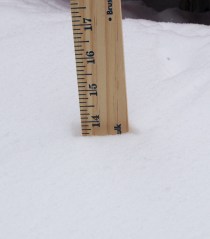
OLYMPUS DIGITAL CAMERAI rise early in the morning, before the light has changed from midnight to the gray that precedes the dawn. A look out the window confirms the wisdom of this. It has snowed—perhaps five inches—and is snowing yet, rather steadily.

I debate the order of things. Coffee? Shower? Shovel? Shower first. If I go out there now I’ll simply have to clean off the car again before I leave.

By the time I am washed and dried and sprayed in place, the light is graying. I layer pants, t-shirt, sweatshirt, two pairs of socks, snow pants, boots, coat, gloves, mittens, scarf. No hat to mess up my hair.

Then I step out into silence.

No cars. No wind. No branches swaying.

No snowblowers.

I lean against the cold brick arch that frames my door, dumbstruck. I have never, even in the middle of the night, ever heard silence outside of my house. My house which stands but a hundred or so feet away from a four-lane highway, from whose windows through the bare trees I can see the exit ramps for the freeway.

And then I realize that it is not quite silent. There are birds. Small voices piercing through the cold, calling me to take up my task.

Then my boots. Then the taking up of the shovel. Then the Scrape.

But even metal on concrete sounds soft, hushed by the snow that fell silently all night and which now shames all sounds. A semi truck lumbers down the highway, but says not a word for the snow.

The gray light eases to pink.

And still no one on my street is about. All sleep soundlessly in their beds.

I ask the snow to move aside, show it a better place to lie. At my suggestion, bare sidewalk appears at my feet and I walk slowly on, up and down the sidewalk, back and forth along the driveway.

And each slow scrape of my shovel wakes one more person in my town.

They do not realize what it is that wakes them, for the sound of it is but a whisper, but when they wake they know they have slept too long, let the snow go unchecked. With each scrape they rise and hurry into their clothes.

I see a car. Then a truck. The sky is white. This city is stirring now and I know my time runs short.

I come to the end of my task and turn to see my great accomplishment. But the bare sidewalk lies beneath new snow that does not know about the arrangement I made with its kin on my slow walk toward the street.

But I haven’t time to explain. I must go in. I must remove all of my clothing and step into something more suitable.

Inside again. Melting snow drips from my hatless head and sweat slicks my back and my neck. I tear away my wet clothes. The house is hot. Too hot. Who turned the heat up so high? Then I remember. I did. I turned it up this morning after leaving the cave of my bed.

And I want to write the silence down immediately, before it escapes, before the magic melts off.

But I can’t. I take up my hairdryer, my mascara, my necklace.

I slip once more out the door.

And all I can hear is an army of snowblowers.

The Kind of Writing That Fills Most of My Days

Now that my writing vacation is over, it’s back to the real world for a while. And what is that, you may ask? Why, copywriting. Yes, like a number of beginning novelists, my 9 to 5 involves practical writing, real world writing–marketing writing. And recently one of the authors for whom I’ve written back cover copy mentioned me on her blog.

Amanda Cabot, a lovely author and just all-around sweet person to work with, breaks down the creation of the cover for her latest book and I knew you writers out there would be interested in it, so click here and please enjoy!

13,652

This is why you should occasionally take a week of vacation just to write if you have a full time job and are finding it difficult to set aside concentrated writing time. I had a goal for my week off to net me three chapters of my new book. Instead, I ended up with five chapters and a nice, encouraging total of 13,652 words–a little over 2,700 per day.

Because I waited to start writing until I was really, really ready (in other words, until I just couldn’t hold back the tide) I had very few moments when I struggled with what to say or what should come next. And it took about a year of musing, outlining, researching, and a few false starts to get there. Now I wish I had a couple more weeks off lined up this month! Still, if I make the time at night or during a few early mornings, I can still manage to keep up a nice pace.

I hope if you made any writing goals for the new year that you are actively pursuing them and that when your passion or energy inevitably fades (as mine will at times, I am quite sure) that you pick it back up before letting the dust settle.

Write on!