Overcoming the Fear of Inadequacy

This is a picture of my son.

CalvinSelfPortraitMarch2013Age4

It is a self portrait made back in March when he was still four years old, sent home in his personal file when he left his daycare/preschool and started kindergarten. Being four, this is as skilled as his self-portrait could be, even though I know he really sees himself more like this:

Do you ever feel like your talent may not live up to your own expectations?

Does that fear keep you from trying something great?

In almost any creative endeavor, we have an idea of what we want the end result of our efforts to be. The knowledge that our labors–our writing or painting or sculpting or songwriting or drawing in crayon–may never quite live up to the perfect standards we have in our heads can keep us from trying. One can feel paralyzed by potential.

But one must still write. One must still create.

My son may not be a real ninja turtle, but he is taking karate lessons.

OLYMPUS DIGITAL CAMERA

If you don’t try, you can’t fail. But if you don’t try, you can’t succeed either.

You’ve got to start somewhere.

On Writing Well: Enjoying the Process as Much as the Product

For about the past year I’ve been in some nebulous writing space when it comes to my next novel. While I’ve been pounding out short stories each month, I’ve also been furiously scribbling notes in parks, in the car, at restaurants, and at my desk. I’ve been creating massive family trees and designing sets. I’ve been writing scenes and sketching outlines and placing them aside, not quite sure where to go next.

I’m calling this conglomeration of activities the “germination stage” of the new novel. And this past week the germination phase came to a close as I entered the “gathering stage.”

OLYMPUS DIGITAL CAMERA

A little bit at a time, I have gathered together what seem like the best of my ideas and put them into a structure I think will work for telling my story, which will span from 1859 to the present, encompassing several generations of a family’s history, but which I have determined I will tell through three separate POV characters. The scope of this novel has created unique structure issues for me (my first novel takes place over a few months and was written entirely from one perspective). The uncertainty about just how to tell the story has stymied my efforts to actually write the thing. So last week I sketched out 30 chapters and essentially outlined the entire novel, something I’ve not done successfully in the past.

In addition to the outline, I’ve gathered scads of images: railroad maps, house plans, photos indicating clothing styles and covering historical events, garden designs and tree profiles, quilt designs and furniture examples, photos indicating mood and available technology. I’ve taped all of these to two pieces of foam board (connected in the middle with packing tape so they fold up and can be made to stand up on the floor or a table). It’s sort of a primitive Pinterest board where I can see everything without accessing the internet (which, generally, one should avoid doing if one wants to get any writing done).

OLYMPUS DIGITAL CAMERA

The process of gathering is just as beneficial to me as the actual product. It makes me review everything I’ve been thinking of, makes me order events in my mind, makes me realize where events need to be foreshadowed in earlier chapters, shows me what I need to research. The product itself (the boards) will serve as a road map for my writing and as inspiration when words aren’t coming easy.

Sometimes we have an idea for a story that balloons so much that it’s hard to keep everything straight in our heads and we lose sight of the main thrust of the narrative we want to create. In times like these, going through your own unique process of gathering and ordering your ideas is so useful. Now that I have all of these words and images on my little idea boards, I feel mentally ready to start tackling this project. Everything is there, I just need to breathe life into it.

Have you been avoiding a big writing project because you just didn’t know where to start or how it would all hang together? Perhaps you should try making it more visual. Get it out of your head and into reality and maybe you’ll find the pieces fitting together in ways you hadn’t anticipated.

Now, if you’ll excuse me, since my gathering is done, I need to get on to the next–and most exciting–step: writing a world into being.

The Courage to Be Yourself–in Life and Writing

I had an important realization this week as I made a big, life-changing decision (i.e., which “first day of kindergarten” photos to post on Facebook. I know, I’m still reeling from all the pressure.)

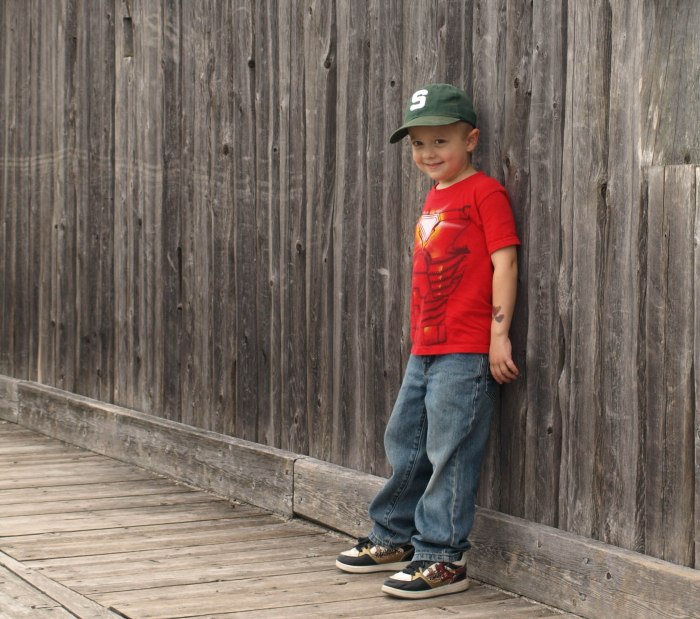
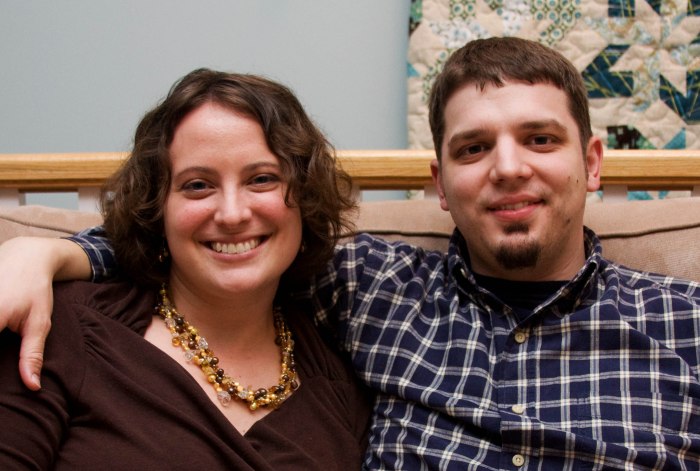
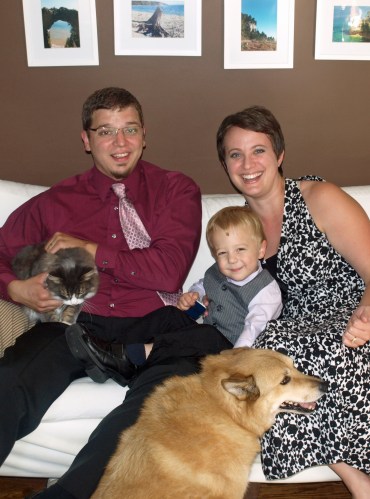
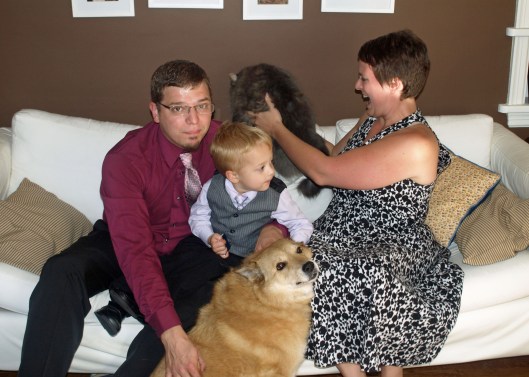
In my mind I tell myself that the pictures of my life and the life of my family should be “normal” and “pleasant.” Something you could put in a frame. Something you could send to parents and grandparents. Something like these:

OLYMPUS DIGITAL CAMERA

OLYMPUS DIGITAL CAMERA

ZachErin2

OLYMPUS DIGITAL CAMERA

OLYMPUS DIGITAL CAMERA

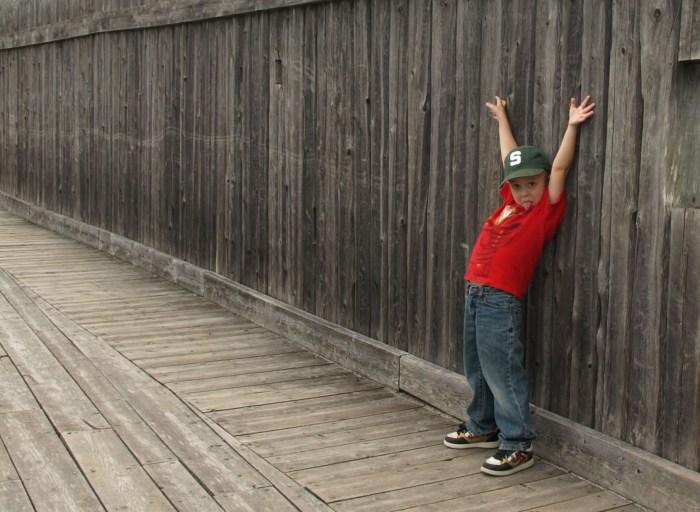
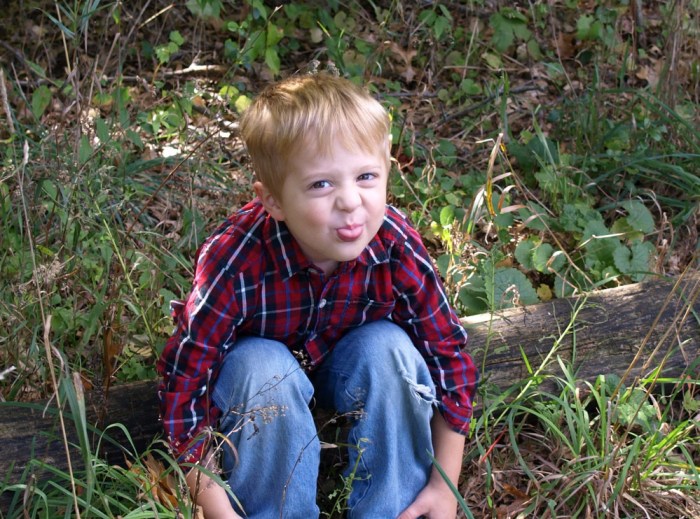
So I ask my son to “smile for real” and hear a lot of “c’mons” come out of my mouth. But in reality, these are the kinds of pictures I generally end up getting the best responses to when I share them (and they’re the ones I really enjoy sharing):

OLYMPUS DIGITAL CAMERA

OLYMPUS DIGITAL CAMERA

MeetingOfTheMinds

OLYMPUS DIGITAL CAMERA

OLYMPUS DIGITAL CAMERA

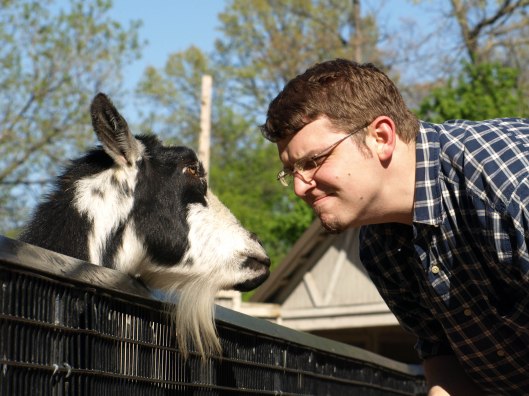
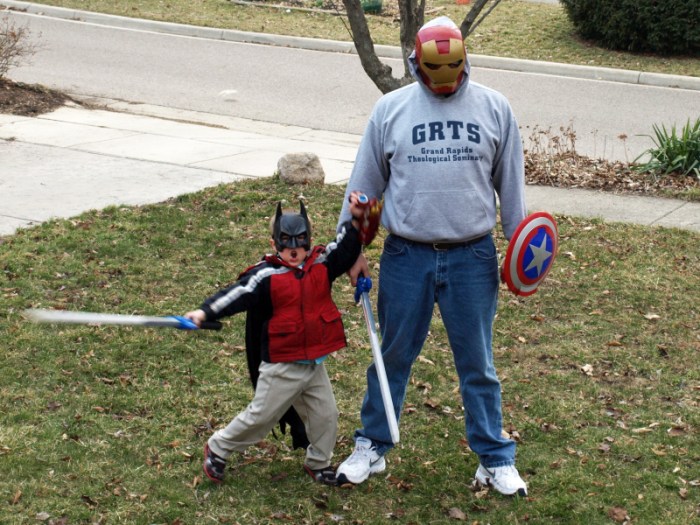
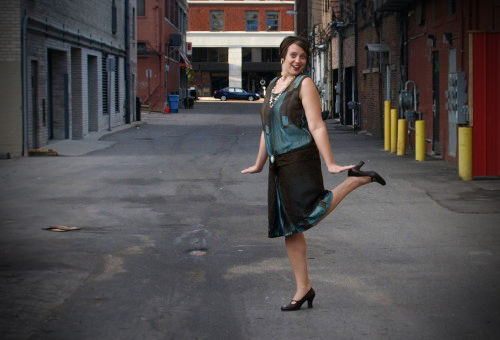
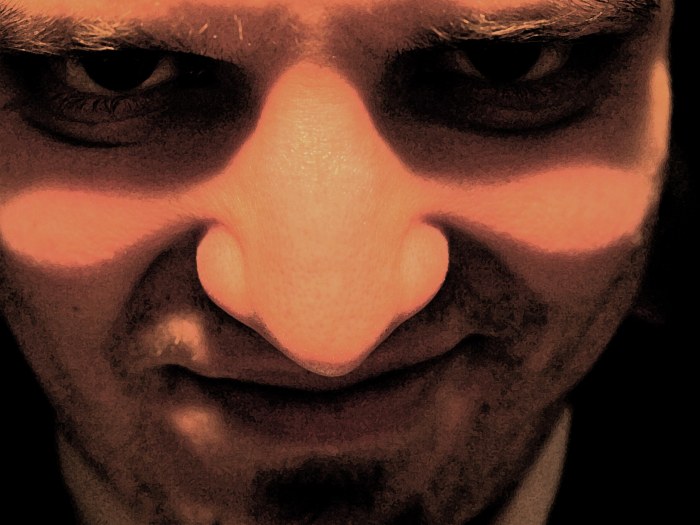
Why? Because they are more interesting. They have personality. They’re truthful. We’re kind of strange and we like it that way. Not to say that we’re not a very pleasant family and even pleasing to the eye at times, but beneath that thin veneer of propriety, we’re really…well, like this:

OLYMPUS DIGITAL CAMERA

Here’s where this parallels writing. Sometimes there’s pressure (internal or external) to make characters or stories “pleasant.” You hear from a writing group member or an agent that your character isn’t “sympathetic” enough. Or that your story is a real downer. Or “Can’t you just write a happy ending for once?”

Though he’s supportive to a fault, my husband will sometimes come to the end of a story of mine, look at me with…well…let’s say concern, and breathe out a little “Sheesh!” I actually love this reaction, but there is still a teensy-tiny part of me that starts to question…

Will people be put off by this?

Will people think I have done or would like to do some mean or immoral thing that one of my characters has done?

Will people think I’m a bad person?

Will people start avoiding me?

Will people think I have psychological problems when they read this?

OLYMPUS DIGITAL CAMERA

Generally, I’m happy enough with the literary results of my efforts that I simply shrug, upload a new story to Amazon, and hope that people will have a good reaction to it. And in my mind, “Sheesh!” is a good reaction. Being a little creeped out is good. Feeling kind of sad is good. Feeling is good.

When stories are too pleasant, wrap up too neatly, or are just a touch too sweet, I get the groans. I’m bored or I’m unsurprised or I’m simply closing the book and never picking it up again. And you can be boring even if you have an interesting plot simply because your main characters have no faults.

Here’s a useful tool to examine your own writing. If you have to answer yes to more than two of these questions, your protagonists may be suffering from pleasantitis:

Are they always attractive (even if they don’t see it themselves)?

Do they have overly-interesting eye colors, especially involving descriptors such as “the sea on a stormy night” or “flecks of purest gold?”

Do they have gorgeous, Pantene-commercial-worthy hair even if they lived in a time when no one showered?

Do they have beautiful teeth and winning smiles even if they lived in a time when EVERYONE had bad teeth?

Do they always know what to do in a given situation?

Do they always get the girl/guy/promotion/bad guy/treasure/best cuts of meat at dinner?

See what I’m getting at here? Too much “pleasant” or “normal” or “perfect” or “happy” and the rest of us mortals can’t really identify with them. Flaws are essential. Flaws in your characters are like the conflict in your plot. If there’s no conflict, there’s no story and if there are no faults, there are no believable characters. Real flaws, not just that she has to wear glasses or he once broke someone’s heart.

How about she has a secret and almost insatiable desire to ruin her sister’s life? Or he suffers from near-crippling anxiety around his father because he fears he’ll never measure up? Or she compulsively corrects everyone’s grammar and so her friends actually loathe her? Or he neglects his own children because he’s so focused on his own advancement and amusement?

Then you take your flawed character and you find something in them, some trait or some believably terrible backstory, that will make them sympathetic without having to be perfect. (Aside: If you want an excellent example of this type of character, watch the hugely underrated movie Young Adult.)

Perfect people aren’t sympathetic. They’re kind of annoying. And anyway, they’re not really perfect either. They’re simply afraid to be real.

Be yourself. Let the real you come through your writing or art or whatever you do.

No matter how weird…

OLYMPUS DIGITAL CAMERA

…or silly…

OLYMPUS DIGITAL CAMERA

…or generally off-putting.

OLYMPUS DIGITAL CAMERA

The Mad, Mad Adventure of Writing to a Title

Ideas for writing come from all over–overheard conversations, awful dinner parties, a moment in time that hits you just right and sparks something inside of you that can only be described as the literary gene. But sometimes, you have to make the ideas come. Like when you’re on a deadline, self-imposed or not.

For several of my short stories this year I’ve started with a title idea and/or cover image rather than actual plot or character ideas, and it’s been interesting to see where that leads my writing. Because of this, I’ve run into a rather interesting situation I thought I’d share with you creative types out there.

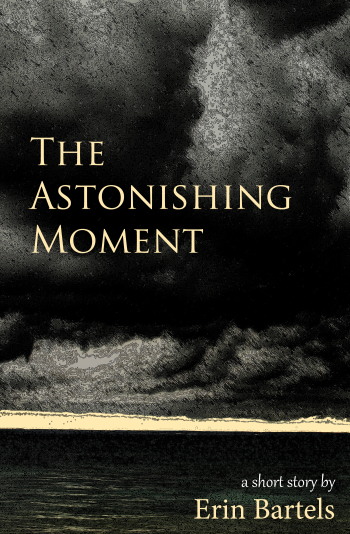
For August’s short story I started with a title which I drew from a quote from Virginia Woolf’s diary where she is describing a total solar eclipse that she and her friends saw. I loved the phrase “the astonishing moment” which she used to describe the moment the eclipse was total and the light in the world simply went out. So I pulled that phrase out and thought it would make a compelling title to write to. I popped it on a photo I took up at Lake Superior whilst hiking Pictured Rocks last summer and thought perhaps I’d do a story with hiking as a backdrop. Here’s the cover I came up with:

OLYMPUS DIGITAL CAMERA

But then Saturday night when I started to think about getting started writing, I decided to reread the section of Woolf’s diary that had inspired the title and pull out a quote with which to begin my story. Here’s what caught my fancy:

“We kept saying this is the shadow; and we thought now it is over—this is the shadow; when suddenly the light went out . . . . How can I express the darkness?”

~Virginia Woolf

Clearly that quote and my original cover concept do not match.

Rather than lose the pathos of that quote by omitting it and just writing the story I had (very) vaguely formed in the back of my mind, I decided to try again at the cover art. I pulled a photo I just took up at Mackinac Island, manipulated it a bit, and came up with this:

OLYMPUS DIGITAL CAMERA

Clearly this new image does fit the quotation. I’m pretty sure the story will not be about hiking. I’m pretty sure it will be “maritime” in flavor. And I’m pretty sure some bad things will happen to the characters.

And that’s all I’m sure of.

7 Favorite Movies about Writers and Writing (and Reading)

I love stories about writers, writing, and books. I love movies about the same. So here’s a list of some of my very favorite movies about writers, writing, and reading. Most are movies I watch over and over again. Some I’ve only just seen for the first time recently.

I’ve left off some with great concepts but poor execution (I’m betraying my fantasy-obsessed childhood self, but I have to put The Neverending Story in this category because it is SO very cheesy when you watch it again as an adult) and I’m sure I’ve left off some good ones because I haven’t seen them (so please add them in the comments if you are so moved so I can put them in my Netflix queue). Also, I very much doubt I’m covering any new ground here, but for what it’s worth, and in no particular order…

[WARNING: These trailers give away a lot of fun surprises in the movies (Why do they DO that?) so if you just want to experience these movies without the little spoilers, please refrain from clicking and just go find them on Amazon Prime or Netflix.]

Adaptation


I know that you either love Nicholas Cage or hate him, and that will color your decision to watch or not watch this movie, but who doesn’t love Meryl Streep and Chris Cooper? No one. What I love about this movie: I love when writers enter their own story; I love the commentary on genre, on being true to one’s own style and method of writing, and on the tired old cliches that we love nonetheless; I love Nicholas Cage. There. I said it.

Stranger Than Fiction


Proof positive that Will Ferrell can act (ergo, the question is raised, Why doesn’t he do this more often?) and that he can be believably romantic. Also Emma Thompson and Dustin Hoffman are fantastic. What I love about this movie: Again, I love the mixing of worlds between writers and their characters; I love slightly illogical and slightly surreal stories that couldn’t really happen but the creators offer absolutely no explanation as to why it’s happening because it doesn’t really matter in the long run; I love how morbid and off-kilter Emma Thompson’s character is.

Midnight in Paris


Dare I admit that this is the first Woody Allen film I’ve actually seen? I’ve heard so much poo-pooing of his movies over the years that I haven’t sought them out. But this is a wonderful, magical film about writers, artists, and other creative types; about the seductive power of nostalgia; and about taking the right chances. What I love about this movie: Owen Wilson; the huge supporting cast of fantastic little surprises; the costuming and lighting; the unique storyline (which doesn’t come through in the trailer, but I’m not going to spoil it for you).

The Hours


This film enchanted me even before I knew I loved Virginia Woolf’s writing. The same story told through three different women in three different cities in three different eras–one writing the story, one reading the story, one living the story. What I love about this movie: Fabulous performances (how could they not be with that cast?); the examination of the power of story; the feeling that the words we write have life and meaning far along down the road.

Julie & Julia


Another film starring Meryl Streep? Yes. It seems the woman loves literary films as much as I do. But isn’t this movie about cooking? Yes, but also writing–a cookbook, letters, a blog. Writing your passion onto the page in the form of recipes. Writing about your life to your closest friend. Writing about your crazy experiment to perfect strangers. But always writing (and eating). This movie will make you hungry and inspire you to get Julia’s cookbook (the chapter on eggs alone can change your culinary life–seriously) and buy some really good knives.

84 Charing Cross Road


Oh, how far we’ve come in the world of movie trailers. This little bit gives you almost nothing of the tender quality of this film. Anthony Hopkins is a London bookseller and Anne Bancroft is a New York City bibliophile who can’t get the rare books she wants in NYC. These two characters begin a correspondence after WWII and get to know each other over a couple decades through letters and books. I loved seeing the economic and social differences between post-war Britain (with its deprivation and rations and ruins) and America (with its prosperity and expansion and optimism). A great film about the power of books.

Under the Tuscan Sun


She’s a writer whose marriage is over. At the behest of her concerned friends she takes a trip that will change her life and her writing. Based on a memoir (which I haven’t read), this movie is wonderfully brought to life through Diane Lane’s acting and narrating. The thought of spontaneously starting over in life (especially in a foreign country) is the impetus for many a literary character’s actions and holds such a romantic fascination for us, doesn’t it? Plus, it’s a movie about a house, an old house, and bringing that house back to life. What’s not to love?

Oh, I know I’ve missed some great ones, along with ones I haven’t had a chance to watch yet. And I haven’t included TV shows, but if I did I would put Mad Men in there.

What are your go-to literary movies?

Your Novel as a Garden: 14 Ways Writing Fiction is Like Growing Your Own Veggies

I’ve once more been in the throes of novel revision during the past couple weeks, adding subplot and subtext, honing here, shaping there, putting everything just so before sending it all off to hands waiting in the cybersphere. At the same time I have been forced to pay closer attention to my vegetable garden as the heat and rain combine forces, spurring on quick growth and a crop of weeds that must be eradicated.

It occurs to me, as I consider these two activities, that writing a novel is much like plotting out and planting a garden. If you start with nothing, just a bit of land and some muscle power and some seeds and plant starts, you can, through hard work and sweat make bare dirt into food. You can make this happen…

Growth

And if you start with nothing, just a blank Word doc and some brain power and the barest germ of an idea, you can, through hard work, make bare creative impulse into engaging fiction.

In fact, here are 14 ways writing a novel is like growing your own vegetables:

1. You till the soil. You prepare your mind to be receptive to writing ideas (these are your seeds) so that when the seeds are planted it is into a mind that is already at work helping them to grow. In gardening this means removing rocks, adding nutrients, and loosening the soil. In writing it means removing obstacles to creativity (like, say, forgetting to worry about the state of your house or waistline for awhile), adding muse-bait (taking more walks in the woods, traveling to some interesting places, or playing hours of Mario Cart–whatever helps you think creatively), and loosening up your writing muscles (by blogging, writing short stories, writing poetry–heck, even a Twitter tirade could get you loose).

2. You plan the layout. You can’t just dump a bunch of different seeds together and expect your garden to grow. You have to plan. For some people that may look like lots of drawing and erasing and drawing again on paper, scouring reference books for light requirements and companion plantings, and whipping out a protractor and one of those chalk line thingies. For others it’s just getting everything in line in your head before diving in head first with a shovel. Whatever your method, whether you’re a compulsive outliner or a free associating free spirit, you need to have some idea of your goals and how all the different parts of your garden will interact with each other. Otherwise you end up with a big mess on your hands come August and a lot of extra work as you try to fix your errors.

3. You plant the first seeds. These are the cold-hardy seeds that just need some thawed ground and the strengthening spring sunlight to get started. They’re your strongest ideas, the ones you can’t get out of your head, the ones that persist despite bad weather and not writing them down. Don’t worry about a late frost. Just get those suckers in the ground so they can get growing. Seeds don’t grow unless they’re planted. Your garden, your novel, will never happen if you don’t take a leap of faith and trust that the strongest ideas will survive.

4. You water. Here’s where you give those seeds a little push. When you write, what is it that helps you develop your ideas into something approaching a story? Whatever that is–giving yourself a word count or time goal, doing character sketches, etc.–do that.

5. You wait. Put your work away for a bit and let things start to happen. In the garden, beneath the soil where you can’t see, roots and shoots begin to grow. In your mind, the same thing happens when you put your writing aside for a while, get some distance, and let things develop beneath the surface.

6. You plant the next wave of seeds. While you were waiting, I bet you got some new seeds, didn’t you? Plant those when the time is right. Some seeds can’t be planted until the soil is warm. Some ideas don’t occur to us until we’ve already gotten started and the story gets going.

7. You water. Again. Keep an eye on those little ideas you’ve planted and don’t let them struggle for life on their own.

8. You wait. Again. No matter how much we may want to sometimes, we can’t force a garden to grow and we can’t force a good story to develop faster than it should. Time is a writer’s best friend and we should try to work with it.

9. You plant some baby plants. Remember that scene you cut from your last writing project? That subplot you’ve been dying to find a place for? Those are your baby plants. They’re already pretty far along and sometimes you can find just the right place to plant them in your current writing project. Don’t force them in if there’s not enough room for them. But sometimes they’re just what you need to make your garden whole and productive.

10. You water. Again.

11. You wait. Again.

12. You weed. Ah. And here is where it can get tricky, time consuming, and hurt your back. Sometimes you won’t know what’s wanted and what’s a weed. Very early on, it’s really hard to tell sometimes because seedlings can look very much the same. But if you let all these ideas develop a bit (through watering and waiting) eventually the weeds will show their true colors. Those things that stick out, don’t belong, and aren’t productive? Pull them out! And when you look over your work again and find that a new crop of weeds has popped up, pull those out too! Don’t let weeds take over your garden or your crops will suffer (and it will just look like one big mess).

13. Repeat steps 10 through 12 as many times as necessary. I’ve lost count on my first novel MS. But the number of times isn’t important. What’s important is that you  repeat these steps as often as is necessary in your particular story garden.

14. Finally, you harvest. At some point, if you have been diligent and attentive, you will have a harvest. A lovely, verdant, productive garden that you are eager to share with others (because you can’t keep all that great food to yourself!). What you do with your harvest is up to you. Self-publish? Find an agent? Give it away for free?

But one thing is sure: you’ll never have anything to share if you don’t plan, plant, have patience, pull up the weeds, and put your back into it! So get out there and get dirty.

“I don’t want to read the book. I’ll watch the movie.”

How many of you out there have heard this song from Switchfoot’s first album in 1997?

It was a favorite GenX anti-anthem of mine in college. I joined the members of Switchfoot in lamenting our generation’s general laziness and lack of ambition. But then this week I found myself in this very situation.

In 2003, Donald Miller’s memoir Blue Like Jazz came out and seemed to almost singlehandedly resurrect the memoir genre for the Christian subculture. Devotees sprang up everywhere I looked, so I figured I ought to read it for myself. However, despite enjoying memoir (I’ve read several over the past few years that contained some of the most lovely writing and emotion I’ve ever encountered in written form) I just couldn’t get into it. It seemed…I dunno…just a bit too whiny.

Whatever it was, I couldn’t relate, and so I couldn’t get past the first chapter. I’ve read nice quotes pulled out of that book and I’m sure Donald Miller is a great writer, but his story of growing up without a father, questioning God’s existence and God’s love, hiding his faith from others during college–it just didn’t resonate because my life experience has been different.

And that’s fine. Lots of people bought Miller’s book. Lots of people love it. He doesn’t need me to be a success.

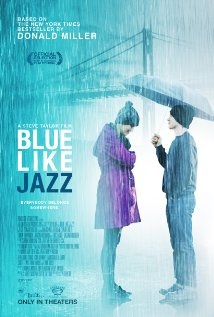
BlueLikeJazzSomewhere along the way, Blue Like Jazz became a movie. A movie I had no interest in seeing, but that my husband, a compulsive consumer of Christian movies (both sincerely and ironically), kept badgering me about. Okay, badgering is too strong a word, but it kept coming up. And on an evening when there was nothing either of us wanted more than to finally sit down and vegetate, I said I’d watch it.

Blue Like Jazz the movie was pretty good. The acting was beyond the moon when it comes to Christian films. The book had been plucked for the most compelling storytelling bits. And it was made by the incomparable songwriter-turned-director Steve Taylor who wrote, among other things, most of the Newsboys songs I love.

The reason I bring this up is not to critique the book or the movie, but to talk about narrative. Narrative in a memoir and narrative in a movie are different. Unless we’re talking about some art house film at Cannes, movies generally have a stronger narrative and more forward motion than a memoir. A memoir feels recollected (because it is) while a movie, even if it begins with a voiceover from the narrator, and even if we then hear that voice now and then later on in the film, is experienced as though it is just now happening because we viewers get to see the action as it happens on the screen.

The medium isn’t necessarily the message, but it sends a message. It creates expectations in people that, when left unmet or when trampled upon, create dissatisfaction.

Occasionally you read an article that should really be given a book-length treatment. Occasionally you read a book that really only has enough substance for an article. Occasionally you read a short story that you wish was a novel. Occasionally you read a novel that would have been far better as a short story. Occasionally a memoir is better as a movie.

Is the form in which you are writing truly the best form for what you want to get across? Are you writing a novel because that somehow feels more legitimate than a short story? Are you trying to stretch a theme out to be a book when it would actually have more impact as a series of blog posts? What expectations do readers have of your chosen genre? Are you meeting and exceeding those expectations?

What’s the Weather Like in Your Story?

WindowviewartsyI feel a bit nervous saying this, as though by daring to utter it I might somehow invite another winter thrashing, but it truly does seem that spring may at last have won the epic battle it has been waging with winter for the past two months. It was finally dry enough and warm enough to spend the day outside, to feel the sun’s heat on my skin and hair, to remember what summer is like. I don’t know how dependable the change of the seasons is in the Middle East, but as a Michigander I feel greatly comforted when I read that God is more faithful than the changing of the seasons.

I think something in us as humans wants to have to contend with something. We want to contend with something and win, or at least endure. And that’s why when outsiders or transplants to Michigan bemoan the weather or are surprised by 50-degree temperature swings in a day or can’t believe it’s still snowing in late April we smugly shrug our shoulders and say “That’s Michigan!”

You don’t like weather? Start packing your bags.

And yet, even I will admit that enough is enough. I knew winter had gone on far too long when I was driving home from Grand Rapids earlier this week and I noticed a farmer’s field covered in bright green and my very first thought was, “What the heck is that?” Two days later I drove back to Grand Rapids in a snow storm.

My own modest gardens have come alive as well. And I saw the first bug smash against my windshield this week, so it is spring for real. Isn’t it?

Maybe because I’ve grown up with schizophrenic weather I love reading stories where weather plays a part or sets a mood. I like to know if it’s sunny or cloudy, humid or parched, burning or icy. Should I be sweating as I read this scene or shivering? If it’s raining, what kind of rain is it? A steady cold spring rain? Drizzle? The fat, merciless raindrops of a storm? Is it falling straight down or sideways? Does it soak me or sting me? Am I managing to stay dry or is my face wet?

Do you make the best use of weather in your writing? Or is that a literary tool you’ve left in your toolbox?

Just Because It’s Good Doesn’t Mean It’s Bad

For much of middle America, spring is a mixed blessing as the same warm air that brings the flowers back also brings severe weather.

Living in an area with only mild tornado activity and no hurricanes or tropical storms (one of Michigan’s many excellent qualities), I love a good rainstorm and I especially love the sound of thunder. When the skies darken and the atmosphere rumbles and tumbles around me, I get a feeling in my gut that is hard to describe. A bizarre sort of mixture of deep awareness of the season and of the power inherent in nature, fond childhood memories of watching storms with my dad in the open garage, and that vague nagging instinct to seek cover. Just a pinch of terror to season it all. Gives me goosebumps just writing about it.

There have been times in my life when I have worried about the weather. A few tense cross-state car rides in whiteout conditions (once with a vanload of youth groupers for whom we were responsible). The first tornado warning I experienced with my infant son in the house. I recall our Little League coach telling us not to hang on the metal chain link fence while menacing clouds glowered and jagged lightning danced on the horizon lest lightning strike, travel through the metal, and kill half a dozen of us in one fell swoop. But during most storms I am safely tucked away inside with a plan worked out for staying that way in case of emergency (interior basement room, away from the windows, stocked first aid kit, etc.).

However, I remember vividly a summer storm when I was 13 or 14. Our softball and baseball games were all canceled and parents were whisking their ball-capped kids from the field and driving down country roads bordered by ditches, heading for basements at home. The reason I remember this day is two-fold.

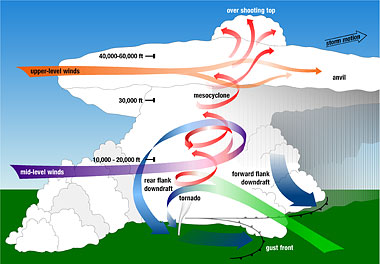
First of all, the air was different. Whereas a winter storm might cause a whiteout, what we were experiencing as my mom drove me back into town after dropping a friend off at his house was a greenish-brownout. The air was thick with dirt and organic matter that was being stirred up by a supercell not far from us. The thing about those videos of tornadoes on YouTube is that you can only see the actual tornado if it is a good distance from you. Once it’s close, you can’t always see it. That’s the scary part.

Second, and much worse than the eerie air swirling around the car, my sister was unaccounted for. Well, we knew she was at a friend’s house, but that was not good enough for my mother. She needed to see her eldest daughter, to have her in our own basement, not someone else’s. So we cut through the dense air to pick her up and bring her home. As a mother now, I can more easily imagine what my own mother must have felt during those soul-tense moments.

The rest of that day is a blur. The next morning trees were down all over town, but I don’t actually remember the worst of the storm. In fact, I don’t even remember actually seeing Alison get into the car or rushing inside our house or going to bed at night. But I remember that car ride between the softball fields out in Hampton Township and the house-lined streets of Essexville.

When you read really good fiction, the same thing happens. You are left with a feeling, sometimes hard to describe but real nonetheless, that you can’t get from mere recounting of events. There are a number of books that I adore that I could not easily summarize for someone else because what happened in the book is not what I remember. I remember how I felt when I read it. There are other books for which I could give a plot synopsis to a friend who asked what it was about. But if I’m recommending a book it is almost never because of plot and I tend to say little about what happens (which always sound so sterile when recounted to another) and more things like, “I can’t explain it to you. You just have to read it.”

A good storyteller can cause physiological reactions in a reader’s body through black marks on a white page. The process is astonishing and awe-inspiring to me. Letters are arbitrary. Phonics are meaningless. Words alone convey some form of reality, but not in whole. But when those letters and sounds and words are strung together in an artful way, more than meaning is produced.

I’ve read a lot in recent years about how authors should remove the parts of their writing that they think are the best because they are probably overwritten and self-indulgent. Not so fast! I’m here to declare that not every story is best told with spare language. Granted, some certainly are and the most talented writers (in my mind) can use very little language to convey deep emotion. Still I would not recommend arbitrarily deleting those passages just because it is currently popular to do so. Maybe have some beta readers test them. Find out what clicks and what doesn’t. Some probably are overwritten. But some of them really may be excellent writing that works and helps to tell your real story. What I mean by the “real” story is not the plot, not what happens, but what you want the reader to feel, what you want him to remember long after that last page.

It’s the difference between this…

Photo credit: Weather Wiz Kids (http://www.weatherwizkids.com/weather-tornado.htm)

And this…

Photo credit: I dunno. It's sort of fuzzy where this originated, but I found it here: http://www.fanpop.com/clubs/national-geographic/images/6968510/title/tornado-wallpaper)
Photo credit: I dunno. It’s sort of fuzzy where this originated, but I found it here: http://www.fanpop.com/clubs/national-geographic/images/6968510/title/tornado-wallpaper

Strive to write in such a way that your deeply held emotions and experiences are made alive and immediate for your readers. Pick out the details that say more than you could say in a paragraph of words and make those details hardworking representatives of the whole. This will keep your good descriptive writing in your story without overdoing it.

For example, in my story of the car ride to get my sister and get home before the tornado struck, I could spend paragraphs describing the weather, how tornadoes form and the destruction they can cause, my own thoughts and the thoughts of my mother, spelling out everything for the reader so there would be no mistaking what happened. But that’s not what made the ride memorable. I don’t remember my own thoughts and I don’t have access to my mother’s thoughts. I was not thinking about the physics of tornado formation at the time. I don’t know if my sister was worried at her friend’s house or whether she was relieved at the sight of her mother pulling up in the driveway to get her.

What I remember is the way the air looked and that feeling you get in your gut when you don’t feel safe. That’s it. So if I were to tell that story, that’s what I would focus on. And if I did it well, I would hope that I could get a reader, even one who had never been in a similar situation, to know what it felt like. And I could probably do it in just a few sentences if I worked hard at it. It might start as a couple overwrought paragraphs, but being a copywriter by trade, I think I could get it down to three really hardworking sentences. I certainly wouldn’t discard it altogether.

You’ve read scenes like that, or even entire books. They make you forget you’re on your couch or tucked under your covers. They pull you in completely. That’s great writing. And that’s what I hope we’ll both create–and keep.

Dogs, Quilts, Graphic Design, and the Beauty of a Barter Economy

Each March my sister and her family go to Florida. Each March we watch her now geriatric dog, Max, while they are away.

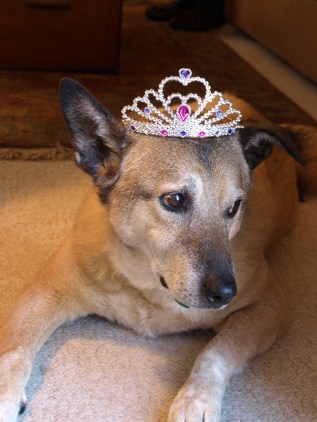
Princess Max

Each July, my family goes to camp in Northern Michigan. Each July my sister watches our dog, Sasha, dig a giant hole in her backyard and sit in it.

Sasha Digs

You scratch my back, I’ll scratch yours.

Exchanging services is a very old way to get something you need without having to fork over money. All it takes is your time and sometimes your talent.

Earlier this winter a colleague in the art department needed someone to turn a bunch of biking and running t-shirts into a quilt. I happen to sew a lot and I’ve made a t-shirt quilt for someone else before, so I volunteered. But any time I’ve sewn for someone else, there is the awkward question of “how much is this going to cost?”

Rather than send my coworker an invoice for something I knew would be fairly simple and for which I would probably only spend $5-10 on materials (since she was giving me a bag full of all the fabric I would need) I asked if perhaps she would use one of her talents for me in exchange.

So Heather will at some point be designing a book cover for me. My initial thought was that it would be the cover for my novel, which I intend to self publish later this year. But I’m also considering whether I might rather have her do the cover for the collection of short stories I will have in 2014. But we’ll work it out.

What talent do you have to offer? What needs do you have to be filled? Find a few people you can help out who can help you out in return. Develop a pool of talented people who can all mutually benefit from each other’s skills and passions.

Are you a good editor? See if you can offer your services free to an influential website in exchange for free advertising space on their page.

Do you know an editor who doesn’t have time to clean her house? Offer your services in exchange for proofing the work you want to publish.

Do you have a friend with connections? How can you help that friend in exchange for some introductions?

Need a better website design? Can you offer your techie friend free fresh baked goods for a year?

Want some professional looking headshots? That friend of yours with the amazing camera and Photoshop skills probably needs something too. Could you supply that need?

Writing and publishing take a lot of time and effort. But amazingly, in this day and age, they may not take as much money as you think.

FIRST WARNING: In this barter economy, you must have something to give. I have known a person or two who only calls or emails me when he needs something and has never offered anything in return. Don’t be that guy. Even if you’re just asking for advice about an aspect of publishing or website design or whatever, you should at least offer something in return, or just show up with a gift that says you appreciate the time your friend has taken to help you.

SECOND WARNING: Don’t let this exchange of services make you start thinking of the people in your life purely in terms of what they can do for you. People can smell this kind of thought process a mile away and you’ll find yourself losing friends instead of gaining help.

Share and share alike and we all benefit.