Kill Your Smart Phone

Tomorrow afternoon I will be leading a workshop at the Breathe Christian Writers Conference on developing a writing rhythm. I’ll talk about the importance of carving out consistent time to write and a space (or spaces) in which to do it. But the most crucial part of the discussion will be on what I’m calling creative sustenance, what others may call “feeding your muse.” And I realized in the course of preparing for this discussion that I have developed a holistic hatred of cell phones in general and smart phones in particular.

I’ve never enjoyed talking on the phone to anyone beyond my husband when we are apart (which really doesn’t happen nowadays, but it certainly did back when I was still in high school and he was off at college already) and I do enjoy an occasional call from a far-flung friend.

Honestly, though, it’s not phone calls that irritate me so much. It’s constant texting, email checking, and web-surfing rather than a.) paying attention to the real person who is talking to you right now, showing just how anti-social social media really makes us, or b.) paying attention to the world around so that you don’t, say, get hit by my Explorer or, heaven forbid, notice the way the trees are swaying or that lonely old man sitting by himself in the corner. Also, there’s that incredible phenomenon of people watching movies on phones or tablets, in public, without headphones. When did that become acceptable?

But for the writer the danger is really point B, and not necessarily because of the possibility of getting run over. It’s because to write about real life you need to pay attention to real life. If it hasn’t already happened, I’m sure someone will make a literary splash at some point for writing a novel entirely in texts, but for most real stories populated with real characters living in a real setting (all of which need to be conveyed in precise words on a page/screen) you have to PAY ATTENTION to the stuff that is real.

If you’re an artist of any kind and you find your well of creativity is running dry, it may be because you’ve been looking at little beyond a screen for too long. Get out in real life and engage. Talk to that old man in the corner. Something he says or the expression that crosses his face will likely inspire you to write a novel or a screenplay or a short story. Look at the tops of those trees swaying in the breeze and imagine what happens on a day where wind blows and leaves wrench themselves from branches and go skittering down the road.

Readers need you to notice for them (because they’re all staring at their little electronic idols too). And you can’t point out beauty and sadness and truth to them if you don’t see it yourself.

F. Scott Fitzgerald on Originality and Style

Fitzgerald“Nobody ever became a writer just by wanting to be one. If you have anything to say, anything you feel nobody has ever said before, you have got to feel it so desperately that you will find some way to say it that nobody has ever found before, so that the thing you have to say and the way of saying it blend as one matter—as indissolubly as if they were conceived together.”

~F. Scott Fitzgerald

Overcoming the Fear of Inadequacy

This is a picture of my son.

CalvinSelfPortraitMarch2013Age4

It is a self portrait made back in March when he was still four years old, sent home in his personal file when he left his daycare/preschool and started kindergarten. Being four, this is as skilled as his self-portrait could be, even though I know he really sees himself more like this:

Do you ever feel like your talent may not live up to your own expectations?

Does that fear keep you from trying something great?

In almost any creative endeavor, we have an idea of what we want the end result of our efforts to be. The knowledge that our labors–our writing or painting or sculpting or songwriting or drawing in crayon–may never quite live up to the perfect standards we have in our heads can keep us from trying. One can feel paralyzed by potential.

But one must still write. One must still create.

My son may not be a real ninja turtle, but he is taking karate lessons.

OLYMPUS DIGITAL CAMERA

If you don’t try, you can’t fail. But if you don’t try, you can’t succeed either.

You’ve got to start somewhere.

Writers: Some Advice on When You Should Give Up

I was reading an article Monday about a couple that both wrote novels and decided to self-publish. Good for them, I thought. It seemed from the beginning of the article that they were just looking for an outlet for their creativity. But then I came across this quote about why they decided to self-publish instead of look for a traditional publishing contract:

“It was disappointing,” she said. “How long do you decide to torture yourself with getting rejected by every publisher in the business before you decide to say you know what, my story’s good enough that it doesn’t really need the approval of a bunch of business people?”

But how many agents and publishers had they queried? Ten each. Ten.

Ten is “every publisher in the business?” No. No it is not. Despite the Big Five, there are still hundreds of publishers and there are thousands of agents.

The couple says that the reason they didn’t have the patience to wait out more rejection in hopes of finding someone who would champion their book is because of their age. Are both in their 80s? Nope! Both are in their 40s.

That’s fine. I may disagree that their age precludes patience (and I’m starting the home stretch toward 40 myself) but of course anyone who wants to can go it alone, and it’s a great choice for a lot of people. I’m self-pubbing short stories every month, so who am I to criticize? And their genres (sci-fi and fantasy) tend to do better in ebooks than many others. But here’s the hard reality: between the two of them, they’ve sold about fifty copies.

This is what traditional publishers (those “bunch of business people”) can generally guarantee: you will sell more than a few dozen copies. You may not be the next bestseller, but you will sell more because your book will be more visible. It will be in physical bookstores, which, yes, people still shop in. It will be sent out for reviews (these authors had to pay Kirkus to review their books). It will get professional editing and proofreading (I haven’t read either book, but a “look inside” one of them on Amazon reveals fourteen en-dashes that should be em-dashes [or commas or sentence breaks] and a distracting slew of ellipses on just the first couple pages).

Those “business people” aren’t sitting in a huge conference room somewhere, gleefully rubbing their hands together and sending out rejections because they don’t “approve” of a story. They love books. They love helping authors improve their books. They love seeing books get into the hands of eager readers. They love their authors (despite what some online rants from bitter authors would have us think) because their authors are the ones who make the whole business possible. Without stories, there’s no business.

I’m glad that these two are putting their books out there. I hope they sell a ton of them and it sounds like both are working on their next novels. They are doing it as a creative outlet. Maybe they don’t care about sales or paychecks from it since it is not their primary employment. And that’s just fine.

But I don’t want anyone to read their rationale, that ten “business people” didn’t respond positively, and think that if you didn’t get a contract after ten queries that there’s no point in querying more. Or that the people who work in the publishing business are heartless or just out to make a buck.

Everyone–everyone–I know in the business (hundreds and hundreds of people) are in the business because they love to read, love to write, and think a good book is its own reward. They simply love good storytelling and they want every book to reach as many readers as possible because they want an author to be read.

Maybe at the tip-top of the Big Five there are some full-on “business people” who are only in it for a fat paycheck. There are the Rupert Murdochs of the world, naturally. But for every one of them, there are thousands of agents, editors, marketers, publicists, and production people who are in it for the love of a good story. They are not a gauntlet of stick-wielding sadists who are looking to pummel an author with rejection. They are an army of supporters who want an author to bring his or her very best to the world.

Thing is, you don’t generally get published by asking just ten people to look at your work. It does take time and tenacity. So many great stories go unread simply because their authors gave up too quickly when faced with the fact that they might not be the next big thing right out of the gate.

Full disclosure here: For my first novel, I have queried 117 agents. Agents I’ve researched. Agents who I know rep my sort of story. Agents who have said they are looking for new clients. Today, one of those agents (number 113) is presenting my proposal to her partners. Together they will come to consensus on whether or not to take me on as a client. If it happens, I’ll be very happy that that particular leg of the journey toward publication is complete. But I’ll also know that it’s not over because then my agent will have to convince a publisher to take on my novel.

If it doesn’t happen, I’ll be disappointed. But then I will start researching more agents who might be a good fit for me and my writing. Or perhaps I’ll self-publish (after getting a professional edit on my own dime) and move on to the next novel, which might strike a chord with an agent where the last one didn’t. Who knows.

The point is, I believe in the publishing industry and I still see value in it. Maybe it’s because I have an inside track on it (I work for a traditional publisher). I love a lot of aspects of self-publishing and it is the right route for certain people and certain projects. But it’s not right if you’re just doing it because you’re impatient. Rejection isn’t just part of the game, it’s an essential part. Because it should make you a better writer.

Had I self-pubbed after I got my first ten “no thanks” responses to my query I would have published a book that wasn’t ready, that was inferior to the book it is now in more than one way. If these two authors had queried agents who rep their genre and were looking for new clients, the rejections they received should have been the first clue that there was something in their writing that needed improvement.

From my 117 queries, I received 11 very helpful rejections and one specific request for revision and resubmission. That’s 10% who read at least a portion of the manuscript and had a lot of positive things to say about it, yet had reservations for a variety of reasons. One of those rejections was a hard one to take because it had a lot of criticism in it. But even that one, when I had let it settle in, contained helpful revision advice.

My manuscript is far stronger now than it was when I sent my first query to an agent in early April of 2012. Yep, that’s nearly a year and a half ago.

So what’s my advice on when you should give up on your dreams? Never. Even some of the greats were told at various times by various people that they lacked talent, their stories were uninteresting or unmarketable, and that they should pursue another line of work. Keep working, keep improving, keep trying.

And for goodness sake, have the humility the learn something from those “business people” in publishing.

Oh, and you don’t have to take my word on all this. Turns out agent Rachelle Gardner was thinking about some of the same things this week!

On Writing Well: Enjoying the Process as Much as the Product

For about the past year I’ve been in some nebulous writing space when it comes to my next novel. While I’ve been pounding out short stories each month, I’ve also been furiously scribbling notes in parks, in the car, at restaurants, and at my desk. I’ve been creating massive family trees and designing sets. I’ve been writing scenes and sketching outlines and placing them aside, not quite sure where to go next.

I’m calling this conglomeration of activities the “germination stage” of the new novel. And this past week the germination phase came to a close as I entered the “gathering stage.”

OLYMPUS DIGITAL CAMERA

A little bit at a time, I have gathered together what seem like the best of my ideas and put them into a structure I think will work for telling my story, which will span from 1859 to the present, encompassing several generations of a family’s history, but which I have determined I will tell through three separate POV characters. The scope of this novel has created unique structure issues for me (my first novel takes place over a few months and was written entirely from one perspective). The uncertainty about just how to tell the story has stymied my efforts to actually write the thing. So last week I sketched out 30 chapters and essentially outlined the entire novel, something I’ve not done successfully in the past.

In addition to the outline, I’ve gathered scads of images: railroad maps, house plans, photos indicating clothing styles and covering historical events, garden designs and tree profiles, quilt designs and furniture examples, photos indicating mood and available technology. I’ve taped all of these to two pieces of foam board (connected in the middle with packing tape so they fold up and can be made to stand up on the floor or a table). It’s sort of a primitive Pinterest board where I can see everything without accessing the internet (which, generally, one should avoid doing if one wants to get any writing done).

OLYMPUS DIGITAL CAMERA

The process of gathering is just as beneficial to me as the actual product. It makes me review everything I’ve been thinking of, makes me order events in my mind, makes me realize where events need to be foreshadowed in earlier chapters, shows me what I need to research. The product itself (the boards) will serve as a road map for my writing and as inspiration when words aren’t coming easy.

Sometimes we have an idea for a story that balloons so much that it’s hard to keep everything straight in our heads and we lose sight of the main thrust of the narrative we want to create. In times like these, going through your own unique process of gathering and ordering your ideas is so useful. Now that I have all of these words and images on my little idea boards, I feel mentally ready to start tackling this project. Everything is there, I just need to breathe life into it.

Have you been avoiding a big writing project because you just didn’t know where to start or how it would all hang together? Perhaps you should try making it more visual. Get it out of your head and into reality and maybe you’ll find the pieces fitting together in ways you hadn’t anticipated.

Now, if you’ll excuse me, since my gathering is done, I need to get on to the next–and most exciting–step: writing a world into being.

The Courage to Be Yourself–in Life and Writing

I had an important realization this week as I made a big, life-changing decision (i.e., which “first day of kindergarten” photos to post on Facebook. I know, I’m still reeling from all the pressure.)

In my mind I tell myself that the pictures of my life and the life of my family should be “normal” and “pleasant.” Something you could put in a frame. Something you could send to parents and grandparents. Something like these:

OLYMPUS DIGITAL CAMERA

OLYMPUS DIGITAL CAMERA

ZachErin2

OLYMPUS DIGITAL CAMERA

OLYMPUS DIGITAL CAMERA

So I ask my son to “smile for real” and hear a lot of “c’mons” come out of my mouth. But in reality, these are the kinds of pictures I generally end up getting the best responses to when I share them (and they’re the ones I really enjoy sharing):

OLYMPUS DIGITAL CAMERA

OLYMPUS DIGITAL CAMERA

MeetingOfTheMinds

OLYMPUS DIGITAL CAMERA

OLYMPUS DIGITAL CAMERA

Why? Because they are more interesting. They have personality. They’re truthful. We’re kind of strange and we like it that way. Not to say that we’re not a very pleasant family and even pleasing to the eye at times, but beneath that thin veneer of propriety, we’re really…well, like this:

OLYMPUS DIGITAL CAMERA

Here’s where this parallels writing. Sometimes there’s pressure (internal or external) to make characters or stories “pleasant.” You hear from a writing group member or an agent that your character isn’t “sympathetic” enough. Or that your story is a real downer. Or “Can’t you just write a happy ending for once?”

Though he’s supportive to a fault, my husband will sometimes come to the end of a story of mine, look at me with…well…let’s say concern, and breathe out a little “Sheesh!” I actually love this reaction, but there is still a teensy-tiny part of me that starts to question…

Will people be put off by this?

Will people think I have done or would like to do some mean or immoral thing that one of my characters has done?

Will people think I’m a bad person?

Will people start avoiding me?

Will people think I have psychological problems when they read this?

OLYMPUS DIGITAL CAMERA

Generally, I’m happy enough with the literary results of my efforts that I simply shrug, upload a new story to Amazon, and hope that people will have a good reaction to it. And in my mind, “Sheesh!” is a good reaction. Being a little creeped out is good. Feeling kind of sad is good. Feeling is good.

When stories are too pleasant, wrap up too neatly, or are just a touch too sweet, I get the groans. I’m bored or I’m unsurprised or I’m simply closing the book and never picking it up again. And you can be boring even if you have an interesting plot simply because your main characters have no faults.

Here’s a useful tool to examine your own writing. If you have to answer yes to more than two of these questions, your protagonists may be suffering from pleasantitis:

Are they always attractive (even if they don’t see it themselves)?

Do they have overly-interesting eye colors, especially involving descriptors such as “the sea on a stormy night” or “flecks of purest gold?”

Do they have gorgeous, Pantene-commercial-worthy hair even if they lived in a time when no one showered?

Do they have beautiful teeth and winning smiles even if they lived in a time when EVERYONE had bad teeth?

Do they always know what to do in a given situation?

Do they always get the girl/guy/promotion/bad guy/treasure/best cuts of meat at dinner?

See what I’m getting at here? Too much “pleasant” or “normal” or “perfect” or “happy” and the rest of us mortals can’t really identify with them. Flaws are essential. Flaws in your characters are like the conflict in your plot. If there’s no conflict, there’s no story and if there are no faults, there are no believable characters. Real flaws, not just that she has to wear glasses or he once broke someone’s heart.

How about she has a secret and almost insatiable desire to ruin her sister’s life? Or he suffers from near-crippling anxiety around his father because he fears he’ll never measure up? Or she compulsively corrects everyone’s grammar and so her friends actually loathe her? Or he neglects his own children because he’s so focused on his own advancement and amusement?

Then you take your flawed character and you find something in them, some trait or some believably terrible backstory, that will make them sympathetic without having to be perfect. (Aside: If you want an excellent example of this type of character, watch the hugely underrated movie Young Adult.)

Perfect people aren’t sympathetic. They’re kind of annoying. And anyway, they’re not really perfect either. They’re simply afraid to be real.

Be yourself. Let the real you come through your writing or art or whatever you do.

No matter how weird…

OLYMPUS DIGITAL CAMERA

…or silly…

OLYMPUS DIGITAL CAMERA

…or generally off-putting.

OLYMPUS DIGITAL CAMERA

What Bette Midler, Julie Andrews, Adele, Celine Dion, Bernadette Peters, and a Bunch of Other Divas Can Teach Novelists about Voice

A Facebook friend clued me into this great comic work that I want to in turn share with you. In it, Christina Bianco sings Total Eclipse of the Heart as more than a dozen different divas, most of which you will know if you’ve been listening (even accidentally) to the radio during the past few decades. Watch the video and then let’s continue with our discussion below.

You did watch it right? To the end? Don’t cheat!

Okay. It doesn’t take a very big leap to apply this fantastically fun video to writing fiction, does it? The same song sung in many different voices.

In your current WIP, are you purposefully cultivating a compelling voice? One that will be recognized? One that is unique? Or has voice slipped your mind as you focus on plot or making sure you don’t mix tenses?

Voice is one of the main elements of fiction that is nearly impossible to define or teach, but every agent and editor out there says they are looking for what? A strong voice. A unique voice.

Voice changes the reader’s experience of the book. With my first completed novel manuscript, the voice was originally fairly flat and matter-of-fact, which was purposeful as I wrote the first draft. But upon revising many times, I realized that the least interesting and least fully realized character in the entire story was my protagonist. Everyone else was alive. She was dead. Problem? POV and voice.

So I changed from 3rd person POV to 1st person POV, and as I made that change, the voice followed. A detached voice turned into the voice of someone who was easier to relate to, who had believable reactions to things, who questioned her own motives and choices, who was thoughtful and introspective, but who invited the reader into her world.

Same story, different voice.

Next time you read through your manuscript, pay attention to the voice. Are you coming across the way you really want to? Is the voice drawing the reader in or keeping him at arm’s length? Is the voice honest or tricky? Above all, whatever voice you develop, is it consistent?

Because while it’s fun to watch a six minute YouTube video with twenty different voices, no reader wants to be jerked around like that.

Finding Your Story’s Triple Point

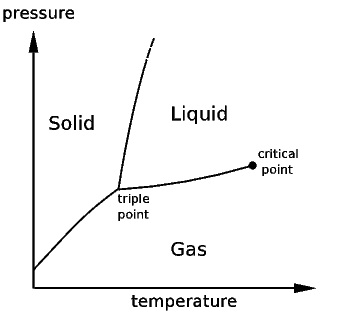
Remember in high school chemistry class when you first learned about triple point? No? Let me refresh your memory. The triple point of a substance is the temperature and pressure at which the three phases of matter (solid, liquid, and gas) coexist in a kind of equilibrium. It’s not any of the three and yet it’s all of the three at the same time. Mind blown. In our class we used to annoy the teacher by asking what the triple point of human flesh was.

Here’s a handy chart:

chart

The triple point of your story (and I’m just making this up here, folks–it’s not a real thing so don’t bother googling it) is when all the right elements of your story come together and you reach the point where you can really take off writing. It could be research, outlining, and a sudden burst of inspiration. It could be characters, plotting, and finally landing on the right point of view. It could be just the right combination of procrastination and pressure (looming deadlines!) It might be a hundred different factors finally converging and giving you the perfect kick in the pants you’ve been waiting for.

In the Bartels household the past couple weeks there’s been a lot of flirting with literary triple points and I think I’ve just reached mine.

Ah, the happiness and contentment one can feel with a good start on a big project. I’m two good chapters into a new novel, one that has been brimming with possibilities in my mind for some time but which has had several false starts and one fairly detailed and then discarded outline. I’ve been struggling not with characters, themes, or plot, which are all firmly implanted in my mind and loosely drawn out in a series of notes, but with form. It was the last piece of the puzzle I needed in order to really get started, to reach the triple point.

Any time you are trying to tell a story in the present that has parallels to and lessons to learn from the past, it can be hard to decide the best method for revealing the important parts of the backstory–especially if the backstory spans a long time period. I’m personally dealing mostly with 150 years of a family history. It feels like a lot to wade through to decide what is most important and determine the best method for slowly uncovering that information in the course of the narrative. But my husband (who is also a writer) is working on a new novel where the backstory covers centuries and crosses oceans. But he too is right there, hovering at that triple point.

I’ve had a few aha moments in the past few days, moments that rendered my earlier outlining fairly useless, but moments that may not have happened if I didn’t first try something that didn’t quite work for me. Luckily, I’ve been able to salvage most of the writing, removing chunks to save for later in the book and revising the remainder to lay the right hints and focus on the right thematic elements. I did kill some darlings in the process, but of course that is inevitable.

Now I feel some real inertia and the road ahead looks pretty clear. The trick will be to harness that and make the time needed to use it wisely.

FridayNightRide05

What are you working on right now? What problems are you facing? What happy moments of clarity have you experienced? Have you ever experienced the exhilaration of reaching your story’s triple point?

The Mad, Mad Adventure of Writing to a Title

Ideas for writing come from all over–overheard conversations, awful dinner parties, a moment in time that hits you just right and sparks something inside of you that can only be described as the literary gene. But sometimes, you have to make the ideas come. Like when you’re on a deadline, self-imposed or not.

For several of my short stories this year I’ve started with a title idea and/or cover image rather than actual plot or character ideas, and it’s been interesting to see where that leads my writing. Because of this, I’ve run into a rather interesting situation I thought I’d share with you creative types out there.

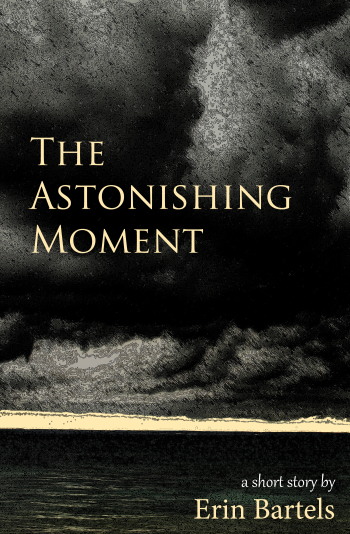
For August’s short story I started with a title which I drew from a quote from Virginia Woolf’s diary where she is describing a total solar eclipse that she and her friends saw. I loved the phrase “the astonishing moment” which she used to describe the moment the eclipse was total and the light in the world simply went out. So I pulled that phrase out and thought it would make a compelling title to write to. I popped it on a photo I took up at Lake Superior whilst hiking Pictured Rocks last summer and thought perhaps I’d do a story with hiking as a backdrop. Here’s the cover I came up with:

OLYMPUS DIGITAL CAMERA

But then Saturday night when I started to think about getting started writing, I decided to reread the section of Woolf’s diary that had inspired the title and pull out a quote with which to begin my story. Here’s what caught my fancy:

“We kept saying this is the shadow; and we thought now it is over—this is the shadow; when suddenly the light went out . . . . How can I express the darkness?”

~Virginia Woolf

Clearly that quote and my original cover concept do not match.

Rather than lose the pathos of that quote by omitting it and just writing the story I had (very) vaguely formed in the back of my mind, I decided to try again at the cover art. I pulled a photo I just took up at Mackinac Island, manipulated it a bit, and came up with this:

OLYMPUS DIGITAL CAMERA

Clearly this new image does fit the quotation. I’m pretty sure the story will not be about hiking. I’m pretty sure it will be “maritime” in flavor. And I’m pretty sure some bad things will happen to the characters.

And that’s all I’m sure of.

7 Favorite Movies about Writers and Writing (and Reading)

I love stories about writers, writing, and books. I love movies about the same. So here’s a list of some of my very favorite movies about writers, writing, and reading. Most are movies I watch over and over again. Some I’ve only just seen for the first time recently.

I’ve left off some with great concepts but poor execution (I’m betraying my fantasy-obsessed childhood self, but I have to put The Neverending Story in this category because it is SO very cheesy when you watch it again as an adult) and I’m sure I’ve left off some good ones because I haven’t seen them (so please add them in the comments if you are so moved so I can put them in my Netflix queue). Also, I very much doubt I’m covering any new ground here, but for what it’s worth, and in no particular order…

[WARNING: These trailers give away a lot of fun surprises in the movies (Why do they DO that?) so if you just want to experience these movies without the little spoilers, please refrain from clicking and just go find them on Amazon Prime or Netflix.]

Adaptation


I know that you either love Nicholas Cage or hate him, and that will color your decision to watch or not watch this movie, but who doesn’t love Meryl Streep and Chris Cooper? No one. What I love about this movie: I love when writers enter their own story; I love the commentary on genre, on being true to one’s own style and method of writing, and on the tired old cliches that we love nonetheless; I love Nicholas Cage. There. I said it.

Stranger Than Fiction


Proof positive that Will Ferrell can act (ergo, the question is raised, Why doesn’t he do this more often?) and that he can be believably romantic. Also Emma Thompson and Dustin Hoffman are fantastic. What I love about this movie: Again, I love the mixing of worlds between writers and their characters; I love slightly illogical and slightly surreal stories that couldn’t really happen but the creators offer absolutely no explanation as to why it’s happening because it doesn’t really matter in the long run; I love how morbid and off-kilter Emma Thompson’s character is.

Midnight in Paris


Dare I admit that this is the first Woody Allen film I’ve actually seen? I’ve heard so much poo-pooing of his movies over the years that I haven’t sought them out. But this is a wonderful, magical film about writers, artists, and other creative types; about the seductive power of nostalgia; and about taking the right chances. What I love about this movie: Owen Wilson; the huge supporting cast of fantastic little surprises; the costuming and lighting; the unique storyline (which doesn’t come through in the trailer, but I’m not going to spoil it for you).

The Hours


This film enchanted me even before I knew I loved Virginia Woolf’s writing. The same story told through three different women in three different cities in three different eras–one writing the story, one reading the story, one living the story. What I love about this movie: Fabulous performances (how could they not be with that cast?); the examination of the power of story; the feeling that the words we write have life and meaning far along down the road.

Julie & Julia


Another film starring Meryl Streep? Yes. It seems the woman loves literary films as much as I do. But isn’t this movie about cooking? Yes, but also writing–a cookbook, letters, a blog. Writing your passion onto the page in the form of recipes. Writing about your life to your closest friend. Writing about your crazy experiment to perfect strangers. But always writing (and eating). This movie will make you hungry and inspire you to get Julia’s cookbook (the chapter on eggs alone can change your culinary life–seriously) and buy some really good knives.

84 Charing Cross Road


Oh, how far we’ve come in the world of movie trailers. This little bit gives you almost nothing of the tender quality of this film. Anthony Hopkins is a London bookseller and Anne Bancroft is a New York City bibliophile who can’t get the rare books she wants in NYC. These two characters begin a correspondence after WWII and get to know each other over a couple decades through letters and books. I loved seeing the economic and social differences between post-war Britain (with its deprivation and rations and ruins) and America (with its prosperity and expansion and optimism). A great film about the power of books.

Under the Tuscan Sun


She’s a writer whose marriage is over. At the behest of her concerned friends she takes a trip that will change her life and her writing. Based on a memoir (which I haven’t read), this movie is wonderfully brought to life through Diane Lane’s acting and narrating. The thought of spontaneously starting over in life (especially in a foreign country) is the impetus for many a literary character’s actions and holds such a romantic fascination for us, doesn’t it? Plus, it’s a movie about a house, an old house, and bringing that house back to life. What’s not to love?

Oh, I know I’ve missed some great ones, along with ones I haven’t had a chance to watch yet. And I haven’t included TV shows, but if I did I would put Mad Men in there.

What are your go-to literary movies?