Overcoming the Fear of Inadequacy

This is a picture of my son.

CalvinSelfPortraitMarch2013Age4

It is a self portrait made back in March when he was still four years old, sent home in his personal file when he left his daycare/preschool and started kindergarten. Being four, this is as skilled as his self-portrait could be, even though I know he really sees himself more like this:

Do you ever feel like your talent may not live up to your own expectations?

Does that fear keep you from trying something great?

In almost any creative endeavor, we have an idea of what we want the end result of our efforts to be. The knowledge that our labors–our writing or painting or sculpting or songwriting or drawing in crayon–may never quite live up to the perfect standards we have in our heads can keep us from trying. One can feel paralyzed by potential.

But one must still write. One must still create.

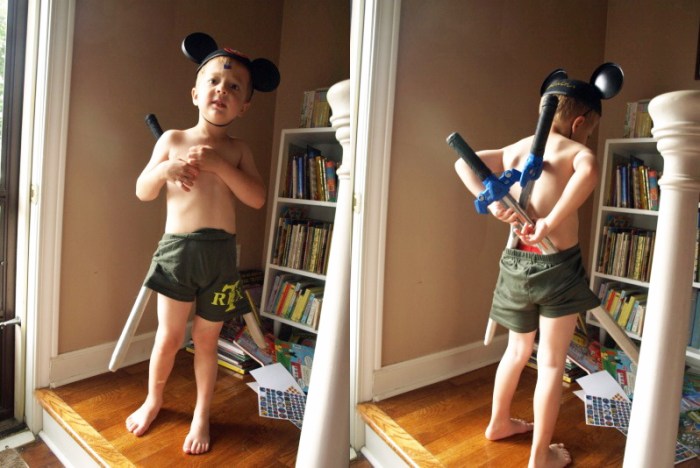
My son may not be a real ninja turtle, but he is taking karate lessons.

OLYMPUS DIGITAL CAMERA

If you don’t try, you can’t fail. But if you don’t try, you can’t succeed either.

You’ve got to start somewhere.

The Mad, Mad Adventure of Writing to a Title

Ideas for writing come from all over–overheard conversations, awful dinner parties, a moment in time that hits you just right and sparks something inside of you that can only be described as the literary gene. But sometimes, you have to make the ideas come. Like when you’re on a deadline, self-imposed or not.

For several of my short stories this year I’ve started with a title idea and/or cover image rather than actual plot or character ideas, and it’s been interesting to see where that leads my writing. Because of this, I’ve run into a rather interesting situation I thought I’d share with you creative types out there.

For August’s short story I started with a title which I drew from a quote from Virginia Woolf’s diary where she is describing a total solar eclipse that she and her friends saw. I loved the phrase “the astonishing moment” which she used to describe the moment the eclipse was total and the light in the world simply went out. So I pulled that phrase out and thought it would make a compelling title to write to. I popped it on a photo I took up at Lake Superior whilst hiking Pictured Rocks last summer and thought perhaps I’d do a story with hiking as a backdrop. Here’s the cover I came up with:

OLYMPUS DIGITAL CAMERA

But then Saturday night when I started to think about getting started writing, I decided to reread the section of Woolf’s diary that had inspired the title and pull out a quote with which to begin my story. Here’s what caught my fancy:

“We kept saying this is the shadow; and we thought now it is over—this is the shadow; when suddenly the light went out . . . . How can I express the darkness?”

~Virginia Woolf

Clearly that quote and my original cover concept do not match.

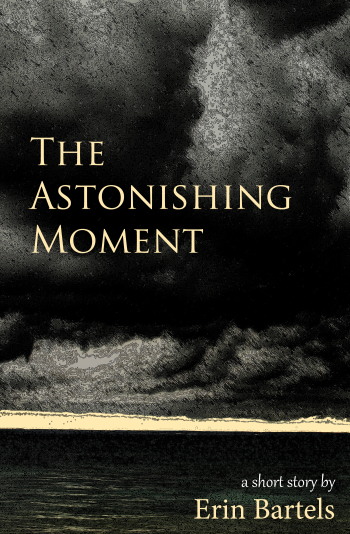
Rather than lose the pathos of that quote by omitting it and just writing the story I had (very) vaguely formed in the back of my mind, I decided to try again at the cover art. I pulled a photo I just took up at Mackinac Island, manipulated it a bit, and came up with this:

OLYMPUS DIGITAL CAMERA

Clearly this new image does fit the quotation. I’m pretty sure the story will not be about hiking. I’m pretty sure it will be “maritime” in flavor. And I’m pretty sure some bad things will happen to the characters.

And that’s all I’m sure of.

Ideas Are Like Deer…

This morning spent a very peaceful morning alone walking the woods of Fenner Nature Center with my camera. Pre-motherhood, I did such things quite often. Once you have a child tagging along it is a different experience. Still a good one, but different. As the sun was rising into the hazy morning sky, I walked at my chosen pace with silent steps and no speech, listening to myriad birds singing springtime songs and watching the woods for things to photograph.

OLYMPUS DIGITAL CAMERA

Not too far into my walk I saw the flashing white tail of a deer as it bounded out of my path. So I stopped, then moved forward slowly until I was at a point where I could see her through a little clearing in the trees. She looked at me, assessing the threat level. I was still, waiting for her to decide I could be trusted at that distance.

We looked at each other for several minutes. Then she started nibbling at the burgeoning plant life around her and flicking her white tail. This seemed to signal her friends. She was joined first by one other doe, who regarded me with just a bit of suspicion before she too began foraging. And soon thereafter two more friends joined them before they all moved on into the woods.

OLYMPUS DIGITAL CAMERA

It occurs to me that this is how our ideas come sometimes. We are out enjoying life when a flash of white catches our eye and we stop a moment, then approach the idea slowly so as not to scare it off. We watch it closely, take in its form, maybe snap some photos or write some notes in order to capture it before it moves on. And if we are patient enough, more ideas come tumbling into the clearing in our mind.

Ideas can be timid, fleeting. Push too much and they can be pushed right out of our minds. But patience, stillness, a willingness to observe and record, can capture them forever.

The Past, the Future, and This Unending Winter

March 16, 2013, Fenner Nature CenterMichigan, like quite a large swath of the country, is in the midst of a depressing cold snap the likes of which puts me in mind of Laura Ingalls Wilder’s The Long Winter. We haven’t started twisting straw into kindling or burning our furniture yet, but one can’t help but feel that everyone is teetering on the edge of that kind of desperation lately.

Last year the temperatures in mid-March were a full 50 degrees higher then they have been during the past week. This was not necessarily good, as it caused massive fruit crop failures when temps dipped below freezing again (for example, Michigan normally produces about 96 million tons of apples a year while in 2012 we only managed 2 million tons). But still, I don’t think I’m speaking out of turn when I say that it would be nice to have temps in the 40s rather than the 20s at this point in the year.

Being stuck in this winter is like being stuck in a story. You get to a certain point where you feel frozen. You can’t push forward. You can’t go back. You’re just…there. Waiting for the thaw in your brain so you can get on with it already.

That’s how I feel right now. Frozen in time. Tired of what has come before. Waiting to see where things will go in the future. Ready to move on. But stuck frozen in place.

How do you hasten spring? How do you thaw the fertile soil of your creative mind? It seems clear to me that we cannot rush the changing of the seasons, as much as we might want to. There are plenty of tips and tricks to get beyond blocks, but sometimes maybe we just have to wait it out, trusting that the thaw will come, the waters will flow, the flowers will bloom, and the story will move on to the next chapter.

Celebrating Progress, Planning Ahead, and Challenging Yourself

Over this past weekend I finished writing January’s short story. Now the man/fellow writer of the house will read it, give his feedback, help me to catch any errors, and show me how to format it for Amazon. I’m pretty excited that the first story of the year will be “on schedule” such as it is. Makes things so much easier to maintain when you start off with a bang.

I very much enjoyed writing this story, which I’ve retitled to Beneath the Winter Weeds. I can’t say that each story will be set in time during the month in which it is written (and certainly for many stories, it will not matter so much when they happen) but it was a fun challenge to write a story that felt immediate.

OLYMPUS DIGITAL CAMERANow then, how am I deciding what to write about when? If I plan for a story to take place during a particular time of year, that is when it will come to life. I know one is in early spring and a couple are set in summer. Beyond that, I know some stories will have female protagonists and some male, and as much as possible I would like to switch back and forth between those so that people don’t feel I write for women exclusively. So both of these elements have helped me arrange my thoughts on which story to put my focus on next.

I have also already mocked up covers for nine of the twelve. For most of these, I have an image and a title and little else in terms of notes on what these stories will be about. I think it will be a fun challenge to approach story creation this way and to see how the title and cover may change as the story develops. For those not yet mocked up, I have particular images I want to capture (all covers will have my own photos on them) but I have to wait until the snow is gone and then go to a couple particular places to take the photos I envision.

Thanks for coming with me on this year-long writing experiment! I hope you’re thinking some creative thoughts of your own. Whether you write novels, short stories, poems, or just in your journal, why not give yourself some creative challenges to have fun with? Try coming up with a title and perhaps an image, then write to that. See what comes out. If you have trouble getting started, try a book like The Pocket Muse or its sequel for some writing prompts.

Happy writing!

Where Do Ideas Come From?

Anyone who writes or wishes to write inevitably asks or is asked this question at some point: Where do your ideas come from? For the person who assumes he or she is uncreative (you know who you are) the notion that anyone “thinks up” plots and settings and characters from thin air is nearly inconceivable. And even as my brain teems with characters and plotlines and settings and title ideas, I still occasionally run across an ultracreative movie (think Inception), TV show (hello, Breaking Bad), or book (The Thirteenth Tale comes to mind) and think “Who thinks of these things?” (This question also arises when my husband, a compulsive band name generator, says, without preamble, something like “Problem Attic.”)

So where do ideas come from? Naturally, I can’t speak to the experiences of others, but in my own creative life, my ideas usually come when I am doing some sort of physical activity that doesn’t involve deep thinking. Of the half a dozen or so writing projects I currently have percolating in my mind and on the page (some still just a note scribbled here or there) nearly all of them came at a moment of mental clarity brought on by physical exertion of some kind. Just one came from something someone said.

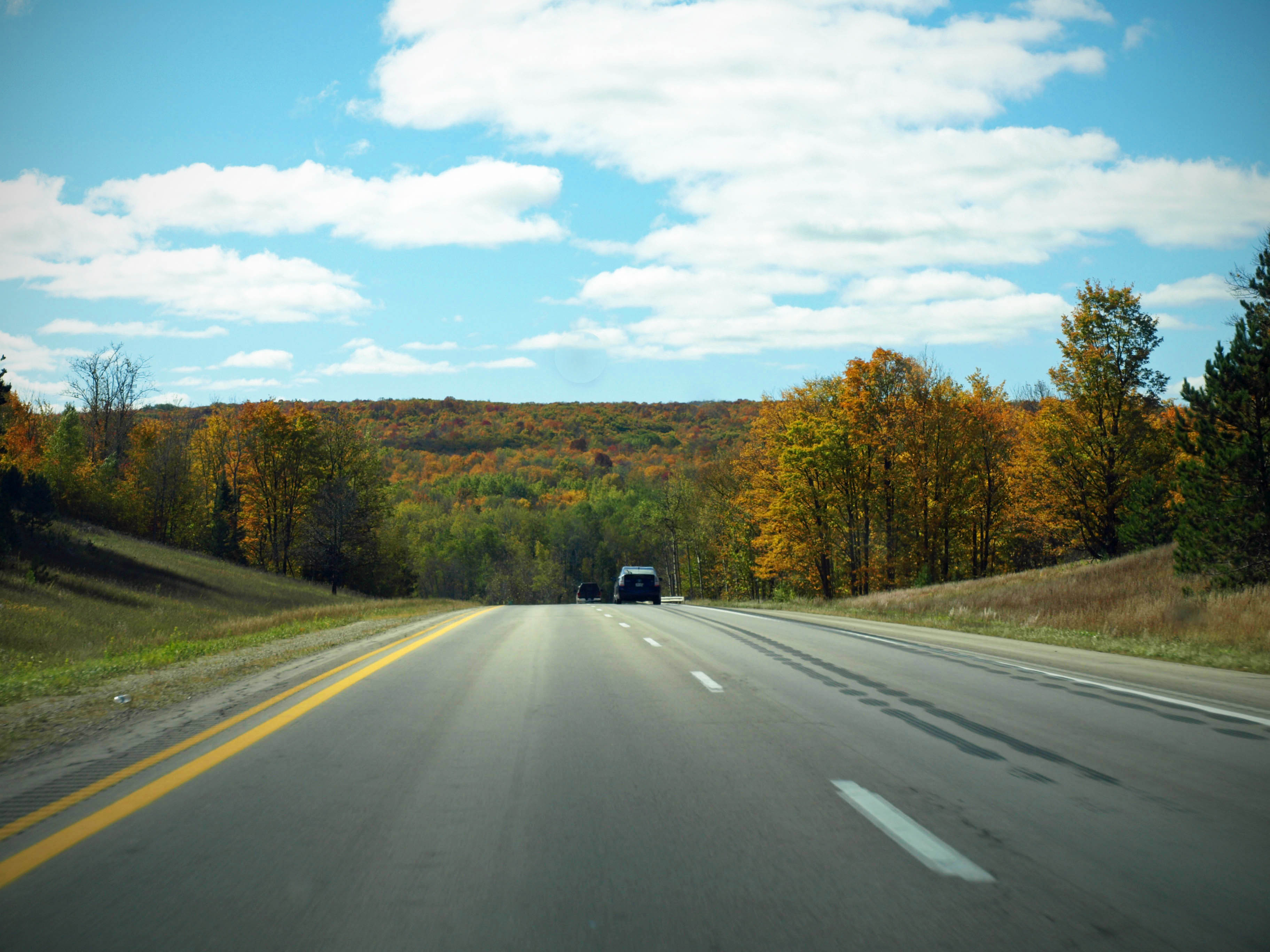
What was I doing when the rest of them come to me? Usually driving. Driving is just the sort of passive physical activity that, in me, breeds creativity. And it can’t be driving just anywhere. No, no. My ideas come on the expressway, usually on I-96 between my home in Lansing and my office in Grand Rapids (and before you ask, no, I don’t make that commute every day–just once a week). The reason they occur on that stretch of road most often? Simple: that’s where I’m most often driving! There’s nothing magical about that particular 50 or 60 miles of concrete. I’ve had plenty of ideas pop up on I-127, M-115, M-31, and various other highways. But when you have a commute that you make regularly, you don’t have to think about it. You keep your eyes open for brake lights ahead and deer to your right and left, and you’re golden! No more thought is required, which gives your mind space to breathe and flex.

I’ve had a novel idea while hiking (that largely mindless process of plodding, plodding, plodding), written much of a poem while stirring something on the stove, and I recently plotted out an entire short story while running. Hiking and running are certainly more physical than driving or stirring, but they require just as little conscious thought to accomplish, and, in fact, are often things that you can get through easier if your mind is distracted from your aching joints and the sweat trickling down your back. I had the idea for this blog post while cutting out pictures of little coffee cups from a java jacket to add to a collage in my office. Not thinking, just letting my kindergarten scissors training kick in (“Move the paper, not the scissors!”).

So next time you’re feeling uncreative, maybe what you need is some good old fashioned mindless physical labor to get the juices flowing.

Just watch out for deer.