Writers: Some Advice on When You Should Give Up

I was reading an article Monday about a couple that both wrote novels and decided to self-publish. Good for them, I thought. It seemed from the beginning of the article that they were just looking for an outlet for their creativity. But then I came across this quote about why they decided to self-publish instead of look for a traditional publishing contract:

“It was disappointing,” she said. “How long do you decide to torture yourself with getting rejected by every publisher in the business before you decide to say you know what, my story’s good enough that it doesn’t really need the approval of a bunch of business people?”

But how many agents and publishers had they queried? Ten each. Ten.

Ten is “every publisher in the business?” No. No it is not. Despite the Big Five, there are still hundreds of publishers and there are thousands of agents.

The couple says that the reason they didn’t have the patience to wait out more rejection in hopes of finding someone who would champion their book is because of their age. Are both in their 80s? Nope! Both are in their 40s.

That’s fine. I may disagree that their age precludes patience (and I’m starting the home stretch toward 40 myself) but of course anyone who wants to can go it alone, and it’s a great choice for a lot of people. I’m self-pubbing short stories every month, so who am I to criticize? And their genres (sci-fi and fantasy) tend to do better in ebooks than many others. But here’s the hard reality: between the two of them, they’ve sold about fifty copies.

This is what traditional publishers (those “bunch of business people”) can generally guarantee: you will sell more than a few dozen copies. You may not be the next bestseller, but you will sell more because your book will be more visible. It will be in physical bookstores, which, yes, people still shop in. It will be sent out for reviews (these authors had to pay Kirkus to review their books). It will get professional editing and proofreading (I haven’t read either book, but a “look inside” one of them on Amazon reveals fourteen en-dashes that should be em-dashes [or commas or sentence breaks] and a distracting slew of ellipses on just the first couple pages).

Those “business people” aren’t sitting in a huge conference room somewhere, gleefully rubbing their hands together and sending out rejections because they don’t “approve” of a story. They love books. They love helping authors improve their books. They love seeing books get into the hands of eager readers. They love their authors (despite what some online rants from bitter authors would have us think) because their authors are the ones who make the whole business possible. Without stories, there’s no business.

I’m glad that these two are putting their books out there. I hope they sell a ton of them and it sounds like both are working on their next novels. They are doing it as a creative outlet. Maybe they don’t care about sales or paychecks from it since it is not their primary employment. And that’s just fine.

But I don’t want anyone to read their rationale, that ten “business people” didn’t respond positively, and think that if you didn’t get a contract after ten queries that there’s no point in querying more. Or that the people who work in the publishing business are heartless or just out to make a buck.

Everyone–everyone–I know in the business (hundreds and hundreds of people) are in the business because they love to read, love to write, and think a good book is its own reward. They simply love good storytelling and they want every book to reach as many readers as possible because they want an author to be read.

Maybe at the tip-top of the Big Five there are some full-on “business people” who are only in it for a fat paycheck. There are the Rupert Murdochs of the world, naturally. But for every one of them, there are thousands of agents, editors, marketers, publicists, and production people who are in it for the love of a good story. They are not a gauntlet of stick-wielding sadists who are looking to pummel an author with rejection. They are an army of supporters who want an author to bring his or her very best to the world.

Thing is, you don’t generally get published by asking just ten people to look at your work. It does take time and tenacity. So many great stories go unread simply because their authors gave up too quickly when faced with the fact that they might not be the next big thing right out of the gate.

Full disclosure here: For my first novel, I have queried 117 agents. Agents I’ve researched. Agents who I know rep my sort of story. Agents who have said they are looking for new clients. Today, one of those agents (number 113) is presenting my proposal to her partners. Together they will come to consensus on whether or not to take me on as a client. If it happens, I’ll be very happy that that particular leg of the journey toward publication is complete. But I’ll also know that it’s not over because then my agent will have to convince a publisher to take on my novel.

If it doesn’t happen, I’ll be disappointed. But then I will start researching more agents who might be a good fit for me and my writing. Or perhaps I’ll self-publish (after getting a professional edit on my own dime) and move on to the next novel, which might strike a chord with an agent where the last one didn’t. Who knows.

The point is, I believe in the publishing industry and I still see value in it. Maybe it’s because I have an inside track on it (I work for a traditional publisher). I love a lot of aspects of self-publishing and it is the right route for certain people and certain projects. But it’s not right if you’re just doing it because you’re impatient. Rejection isn’t just part of the game, it’s an essential part. Because it should make you a better writer.

Had I self-pubbed after I got my first ten “no thanks” responses to my query I would have published a book that wasn’t ready, that was inferior to the book it is now in more than one way. If these two authors had queried agents who rep their genre and were looking for new clients, the rejections they received should have been the first clue that there was something in their writing that needed improvement.

From my 117 queries, I received 11 very helpful rejections and one specific request for revision and resubmission. That’s 10% who read at least a portion of the manuscript and had a lot of positive things to say about it, yet had reservations for a variety of reasons. One of those rejections was a hard one to take because it had a lot of criticism in it. But even that one, when I had let it settle in, contained helpful revision advice.

My manuscript is far stronger now than it was when I sent my first query to an agent in early April of 2012. Yep, that’s nearly a year and a half ago.

So what’s my advice on when you should give up on your dreams? Never. Even some of the greats were told at various times by various people that they lacked talent, their stories were uninteresting or unmarketable, and that they should pursue another line of work. Keep working, keep improving, keep trying.

And for goodness sake, have the humility the learn something from those “business people” in publishing.

Oh, and you don’t have to take my word on all this. Turns out agent Rachelle Gardner was thinking about some of the same things this week!

On Writing Well: Enjoying the Process as Much as the Product

For about the past year I’ve been in some nebulous writing space when it comes to my next novel. While I’ve been pounding out short stories each month, I’ve also been furiously scribbling notes in parks, in the car, at restaurants, and at my desk. I’ve been creating massive family trees and designing sets. I’ve been writing scenes and sketching outlines and placing them aside, not quite sure where to go next.

I’m calling this conglomeration of activities the “germination stage” of the new novel. And this past week the germination phase came to a close as I entered the “gathering stage.”

OLYMPUS DIGITAL CAMERA

A little bit at a time, I have gathered together what seem like the best of my ideas and put them into a structure I think will work for telling my story, which will span from 1859 to the present, encompassing several generations of a family’s history, but which I have determined I will tell through three separate POV characters. The scope of this novel has created unique structure issues for me (my first novel takes place over a few months and was written entirely from one perspective). The uncertainty about just how to tell the story has stymied my efforts to actually write the thing. So last week I sketched out 30 chapters and essentially outlined the entire novel, something I’ve not done successfully in the past.

In addition to the outline, I’ve gathered scads of images: railroad maps, house plans, photos indicating clothing styles and covering historical events, garden designs and tree profiles, quilt designs and furniture examples, photos indicating mood and available technology. I’ve taped all of these to two pieces of foam board (connected in the middle with packing tape so they fold up and can be made to stand up on the floor or a table). It’s sort of a primitive Pinterest board where I can see everything without accessing the internet (which, generally, one should avoid doing if one wants to get any writing done).

OLYMPUS DIGITAL CAMERA

The process of gathering is just as beneficial to me as the actual product. It makes me review everything I’ve been thinking of, makes me order events in my mind, makes me realize where events need to be foreshadowed in earlier chapters, shows me what I need to research. The product itself (the boards) will serve as a road map for my writing and as inspiration when words aren’t coming easy.

Sometimes we have an idea for a story that balloons so much that it’s hard to keep everything straight in our heads and we lose sight of the main thrust of the narrative we want to create. In times like these, going through your own unique process of gathering and ordering your ideas is so useful. Now that I have all of these words and images on my little idea boards, I feel mentally ready to start tackling this project. Everything is there, I just need to breathe life into it.

Have you been avoiding a big writing project because you just didn’t know where to start or how it would all hang together? Perhaps you should try making it more visual. Get it out of your head and into reality and maybe you’ll find the pieces fitting together in ways you hadn’t anticipated.

Now, if you’ll excuse me, since my gathering is done, I need to get on to the next–and most exciting–step: writing a world into being.

Giddiness, Goals, and Giveaways

Hi friends. I don’t typically focus on stats and numbers in this space (yawn) but I noticed this week that A Beautiful Fiction reached 900 followers. This made me understandably perky. And then I thought, What if I could reach 1000 by the end of the year? Wouldn’t that be cool? And I answered myself, Yes, Erin, that would indeed be cool.

So beyond my goals to write and publish a short story each month (which is going just swimmingly, I can assure you) and to secure literary representation for my first novel (which may or may not happen in the coming month, but it’s a possibility), I’ve added a third goal for the year: to reach 1000 followers on the blog. Hey, it could happen. And if it does, I’m prepared to go a little nuts.

So, if by 11:59 PM on December 31, 2013 I’ve gotten to 1000 followers, all twelve short stories I will have written this year will be available as a free download on January 2, 2014 (my 34th birthday) as a thank you to all of you.

How can you help make this great giveaway happen?

1.) One easy way is to click the Follow button on the righthand side of the screen if you are not already an official follower of this blog. You’ll get new posts emailed to you automatically–and nothing else. No spam. No ads. Just blog posts. That’s it. When I blog you’ll know about it and you’ll be among the first to know about future giveaways and promos!

2.) When you read a blog post that speaks to you, please share it with your friends on Facebook and Twitter or email it to someone you think would enjoy and benefit from what I write about here.

I may occasionally remind everyone of this opportunity (for newcomers who don’t go back to read this post) but I promise not to be obnoxious about it.

If the blog reaches 1000 followers earlier than the last night of the year, the giveaway will happen earlier as well. So if you’ve been enjoying this space as much as I have, please share it with your friends–and then get 12 short stories totally free on your Kindle.

And now back to our regularly scheduled program…

Wildflower Wednesday: Swamp Milkweed

Swamp Milkweed

Common Name: Swamp Milkweed

Scientific Name: Asclepias incarnata

Habitat & Range: wet meadows, swamps, streams, lakesides

Bloom Time: summer

About: Host to the Monarch butterfly (along with Common Milkweed, which can be distinguished from its more delicate cousin by its much larger leaves and duller flowers), this is perfect for your butterfly garden if you’ve got some consistently wet spots on your property. I tried them (purchased from a native plant sale, not taken from the wild) in an area of my yard that is often soggy in springtime, but the summer sun dries out my soil too much and there’s too much shade there, so they never took.

This photo (like those of the Boneset a couple weeks ago) was taken along the shore of Lake Louise (properly Thumb Lake) in the northern Lower Peninsula, but this plant can be found throughout the state.

Reference: Wildflowers of Michigan by Stan Tekiela; Adventure Publications, 2000

Destination Lansing: River Trail

Oh, it has been ages since shared a Destination Lansing post with you!

This is the time of year when I love to start getting back outside, taking walks and taking pictures. Running through Lansing, largely in a generally north-south orientation, though with tributaries jutting off here and there, is a modest river of asphalt called the River Trail.

Lansing River Trail, MI

It follows not one but two rivers, the Grand through downtown Lansing and the Red Cedar past Potter Park Zoo and Michigan State University, carrying travelers by bike, roller blades, or feet through woods, under concrete bridges, and by parks, museums, and markets. One trip on the River Trail and you can see almost all that Lansing and East Lansing have to offer represented in some way. In fact, here’s a list off the top of my head of where you can get and what you can see if you start on the southern end of the trail on Jolly Road (right by the 7-Eleven there) and head north:

Hawk Island County Park (fun and relaxing yearround)

HawkIslandDream

Scott Woods Park (GORGEOUS in the fall, but great anytime)

AutumnSplendor

Mount Hope Cemetery

EndofSummerFawn

Fenner Nature Center

OLYMPUS DIGITAL CAMERA

Red Cedar River Natural Areas

RiverTrail01

Potter Park Zoo

OLYMPUS DIGITAL CAMERA

Impression 5 Children’s Museum

OLYMPUS DIGITAL CAMERA

Lansing Center

OLYMPUS DIGITAL CAMERA

Lansing City Market

OLYMPUS DIGITAL CAMERA

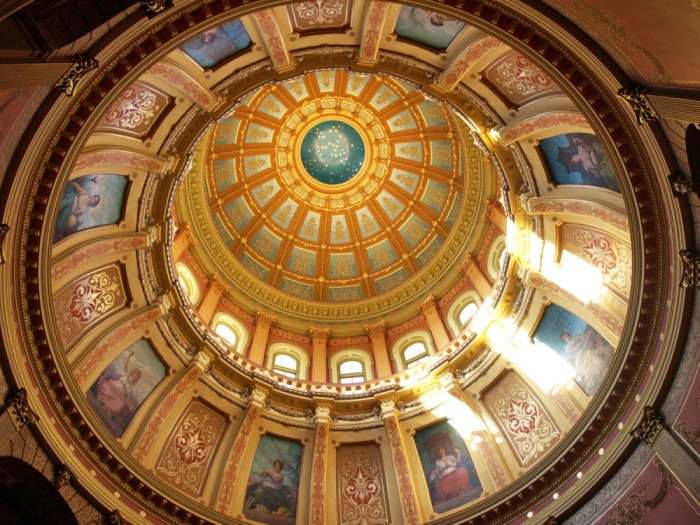
Downtown Lansing and the Capitol Building

OLYMPUS DIGITAL CAMERA

Adado Riverfront Park (which, depending on the day, may include various concerts or events)

OLYMPUS DIGITAL CAMERA

Brenke Fish Ladder

Old Town (and all the cool shops and restaurants therein–like Elderly Instruments and Pablo’s Panaderia, where you should order the torta sandwich with pork on their life-changing homemade bread or the huevos y chorizo with warm, homemade flour tortillas)

The Turner-Dodge House and Heritage Center

If you take the spur that heads east along the Red Cedar River, you can get to MSU and East Lansing, including these destination spots: The Breslin CenterThe Kellogg CenterBroad Art MuseumMSU Gardens, and Sanford Natural Area. All the way up to Hagadorn Road, where you can stop for dinner at Sultan’s Restaurant for some shawarma and falafel.

And I didn’t even list all the awesome restaurants in both downtown Lansing (like the Tavern on the Square or Mediteran or Troppo) and downtown East Lansing (like Dublin Square or Woody’s Oasis).

grassheads

The trail is open yearround. Even in winter it is plowed to allow regular foot traffic and biking for those of us who don’t have cross country skis. So, if you took the notion, you could bundle up and bike down to Hawk Island County Park and go snow tubing in the wintertime.

But of course, my favorite time is fall.

PotterPark03

Wildflower Wednesday: Wild Parsnip

Wild Parsnip

Common Name: Wild Parsnip

Scientific Name: Pastinaca sativa

Habitat & Range: wet, sunny fields and roadsides

Bloom Time: spring and summer

About: Not all flat-topped wildflowers are white. A few of them are yellow. Growing right along with the Yarrow and Queen Anne’s Lace from weeks past I spotted Wild Parsnip (not to be confused with the white-flowered Cow Parsnip, which I mentioned in the entry on Water Hemlock). All of these photos (along with many others) were taken on the same day in one small area on Mackinac Island near Mission Point Resort. Like Queen Anne’s Lace and Water Hemlock, Wild Parsnip is part of the carrot family and is a host plant for black swallowtail butterflies. Like Queen Anne’s Lace, this was a European garden plant that has escaped. You can only eat the long taproot of this plant in the first year of growth (after that it gets too woody). But beware of the parts of the plant that sit above the ground. If you are sensitive to it, the leaves can cause photodermatitis if touched. This means that after you touch the plant, if you are exposed to sunlight, your skin can blister and weep (eww), so wear long sleeves and gloves. Very inconsiderately, this plant’s flower looks like dill, but one look at the leaves and you will know it’s not.

Reference: Wildflowers of Michigan by Stan Tekiela; Adventure Publications, 2000

What if you lived in a world where it was illegal to touch another human being (or even your own face)?

Hey folks, I want my former GVSU writing center supervisor’s novel to happen and I want you to help! If you read dystopian fiction (a la Margaret Atwood); are concerned about the health ramifications of factory farms, overuse of antibacterial soaps, and food supply disruption; or wonder what it would be like to live in a world where touching another human being (or even your own face!) was outlawed, please consider supporting this kickstarter campaign! She only has 9 days to go and about $1300 more to raise!

I read an earlier draft as a beta-reader/friendly editor and so I know that this is a really fascinating what-if story based in some pretty frightening science. Hope you’ll support her!

The Courage to Be Yourself–in Life and Writing

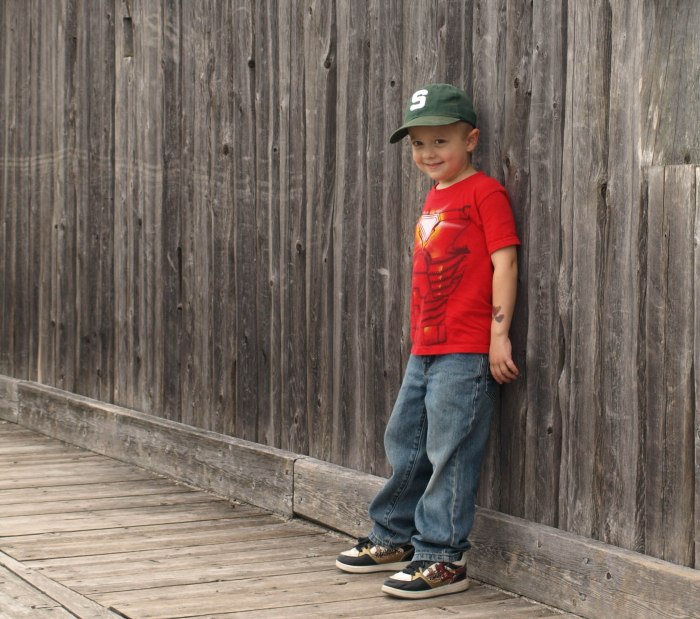
I had an important realization this week as I made a big, life-changing decision (i.e., which “first day of kindergarten” photos to post on Facebook. I know, I’m still reeling from all the pressure.)

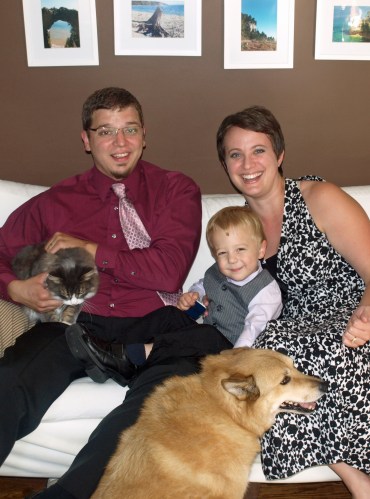
In my mind I tell myself that the pictures of my life and the life of my family should be “normal” and “pleasant.” Something you could put in a frame. Something you could send to parents and grandparents. Something like these:

OLYMPUS DIGITAL CAMERA

OLYMPUS DIGITAL CAMERA

ZachErin2

OLYMPUS DIGITAL CAMERA

OLYMPUS DIGITAL CAMERA

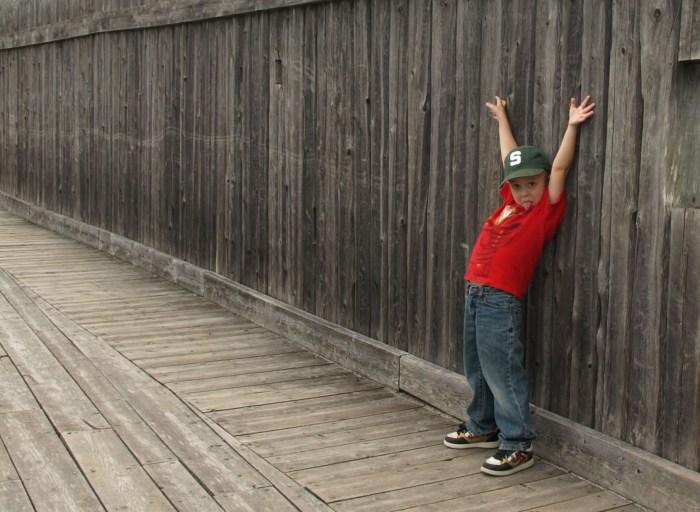
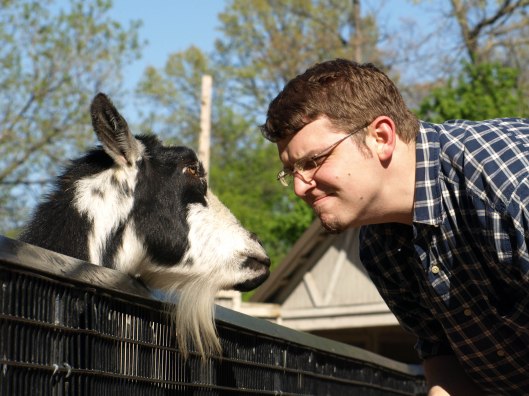
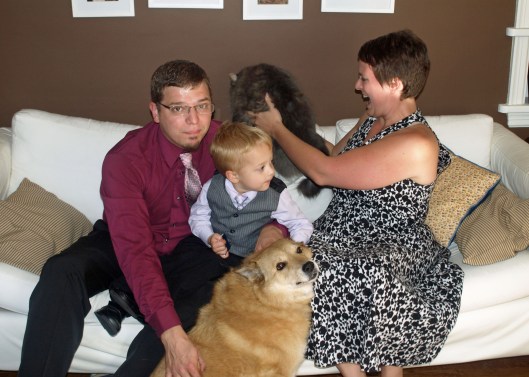
So I ask my son to “smile for real” and hear a lot of “c’mons” come out of my mouth. But in reality, these are the kinds of pictures I generally end up getting the best responses to when I share them (and they’re the ones I really enjoy sharing):

OLYMPUS DIGITAL CAMERA

OLYMPUS DIGITAL CAMERA

MeetingOfTheMinds

OLYMPUS DIGITAL CAMERA

OLYMPUS DIGITAL CAMERA

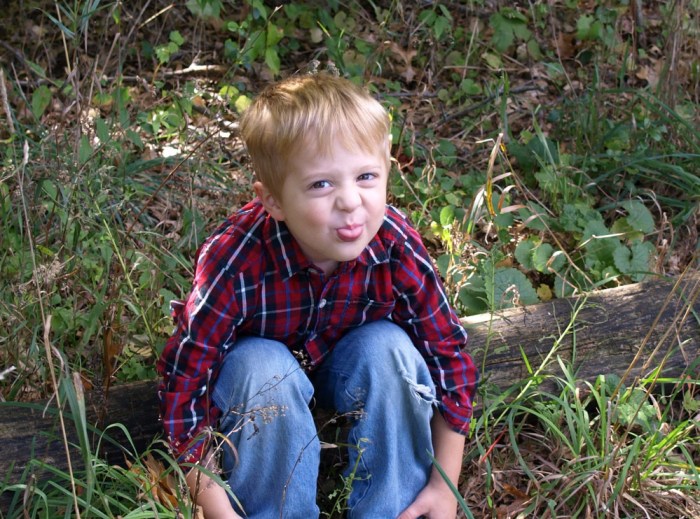
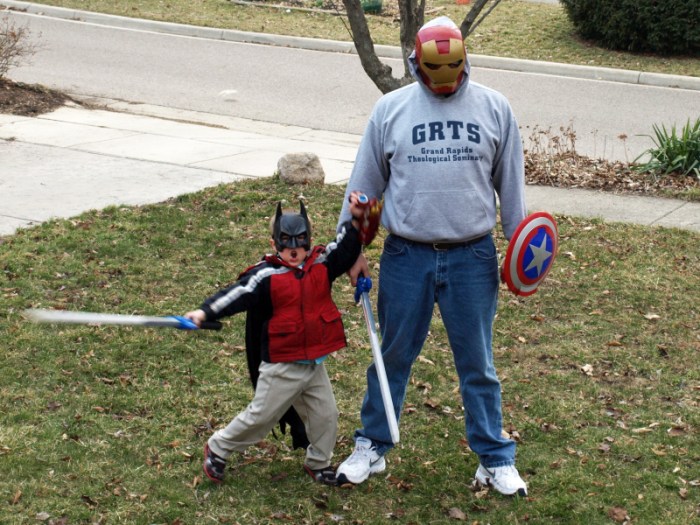
Why? Because they are more interesting. They have personality. They’re truthful. We’re kind of strange and we like it that way. Not to say that we’re not a very pleasant family and even pleasing to the eye at times, but beneath that thin veneer of propriety, we’re really…well, like this:

OLYMPUS DIGITAL CAMERA

Here’s where this parallels writing. Sometimes there’s pressure (internal or external) to make characters or stories “pleasant.” You hear from a writing group member or an agent that your character isn’t “sympathetic” enough. Or that your story is a real downer. Or “Can’t you just write a happy ending for once?”

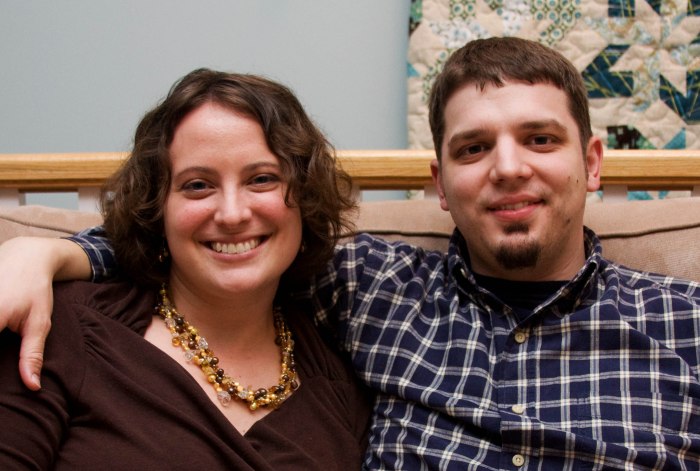
Though he’s supportive to a fault, my husband will sometimes come to the end of a story of mine, look at me with…well…let’s say concern, and breathe out a little “Sheesh!” I actually love this reaction, but there is still a teensy-tiny part of me that starts to question…

Will people be put off by this?

Will people think I have done or would like to do some mean or immoral thing that one of my characters has done?

Will people think I’m a bad person?

Will people start avoiding me?

Will people think I have psychological problems when they read this?

OLYMPUS DIGITAL CAMERA

Generally, I’m happy enough with the literary results of my efforts that I simply shrug, upload a new story to Amazon, and hope that people will have a good reaction to it. And in my mind, “Sheesh!” is a good reaction. Being a little creeped out is good. Feeling kind of sad is good. Feeling is good.

When stories are too pleasant, wrap up too neatly, or are just a touch too sweet, I get the groans. I’m bored or I’m unsurprised or I’m simply closing the book and never picking it up again. And you can be boring even if you have an interesting plot simply because your main characters have no faults.

Here’s a useful tool to examine your own writing. If you have to answer yes to more than two of these questions, your protagonists may be suffering from pleasantitis:

Are they always attractive (even if they don’t see it themselves)?

Do they have overly-interesting eye colors, especially involving descriptors such as “the sea on a stormy night” or “flecks of purest gold?”

Do they have gorgeous, Pantene-commercial-worthy hair even if they lived in a time when no one showered?

Do they have beautiful teeth and winning smiles even if they lived in a time when EVERYONE had bad teeth?

Do they always know what to do in a given situation?

Do they always get the girl/guy/promotion/bad guy/treasure/best cuts of meat at dinner?

See what I’m getting at here? Too much “pleasant” or “normal” or “perfect” or “happy” and the rest of us mortals can’t really identify with them. Flaws are essential. Flaws in your characters are like the conflict in your plot. If there’s no conflict, there’s no story and if there are no faults, there are no believable characters. Real flaws, not just that she has to wear glasses or he once broke someone’s heart.

How about she has a secret and almost insatiable desire to ruin her sister’s life? Or he suffers from near-crippling anxiety around his father because he fears he’ll never measure up? Or she compulsively corrects everyone’s grammar and so her friends actually loathe her? Or he neglects his own children because he’s so focused on his own advancement and amusement?

Then you take your flawed character and you find something in them, some trait or some believably terrible backstory, that will make them sympathetic without having to be perfect. (Aside: If you want an excellent example of this type of character, watch the hugely underrated movie Young Adult.)

Perfect people aren’t sympathetic. They’re kind of annoying. And anyway, they’re not really perfect either. They’re simply afraid to be real.

Be yourself. Let the real you come through your writing or art or whatever you do.

No matter how weird…

OLYMPUS DIGITAL CAMERA

…or silly…

OLYMPUS DIGITAL CAMERA

…or generally off-putting.

OLYMPUS DIGITAL CAMERA

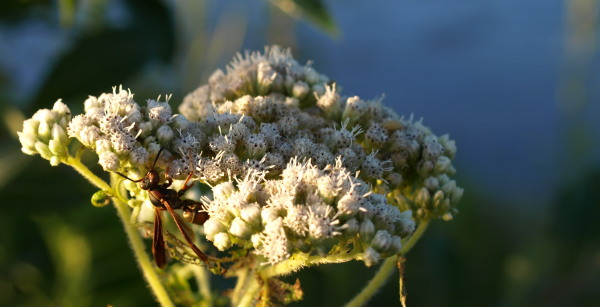
Wildflower Wednesday: Boneset

Boneset

Common Name: Boneset

Scientific Name: Eupatorium perfoliatum

Habitat & Range: wet ditches, meadows, and roadsides

Bloom Time: summer and fall

About: Boneset is yet another white, flat-topped flower you will find in bloom in the summertime. The flower resembles Yarrow, but it is easily identified by its unique rough leaves, which are joined to the opposite leaf at the base so that it looks like the stem goes right through one large leaf. (Unfortunately, the specimen in my photo below had well-chewed leaves so you can’t really tell.) It’s an important nectar plant and has been used medicinally in the past to treat dengue fever. However, it is toxic to humans, so this is another plant you have to be careful with. Old herbals may advocate its use as a tea to treat coughs and colds, but it can cause liver damage, muscle tremors, and other problems. Overdose can be deadly. Best to leave it to the butterflies.

Boneset

Reference: Wildflowers of Michigan by Stan Tekiela; Adventure Publications, 2000

(also Wikipedia)