Why I Don’t Think 2016 Was “The Worst Year”

Social media posts over the past 3-6 months would have us believe that 2016 was the “worst year,” if not ever then at least in living memory. A number of prominent celebrities died, some of them young, some of them tragically young. A fairly despicable human being was elected president of the United States and no one knows quite what to expect from him. Problems that I guess some people had thought were largely solved (though I can’t imagine why beyond wishful thinking) reared their ugly heads. Violence against people because of race, sexuality, and religion was too regular for our tastes.

Yes, some terrible things happened, and their impact was amplified by the frequency with which we saw them on social media and the 24 hour news cycle. Our parents’ or grandparents’ generation only had to confront such realities of life on planet earth once or twice a day in the newspaper or on the evening newscast, not every time they compulsively opened Facebook when they had to wait twenty seconds for their slow work computer to open a document or wait through the indecisive person in front of them at Starbucks.

But are our times truly worse than theirs? Is 2016 to be the new yardstick of calamity?

You’re probably thinking, “Geez, Erin, it’s just hyperbole. Don’t you understand simple rhetorical devices?”

Yes, I do. I also understand the power of putting our problems in perspective. And here’s just a little of that.

  • Between 1347 and 1352, possibly 50 million people died of bubonic plague, 60% of Europe’s entire population at the time.
  • In 1520, smallpox was introduced to the Americas and would eventually kill more than 60% of the native population.
  • Between 1769 and 1792, more than 20 million people succumbed to famine in India.
  • Adding up the deaths from starvation and disease during the deadliest famines in Russia (1601-1603, 1921-1922, and 1932-1934) and you get between 14 and 17 million people.
  • From 1861 to 1865, up to 750,000 Americans died during the Civil War.
  • From 1915 to 1924, 1.5 million ethnic Armenians were systematically exterminated by the Ottoman government.
  • In 1918, not only was World War I reaching its bloody crescendo, but a flu pandemic killed somewhere between 20-50 million people, depending on who you ask.
  • In July 1931, floods in China killed between one and four million people. In fact, if you look up the ten most deadly natural disasters ever recorded, you’ll find China in five of those spots, including the top four (in 1556, 1887, 1931, and 1976). PLUS, between 1958 and 1961, tens of millions of Chinese civilians lost their lives to famine.
  • Or perhaps choose any year between 1939 and 1945. In that span of time, 60 million people lost their lives (most of them civilians, 6 million of them to genocide) during World War II.
  • In August 1945 nearly 130,000 people were killed, tens of thousands of them in mere seconds, when the two atomic bombs were dropped on Hiroshima and Nagasaki, including 90% of the doctors and 93% of the nurses in Hiroshima alone.

And disasters, both natural and manmade, are not limited to the time before color film. I’m willing to bet that many of my readers remember these more recent events.

  • Between 1975 and 1979, 500,000-3,000,000 people died in the Cambodian genocide.
  • In the first half of the 1990s, 500,000-1,000,000 Tutsi people lost their lives to genocide in Rwanda. And let’s not forget places like Bosnia, Kosovo, Congo, and Sudan when it comes to recent genocides.
  • In 2004, an earthquake and resultant tsunami killed 280,000 people all over southeast Asia.
  • In 2010, 160,000 Haitians were killed by a massive earthquake.

By comparison to all this, even the tragedy of September 11, 2001, pales in comparison, does it not? And yet anyone alive during that time would certainly say that was one of the worst years they had ever experienced.

Yes, in 2016 there were a disturbing number of terrorist attacks, which are so unsettling because they are unpredictable and unexpected. Yes, in 2016 a number of Baby Boomers died of cancer (this is not so unexpected). Yes, a possibly fascist manchild with an itchy Twitter finger was elected president.

This post isn’t about belittling people’s feelings about 2016. Is is about helping us all sit back, take a breath, and appreciate what we’re NOT going through. The perspective we take on bad things that happen should always be informed by all of the things that aren’t happening that could be happening.

The world is a dangerous place. We are dangerous people. We do terrible things to each other and terrible things can happen to us, at almost any moment. But to let 2016 drive you to despair? What if your grandparents or great grandparents had let that happen to them when 60 million people — their sons and husbands and fathers, their daughters and wives and mothers — died during WWII?

The world will never be safe. We cannot fix all of this. We can do a lot, and that much we must do, but the world is the world. Bad things happen. And we must get on with life, striving to love one another despite our faults, and working toward peace and safety. And you know what helps in that noble pursuit? A positive attitude and a little perspective.

So stop dwelling on the past, which cannot be changed, and look to the future you want to make. Do the work, cheerfully, and maybe you’ll find in that future that 2016 was barely a blip on your radar.

My Second Oil Painting: A Sepia-Toned Waterfall

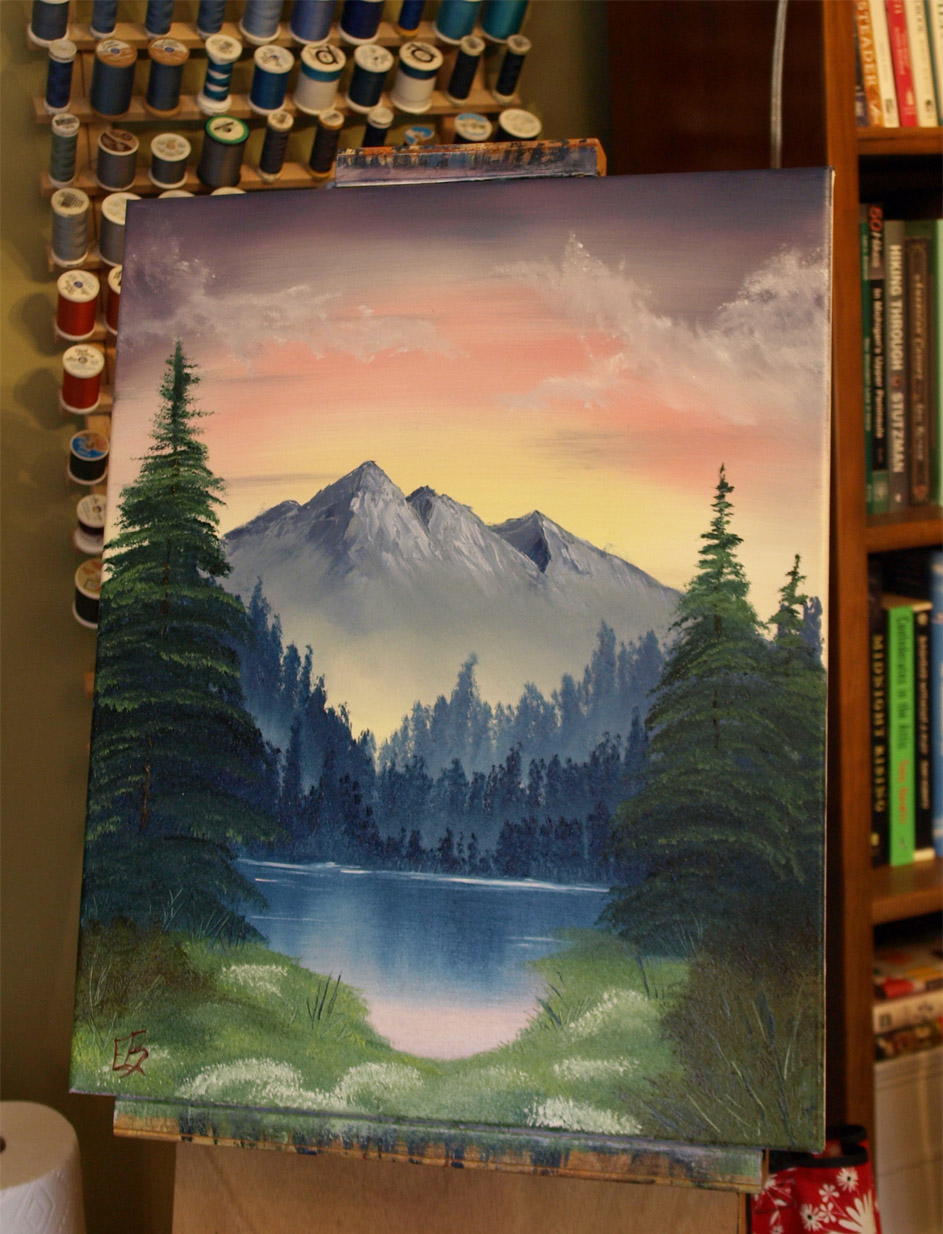
This evening I executed my second oil painting.

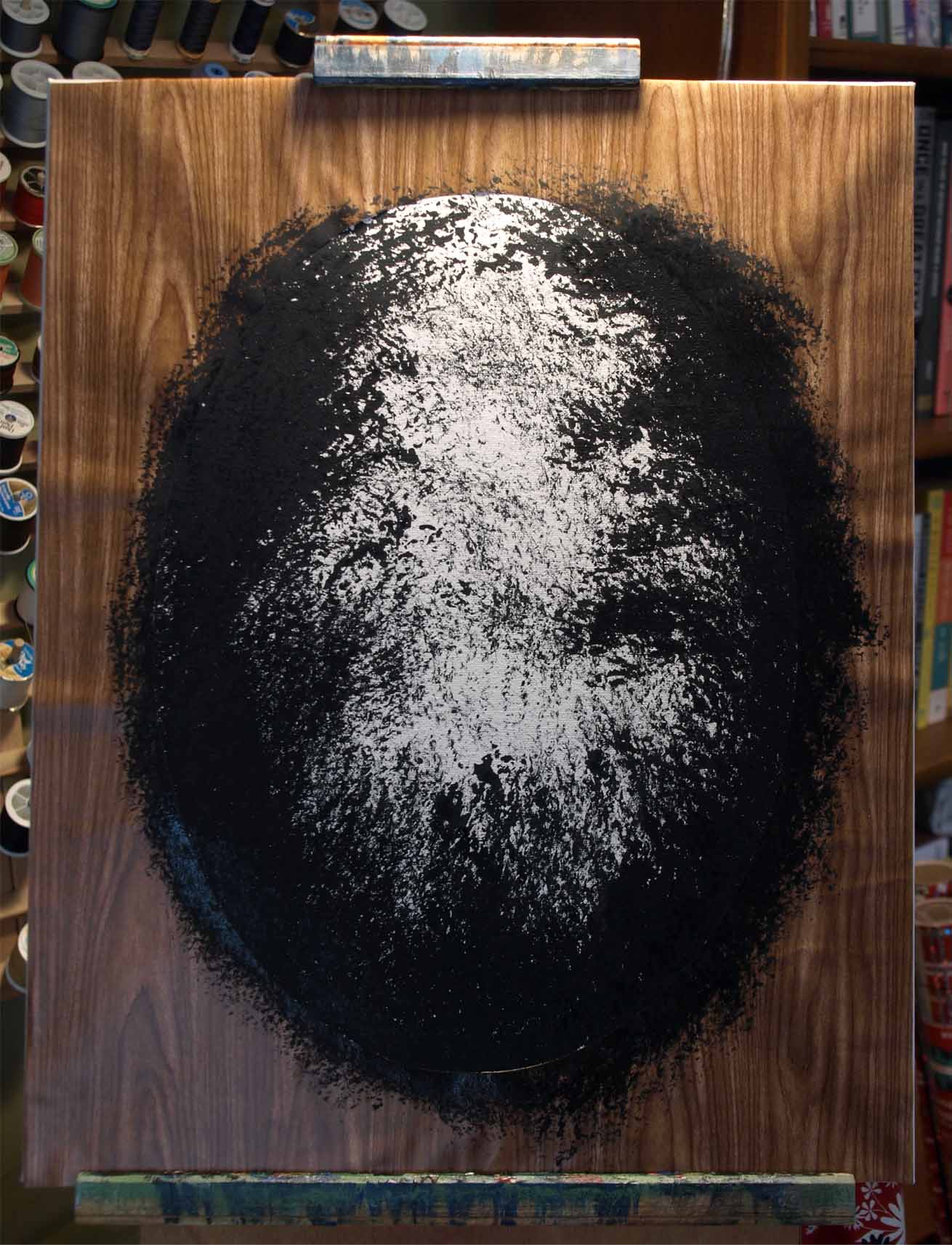
I’m largely happy with it, though next time I do a shape with contact paper I will get some that is a bit stronger as a few little gaps let out some paint and I had to take it off the canvas as best I could with paint thinner. And once I’m at the stage where I think I’m getting good enough to give anything away, I’ll have to get some professional grade canvases because, as you can see, this one was not stretched tight enough.

For this painting I followed one of Bob Ross’s videos, one I got on DVD for my birthday. It started with contact paper and black gesso (which is an acrylic paint and allowed to dry completely.

Next you cover the whole canvas with a very thin coat of liquid clear, followed up by a thin coat of a brown color created from equal parts alizarin crimson and sap green.

And after this point I totally forgot to stop between each stage to take pictures! But you start from what is in the very background in your mind and work forward, each layer of tree shapes getting darker and darker as they get closer to you. Add the waterfall, a cliff face, and water at the bottom, plus some highlights and water lines and you’re nearly done.

Then you get to take that ugly contact paper off.

I definitely made some mistakes in this one, and it’s harder than it looks when Bob does it to make tree trunks and branches that look decent (more practice with the liner brush is needed). But it’s also a lot easier than you think it will be, especially if you already have some experience with a brush.

I hope to do a new painting every Sunday, so you’re likely to see more of these soon. I hope you like seeing them, and seriously, it’s less complicated than you think. If you can make the investment (getting started can be pricey) you can absolutely have some fun painting in oils.

It’s My Birthday and I’ll Paint If I Want To

Today is my 37th birthday, and this is what I did.

First Oil Painting

For Christmas and my birthday I asked for oil painting supplies. I’ve never painted with oils before, but I’ve been immersing myself in Bob Ross on Netflix and I really wanted to try it out.

It’s completely backwards in some ways to watercolors, which is the medium I’m more familiar with. Highlights go on last in oils, whereas if you want something light in watercolors you have to do it first, then mask it or avoid painting over it, which is why a lot of people prefer oils to watercolors.

The only drawback to oils that I can see at the moment is the strong smell and the days-long drying time. I’m looking forward to developing my technique and rendering some favorite photographs in oils during the next year. If you’re a person I see regularly, you’ll probably end up with a painting of your own by the end of the year — I certainly won’t have a place for everything I intend to paint!

Noel: Christmas Eve 1913

 
Noel: Christmas Eve 1913
by Robert Bridges, 1844–1930

Pax hominibus bonae voluntatis

A frosty Christmas Eve
when the stars were shining
Fared I forth alone
where westward falls the hill,
And from many a village
in the water’d valley
Distant music reach’d me
peals of bells aringing:
The constellated sounds
ran sprinkling on earth’s floor
As the dark vault above
with stars was spangled o’er.
Then sped my thoughts to keep
that first Christmas of all
When the shepherds watching
by their folds ere the dawn
Heard music in the fields
and marveling could not tell
Whether it were angels
or the bright stars singing.

Now blessed be the tow’rs
that crown England so fair
That stand up strong in prayer
unto God for our souls
Blessed be their founders
(said I) an’ our country folk
Who are ringing for Christ
in the belfries to-night
With arms lifted to clutch
the rattling ropes that race
Into the dark above
and the mad romping din.

But to me heard afar
it was starry music
Angels’ song, comforting
as the comfort of Christ
When he spake tenderly
to his sorrowful flock:
The old words came to me
by the riches of time
Mellow’d and transfigured
as I stood on the hill
Heark’ning in the aspect
of th’ eternal silence.

Winter through a Warm Filter

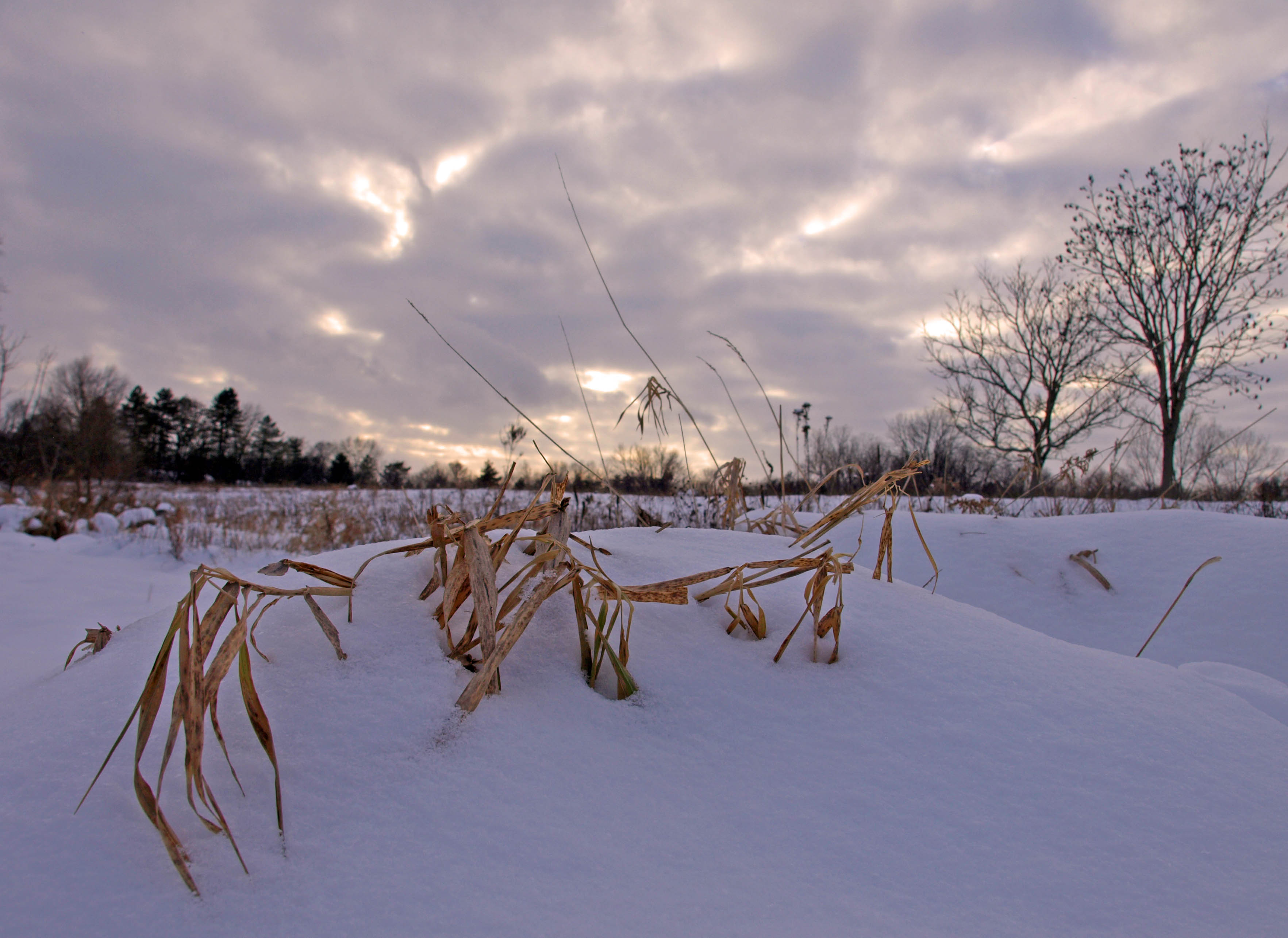
I think when winter settles in, lots of people immediately put on their grumpy glasses. Everything about winter irritates them — the cold temperatures, the snow, the driving — and they are miserable until April. They see life in winter through a cold filter, like this:

Winter at Fenner Nature Center

Others put on a different pair of glasses. They see winter as a chance to be cozy at home, a chance to do winter sports, or even just a welcome blank space in their social calendar (post-Christmas, at least). They see beauty and artistry. They see life in winter through a warm filter, like this:

Winter at Fenner Nature Center

No matter what our station in life or what the season, our enjoyment of life is directly correlated to how we choose to see it. If we see adversity and enemies and obstacles everywhere we look, if we see everything as an inconvenience to us, then that’s what we’ll get. But if we can see that winter is merely a wondrous part of the yearly cycle of nature in a temperate zone, maybe we’ll enjoy it a little more.

Winter at Fenner Nature Center

After all, we’re all experiencing the same winter if we’re in the same area of the country. If you hate it and your friend loves it, the difference isn’t in winter, it’s in you. It’s in how you’re choosing to experience the exact same circumstances as your friend. Maybe if we stop complaining, we won’t feel so put upon by winter (which really isn’t out to get you — it doesn’t even know you’re there).

Winter at Fenner Nature Center

I have a friend who is experimenting with liking winter this year. She hates it, but she’s decided not to complain about it. And you know what she realized for the first time? Just how much other people were complaining about it. The experiment is ongoing, and I’m not sure if she’ll last until spring finally comes, but for right now, I’m really proud of her. If you’re normally wearing your grumpy glasses all winter, I encourage you to try it out, even if just for a week or two.

Winter at Fenner Nature Center

Besides, if you just can’t hack it, I’m sure Florida will take you.

Frigid Photography

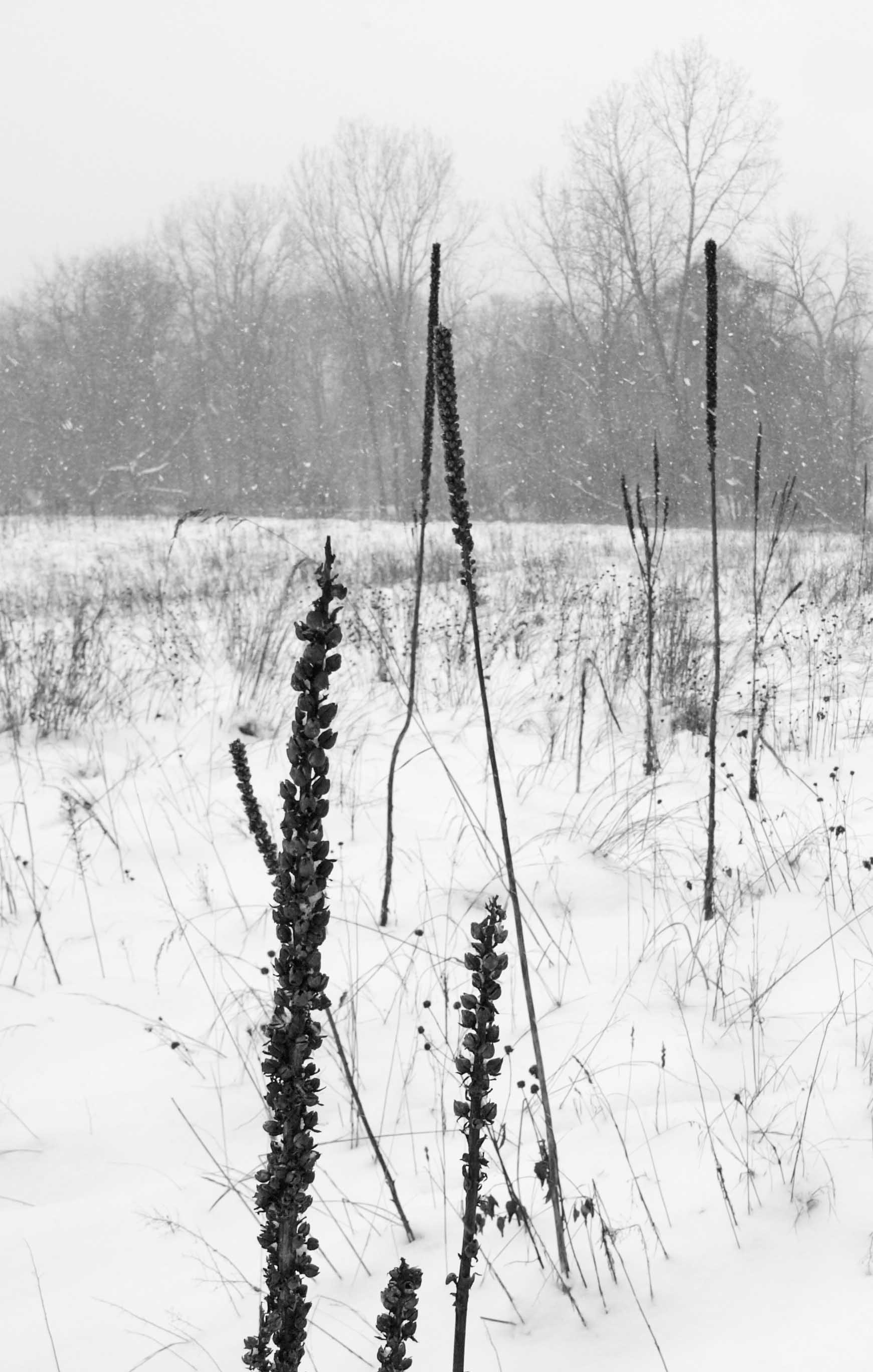
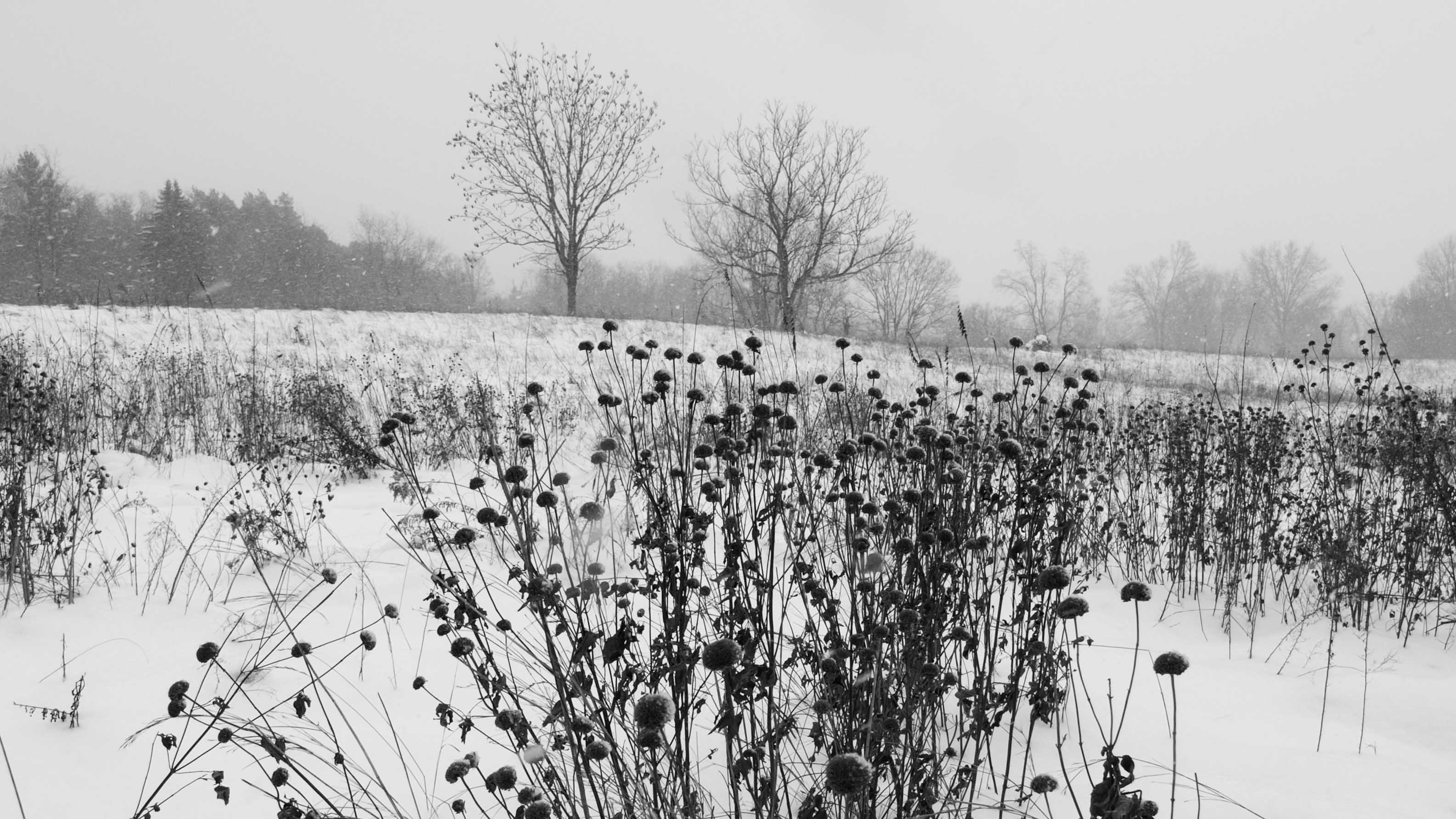
It’s cold, cold, cold and snowy in Michigan lately, which suits me just fine. I stopped off at Fenner Nature Center today to take a few pictures on the way to pick up my son from school. I trudged in snow drifts nearly up to my knees and it was still coming down.

Snowy Day at Fenner Nature Center, December 2016

Snowy Day at Fenner Nature Center, December 2016

Snowy Day at Fenner Nature Center, December 2016


Snowy Day at Fenner Nature Center, December 2016

Snowy Day at Fenner Nature Center, December 2016

Snowy Day at Fenner Nature Center, December 2016

Snowy Day at Fenner Nature Center, December 2016

I wish I’d had more time and my snow pants on. After only about ten or fifteen minutes I had to be on my way.

Bringing Back the Morning Room and the Drawing Room

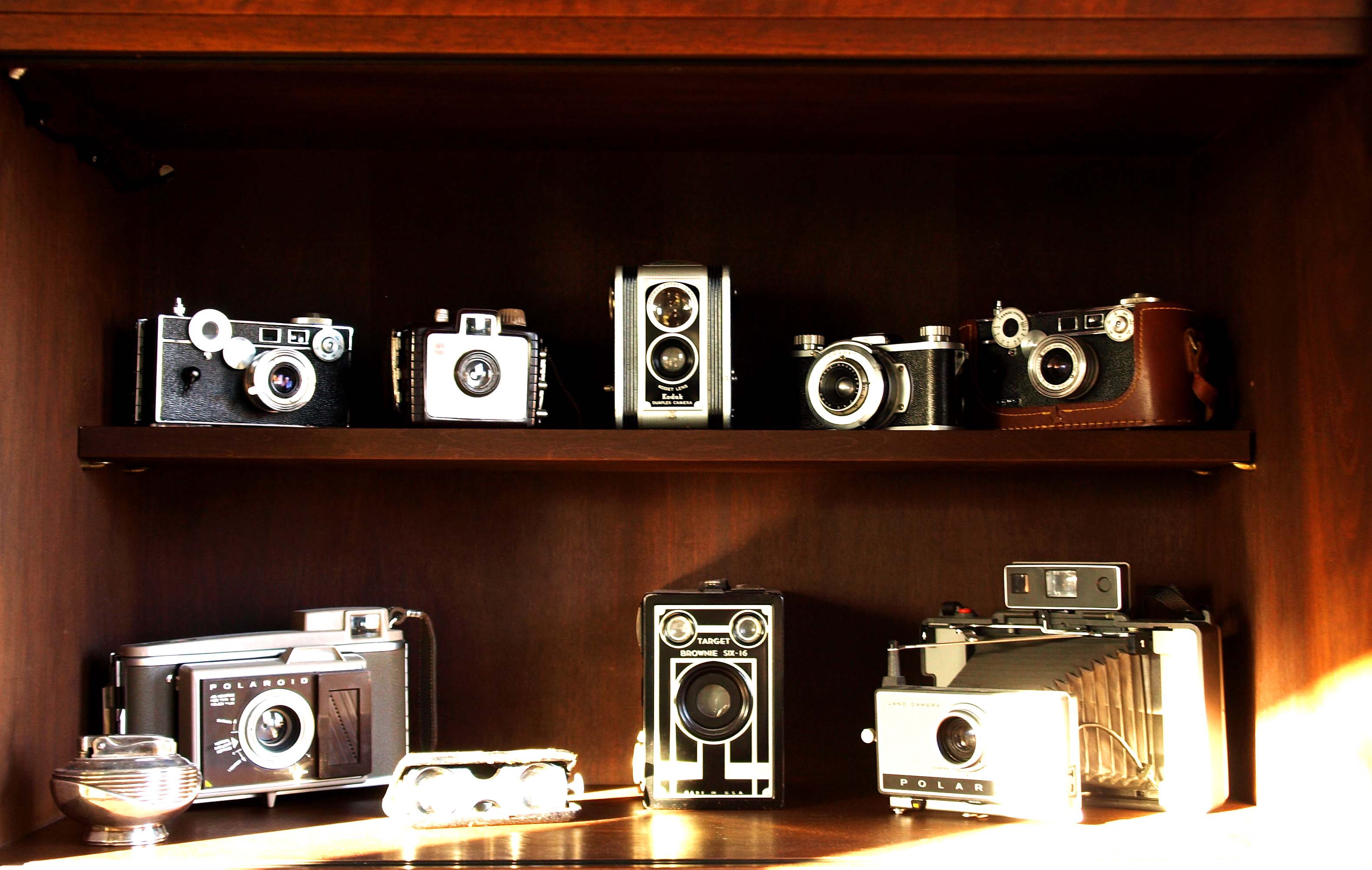
A couple new pieces were added to the Cigar Room over the long weekend. While the menfolk were out geocaching and shooting off rockets on Black Friday, my mother-in-law and I went antiquing. I had two very specific items on my list — a small, round drink table and a vintage lamp for right next to the Eames style chair. I found the lamp right when I walked in the door of the first shop. The table was discovered in the back of the second. It’s the perfect size for the lamp, a drink, and a little candle.

We do still need to put a few more things on the wall, but the room is nearing completion. Both my husband and I find ourselves there at some point almost every day. Sometimes all day when we are writing or editing. It is perfect for sunny morning coffee and reading, afternoon tea or cigars and writing, and evening wine or decaf paired with pleasant adult conversation.

Though it’s far more masculine than the traditional morning room that a large estate may have had in the 18th or 19th century, I find that it is a nice substitute in our neighborhood of small homes built in the 1930s and 1940s.

A morning room, if you’re unaware, is just what it sounds like. A room used in the morning. Traditionally it would have been used by the lady of the house to receive visitors, plan meals, make shopping lists, and work on correspondence (I do have all my stationary there now). Lots of windows and strategic placement on the morning side of the house meant lots of natural light by which to read and write. The term is used more in Britain than the US, by why not borrow it to add a touch of formality to our stubbornly casual lives?

The morning room’s cousin is the more commonly encountered drawing room. Contrary to my childhood misunderstanding, it is not a room reserved for drawing (a fact which deeply disappointed me when I discovered it). The term is short for withdrawing room. It’s a room to which you and your guests might withdraw after a meal for conversation and drinks. Alternatively, it might be a room to which one would withdraw alone in order to escape one’s guests.

We use it to escape the messy kitchen and dining room after dinner, or the toy-strewn living room at almost any time during the day. We also use it to withdraw from noise when we are trying to read or write with other people in the house. It is mostly separated by the brick wall that used to be the outside of the house, so with the door shut it is quite insulated from the sounds of video games in the basement or music in the living room. It is an absolutely adult room — no toys allowed — and the only part of it that can get messy is the table, which is easily tidied by emptying the ash tray and putting coffee mugs into the dishwasher.

This uncluttered space has helped my state of mind immensely. It is a room in which it is equally easy to concentrate and to let the mind wander and dream. I don’t know when I’ve ever been so pleased with how a sudden redecorating whim has turned out.

Thanksgiving amid Civil Strife and while Acknowledging Our “National Perverseness”

Washington, D.C.
October 3, 1863

By the President of the United States of America.

A Proclamation.

The year that is drawing towards its close, has been filled with the blessings of fruitful fields and healthful skies. To these bounties, which are so constantly enjoyed that we are prone to forget the source from which they come, others have been added, which are of so extraordinary a nature, that they cannot fail to penetrate and soften even the heart which is habitually insensible to the ever watchful providence of Almighty God. In the midst of a civil war of unequalled magnitude and severity, which has sometimes seemed to foreign States to invite and to provoke their aggression, peace has been preserved with all nations, order has been maintained, the laws have been respected and obeyed, and harmony has prevailed everywhere except in the theatre of military conflict; while that theatre has been greatly contracted by the advancing armies and navies of the Union. Needful diversions of wealth and of strength from the fields of peaceful industry to the national defence, have not arrested the plough, the shuttle or the ship; the axe has enlarged the borders of our settlements, and the mines, as well of iron and coal as of the precious metals, have yielded even more abundantly than heretofore. Population has steadily increased, notwithstanding the waste that has been made in the camp, the siege and the battle-field; and the country, rejoicing in the consciousness of augmented strength and vigor, is permitted to expect continuance of years with large increase of freedom. No human counsel hath devised nor hath any mortal hand worked out these great things. They are the gracious gifts of the Most High God, who, while dealing with us in anger for our sins, hath nevertheless remembered mercy. It has seemed to me fit and proper that they should be solemnly, reverently and gratefully acknowledged as with one heart and one voice by the whole American People. I do therefore invite my fellow citizens in every part of the United States, and also those who are at sea and those who are sojourning in foreign lands, to set apart and observe the last Thursday of November next, as a day of Thanksgiving and Praise to our beneficent Father who dwelleth in the Heavens. And I recommend to them that while offering up the ascriptions justly due to Him for such singular deliverances and blessings, they do also, with humble penitence for our national perverseness and disobedience, commend to His tender care all those who have become widows, orphans, mourners or sufferers in the lamentable civil strife in which we are unavoidably engaged, and fervently implore the interposition of the Almighty Hand to heal the wounds of the nation and to restore it as soon as may be consistent with the Divine purposes to the full enjoyment of peace, harmony, tranquillity and Union.

In testimony whereof, I have hereunto set my hand and caused the Seal of the United States to be affixed.

Done at the City of Washington, this Third day of October, in the year of our Lord one thousand eight hundred and sixty-three, and of the Independence of the United States the Eighty-eighth.

By the President: Abraham Lincoln

William H. Seward,
Secretary of State

Rediscovering the Power of Idleness

In the second episode of Mad Men, Roger Sterling walks into Don Draper’s office and says, “I can never get used to the fact that most of the time it looks like you’re doing nothing.”

As both a professional copywriter and a novelist, I knew exactly what that meant. Creative work, whether you’re coming up with sales angles and headlines or plot twists and character arcs, requires marination — periods of time in which the writer looks like they are doing nothing at all when in reality there is a whole hell of a lot going on behind the scenes, as it were.

Whether lying on the fabulous mid-century modern couch in your swank NYC office, taking long walks in the woods, or just staring into space at your desk, “doing nothing” is important. It looks to all the world like idleness — laziness, even — especially to those with more visibly active jobs. But it isn’t.

I was recently talking with a friend whose kids are intensely scheduled — school, music lessons, sports, and other extracurricular activities, one right after another, nearly every day of the week. I felt exhausted just listening to her list them all out. When I commented on how that seemed like a lot for a kid to do, she responded that otherwise her son got bored. I’m going to go out on a limb and predict that her son will do something amazing with his life (and knowing his parents, I’m sure of it) but that thing will not be becoming a writer.

From my earliest days, I was a “lazy” child. After having had an extremely active (maybe even hyperactive) first baby who climbed and ran and tumbled all over the place, my worried mother actually asked the pediatrician if there was something wrong with little Erin, who spent most of her time sitting and staring off into space.

“She’s just thinking,” was his wonderful reply. And I guess I was.

As a kid I spent a lot of time drawing and reading and sitting in trees, all activities that allowed me to do a lot of thinking. Sure, I played sports and acted in plays and played an instrument as I got older, but most of the time, I preferred to just observe and think. I was never bored. I was never looking for more to do. In fact, I was really good at doing nothing at all, which, as I grew up, I realized not everyone can do.

My childhood talent for idleness came from my father, who loved nothing more after a long day at work than to turn the stereo up loud, sit down, and listen with eyes closed, drink in hand. He wasn’t someone who always had a bunch of projects going. He wasn’t going off to parties or performances. He liked being home and relaxing by himself. I can’t imagine him ever feeling lonely or bored during these times.

I certainly didn’t get my talent for doing nothing from my mother, who couldn’t sit down to watch a movie without also ironing or folding towels or cleaning out her purse. She was the list-maker, the errand-runner, the shopper, the one making dinner and cleaning the house. She was always productive in a way my father and I were not. Nowadays she’s learning to enjoy relaxing with a book (though I suspect she still can’t watch a movie without a sewing project in hand).

As a teenager, my sister jumped at the chance to get a job and earn money that she could spend while out with her friends. I resisted getting a job for as long as I could. I didn’t care about earning money because I didn’t go out with friends. I didn’t care about having a car, going to movies at the theater, going to the mall. Everything I liked to do, I did by myself and none of it cost more than I could earn doing chores around the house (which I would always put off until the last possible moment).

I was lazy and content.

Then at some point, perhaps once I was done with college, I turned into my mother.

With just a job and no school, I suddenly had a bunch of empty time to fill and a bit more money to spend. I began making lists and thinking up little projects and shopping for stuff I didn’t need. I started hobbies — scores of them — and filled my time with stuff to do. I still didn’t care to do the stuff that actually needed doing — like cleaning and laundry and grocery shopping — but by golly I made a lot of cards and jewelry and quilts.

I kept busy and I somehow got the notion into my head that any recreational time I had should be productive. That there should be some visible result or product of anything I did. Something to show for my time. I have no earthly idea where this notion came from. It certainly wasn’t a concept I was raised with. My parents never told me that “idle hands are the devil’s workshop.”

Maybe it was just the natural result of reading DIY magazines. Maybe I spent too much time at Michael’s and Jo-Ann’s. Maybe it was just living long enough in a frenetic, get-ahead-or-get-left-behind culture. I have no clue. But somehow I had lost the white space in my life. And while my twenties may have been extremely productive years in terms of things created, they were barren years in terms of creative thinking. They were years I thought about how I’d like to write . . . and yet didn’t write a word worth reading.

Lately I’ve been reclaiming my down time, from both responsibilities to others by quitting a few activities and from the arbitrary busyness I have tended to create for myself. I’ve spent entire afternoons reading and not felt guilty about wasting time. I’ve spent entire days closing myself off in a room to write. I’ve spent entire weeks off work without checking my email. I decided that it’s okay for my garden to just be pretty and not productive. It’s okay to binge-watch The Joy of Painting with Bob Ross. It’s okay to amble through a park and watch ducks and collect pretty leaves.

Nothing has to come of it all. It’s just pleasant idleness. It’s just enjoying myself, my family, and my world.

And in rediscovering the idleness I was so good at as a child, I find that I am recovering the “empty” time I need in order to write.

“I can never get used to the fact that most of the time it looks like you’re doing nothing,” Roger Sterling said to Don Draper. But he wasn’t doing nothing. He was doing his job, and doing it in such a way that he made his company quite successful.

At the end of our super busy months of September and October, I told my husband that I was not going to say yes to any invitation to go somewhere and do something on any Saturday in November. And except for one Saturday in December, the same conviction holds true. I don’t need the time to do anything specific at home beyond rake the leaves and do the laundry. I need that time to just do nothing. 

I know that to a lot of people this seems kind of rude and selfish and antisocial and lazy. But it really isn’t. My 9-5 job is writing. My avocation is writing. And my writing well is not filled by engaging in activity for activity’s sake. It’s filled by reading, walking, observing, thinking. It’s filled by things that look like nothing.

Writers like Virginia Woolf, Ernest Hemingway, William Wordsworth, Henry Miller, Charles Dickens, Henry David Thoreau, C.S. Lewis, Madeline L’Engle, and many others understood the importance of giving the mind room to work by simply taking a walk, and this article has a lot to say about why that is. I heard a speaker at a recent conference relay some advice she had drawn from another writer (whose name escapes me) that “If you aren’t reading so much that you feel guilty about it, you aren’t reading enough.”

“It is in our idleness, in our dreams,” said Virginia Woolf, “that the submerged truth sometimes comes to the top.” And if I, as a writer, intend to be about the business of discerning and presenting truth, I need the time that I need in order to discern it and present it in such a way that the reader experiences it in the most fulsome and lasting way possible.

If you are a writer or a painter or a poet or some other kind of artist who has been feeling guilty about the time required to do your art well, I invite you to join me in recovering and relishing your “idle” times — which of course we know are anything but. Others may not understand, but what they don’t realize is that every time they read a book or watch a movie or listen to a song that speaks to them, they’re enjoying the result of someone else’s strategic idleness.

Donald Trump, Rape Culture, and “What do I tell my daughter?”

Let’s just put it out there: a pretty despicable human being has been elected president of the United States. One of the many reactions to this has come from parents, especially mothers, who are asking “What do I tell my daughter?”

Before I share my answer to that question, I want to share with you a story only a few people in my life know but which is agonizingly common amongst women.

I was nine, one year older than my son is right now, when a friend’s older brother molested me. It takes a lot — a lot — of effort for me to let that sentence sit there. To not go back and delete it. To not edit it out of my story.

But it happened. More than once. And I didn’t tell anyone at first.

Probably the first couple times it happened, most people would have termed it “teasing,” especially back then. But anyone who has been intimidated or tricked into a position of helplessness while someone bigger and stronger has obvious control over whether you must stay or you get to leave will tell you that it’s not teasing. It’s at least bullying. Sometimes it’s assault, even if it is not much more than one person’s weight keeping you down on the floor until you promise him you will come back if he let’s you go.

Though I won’t go into details, the last time it happened, no one could deny that it was molestation. And not long after that traumatic incident, I stopped going over to my friend’s house. But I still didn’t tell anyone.

In sixth grade, I finally told someone. A teacher. I wrote out the story in a journal we kept in class. It didn’t have anything to do with the subject matter — science — it was just supposed to be us writing about anything we wanted and this teacher would be the only person who would read it. So I wrote what had happened to me. When I got my journal back the next week, my teacher had written at the top, “I hope you slapped him,” but he didn’t tell anyone. I guess mandatory reporting wasn’t a thing back then?

A couple years later, that teacher was arrested, tried, and convicted of molesting boys in his scout troop.

The one person I had reached out to was also a sex offender.

Though I doubt it was a conscious choice, the way I saw guys from that point on was fundamentally different. Boys became a force to be resisted, fought, proven wrong, and outdone. I would be better, stronger, smarter, more successful than they were. I would become someone to reckon with.

And I did. I beat nearly all of my male classmates in academics. I beat boys at arm wrestling. I bested them in Trivial Pursuit. I hit home runs. I was never afraid of the ball. I didn’t run like a girl, throw like a girl, or do shot put like a girl. I never backed down from an argument. I opened my own jars. I didn’t believe in the phrase “that’s a man’s job.” I wrote feminist poetry.  And of the girls in my graduating class, I was voted Most Likely to Be President.

I never felt that same level of competition with other girls. Only boys.

Being an outspoken young lady who carries herself with confidence can draw idiotic sexist comments from a lot of guys. Some of them might even call you a “nasty woman.” But according to more than one adult man in my life, the boys were just “intimidated” by me. When I heard that I would think to myself, “Good. They should be.” And I would go on being me.

Eventually, I told the story of my childhood molestation to my future husband (one boy who was not intimidated by me).

In college, I stopped worrying so much about beating the boys. I was comfortably engaged to my high school sweetheart, excelling in my classes, and relishing every moment spent discussing literature, history, and culture. Unlike this woman, my experience as the victim of unwanted advances or outright assault did not continue throughout my life. It may have something to do with the different circles we ran in or it may be that me “intimidating” guys had a nice scumbag repellent effect. For whatever reason, the worst thing that happened had happened a really long time ago. And when you hear what some women have gone through, my story is mild.

But that doesn’t mean that every time I walked home from a late shift at a diner on campus I wasn’t listening for footsteps behind me and constantly running through self-defense scenarios in my mind. Because I was. No matter how long ago, an experience like that never leaves you. This statement from a New York Times article regarding Donald Trump’s treatment of women rings achingly true: “They appeared to be fleeting, unimportant moments to him, but they left lasting impressions on the women who experienced them.”

It’s obvious to me in hindsight that my early experience as the victim of sexual abuse had a significant role in molding me into the person I am today. A person who, along with every other decent person out there, was disgusted by comments made (and then lamely defended) by the president elect. To some men it might be just “locker room talk” but to women, dismissing such comments is another dismissal of their own personal story of sexual harassment or abuse, another log to throw on the smoldering fire of what’s become known as rape culture, a culture in which men are rarely held accountable and women are blamed for their own life-altering assaults.

Now then, for the answer to the question, “What do I tell my daughter?”

What do I say to her as we leave an administration led by an honorable man who set up the Council on Women and Girls and eloquently explained the problems and solutions to rape culture, and enter the administration of this guy? (For the record, I don’t think he’s actually done what he says there, but parsing all of that out is a little beyond the scope of this essay.)

Well, you could tell her the truth.

Tell her that while the office of the presidency is to be respected, there have been a number of men who held that position who have been less than honorable in their conduct toward women.

Tell her that unfortunately we live in a world where she needs to be vigilant, on guard against people who might want to take advantage of her. That while sexual assault is never her fault, she can reduce her vulnerability by taking smart precautionary measures, like never walking alone at night, learning basic self defense, supporting her female friends, and remaining sober-minded and alert in potentially dangerous situations.

Tell her that women are not exempt from feeding into a culture that devalues and blames women. Sometimes, while they are trying to protect their own hearts, lives, careers, and families, they do and say things that harm other women. They excuse terrible behavior to protect a reputation that, let’s face it, is bordering on unredeemable. (I say bordering, because if the man actually humbled himself and repented, he absolutely could be redeemed. But at this point his “conversion” is obviously a false one because he doesn’t believe he needs forgiveness, doesn’t understand the meaning of the Eucharist, and tries to make up for the bad things he does with works rather than accepting God’s grace.) They may even perpetuate the view of women as sex objects and call it empowerment. They make bad choices, and may regret them later, but they feel like they have to double down to retain their integrity because there are so many ways to make missteps in our judge now, ask questions later culture.

Tell her that nothing, fundamentally, has changed. Before Trump we lived in a dangerous and fallen world. During Trump we live in a dangerous and fallen world. After Trump we will live in a dangerous and fallen world.

And you might even tell her that the kind of people who put sexual pressure on others or who desire to feel power over others, are often the past victims of sexual pressure, harassment, or assault.

Remember the story of the friend’s older brother who molested me? When I finally told my childhood best friend and my sister about it last year, both of them immediately said, “I wonder what happened to him.”

Those twin statements kind of hit me broadside. I had often wondered why he had done what he’d done, especially since he was only four or five years older than me, still a kid himself. But it had never occurred to me that he might be acting out a scenario that had happened to him in the past, only this time he could be the one who felt in control rather than the one who felt powerless. Leave it to my always compassionate best friend and my former Child Protective Services worker sister to immediately see him as more than a perpetrator, to see him as a unique individual who might have his own difficult past.

Remember that teacher who was sent to prison for molesting boys in his scout troop? The boys who had come forward with the allegations were the same age as the boy who molested me. And it’s possible that he was even in that troop. That he had either heard about this teacher’s abuse or that he was a victim himself. I don’t know. We’re not exactly in touch and I can’t ask his sister because sadly she died after an on again, off again struggle with substance abuse.

The last time I talked to him I was a freshman in high school. He had already graduated. I contacted him and asked him if he wanted to come back for the school’s talent show and do a duet with me. It was a carefully considered ploy on my part to get the chance to put the incident, which I had still not told anyone about, to rest. To get it out of my mind. Surprisingly, he agreed. I chose the song: “Always on My Mind.” I chose it because it would make a good duet. I didn’t think any deeper about the title or lyrics for many years.

We got together a few times to practice. We watched a movie. He taught me how to drive his car, a stick shift, even though I was underage and didn’t have a license. We drove out to the Saginaw Bay, to a remote little spot at the end of a very long pier. In telling my sister the story years later, this is where she interrupted and said, “Without even a cell phone?” I stopped to think about it and said, “Yeah, I guess that was really dumb.”

We stood and watched the sun sinking over the bay and I finally got up the nerve. I asked him if he remembered luring me into his bedroom, forcing me down, and laying on top of me. If he remembered cornering me in the tent they had up in their back yard or groping me in their van when we were all playing hide and seek. He did remember. I asked him why he did all of that. All he could say was, “I don’t know.”

And maybe he didn’t. Or maybe deep down he did, but unlike me he was not ready to talk about it, to admit that something may have happened to him.

Again, I don’t know that anything did. But it might have. Because eighth grade boys don’t normally grope fourth grade girls. And that big “maybe” has helped me move past what happened to me twenty-seven years ago. Were I given the opportunity, I’d love to talk to him again and tell him that I think I have finally completely forgiven him. In case you’re wondering, we never did perform that song at the talent show.

I’m not saying all of this to excuse anyone, least of all our president elect, from criminal behavior toward women, lewd comments, or even general skeeviness. Nothing makes me feel more capable of extreme physical violence than talk of sexual assault. If I had 20 minutes, a baseball bat, and the promise of no legal consequences, it would take every ounce of my willpower not to beat Brock Turner to a raw, bloody pulp, and ask for a few shots at that judge as well.

But Donald Trump being president (How? How? How did it come to this?) will not make humanity worse. Or better. Humanity has been broken and sinful since the Fall and anyone who can look at our world and still think that people are basically good is wishing for something that is demonstrably untrue.

We all wish other people were better people. But we only have control over the behavior of one person — ourselves.

So what do you tell your daughter?

Tell her to live in such a way that she intimidates the boys.

When you pair self-confidence with self-control and self-reliance, you get someone like her. And she is a fantastic role model.

Someday, if she can ever be prevailed upon to run, your daughter might even get a chance to vote for her for president. And that would be a very proud day indeed.