I’m sure you can tell why…
First Short Story Collection: Cover Art Reveal!
Over a year ago, I secured the services of Heather Brewer, a talented graphic designer I’m lucky to call a colleague and friend, to design a book cover for me. At the time, I thought it would be a novel. At some point I realized that what I really wanted her to design was the cover for my collected short stories.
If you’ve been reading this blog for a year or more, you probably know that in 2013 I challenged myself to write one short story each month. During that year, I made each story available for Kindle users. Now I’m gathering those stories together, adding more material, and preparing to publish the collection as both a printed book and an ebook.
And this, I’m ecstatic to say, is the cover…

When I saw it, I literally said in a loud and astonished voice (to no one in particular), “Oh my GOSH!”
It’s breathtaking. And it’s more than just a pretty picture. Not only is it eye-catching, it evokes the kind of emotion that I hope the stories evoke in the reader–a little mystery, a little ache in the soul, an appreciation of beauty alongside an acknowledgement of the broken things. And, importantly, it’s non-gendered. In this collection, there are just as many male protagonists as female, and the themes are more universal than gender-specific, so having a cover that would appeal to both men and women was important to me. What do you think? Have we succeeded?
I’m currently editing the collection and getting the interior ready to go. I don’t have a firm release date just yet, but my hope is that it will hit the “shelves” by late summer or early fall. I’ll keep you posted!
Revising Your Manuscript: Sifting through All That Good Advice
Back in March after I finished the first draft of my WIP, I talked about getting the most out of your beta readers. But what do you do with all their comments and advice? Most especially, what do you do when one person’s feedback conflicts with another?
So far, I’ve had ten lovely people give me feedback on my manuscript. Three more are reading now. With that much feedback, you’re bound to get some comments more than once (and that’s when you should perk up your ears and seriously consider their advice) and you’re bound to get a few things that don’t mesh.
My WIP is really three stories in one. Three protagonists. Three time periods. Lots of connections between the three. Inevitably when you have an ensemble cast, readers will likely gravitate to one character over another. So I’ve had champions for each of these three characters as well as critics for each of them. One reader thinks the book is really about Character A and rushes through the chapters that don’t include her. Another reader can’t stand Character A and knows that the book is really about Character B. Another adores Character C but can’t connect with Character B. And so on. And most readers have ideas about how you could improve the parts of the book they didn’t like as much.
On a smaller scale, you may have different readers mark the same little bit of prose with an underline and a smiley face, or a double strikethrough and a skull and crossbones. A member of one of my writing groups recently had that very experience with a descriptive dialogue tag and was at a loss about how to edit or if she should change it at all.
So what do you do with this conflicting advice?
First and foremost, consider your true audience. What’s your genre? Who is going to gravitate toward this book and snatch it off the shelves? Is the reader who gave you feedback someone who generally reads in your genre? If not, pause a moment to consider whether their advice on this particular problem is coming from a place of ignorance.
That doesn’t mean there’s no point in having them read and comment. After all, my book is geared toward the women’s book club crowd, but male readers (I’ve had four of them) are essential because there as many male characters as there are female. But if one of my male readers advises me to change a female character’s reaction to a situation because he doesn’t think women act that way or doesn’t understand why women act that way, I’m going to give it some serious thought, pat him on the hand, and say, “Nope, a woman really would do that, even if you don’t understand it. Women readers will understand that completely.”
But if the same male reader advises me to change something a male character says or does because he thinks that no man would act that way, then you had better bet I’m listening close and following his advice. In fact, that often makes for better conflict because the male characters aren’t behaving the way I as a female writer would like them to, and so now my characters have to deal with it.
Sometimes advice doesn’t hinge on audience. Sometimes it’s a matter of clarity versus obscurity. I tend to not like to explain things too much in my writing because I resent being talked down to in any area of life (which is why I hate getting my oil changed). I’m intelligent enough; let me figure it out. And if I can’t, let me struggle with it and discuss it with others. I’m sure this has something to do with being an English major.
But not all of my readers will have been English majors. Not everyone is on the lookout for obscure symbolism–or even overt symbolism! So when a beta reader completely misses an important plot point because I was worried about making it too obvious, it’s time to reread from the point of view of someone who hasn’t been thinking about the plot of this book for over a year. Come at it with fresh eyes. The best way to accomplish this is temporal distance–spend time away from your manuscript. Put it away for a month, then reread the notes from your beta readers, then reread your manuscript through the lens of a first-timer.
The side benefit of spending that time away is that any anger or anxiety you felt when reading over the notes that your beta readers sent to you will have dissipated. Items that seemed like a crisis at the time will suddenly seem very doable. Things you bristled at when you first read them will now seem quite sensible. And the task of revision will be at least partially divorced from the task of creation. You’ll accept that this novel you wrote is, in fact, not perfect. And that that’s okay. That it’s all part of a longer process by which you will slowly, slowly chip away the things that are not your story so that you can uncover the thing that is your story.
Above all, when you are considering conflicting advice–or any advice at all for that matter–there is a balance to be struck between being true to yourself and your vision and being faithful to your potential readers. If you’re writing to be published and read, you do need to consider your audience. But remember that you cannot, no matter how hard you try, please everyone. When you change Character A so that Reader A will like them more, Reader B will be furious.
So how do you like Character A? Does she serve the story? Does she evoke some kind of emotion in the reader? Does she struggle and change and mess up? If you’re uncomfortable with Character A, change her. If not, don’t.
Stories that get passed around and talked about are not necessarily the ones where everyone has the same opinion on every element. After all, if everyone thinks the same way on something, there’s really nothing to talk about, is there? So leave us a little complexity, a little controversy, a little mystery. We might be frustrated sometimes as readers, but it’s a sweet frustration indeed.
The Thrill of that First Paragraph
This morning as I drove home from dropping my son off at school, I found my mind working on words. I’ve been thinking about and taking notes on a new novel since the very day I wrote the last word of the first draft of my last novel. But I couldn’t start anything new at the time. I wasn’t mentally ready. I was still embroiled in the last plot, the last set of characters, the last setting. Which is good, because I still had revising and editing to do!
So I just let things start percolating in my mind and committed only notes to paper. I started to do some background reading for the new novel idea. I tested the idea out on a few friends and got instant and enthusiastic validation (thank you Zach, Valerie, and Ted) as well as great plot ideas. These friends were immediately excited about the story idea and their synapses began firing. What if this happened? What if that happened? One friend, also a writer, said, “This has legs. I want to write the screenplay when you’re done with it.”
I don’t think I have to tell you that I wanted to put pen to paper (or fingertips to keys) right then and there. I couldn’t, of course, mainly because I was driving 75 mph, but also because the idea was in its infancy. It needed more time. I needed more space from the manuscript I had just finished.
Then this morning, the first sentence wormed its way into my mind. Then the next. Then the next. And I ended up with 126 mood- and scene-setting words that can usher me into this new story. It’s a great feeling. The feeling of something new and never-before-seen. It continues to amaze me that we humans can take our thoughts, put them into words, string letters together to make words and words to make sentences and sentences to make stories. Something that doesn’t exist comes slowly into being. And it’s all made up of 26 arbitrary black marks on a white page.
It’s truly thrilling and it remains for me some of the most convincing evidence that this world came about and we came about as the product of an endlessly creative mind rather than a chaotic string of random events, and that we bear the mark of our Maker.
Something Wicked This Way Comes & Why Writers Could Be in Great Danger
If you read, educate, are going to school, or have a pulse, this post is worth your time.

 Image courtesy of Raymond Brown via Flickr Creative Commons
Today, we are going to take a bit of a sideline from our acrostic. Over the holiday weekend, I was resting up from a nasty bout of bronchitis and puttering around Facebook. I’ve been long frustrated with this new culture of “Everyone’s a Winner.” Back in 2005, my young nephew was in soccer. I recall being horrified that everyone received a trophy.
What was the point for working harder? What gain did it give my nephew that I ran extra drills with him after school and off the practice field? He “won” the same trophy as the kid who showed for one game out of the season.
Trying is all that matters.
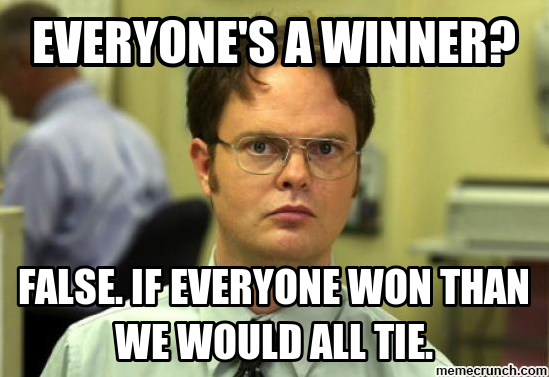 Deep. Never mind the TYPO. The person “tried.”
We see all over the news where schools are attempting to cancel Honors events because those kids who didn’t achieve honors…
View original post 1,647 more words
Revising Your Manuscript: Clarifying Motivation
Last week I shared the story of a shooting near our house. If you haven’t read that post, hop on back and read it first, then move on to this one.
When the dust settles after a tragedy in which the human will was involved–as opposed to a natural disaster–the very first question we ask ourselves is Why? What drove the villains of innumerable wars and genocides and school shootings and kidnappings and murders to commit such heinous acts? We want a reason, even if it’s an inadequate one, for the crime. And when we don’t get it, it makes the tragedy more frightening. Whatever the reason, it is so much easier to process and understand if it isn’t random.
When it comes to storytelling, motivation is key to understanding characters, accepting the plot, and fully immersing ourselves in the story. If there’s no clear reason for an action, the reader will be continually on the lookout for it. Now, if we want to make unclear motivation part of the tension for a while, that’s fine. But if we never manage to explain to a reader why a character, say, betrays his brother or cries when he sees a field of ripe wheat or sabotages his best friend, we’re betraying their trust in us as storytellers.
In high school I was in a number of plays and musicals, and beyond the very obvious difference of one having musical numbers and one not, I noticed a very pronounced difference in stage direction. In a play, if I stood up and walked to another spot in the “room” for no apparent reason, the director would call me on it. I needed to have a reason to change my position beyond me just feeling like the audience would be bored if I sat the whole time I was delivering these lines. In fact, it was so ingrained in me that it has affected my enjoyment of other productions! A common problem when memorizing lines and movements for a play is to answer the question What’s my motivation? because, of course, as an actor you are given lines and stage direction in a non-organic matter. To you, they did not arise naturally. Someone else wrote them out and you have been tasked with performing.
In contrast, the director of the musicals needed little reason for movement beyond the need to get people into the proper spots to start the next dance number. If you’re manipulating events in your manuscript just so you can get to the next scene that you planned, step back a moment and examine each character’s motivation. Would someone really act that way, say that line? Why? What would drive them to do that?
Using my example of the recent deadly shooting from the post on tension, after the shooter was taken into custody our questions changed from Who? and Where? to Why? Why the pharmacist? Was the shooter attempting to steal drugs? Was he under the influence of drugs? Why his neighbor? Had they been at odds?
The day after the shooting I was attempting to organize my desk (because deeper thought eluded me, preoccupied as I was with the events of the day before). This process involved going through a stack of items to be read and filed, including several issues of The New Yorker. I was flipping through them for articles and stories and comics I wanted to rip out and keep when I ran across an article about Adam Lanza’s father. I didn’t want to read about Sandy Hook, especially after the experience of my son’s school being on lockdown. But for some reason I began to read anyway. The article essentially attempted to explain what created a killer and a scenario like Sandy Hook. It talked about Adam Lanza’s childhood and teen years, his slow descent into a mental prison, the enabling actions of his mother, the frustration and despair of his father, everything, it seemed, except personal motivation. And that’s because that’s all we’re left with when a mass murderer kills himself and leaves no explanation. We’re left to grasp at wisps of clues and will never know the full truth.
But as writers, we must know why our characters are behaving the way they are, doing the things they’re doing, saying the things they’re saying. Read through each scene of your work in progress. Are the motivations of your characters clear? You don’t have to tell the reader outright why someone did something. You just have to make it easy enough for them to figure out on their own.
In my current manuscript, I wasn’t happy with one aspect of the ending. A young character committed a heinous act because I needed another character to suffer the consequences of their actions. The only problem was, I didn’t give this young character enough motivation. I tried adding a bit here and there, but what he did was so awful, my sprinklings of motivation were not enough, and I knew it. Rather than change the ending so that my other character didn’t suffer the consequences of her actions, I simply switched the young man’s target and made the consequences to the other character accidental. Problem solved.
Not everything needs an explanation of course. You don’t need to tell us why your protagonist rescued a dog from a shelter. It’s a pretty common thing humans do because most people like pets. However, you might have a reason for your protagonist choosing a large and imposing dog rather than a little yippy one. Or choosing a dog rather than a cat. That may factor into the plot or it may simply tell a reader something about the character that’s important.
Remember, if your character moves stage left, there had better be a reason for it or the spell you are trying to cast will be broken. Your audience will remember that they’re reading a book. And that’s exactly what we don’t want them to do.
Revising Your Manuscript: Increasing Tension
As I was headed to the post office late Monday morning in the pouring rain, I couldn’t help but notice half a dozen police cars and twice as many police officers in an otherwise empty parking lot in front of Rite Aid. Yellow police line tape cordoned off both the parking lot and the building, which is situated uncomfortably close to my house. Uncomfortably, because of what had happened there to necessitate the police presence.
I got to the post office in East Lansing and called my husband for a phone number I’d forgotten to write down and mentioned the strange situation at the Rite Aid. As we do nowadays, he proceeded to look up what information could be gleaned from online sources. Very little, as it turns out. A pharmacist, a kind man who had filled prescriptions for our family, had been shot in the face 30 or 40 minutes earlier and died. The shooter fled on foot into a residence on a nearby street, a street we used to use daily when our son was younger as we took him to daycare. There the shooter had apparently shot someone else just fifteen minutes later. Several schools were on lockdown. But my son’s school, closer in distance to the now supposed location of the shooter then the other schools listed, was not on the list. A call to the school went unanswered.
I finished my business at the post office, ran through the downpour to my car, and headed for his school. Thankfully when I got up to the front door, the building was locked. The principal let me in, I quickly made sure they knew what was going on, and then I left.
In the tense hours that followed, news was sketchy. “Isn’t this what Twitter is for?” I wondered in frustration as my husband and I scanned every news site, every feed we could think of, reloaded articles every two minutes to see if anything had been added. Robocalls from the police department and the school came ten to twenty minutes after events had already been reported on the Internet. We got the call that the school lockdown had been lifted, but still could find no indication that the police were positive that the suspect was in the residence that they had surrounded with cops from three cities, S.W.A.T., a U.S. Marshall, K9 units, and armored vehicles.
I second guessed myself for leaving my son at school. Why didn’t I ask if he could come home with me? What if he’s in danger? With every half hour that passed by with still no updates, anxiety mounted within me. A headache came on. I erupted in tears a few times (folks, I rarely cry). I couldn’t concentrate on anything. I was steadily losing it.
Let’s pause this story here and take a look at the facts.
By the time I drove by the Rite Aid and saw the tape and the cops and the cruisers, everything except the apprehension of the suspect had already taken place. Two men were already tragically dead. The shooter was already barricaded in the location of the second shooting and surrounded by law enforcement. The only thing yet to be decided was whether he would give himself up, go out in a hail of bullets, or shoot himself. He was contained.
But I didn’t know that. And my baby was not home with me.
Tension–severe and almost unbearable tension–can happen even when nothing is actually happening. Tension stems from uncertainty–not knowing someone’s true identity, not being able to predict what someone will do next, not understanding why something is happening, not knowing if a loved one is safe, not knowing when something will end, not knowing how someone will react…not knowing the end of the story. In our writing, tension is as much about what is not apparent to a character as an immediate physical threat to a character. Stories with absolutely no big action can have more tension than the most explosive big-budget Hollywood shoot-em-up ever made. Yes, there’s Speed, but there’s also Phonebooth.
Inside the Rite Aid, there was a brief moment of tension. An argument perhaps, the sight of a gun. But when that poor pharmacist died, the tension for him ended.
Outside the Rite Aid, every parent in two cities was terrified and anxious and even hysterical for over three hours. Each child in those locked down schools was wondering why their teachers were so tense and why they had a Code Yellow. People at work or at home within a five mile radius of all the action, including the campus of Michigan State University, were told to “secure in place,” stay inside, lock the doors. For tens of thousands of people outside, though they were not directly involved in any of the tragic events of the day, the tension worsened with every moment that passed with no information and no resolution.
Tension kept my husband and I reloading scant articles online. Tension keeps a reader turning the pages. And if tension stems from uncertainty, as writers we need to keep readers in suspense as long as possible.
It can be uncomfortable to write like that. We naturally desire resolution. Even a song that ends on an unresolved chord can drive us nuts. But in order to keep a reader engaged, we need to resist the desire to explain. Tension is in the pauses, the silences, the moments before the Moment. Have you ever read For Whom the Bell Tolls? That entire book ends on an unresolved chord! And it’s the ending that makes the rest of the book worth reading at all.
Take a look at your work in progress, scene by scene. Do you allow tension to hang heavy in the air? Or do you resolve problems as quickly as possible? Is your story lacking tension of any kind? How could you add tension? How can you increase the uncertainty of a situation? Raise the stakes? Make the consequences more dire? Give the character (and the reader) less information? End a scene sooner? Pay special attention to the ends of your chapters and try to end each one with an unresolved chord. Compel the reader on to the next chapter by leaving them unsatisfied in this one.
That’s what makes a thriller a page-turner. It’s not the action itself. It’s the uncertainty. And you can use that to your advantage even in a quiet book.
Back to Rite Aid. When my husband left the house to pick up our son from school, word filtered through that the shooter had given himself up. He was in custody and the threat had ended. I texted my husband to let him know, to ease his anxiety and break the tension. It took me the rest of the evening to truly recover from the day. And in the light of the next morning, the big question became one of motivation.
As I said, this story is still developing. Here is a good article about the first victim and here is one about the second, men who had dreams and families and were made in the image of God, cut down in the prime of life. Why? We don’t know. And that is the subject of my next post on revising your manuscript…
Characters…with insight from a writer we should know, Erin Bartels
Check out my thoughts on character development over at Andrea Peterson’s blog today…

There have been characters I feel so deeply for, I dream of them. Some stay with me even if I have to put the book down, and, when I’m invested in my character, putting the book down is very hard for me to do. They are part of my circle of friends, my family…
View original post 1,963 more words
Revising Your Manuscript: Solving Plot Problems
You know when you watch a movie and you find yourself asking “but why wouldn’t he just…” and you can’t enjoy the rest of the show because everything hinged on that one thing that doesn’t make a lick of sense?
Congratulations! You’ve identified a plot hole. Spend much time on IMDB.com and you will find thousands of threads about plot problems in popular movies. Some of them are little, and rabid fans quickly explain them to the not-so-observant watcher. They’re the potholes, something we Michiganders are intimately familiar with this time of year. They make the ride clunky, but they’re not going to ruin the trip altogether.
Others are, well, like this.

For the pothole type, you probably just need a patch. You find a reasonable explanation for why this character did X or why Y caused Z and you work it into the story. For the sinkhole type, you may need to do some intensive structural repair and rerouting.
The sinkholes are the things we wish we could ignore because fixing them could alter everything else in our story. So we pretend they don’t exist, convince ourselves that we’re worrying about nothing, and in the meantime they swallow up the whole story because no one can get past them. Sometimes we need others to point them out to us, so we know–for sure, now–that yes, this is tripping up everyone else as well.
As painful and labor-intensive as they may be to fix, they must, must, must be fixed. And here are a couple ways we can approach them:
1. Go back to the beginning and prepare us.
Want to keep that plot device? Then you need to go back and lay out for the reader why it has to happen that way. Give the reader signposts and clues and reasons. If adequately done, then when we come back up to where that sinkhole was, you may find that it’s disappeared. Everything makes sense and falls into line and we go trucking right along to the next chapter.
2. Go a completely different direction.
Just can’t get your mind around how to salvage your plot and not fall into the sinkhole? Turn around and go another direction. Choose that direction according to the natural flow of the story. What would really happen next? And next? And next? Make that happen. Maybe you’ll get to the place you had wanted to be in the end anyway. Or maybe you’ll discover an even better ending in this new direction. I like it when the latter happens, because those are the endings that can both surprise us and still feel inevitable. They never feel tacked on.
What about you? How have you handled big plot holes in your own work? Do you find they tend to pop up in the same places, like the muddled middle or the ending that you just never quite thought through until you found yourself there and had to wrap this blessed tale up? I’d love to hear from you!
Lessons in Not Scrimping
There are some foods that you just can’t go low-fat on, aren’t there? I think we can all agree that fat-free ranch dressing and fat-free mayonnaise and those sick, white-fleshed turkey hot dogs are at best disappointing and at worst disgusting and not worth all the calories you’re saving. With some foods, you just can’t hold the good stuff back. They need the fat in order to taste how they’re supposed to taste.
I imagine that pound cake is one of these.
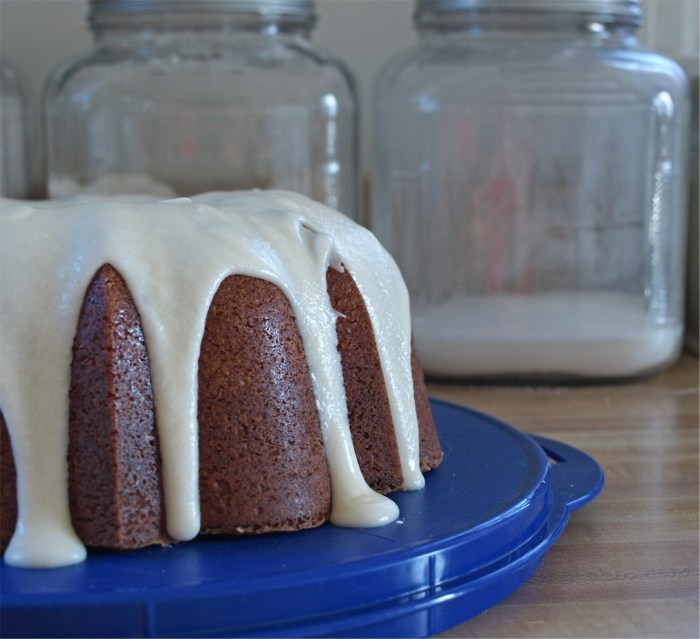
Pound cake is lavish. It’s unapologetically decadent. It’s essentially just butter, sugar, eggs, and heavy cream with some very white flour thrown in for good measure, then topped with more butter, sugar, and heavy cream. If you tried to make pound cake with low-fat and low-sugar substitutes I think you’d end up with a sad, nasty mess. No, in the case of pound cake, you need to go all in.
When you’re creating, whether you’re writing, sewing, painting, gardening, or whatever, the same holds true. You want to go all in, with the best of your ideas, the best tools at your disposal, the best raw materials you can get, and the best effort so that when you’ve finished something you’ve put all of yourself into it. Why? For several reasons:
1. When you put your all into something, you are generally happier with the result. Even if something didn’t turn out quite perfect (and there’s always something) you still know for a fact that you have done your absolute best. And mentally, that’s worth something. Even if others don’t get it or don’t even see it, if I know I’ve done my best and put everything I had into something, I can be proud of it.
2. The product of your efforts, whether it’s an herb garden or a baby blanket or the Great American Novel, will be better than if you only put in partial effort or just some of your good ideas (holding back others for a later project because you were worried you’d exhaust them forever on this one). If you put your “full-fat” self into your work, the end result will always taste/look/read/feel better. This is obvious, but it bears repeating when so many of us have the tendency to get down on our own work before we’ve even given our full effort to it. The world doesn’t owe us success for our minimal efforts. We owe the world our best effort, and success may follow.
3. Once people see your best, you’ll always want to give them your best in the future. If you bring an amazing, delicious, completely homemade pound cake to a dinner, the next time you’re asked to bring food, you’re not going to want to bring Chips Ahoy! cookies. You’re going to want to wow people again–because it feels so good to wow people. Once you write something you’re truly proud of and you get great feedback from people, you’re going to want to do even better the next time. Giving our best in one thing spurs us onto improvement. When we set a personal record running a mile (because really, you need to work off that pound cake) it makes us want to beat our personal best, doesn’t it? Giving everything you’ve got to a task not only makes the current result better, it makes future results better.
Today, this week, this month, and for the rest of the year, ask if you’re giving your current project the full-fat, gloriously delicious best you have to offer. Whether you’re cleaning out the garage or teaching your kid to ride a bike or detailing a car or crafting a poem or refinishing a table or whatever, remember that Splenda and Egg Beaters and skim milk and gluten-free flour do not a pound cake make.
How are you giving your best today?
 Erin Bartels
You must be logged in to post a comment.