I Am Building a House with a History

Lately, when I’m not working, cooking, reading, spending time with my family, or folding laundry, I’m busy building a nearly 150-year-old farmhouse. I’m digging the cellar, placing the windows and doors, nailing on the shingles, and sending long fingers of Virginia creeper up the chimney. I’m polishing the oak staircase, papering the walls, and arranging the furniture. I’m also planting gardens and trees and secrets all over the place.

It’s great fun.

OLYMPUS DIGITAL CAMERA

I’m building this house in my mind and on paper so that my characters can live in it–so they can move through rooms, stare out windows, and pull covers up over themselves at bedtime. I’m layering each room with the history of its inhabitants. Each floor is being smoothed by generations of feet. Each book in the library is being flipped through by countless fingers. I’m making it a place I would want to spend a lot of time and I hope those who one day read this book will love to spend time there as well.

OLYMPUS DIGITAL CAMERA

I dream about houses fairly regularly. Sometimes I’ll visit the same one in multiple dreams over the course of many years, but I’ll discover a room or a person I didn’t know was there. I’m hoping if I think about this house I’m building enough in the daytime I may be able to walk through it in my dreams at night.

When was the last time you built a world in your mind or on paper? I bet it was something you did a lot as a kid. You may be rusty, but I’m willing to bet if you dusted off your brain a little there would be no end to what you can imagine.

Your Novel as a Garden: 14 Ways Writing Fiction is Like Growing Your Own Veggies

I’ve once more been in the throes of novel revision during the past couple weeks, adding subplot and subtext, honing here, shaping there, putting everything just so before sending it all off to hands waiting in the cybersphere. At the same time I have been forced to pay closer attention to my vegetable garden as the heat and rain combine forces, spurring on quick growth and a crop of weeds that must be eradicated.

It occurs to me, as I consider these two activities, that writing a novel is much like plotting out and planting a garden. If you start with nothing, just a bit of land and some muscle power and some seeds and plant starts, you can, through hard work and sweat make bare dirt into food. You can make this happen…

Growth

And if you start with nothing, just a blank Word doc and some brain power and the barest germ of an idea, you can, through hard work, make bare creative impulse into engaging fiction.

In fact, here are 14 ways writing a novel is like growing your own vegetables:

1. You till the soil. You prepare your mind to be receptive to writing ideas (these are your seeds) so that when the seeds are planted it is into a mind that is already at work helping them to grow. In gardening this means removing rocks, adding nutrients, and loosening the soil. In writing it means removing obstacles to creativity (like, say, forgetting to worry about the state of your house or waistline for awhile), adding muse-bait (taking more walks in the woods, traveling to some interesting places, or playing hours of Mario Cart–whatever helps you think creatively), and loosening up your writing muscles (by blogging, writing short stories, writing poetry–heck, even a Twitter tirade could get you loose).

2. You plan the layout. You can’t just dump a bunch of different seeds together and expect your garden to grow. You have to plan. For some people that may look like lots of drawing and erasing and drawing again on paper, scouring reference books for light requirements and companion plantings, and whipping out a protractor and one of those chalk line thingies. For others it’s just getting everything in line in your head before diving in head first with a shovel. Whatever your method, whether you’re a compulsive outliner or a free associating free spirit, you need to have some idea of your goals and how all the different parts of your garden will interact with each other. Otherwise you end up with a big mess on your hands come August and a lot of extra work as you try to fix your errors.

3. You plant the first seeds. These are the cold-hardy seeds that just need some thawed ground and the strengthening spring sunlight to get started. They’re your strongest ideas, the ones you can’t get out of your head, the ones that persist despite bad weather and not writing them down. Don’t worry about a late frost. Just get those suckers in the ground so they can get growing. Seeds don’t grow unless they’re planted. Your garden, your novel, will never happen if you don’t take a leap of faith and trust that the strongest ideas will survive.

4. You water. Here’s where you give those seeds a little push. When you write, what is it that helps you develop your ideas into something approaching a story? Whatever that is–giving yourself a word count or time goal, doing character sketches, etc.–do that.

5. You wait. Put your work away for a bit and let things start to happen. In the garden, beneath the soil where you can’t see, roots and shoots begin to grow. In your mind, the same thing happens when you put your writing aside for a while, get some distance, and let things develop beneath the surface.

6. You plant the next wave of seeds. While you were waiting, I bet you got some new seeds, didn’t you? Plant those when the time is right. Some seeds can’t be planted until the soil is warm. Some ideas don’t occur to us until we’ve already gotten started and the story gets going.

7. You water. Again. Keep an eye on those little ideas you’ve planted and don’t let them struggle for life on their own.

8. You wait. Again. No matter how much we may want to sometimes, we can’t force a garden to grow and we can’t force a good story to develop faster than it should. Time is a writer’s best friend and we should try to work with it.

9. You plant some baby plants. Remember that scene you cut from your last writing project? That subplot you’ve been dying to find a place for? Those are your baby plants. They’re already pretty far along and sometimes you can find just the right place to plant them in your current writing project. Don’t force them in if there’s not enough room for them. But sometimes they’re just what you need to make your garden whole and productive.

10. You water. Again.

11. You wait. Again.

12. You weed. Ah. And here is where it can get tricky, time consuming, and hurt your back. Sometimes you won’t know what’s wanted and what’s a weed. Very early on, it’s really hard to tell sometimes because seedlings can look very much the same. But if you let all these ideas develop a bit (through watering and waiting) eventually the weeds will show their true colors. Those things that stick out, don’t belong, and aren’t productive? Pull them out! And when you look over your work again and find that a new crop of weeds has popped up, pull those out too! Don’t let weeds take over your garden or your crops will suffer (and it will just look like one big mess).

13. Repeat steps 10 through 12 as many times as necessary. I’ve lost count on my first novel MS. But the number of times isn’t important. What’s important is that you  repeat these steps as often as is necessary in your particular story garden.

14. Finally, you harvest. At some point, if you have been diligent and attentive, you will have a harvest. A lovely, verdant, productive garden that you are eager to share with others (because you can’t keep all that great food to yourself!). What you do with your harvest is up to you. Self-publish? Find an agent? Give it away for free?

But one thing is sure: you’ll never have anything to share if you don’t plan, plant, have patience, pull up the weeds, and put your back into it! So get out there and get dirty.

You Have Been Chosen

On Sunday we had my son’s fifth birthday party with his crazy little friends at Impression 5 Children’s Museum. Calvin wanted a Toy Story theme, and so I made these little cupcakes for dessert.

Oooooooooooo!

For the uninitiated, these are my best effort at making a bunch of Pizza Planet aliens from the claw machine. Observe…

As the writer seeking publication or even representation, it’s easy to feel like one of those little alien squeaky toys, waiting in a sea of other aliens–er, writers–for some mystical outside force to pluck us from obscurity. We long to be “chosen.” Some, like Woody, will search out another, more indie avenue. Others, like Buzz, will be chosen without even having waited at all (those lucky-ducky writers who are at just the right place at the right time and know the right people).

But most of us are aliens. Waiting and hoping.

But while you’re busy waiting, be busy writing more, revising again, making everything you create as creative and as strong as possible. So that when The Claw closes around you and draws you up above the crowded masses, you will be ready to take full advantage of that “better place” to which you are going.

And here’s hoping your agent or publisher is nothing like Sid.

“I don’t want to read the book. I’ll watch the movie.”

How many of you out there have heard this song from Switchfoot’s first album in 1997?

It was a favorite GenX anti-anthem of mine in college. I joined the members of Switchfoot in lamenting our generation’s general laziness and lack of ambition. But then this week I found myself in this very situation.

In 2003, Donald Miller’s memoir Blue Like Jazz came out and seemed to almost singlehandedly resurrect the memoir genre for the Christian subculture. Devotees sprang up everywhere I looked, so I figured I ought to read it for myself. However, despite enjoying memoir (I’ve read several over the past few years that contained some of the most lovely writing and emotion I’ve ever encountered in written form) I just couldn’t get into it. It seemed…I dunno…just a bit too whiny.

Whatever it was, I couldn’t relate, and so I couldn’t get past the first chapter. I’ve read nice quotes pulled out of that book and I’m sure Donald Miller is a great writer, but his story of growing up without a father, questioning God’s existence and God’s love, hiding his faith from others during college–it just didn’t resonate because my life experience has been different.

And that’s fine. Lots of people bought Miller’s book. Lots of people love it. He doesn’t need me to be a success.

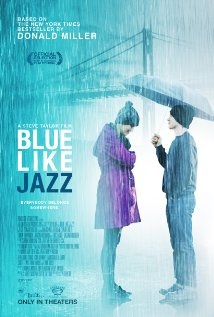
BlueLikeJazzSomewhere along the way, Blue Like Jazz became a movie. A movie I had no interest in seeing, but that my husband, a compulsive consumer of Christian movies (both sincerely and ironically), kept badgering me about. Okay, badgering is too strong a word, but it kept coming up. And on an evening when there was nothing either of us wanted more than to finally sit down and vegetate, I said I’d watch it.

Blue Like Jazz the movie was pretty good. The acting was beyond the moon when it comes to Christian films. The book had been plucked for the most compelling storytelling bits. And it was made by the incomparable songwriter-turned-director Steve Taylor who wrote, among other things, most of the Newsboys songs I love.

The reason I bring this up is not to critique the book or the movie, but to talk about narrative. Narrative in a memoir and narrative in a movie are different. Unless we’re talking about some art house film at Cannes, movies generally have a stronger narrative and more forward motion than a memoir. A memoir feels recollected (because it is) while a movie, even if it begins with a voiceover from the narrator, and even if we then hear that voice now and then later on in the film, is experienced as though it is just now happening because we viewers get to see the action as it happens on the screen.

The medium isn’t necessarily the message, but it sends a message. It creates expectations in people that, when left unmet or when trampled upon, create dissatisfaction.

Occasionally you read an article that should really be given a book-length treatment. Occasionally you read a book that really only has enough substance for an article. Occasionally you read a short story that you wish was a novel. Occasionally you read a novel that would have been far better as a short story. Occasionally a memoir is better as a movie.

Is the form in which you are writing truly the best form for what you want to get across? Are you writing a novel because that somehow feels more legitimate than a short story? Are you trying to stretch a theme out to be a book when it would actually have more impact as a series of blog posts? What expectations do readers have of your chosen genre? Are you meeting and exceeding those expectations?

Editing Out the Cowbirds

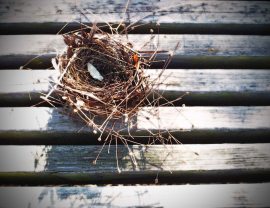
nestLast week my husband, Zach, and I were over at our friends’ house. While our sons tore around the house and our husbands scrutinized slabs of meat on the grill, my friend Kristin told me with a little glint of excitement in her eye that they had a bird’s nest in their juniper near the front door. She knew that I, the consummate animal-lover, would want to see it, so we went down the porch steps to the blessedly quiet outdoors.

Being allergic to juniper, I allowed Kristin to part the boughs and I peered into a small nest that held five eggs: four tiny blue eggs with speckles on one end and one creamy egg with speckles all over.

“You need to get rid of that white egg,” I said.

Kristin looked at me, her face a swirling mixture of puzzlement, suspicion, and intrigue. “Why?”

“It’s a cowbird egg. It’s a parasitic bird. The cowbird chick will be larger than the others and will push them out of the nest or eat all the food and the other babies will starve.”

Now Kristin looked positively flummoxed. “What?!”

“Yes, they lay all their eggs in the nests of other birds. You need to get rid of it.”

After I assured her that the mother bird would not reject the nest if it smelled like human (besides vultures, birds actually have a very poor sense of smell) it was decided that Kristin would fish the offending egg from the nest so that I wouldn’t break out in a hideous and persistent rash, but I would be the one to heartlessly dispose of the egg. I tossed it into the backyard where it could become a tasty treat for a blue jay, crow, or garter snake.

As a child, such an act would have seemed to me to be very harsh, cruel, morally reprehensible. To even squish a bug was a sin to me. But I am an adult and my sensibilities have been hardened by the knowledge that we have plenty of cowbirds in Michigan and if that nest contained the brood of a rarer bird, like a warbler of some sort, the threatened species was the one that warranted my protection.

Not surprisingly, there’s a lesson to be learned here (beyond the avian one).

In our interaction over the nest, Kristin was the writer, I was the editor, the nest was the piece of writing, and the eggs were content.

When we act as writers, we love the piece and everything in it. Then we share it with someone else, looking for critique. When we act as editors, we see a problem the writer does not. We helpfully point it out (hopefully with tact). We explain why it’s bad for the rest of the piece to leave it in there. And then it’s the writer’s job to trust the editor and actually pluck the offending egg out for the greater good. Sometimes the writer needs an extra push here and there, sometimes she needs reassurance that it’s the best course of action, and sometimes she needs the editor to be the bad guy. (“Yeah, I loved that part too, but my editor said it had to go.”)

When you’re writing for eventual publication or public consumption, you can’t go it alone. When we write, we need others to look at our work and identify the cowbird eggs, the parasitic parts that need to be removed so that the good eggs will survive and mature.

Who is editing your work? If you’re thinking of self-publishing, this is an essential component. Yes, self-pubbing is relatively easy and very cheap, and maybe you have an awesome platform to help you market your book and sell lots of copies. But don’t make the mistake of going it alone. Every writer needs an editor. And there are a lot of freelance editors out there.

If you have trouble finding one, let me know. I kill cowbirds for a very reasonable price.


Yes, That Really Is Your Voice

Not so very long ago there were these things called tape recorders. Many of you who are older than thirty probably remember these devices. And I’d wager that most of you remember listening to your recorded voice at one time or another and thinking, “That’s what I sound like?”

I’m not sure this is a pleasant experience for anyone. It’s definitely worse if you hear yourself singing–those church or school performances you thought you’d nailed but then CRINGE, oh, that was most certainly not the right note right there. Or there.

In our own heads we sound one way, but the world at large experiences us in a different way. And if you’re going by numbers, the world has you beat about 7,000,000,000 to 1.

The same is true with our writing, I believe. To me, certain sentences may sound lyrical and fraught with meaning, while to another they may sound clunky and trite. The opposite is also true. At times we write things that sound common to us and yet they may strike another in such a profound way that they print them up and tack them to their wall or put them on their refrigerator as a reminder.

Here’s what I think you should do with this little observation:

If you’re going about blithely assuming everyone reads your writing the way you do, the way you intended, take some time to examine it from another’s perspective. Are there ways you could make your meaning more clear? Are there ways you are closing off access inadvertently? Are you talking down to people? Are you assuming your reader is more knowledgeable about your subject than they actually are? How can you try to make others hear your voice as you do?

Conversely, if you can’t even bear to share your work with others for fear that they will see you for the hack you are, can you step out in courage and faith and let a few friends read your work? Isn’t it possible that you don’t sound as bad as you think?

I have a number of kind “no thank yous” filed away that tell me that not everyone reads my writing the way I intend it to be read. I can let that bother me, let it beat me down until I give up. Or I can learn from them. I can work to fix the fixable things so that my writing is read by another they same way it came out of my head in the first place.

Remember, perception is reality…except when it isn’t.

Pointing Out Pain, Then Pointing Toward Beauty

I spent some time tonight working on a new short story. It’s hard going, not because the words are not coming–they are, and fast–but because some stories are just hard to write. Stories that tackle uncomfortable or difficult subjects, especially when those subjects are part of our own personal history.

Writing from life can mean re-experiencing something you wish you could leave behind in the forgotten past, something you thought you had already buried. It can mean coming to terms with the fact that an event from your past, perhaps even just a few unforgettable moments from your childhood, shaped you in ways you didn’t realize until you started getting it all out on paper.

It can mean pain.

And sometimes, writers stop there. They lay out their painful experiences, looking for some sort of catharsis, perhaps, or a bit of sympathy, and then leave it there in all its depressing fullness.

What do you do with that as a reader? What can you do with it? Honestly, beyond trying to sympathize with a writer, there’s not a lot you can do with it. You close the book and move on to the next one.

It seems to me that the really good, memorable stories we read are the ones that honestly point out pain and then point us toward beauty. They expose a negative, maybe let us stew in it a bit, and some may even appear to leave us there, but at some point they offer at least a glimmer of hope or at the very least a lesson, an admonition not to go down that same bad road that a character did, showing us the points at which we can choose a better path.

I have read a number of stories that wallow in sorrow and angst, giving no hint of redemption. I’ve read a number that really only present the reader with fake problems encountered by characters that are less than authentic. But between the bitter and the saccharine are the stories that stick–the bittersweet ones.

Certainly there are readers for any type of story that can be written–even the Pollyanna, the pouting, or the painful–but I’m comfortable making a value judgment here. Depressing stories that revel in the moribund and never climb up out of the mire of despair are, in my mind, self-indulgent in precisely the same way as that girl you knew in high school who cultivated imagined personal tragedies to get attention.

Don’t get me wrong; I actually do like depressing stories provided I get a little comic relief and even the faintest glimmer of hope. I think some of our more authentic expressions of deeply felt human emotions come through tragedy. But at the end of the day I have a cautiously positive view of the world–not because I think the best of people, but because my worldview is formed by my religious belief. I believe God works out all things to bring glory to himself and that I’m part of that plan. It helps me put things into an eternal perspective. We all have our lens, and that’s mine.

So even as I write through the parts of my own personal history that seem ugly and unfair, I look for the glint of good that must lie within them. The negative events of our lives are rich deposits of literary iron to be mined, the tough, blackish parts that hold within them the conflict we need in order to make our stories interesting. But don’t miss the thin veins of gold or silver running through them because you’re so focused on the negative.

It’s the dark parts of our lives that make those bits of beauty shine so brightly.

It’s the winter that makes the spring such a miracle.

OLYMPUS DIGITAL CAMERA

What’s the Weather Like in Your Story?

WindowviewartsyI feel a bit nervous saying this, as though by daring to utter it I might somehow invite another winter thrashing, but it truly does seem that spring may at last have won the epic battle it has been waging with winter for the past two months. It was finally dry enough and warm enough to spend the day outside, to feel the sun’s heat on my skin and hair, to remember what summer is like. I don’t know how dependable the change of the seasons is in the Middle East, but as a Michigander I feel greatly comforted when I read that God is more faithful than the changing of the seasons.

I think something in us as humans wants to have to contend with something. We want to contend with something and win, or at least endure. And that’s why when outsiders or transplants to Michigan bemoan the weather or are surprised by 50-degree temperature swings in a day or can’t believe it’s still snowing in late April we smugly shrug our shoulders and say “That’s Michigan!”

You don’t like weather? Start packing your bags.

And yet, even I will admit that enough is enough. I knew winter had gone on far too long when I was driving home from Grand Rapids earlier this week and I noticed a farmer’s field covered in bright green and my very first thought was, “What the heck is that?” Two days later I drove back to Grand Rapids in a snow storm.

My own modest gardens have come alive as well. And I saw the first bug smash against my windshield this week, so it is spring for real. Isn’t it?

Maybe because I’ve grown up with schizophrenic weather I love reading stories where weather plays a part or sets a mood. I like to know if it’s sunny or cloudy, humid or parched, burning or icy. Should I be sweating as I read this scene or shivering? If it’s raining, what kind of rain is it? A steady cold spring rain? Drizzle? The fat, merciless raindrops of a storm? Is it falling straight down or sideways? Does it soak me or sting me? Am I managing to stay dry or is my face wet?

Do you make the best use of weather in your writing? Or is that a literary tool you’ve left in your toolbox?

The Deadly Act of Revision

The Butterfly EffectDuring the past week I took the plunge and switched a novel-length manuscript from 3rd person limited omniscient over to a 1st person point of view. I knew I needed to do it, but I wasn’t looking forward to it because it meant a lot of changes.

A change in narrator means not only a change in personal pronouns but (in this case) subtle changes in voice, phrasing, and vocabulary. It can change the way you describe a scene. It can change the values you place on various elements of the story. It can change the past and it can change the future. It can change everything.

It can mean throwing out a significant amount of good writing. But as painful as this whole process can be, it is also a great teacher. And I shall not presume my learning days are done just because I’m long out of college. (Oh my, it has been twelve years.)

You know the butterfly effect? One tiny event in one spot causes untold numbers of events that would not have happened, or would have happened differently, had it not been for that one tiny event half a world away? That’s the kind of thing that happens when you replace the word “she” with “I” in a novel.

Big revisions are not for the faint of heart. You lace up your boots (or, for those of you write historical romances, your corset), take a blind leap into the fray, and hope that with persistence and intelligence you will come out on top. And a little luck probably doesn’t hurt either.

In the meantime I am also writing and taking notes on a new series, coming up with story arcs and subplots and characters. Lots of planning, planning, planning. Very different in process and in tone from my first finished novel, but it is something I started thinking about doing a decade ago and now I’m finally ready to start bringing it into reality. I love brainstorming and throwing a ton of ideas out there, ready to be plucked later. It has me excited and feeling rather happy. Which is a nice relief when the revisions of earlier pieces gets tedious.

What are you working on?

The Freedom of a Plan

A to ZDuring the past week my husband and I have been scheming. We’ve developed a plan to pay off our remaining debt (funny how having a child can completely derail your life for awhile) and get our house ready to sell sometime next year. With our son starting kindergarten this fall in a school system that is beyond inadequate, it’s time to consider one of the many nice communities around Lansing (all with highly rated school systems and lower crime rates) for our next house. We want something bigger with a larger yard further away from busy streets now that we have a little guy who is keen on spreading his wings a bit. And we have the plan in place to help us make it happen.

Here’s why a plan is essential to an undertaking like this. If you have a long term goal that’s big, you are far more likely to be successful if you break it down into smaller goals. A plan helps keep you on track, marking completion of the little goals and constantly reminding you of the ultimate goal. And it shows you how far you are toward accomplishing it.

The plan can seem restrictive. When you’re paying down debt, for instance, you need to be strict with yourself to keep from veering off course. Yes, it would be super fun to go out to eat twice a week, but we have our future house to think of. Yes, it would be great to go on vacation this summer, but we have our son’s education and safety to think of. Yes, I would like to make goat cheese and gourmet olives part of my daily caloric intake, but I have a goal that is bigger than goat cheese.

And when you don’t have a plan in place that shows you exactly how and when you will accomplish your goal, it’s really easy to wander off track. Just for a while, we tell ourselves, but then one day runs into another and another and another and we can find that we are still as far from accomplishing that goal as when we started.

The same is true (I am finding) in writing. I have a lot of novels started, but only one finished. I have a lot of ideas, but I can’t bring them all to fruition at once. So I need both an end goal (write a novel) and a real, concrete plan to get there. I currently have my next novel planned out with Scrivener, and I have set dates by which each scene should be written (two per week) and an average word count goal for each scene. Following this schedule, I will have the first draft written by mid-September, I will write the proposal in October, and I will revise the draft in November. By the end of the year, I will be thinking about shopping it.

The mere thought of a schedule may make some of you cringe. But for me, for now, it is what is going to help me reach a goal.

Where’s the freedom in that, you may ask? It takes a lot of pressure and negativity off of me because I know if I simply follow it, I will reach the goal. I don’t have to continually rethink and re-strategize. It frees me to say no to other things so that I can focus on writing. It allows me to be happy with just 1700 words in a writing session because that is all that is required of me at a time. I can write 10,000 in a day, but I really only have to write 1700 twice a week. Freedom to pace myself.

In five months I’ll have my next novel drafted. In a year we’ll put our house on the market. We have our plans in motion and all we have to do is stick to them.

Have you planned how you will reach your writing or other creative goals?