Entering a Season of Joyful Anticipation

I don’t know about you, but I feel like I’m still recovering from a fantastic extended weekend of great food, family, friends new and old, and lots and lots of cleaning up. I managed to somehow be involved in three Thanksgivings: one at my in-laws’ with fifteen people; a quick visit to my aunt & uncle’s house to see them, my parents, and one of my cousins; and one at home a couple days later with eleven people that I actually prepared singlehandedly.

OLYMPUS DIGITAL CAMERA

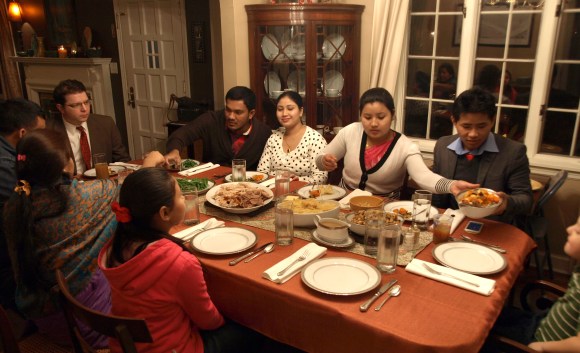
It ended up being a very multicultural Thanksgiving. My mother-in-law invited four international students who wouldn’t be able to be home over the holiday. Our Kenyan friend Grace we have known since she was nine and her father Jeremiah was attending seminary in Grand Rapids. She brought three friends: Korean Grace who grew up in China, Korean Grace who grew up in India, and Nigerian Oyin who grew up in Nigeria. The meal we had at our home on Sunday night was our little family and eight Bhutanese-Nepali friends from one of the congregations that uses our church building for their church services.

It was fun to share the story of the first Thanksgiving with our Nepali friends who had never heard it. And it was fun to discover, through my mother-in-law’s careful genealogical research over many years, that my husband Zach has two ancestors who were actually on the Mayflower! Thinking about that distant connection gave new meaning to the very old story.

And as Advent began on Sunday, Zach (who is also my pastor, in case you didn’t know) made a poignant connection for me. The same distance in time that exists between us modern Americans and the Mayflower existed between the close of the Old Testament and the coming of Christ as a baby in the manger. Four hundred years. Four hundred years from when God said this:

“Behold, I will send you Elijah the prophet before the great and awesome day of the Lord comes. And he will turn the hearts of the fathers to their children and the hearts of children to their fathers, lest I come and strike the land with a decree of utter destruction.” – Malachi 4:5-6

to when God said this:

But the angel said to him, “Do not be afraid, Zechariah, for your prayer has been heard, and your wife Elizabeth will bear you a son, and you shall call his name John. And you will have joy and gladness, and many will rejoice at his birth, for he will be great before the Lord. And he must not drink wine or strong drink, and he will be filled with the Holy Spirit, even from his mother’s womb. And he will turn many of the children of Israel to the Lord their God, and he will go before him in the spirit and power of Elijah, to turn the hearts of the fathers to the children, and the disobedient to the wisdom of the just, to make ready for the Lord a people prepared.” – Luke 1:13-17

I think about those four hundred years of waiting, listening, wishing for a word from one’s God, wishing for fulfillment of a promise. And I believe I shall think on it all during Advent, in a time in our world when it can feel like God is silent and everyone simply does “what is right in his own eyes.”

Tonight we’ll finally have time to decorate the house for Christmas. On our pre-lit tree, I believe there are four hundred lights. One tiny light for every dark year of anguished waiting. Altogether they make a bright and beautiful light and will point me toward the one Light that was soon to make His humble entrance into His creation, in order to redeem it.

So Much for Which to Be Thankful

Tomorrow is Thanksgiving in the US and therefore we are all beginning to think of the things for which we are most grateful. We’re also beginning to stress about food preparation, where all these guests are going to sit, and whether it’s worth it to go out shopping on Friday amongst the hordes to save a few bucks. But mostly, let’s hope, we are counting our blessings. I thought I’d share a few with you.

I am thankful…

…for a husband who is caring, talented, funny, and supportive

…for a son who is enthusiastic and hilarious and so, so sweet

…for a warm home with a fireplace and a well-stocked pantry

…that we found a new home for our cat and that our son’s allergies have greatly improved

…that last night I reached 50,000 words on my WIP and became a winner of National Novel Writing Month

…that my extended family is intact and that we all enjoy spending time together

…that I have a few days of relaxation coming up during which I can chat with people I don’t get to see often enough and quilt a baby quilt for a friend

…for a good job at a great company where I feel our collective work makes a difference in people’s lives

…for a beautiful, if broken, earth to care for and enjoy

That’s just a short list. I could go on, but you’d probably stop reading because it would get too long.

Most importantly, I’m not thankful for these things in some vague “I’m happy about these things” way. You can’t just be thankful for something. You also have to be thankful to someone for providing those things. So this Thanksgiving, and every day, I am thankful to God for these material blessings. And I’m most thankful to Him for creating everything that is, for creating it “good,” for not abandoning that creation when it turned against Him, and for sending His Son to redeem it. Because Thanksgiving, to me, is the first step into the Advent season, when we wait with joyful anticipation for God’s long-promised and yet still somehow unexpected gift: Jesus.

If you live in America, I hope that no matter what your faith you have time to celebrate Thanksgiving with friends and family. I hope you’ll take time to count your blessings. I hope you’ll meditate on the story of the first Thanksgiving. And I hope especially for those of you who don’t know what you believe about God, that you’ll feel the pull, either a gentle tug or a disorienting jerk, of the One who knew you before you were born and who has lovingly sustained you, even to this very moment.

Happy Thanksgiving, everyone!

August on My Mind

It’s no secret that August has been an…interesting month. Volatile. Heartbreaking. Incomprehensible. Israel and Gaza. ISIS and extermination of Christians. Depression and suicide. Ice buckets and ALS. Clashes between police and community.

There are a lot of people out there saying and writing plenty about these things. I have little to nothing to add. In many cases I’m just not sure what to even think let alone what to say.

So this post isn’t really about any of those things. It’s about the times when we’re overwhelmed by the brokenness of this world, when we realize that no amount of awareness or legislation or fundraising or foreign policy can fix things. It’s about the moments we teeter on the edge of despair and wonder what it’s all for, when we want to escape into a book or a movie or our own little family circle and block out all the bad, but at the same time we feel guilty for doing it. It’s about wishing for another world. Waiting.

It’s about putting our hope in the promise of all things made new.

What I Learned from a Chatty Iraqi Woman at the Park

Yesterday I met a woman from Iraq at an area playground. A teacher, she was there with a number of young girls and two other teachers. She has lived in the US for 6 years, coming here with her two young daughters after her husband was killed in the war. She was much more talkative than any other Muslim woman I’ve ever encountered, and I probably see Muslim women every other day in the Greater Lansing Area. It may be because she had been living in the US for so long and spoke such good English that there was no language barrier. We talked for perhaps twenty minutes, and in that short time frame she shared a number of interesting things with me.

First, she was compelled by one of her charges to go down a slide. Afterward, she came back to our bench and said, “I probably shouldn’t have done that. I may hurt my baby.” She shared that she was two months pregnant and that in Iraq, when a woman is pregnant, she basically does nothing but sit around all day. “We are afraid that the glue that holds the baby in will come loose. But American women do everything–they work, they run.” I told her that it was my understanding that as long as you had a normal healthy pregnancy, nothing much was forbidden by American doctors except flying in the last month of your term. She said her husband, who has lived in America for 18 years, told her the same thing. “He says, ‘Get out of the house. American women do not just sit around when they are pregnant.'”

Second, she said that her daughters, now both in high school, live with their grandmother rather than her and her new husband. He had proposed to her not long after she arrived in the US and she refused him because her daughters were “still missing their father.” But a few years later, when he proposed again, she accepted and the girls from her first marriage moved in with their grandmother. “I can tell my girls are sad without me, but it is hard for a new husband and wife to live with older children from another marriage.” I found this very interesting. At first, her focus was on her daughters who were grieving, but then they are sent out of her house, as high schoolers, so that she and her new husband can focus on their new relationship. I’m still not sure what I think of this method of not blending families. But apparently, that’s how it’s done back in Iraq.

Lastly, when I asked her if she liked living here she said yes. She mentioned that her neighborhood was very safe, but that she used to live in the area where two men were shot back in May (you may remember me blogging on that incident). Coming from a war-torn country, she was very concerned that she be somewhere safe. But even in her East Lansing neighborhood, she said, there had been a recent break-in and robbery. I told her that there really is nowhere that is safe from all crime and she seemed surprised by this. This seemed so odd to me since she has come out of a situation in which the worst of human nature is on display.

Soon my son retrieved me and I had to leave. I was reluctant to stop talking with this woman and we never even exchanged names. I don’t know that I will ever run into her again. But I wanted to share our conversation with you. She and I are of different origins and different faiths, but we came together on a bench, connecting first through the common subject of children. We chatted, told each other “it was nice talking to you,” and went our separate ways.

I see those “Coexist” bumper stickers all over town. I’m not a particularly big fan of them because they seem to imply to me that we should ignore all of our difference and leave each other alone. But I don’t want to ignore our differences. I want to discuss them, learn from them, and struggle with them–in a civil manner. And I don’t want to leave other people alone. I want to have conversations and strike up friendships.

My short time with this kind, thoughtful, and sweet-spirited Iraqi woman on a bench in an East Lansing park is what coexisting really looks like, and I’m so grateful that she struck up this conversation with me. I will (hopefully) never know the horrors she had to live through, but regardless of that, we had a lot in common. We both love our families. We worry a little about safety. And frankly, we think that perhaps the new equipment at this playground is a little on the dangerous side for small children.

Thinking of how often Muslims in the US probably encounter hostility from others, I hope that my friendly demeanor reinforced a positive view of this woman’s adopted country. After all, one of the foundational principles upon which this country was built was religious toleration (brought to you by the Baptists via Roger Williams…You’re welcome, America). Toleration doesn’t mean that you accept that the religious beliefs of others are correct or that you never debate about them. It means that you don’t let those differences cause you to persecute those not of your own faith. You live side by side in peace.

So who have you encountered lately that broadened your horizons?

The Thrill of that First Paragraph

This morning as I drove home from dropping my son off at school, I found my mind working on words. I’ve been thinking about and taking notes on a new novel since the very day I wrote the last word of the first draft of my last novel. But I couldn’t start anything new at the time. I wasn’t mentally ready. I was still embroiled in the last plot, the last set of characters, the last setting. Which is good, because I still had revising and editing to do!

So I just let things start percolating in my mind and committed only notes to paper. I started to do some background reading for the new novel idea. I tested the idea out on a few friends and got instant and enthusiastic validation (thank you Zach, Valerie, and Ted) as well as great plot ideas. These friends were immediately excited about the story idea and their synapses began firing. What if this happened? What if that happened? One friend, also a writer, said, “This has legs. I want to write the screenplay when you’re done with it.”

I don’t think I have to tell you that I wanted to put pen to paper (or fingertips to keys) right then and there. I couldn’t, of course, mainly because I was driving 75 mph, but also because the idea was in its infancy. It needed more time. I needed more space from the manuscript I had just finished.

Then this morning, the first sentence wormed its way into my mind. Then the next. Then the next. And I ended up with 126 mood- and scene-setting words that can usher me into this new story. It’s a great feeling. The feeling of something new and never-before-seen. It continues to amaze me that we humans can take our thoughts, put them into words, string letters together to make words and words to make sentences and sentences to make stories. Something that doesn’t exist comes slowly into being. And it’s all made up of 26 arbitrary black marks on a white page.

It’s truly thrilling and it remains for me some of the most convincing evidence that this world came about and we came about as the product of an endlessly creative mind rather than a chaotic string of random events, and that we bear the mark of our Maker.

Lessons in Not Scrimping

There are some foods that you just can’t go low-fat on, aren’t there? I think we can all agree that fat-free ranch dressing and fat-free mayonnaise and those sick, white-fleshed turkey hot dogs are at best disappointing and at worst disgusting and not worth all the calories you’re saving. With some foods, you just can’t hold the good stuff back. They need the fat in order to taste how they’re supposed to taste.

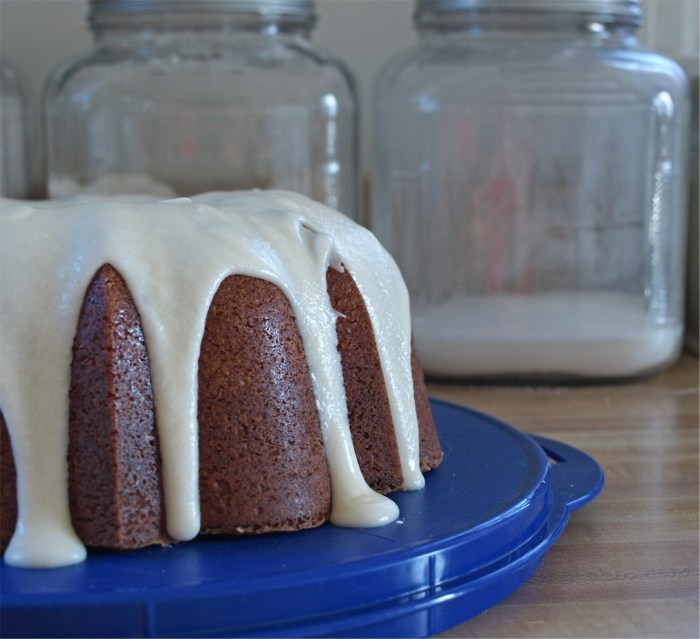
I imagine that pound cake is one of these.

OLYMPUS DIGITAL CAMERA

Pound cake is lavish. It’s unapologetically decadent. It’s essentially just butter, sugar, eggs, and heavy cream with some very white flour thrown in for good measure, then topped with more butter, sugar, and heavy cream. If you tried to make pound cake with low-fat and low-sugar substitutes I think you’d end up with a sad, nasty mess. No, in the case of pound cake, you need to go all in.

When you’re creating, whether you’re writing, sewing, painting, gardening, or whatever, the same holds true. You want to go all in, with the best of your ideas, the best tools at your disposal, the best raw materials you can get, and the best effort so that when you’ve finished something you’ve put all of yourself into it. Why? For several reasons:

1. When you put your all into something, you are generally happier with the result. Even if something didn’t turn out quite perfect (and there’s always something) you still know for a fact that you have done your absolute best. And mentally, that’s worth something. Even if others don’t get it or don’t even see it, if I know I’ve done my best and put everything I had into something, I can be proud of it.

2. The product of your efforts, whether it’s an herb garden or a baby blanket or the Great American Novel, will be better than if you only put in partial effort or just some of your good ideas (holding back others for a later project because you were worried you’d exhaust them forever on this one). If you put your “full-fat” self into your work, the end result will always taste/look/read/feel better. This is obvious, but it bears repeating when so many of us have the tendency to get down on our own work before we’ve even given our full effort to it. The world doesn’t owe us success for our minimal efforts. We owe the world our best effort, and success may follow.

3. Once people see your best, you’ll always want to give them your best in the future. If you bring an amazing, delicious, completely homemade pound cake to a dinner, the next time you’re asked to bring food, you’re not going to want to bring Chips Ahoy! cookies. You’re going to want to wow people again–because it feels so good to wow people. Once you write something you’re truly proud of and you get great feedback from people, you’re going to want to do even better the next time. Giving our best in one thing spurs us onto improvement. When we set a personal record running a mile (because really, you need to work off that pound cake) it makes us want to beat our personal best, doesn’t it? Giving everything you’ve got to a task not only makes the current result better, it makes future results better.

Today, this week, this month, and for the rest of the year, ask if you’re giving your current project the full-fat, gloriously delicious best you have to offer. Whether you’re cleaning out the garage or teaching your kid to ride a bike or detailing a car or crafting a poem or refinishing a table or whatever, remember that Splenda and Egg Beaters and skim milk and gluten-free flour do not a pound cake make.

How are you giving your best today?

Adventures in Shameful American History

If I’ve been absent from the blog lately, it’s because I’m steadily checking things off my end-of-year to-do list, including much reading. I’m finishing up preliminary research for my novel and have spent much of the last six months exploring the very violent history of race in America, from pre-Civil War through the 1960s. And despite having minored in US history in college, it has been jaw-droppingly eye opening.

In school, we generally learn about the slave trade, the escalation of slavery with the advent of the cotton gin, the Civil War and Emancipation Proclamation (whose 150th anniversary we have recently noted in this country), and the very beginnings of the period known as Reconstruction (maybe). During this time we learn to love Frederick Douglass, the former slave who ran in white circles, and to appreciate, but be slightly suspicious of, the more dangerous-sounding W.E.B. Du Bois. We then briefly consider the Industrial Revolution before we plunge into a string of wars overseas–the Spanish American War, WWI, WWII, the Korean War, and Vietnam.

Finally we circle back around to the race question. How have the descendants of those freed slaves been faring all this time we’ve been focused on lands across the oceans? Apparently poorly. So we read about the Civil Rights Movement and learn to love a pacifist preacher named Martin Luther King Jr. and learn to be wary of people who preach revolution like Malcolm X. At least, that’s how it went when I was in my mostly white high school.

We get the arbitrary bookends of a struggle, as though Civil War were the beginning and Civil Rights were the end, which, obviously they weren’t. But even if they were the beginning and the end, what happens when we read just the first and last chapter of a book and nothing in between? We might be able to figure out what happened at the end, but we won’t understand why. Most importantly, we will not have had any way to identify with or even develop much empathy for the protagonist because we haven’t seen his struggles clearly. We’ll be given a clue here and there in the last chapter, but we won’t really know what those clues truly mean.

This is what happens when educators and media focus on the grand moments in history (like the anniversary of the Emancipation Proclamation or Martin Luther King Jr.’s “I Have a Dream” speech) and yet neglect to help people fully understand the very long story that connects them, the frighteningly grim realities that tie those singular pretty moments together. We watch the stage being set and we see the moments before the final curtain, but while the play is being lived out on stage, we’re standing outside the theatre having a smoke.

So what happened while we weren’t paying attention? What happened in the years between Emancipation and I Have a Dream? That’s what I’ve been reading about. Day after day, week after week, I’ve been reading. And I have been stunned at all I never really allowed to sink in.

As a young student, my understanding of the Civil Rights Movement of the 1960s was that it was about fairness. It wasn’t fair for one group to be treated as second class citizens. I never really understood how far beyond “separate but equal” or belittling speech or dirty looks the issue really went. The photos in our history books of “Whites Only” and “Colored Only” signs cannot begin to help a person understand the sheer magnitude of the continuous suffering of black people in America.

Our books should have shown children picking up severed toes and fingers of lynching victims as souvenirs. Because that happened.

Our books should have shown people strung up and tortured for nothing more than baseless accusations or because they were nearest person with dark skin that the crowd had handy. Because that happened, at one point every four days.

Our books should have shown close-ups of anguished faces of bereft mothers, wives, children, and brothers. Because that happened with heartrending regularity.

Instead, we saw blurry figures seated at counters or standing in lines or walking down the street. Always from a distance too great to see the expressions on their faces.

And what could never be shown in a photo, but that can be drawn–slowly–from 1,000+ pages of interviews, statistics, newspaper clippings, and historical inquiry, is the psychological terrorism that lay beneath the outright terrorism. The confused and hurt minds of children growing up under a cloud of invisible and arbitrary rules, worried that even the smallest infraction could be the catalyst to their own death or the deaths of loved ones. The utter lack of any sense of self-worth that generation upon generation must have felt. The hopelessness.

But we don’t have time for real history. We only have time for soundbites and headlines. And so we don’t understand times past and thus we don’t understand the present time. We think, “Why are they so angry? Why can’t they just be patient? Why can’t they let things right themselves naturally?”

The more I’ve read, the more I realize that, had I been alive and black in the 1960s, I almost certainly would have been militant. I now understand those figures in history that I had been subtly taught to stand in judgment of for their confrontational writings and speeches. I think I would have admired Martin Luther King Jr.’s ability to organize a nonviolent movement, but I would have found it hard to undertake personally. And I now have even more respect for the incredible individuals who did take part in peaceful civil disobedience and did not retaliate when they were attacked, hosed, bombed, and beaten–an almost supernatural forbearance.

There is no denying that the history of this country is one steeped as much in violence and oppression as any other in the history of the world. We like to believe that we are different. But we aren’t. We are not somehow above it. We pretend we are and we sit in judgment of societies that make no attempt to hide their violence. We decry genocide while we recently (in my parents’ lifetime) often stood but a hair’s breadth away from it. We focus on ideals and gloss over realities.

When you take the time to read deeply about slavery, Civil War, Reconstruction, Jim Crow, lynch mobs, the Great Migration, race riots, and all the many political maneuverings carried out in order to subjugate, separate, and even annihilate the descendants of slaves in America, you see the awful truth: our history isn’t pretty.

But, you may argue, my ancestors never owned slaves, never lived in the South, never this, never that. I know. I can say the same about mine. Many of mine weren’t even Americans until the 1940s. The reality is, though, that if you live in America, its history is your history. We cannot avoid being formed by it. The present realities of our lives and our relationships with those people who look different than us are partially a product of that cumulative history, whether or not we had anything to do with it.

The thing is to not ignore it. Pretending violence and racism and subjugation do not exist does nothing to negate them. It is simply refusing to acknowledge the flames even as the house burns down around you. We should be able to learn about the past, talk about the past, and use the past to inform the future. A better future.

As I finish my initial research (right now I’m reading the incredibly readable and fascinating The Warmth of Other Suns about the Great Migration) I am sobered, stunned, stupefied by the past–and yet I’m looking forward to working through our history with fiction. Sometimes the best way to display the truth in such a manner that others grasp it and allow it to change them is through stories. And I have a story to tell.

I only hope I am up to the task.
Why Today I Am Remembering C.S. Lewis Rather than JFK

Someone else died on this date fifty years ago whose influence during and after his life has far and away surpassed that of JFK. And this excellent little documentary film shows you just a small slice of why he is so significant. I encourage you to watch it. It is beautifully done and I was happy to see some familiar faces in it.

Remember Life before You Had the Capacity to Feel Embarrassed?

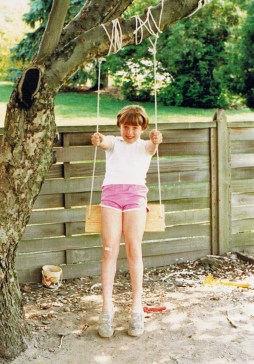
Appletree3I vividly remember the first time I felt self-conscious. I blame the administrators at Bush Elementary School in Essexville, Michigan, as it was their tennis-shoes-only policy that created the problem. You see, as a small girl I refused to wear pants. I wanted to wear only dresses. And when I started kindergarten, I had starry little-kid plans to continue to wear only dresses.

BUT . . .

When we kindergartners came in from the playground in the morning, the first thing we were required to do after hanging up our little coats and backpacks was to change out of our “street shoes” and don our tennis shoes. (I guess much of the country calls them sneakers, so if you’re lost, that’s what we’re talking about here.)

At five years old, I knew instinctively that wearing tennis shoes with a dress looked DUMB. And I felt DUMB wearing them. I felt like a DUMB idiot. And I felt that every one of my fellow students must be snickering behind my back about how DUMB I looked.

As an adult, I can now accept that absolutely no one else even noticed what I had on my feet. My embarrassment was imaginary. Call it practice embarrassment for all the years of real embarrassment that were to follow.

Still, that’s when I stopped wearing dresses. It would be years before I wore them again. Now I am often one of only a few women in my church and at my place of work who wears dresses or skirts almost exclusively. (Of course, I certainly don’t wear them with tennis shoes.)

Why do I even bring this up? Because this past week we discovered that our little five-year-old boy has a plantar’s wart (we assume from the mats at karate). We’re treating it and it is slowly disappearing, but this weekend he had two friends at our house for a sleepover. Before the guys all left Friday evening for their fun night out at karate buddy week and a sub-literate kids’ movie, I handed my husband the tube of wart remover just in case they should need to reapply. One of my son’s friends saw it.

“What’s that?” the friend said.

“That’s none of your business,” my husband replied in an effort to protect his son’s dignity. My boy’s warts are his private concern. I would have replied the same way.

But not our little kindergartner. “That’s for the wart on my foot.”

No shame. No embarrassment. No self-consciousness. Take him or leave him, warts and all.

It is not the first time I have noted with a bittersweet pang the complete lack of self-consciousness my son possesses. Bittersweet because I know that one day it will come to an inevitable end, and on that day my poor little boy will feel profoundly embarrassed. We all have to do our time.

I hope after that, though, he’ll reach a point, perhaps in early high school as I did, where he realizes that he truly doesn’t give a crap what other people think of him. I hope he can see that every person he had thought was analyzing and judging him actually had no time to do so because they were all so busy having their own near-constant paranoid, insecure self-image crises. Because you know what? It matters very little what the world out there thinks of you.

Live honestly, serve God, love people, and stop worrying about what’s on your feet. Nobody cares. Every time you find yourself obsessing over what someone is thinking of you, go give that person a compliment. Because you can rest assured they’re worried about looking DUMB too.

Choosing the Hard Way

Today my son turns five.

Explorer

I took this photo at Woldumar Nature Center last year when he and I were “hiking” through the woods. I stood back, proud to see that he ignored the stairs and chose instead the natural path. Instead of the easy way, he chose the harder way. If this picture had been taken in the fall, it would put me in mind of “The Road Not Taken” by Frost.

Then in the car a week or so ago, the boy and I were listening to Hard Way Home by Brandi Carlile. When the song was done he asked, “Why doesn’t she take the easy way home?”

“Sometimes,” I answered, “you have to take the hard way. And anyway, sometimes it’s more interesting than the easy way.”

This seemed to suffice. We arrived home and he went off to play and I’m sure he has given it no more thought at all.

But in the next five, ten, fifteen years of my boy’s life, he will have many opportunities to choose either the easy way or the hard way. If the easy way is the path of least resistance, an unchallenging, popular path that leads him to a sense of entitlement-because-I-breathe and success at the expense of his faith or his self-respect, I hope he chooses the hard way, the little-bit-strange way, the peculiar way of hard work, personal responsibility, earned trust, generosity of spirit, and faithful devotion to God, family, and friends. I hope he has the strength to eschew the cultural stairs, endure the stares he gets for being different, and press on toward a meaningful life amid a culture that is all too often focusing all of its energy on meaningless things.

And I hope that, as we guide and love him, his father and I will have that strength as well.

Happy birthday, Calvin. Let’s take the hard way together.