Destination Lansing: River Trail

Oh, it has been ages since shared a Destination Lansing post with you!

This is the time of year when I love to start getting back outside, taking walks and taking pictures. Running through Lansing, largely in a generally north-south orientation, though with tributaries jutting off here and there, is a modest river of asphalt called the River Trail.

Lansing River Trail, MI

It follows not one but two rivers, the Grand through downtown Lansing and the Red Cedar past Potter Park Zoo and Michigan State University, carrying travelers by bike, roller blades, or feet through woods, under concrete bridges, and by parks, museums, and markets. One trip on the River Trail and you can see almost all that Lansing and East Lansing have to offer represented in some way. In fact, here’s a list off the top of my head of where you can get and what you can see if you start on the southern end of the trail on Jolly Road (right by the 7-Eleven there) and head north:

Hawk Island County Park (fun and relaxing yearround)

HawkIslandDream

Scott Woods Park (GORGEOUS in the fall, but great anytime)

AutumnSplendor

Mount Hope Cemetery

EndofSummerFawn

Fenner Nature Center

OLYMPUS DIGITAL CAMERA

Red Cedar River Natural Areas

RiverTrail01

Potter Park Zoo

OLYMPUS DIGITAL CAMERA

Impression 5 Children’s Museum

OLYMPUS DIGITAL CAMERA

Lansing Center

OLYMPUS DIGITAL CAMERA

Lansing City Market

OLYMPUS DIGITAL CAMERA

Downtown Lansing and the Capitol Building

OLYMPUS DIGITAL CAMERA

Adado Riverfront Park (which, depending on the day, may include various concerts or events)

OLYMPUS DIGITAL CAMERA

Brenke Fish Ladder

Old Town (and all the cool shops and restaurants therein–like Elderly Instruments and Pablo’s Panaderia, where you should order the torta sandwich with pork on their life-changing homemade bread or the huevos y chorizo with warm, homemade flour tortillas)

The Turner-Dodge House and Heritage Center

If you take the spur that heads east along the Red Cedar River, you can get to MSU and East Lansing, including these destination spots: The Breslin CenterThe Kellogg CenterBroad Art MuseumMSU Gardens, and Sanford Natural Area. All the way up to Hagadorn Road, where you can stop for dinner at Sultan’s Restaurant for some shawarma and falafel.

And I didn’t even list all the awesome restaurants in both downtown Lansing (like the Tavern on the Square or Mediteran or Troppo) and downtown East Lansing (like Dublin Square or Woody’s Oasis).

grassheads

The trail is open yearround. Even in winter it is plowed to allow regular foot traffic and biking for those of us who don’t have cross country skis. So, if you took the notion, you could bundle up and bike down to Hawk Island County Park and go snow tubing in the wintertime.

But of course, my favorite time is fall.

PotterPark03

Wildflower Wednesday: Wild Parsnip

Wild Parsnip

Common Name: Wild Parsnip

Scientific Name: Pastinaca sativa

Habitat & Range: wet, sunny fields and roadsides

Bloom Time: spring and summer

About: Not all flat-topped wildflowers are white. A few of them are yellow. Growing right along with the Yarrow and Queen Anne’s Lace from weeks past I spotted Wild Parsnip (not to be confused with the white-flowered Cow Parsnip, which I mentioned in the entry on Water Hemlock). All of these photos (along with many others) were taken on the same day in one small area on Mackinac Island near Mission Point Resort. Like Queen Anne’s Lace and Water Hemlock, Wild Parsnip is part of the carrot family and is a host plant for black swallowtail butterflies. Like Queen Anne’s Lace, this was a European garden plant that has escaped. You can only eat the long taproot of this plant in the first year of growth (after that it gets too woody). But beware of the parts of the plant that sit above the ground. If you are sensitive to it, the leaves can cause photodermatitis if touched. This means that after you touch the plant, if you are exposed to sunlight, your skin can blister and weep (eww), so wear long sleeves and gloves. Very inconsiderately, this plant’s flower looks like dill, but one look at the leaves and you will know it’s not.

Reference: Wildflowers of Michigan by Stan Tekiela; Adventure Publications, 2000

Wildflower Wednesday: Boneset

Boneset

Common Name: Boneset

Scientific Name: Eupatorium perfoliatum

Habitat & Range: wet ditches, meadows, and roadsides

Bloom Time: summer and fall

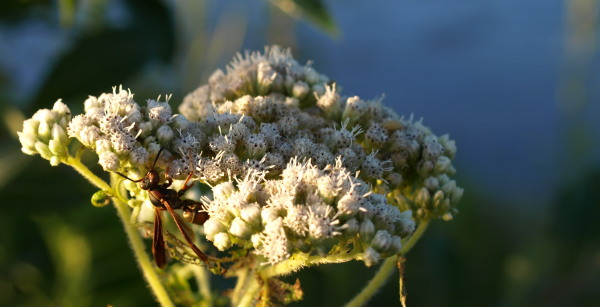
About: Boneset is yet another white, flat-topped flower you will find in bloom in the summertime. The flower resembles Yarrow, but it is easily identified by its unique rough leaves, which are joined to the opposite leaf at the base so that it looks like the stem goes right through one large leaf. (Unfortunately, the specimen in my photo below had well-chewed leaves so you can’t really tell.) It’s an important nectar plant and has been used medicinally in the past to treat dengue fever. However, it is toxic to humans, so this is another plant you have to be careful with. Old herbals may advocate its use as a tea to treat coughs and colds, but it can cause liver damage, muscle tremors, and other problems. Overdose can be deadly. Best to leave it to the butterflies.

Boneset

Reference: Wildflowers of Michigan by Stan Tekiela; Adventure Publications, 2000

(also Wikipedia)

Lake Superior Stones: A Collector’s Lament

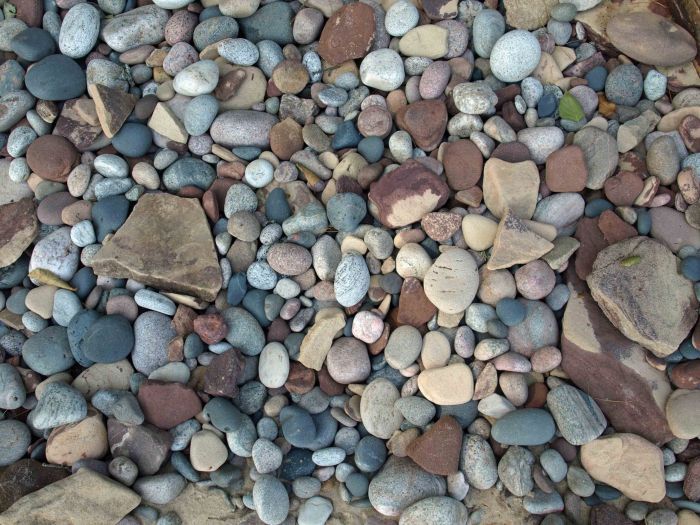
I love rocks. I like looking at them, feeling them, collecting them, putting them in jars.

OLYMPUS DIGITAL CAMERA

But here’s the problem with being a rock collector at a National Park–you can’t collect the rocks.

OLYMPUS DIGITAL CAMERA

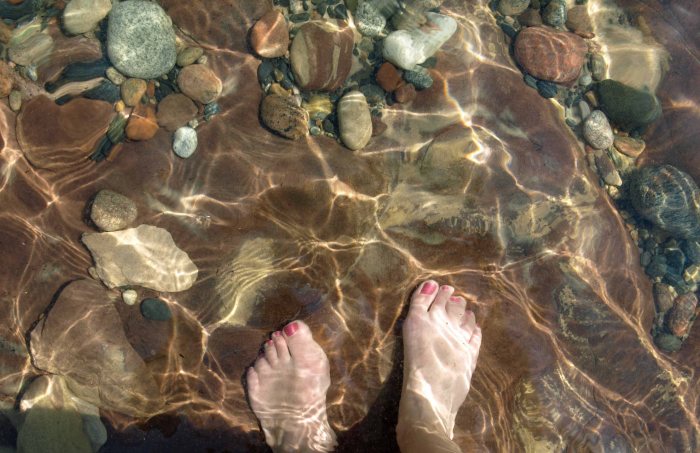
All these lovely rocks and you have to leave them be.

OLYMPUS DIGITAL CAMERA

And anyway, when you’re backpacking, you can’t really start socking away a bunch of rocks in your pack. Every ounce counts.

OLYMPUS DIGITAL CAMERA

So while I would have liked to bring home a bunch of stone souvenirs, I mostly left them alone and took pictures (though I have to admit, I brought a few little ones home…they were tiny, really…no one will miss them).

OLYMPUS DIGITAL CAMERA

I generally like stones for how they look and I don’t get deep into their composition, rarity, or how they formed (although, that does interest me).

OLYMPUS DIGITAL CAMERA

And there are people far better qualified to identify all of these beauties than I.

OLYMPUS DIGITAL CAMERA

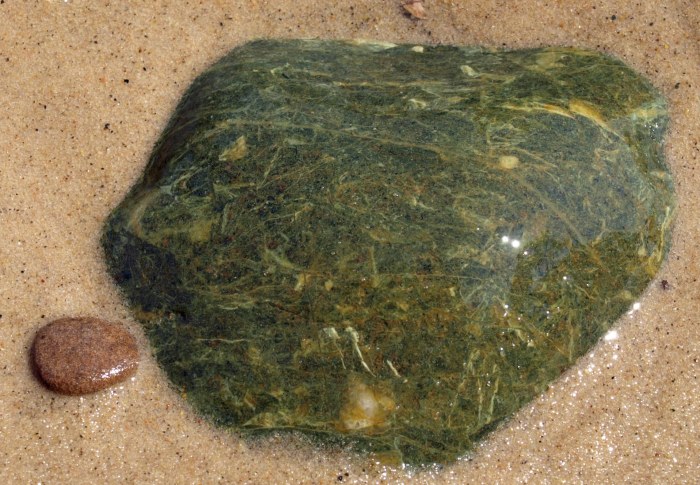
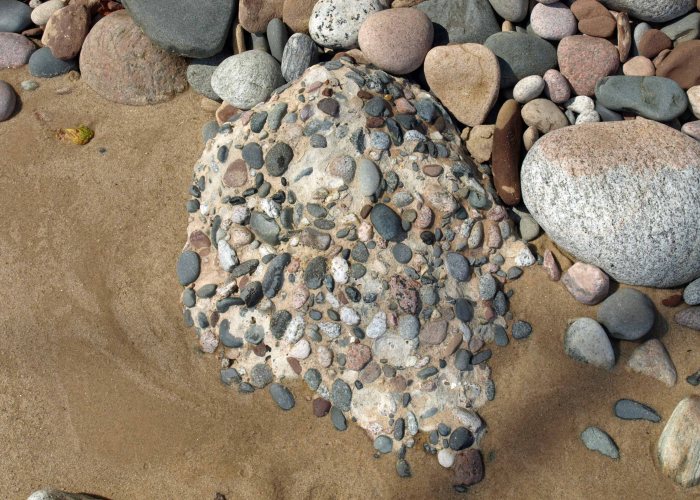
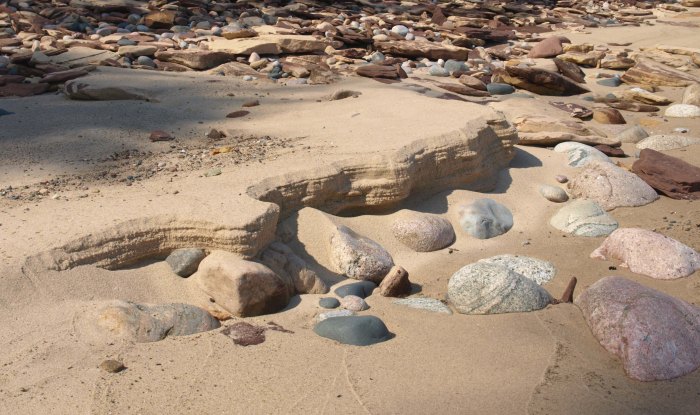
I can tell you that I saw sedimentary rocks, like sandstone and the great conglomerate above.

OLYMPUS DIGITAL CAMERA

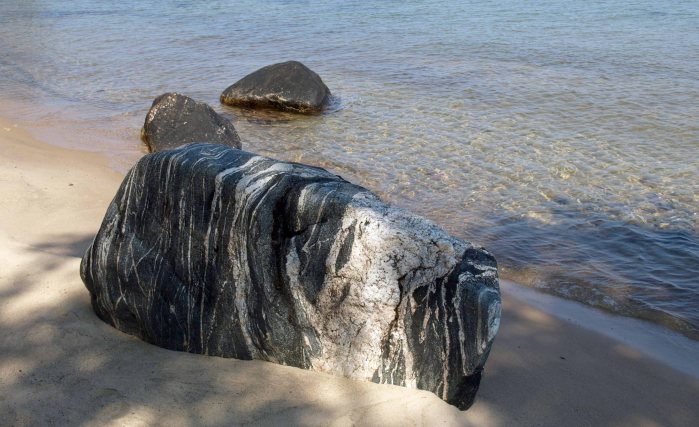
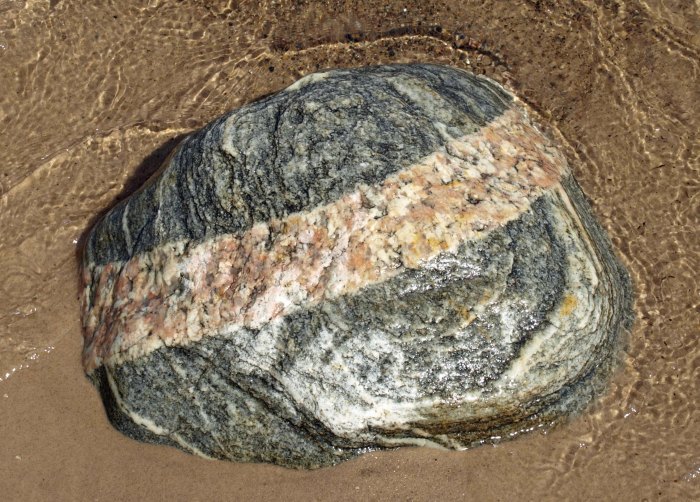
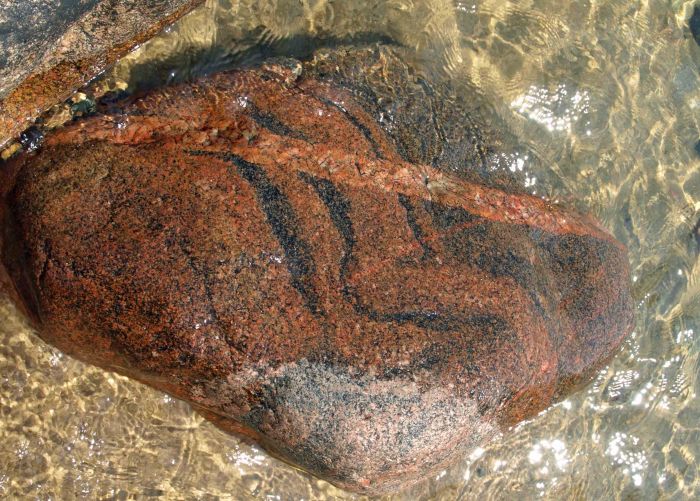
And that I saw igneous rocks, like strips of granite, through metamorphic rocks, like gneiss, which you can see in a couple of these photos. And I wonder just how that granite found its way in there.

OLYMPUS DIGITAL CAMERA
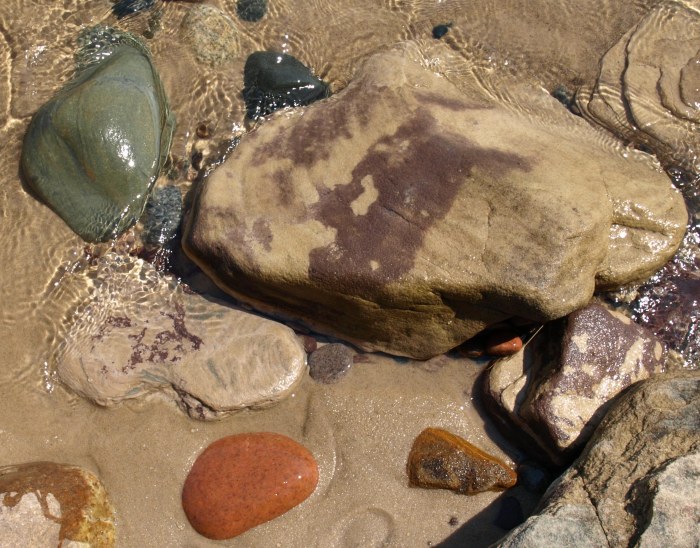
And I saw this great little scene of erosion and shaping by the waves and wind on the beach, like Pictured Rocks in miniature.

But I left them all there. For your trip.

A New Appreciation for August–Oh, and a New Story

Before I get to the post, just want to make you aware that…

********************************************

August’s Short Story Is Now Available!

OLYMPUS DIGITAL CAMERA

Kayaks, Lake Superior, bad weather, a mysterious woman…this story blends together elements of adventure on the open “seas” and psychological drama to create a time-bending tale that feels to me like the beginning of a much larger story waiting to be written. Hope you enjoy it! Click here to buy it for slightly less than $1 for your Kindle.

********************************************

Now, to the point…

It is the final day of August and, as I mentioned earlier in the week, I have just begun to develop a bit of a good feeling toward this month.

Since childhood, I have disliked the month of August, which I always thought of as just one more month of hot, humid, numbingly boring days before school finally started up (yeah, I was one of those kids who loved going back to school). Little League was over, the bloom of freedom I felt in June had withered, and I have always disliked very hot weather.

Into adulthood I have maintained this disdain for August. It is a month where you dress for the heat and then freeze inside every business because they set their air conditioning so insanely low. It is a month where wasps and bees, previously seen as happy-go-lucky and dopey, mindlessly buzzing about in the yard, become aggressive and swarmy as they start fretting about the impending winter. It is a month when lots of spiders and bats–BATS–start exploring your house (and your poor husband must get a painful and heart-stoppingly expensive series of eleven rabies shots after a close encounter, eight in just one sitting).

Still, there are a few perks, right?

FarmersMarket06

The farmer’s market is flush with fresh local produce. My backyard vegetable garden is busy working on a bumper crop of tomatoes, eggplants, and cucumbers. Homemade tomato sauce is bubbling on the stove top. There are peaches and apricots and plums to can. 

OLYMPUS DIGITAL CAMERA

Ah, but the flower garden is in such disarray! It looks terrible! Besides those common little black-eyed susans, nothing at all is blooming! And the weeds! The weeds!

Still, there was that field of nodding sunflowers we saw as we drove home from our hiking trip.

OLYMPUS DIGITAL CAMERA

And the sound of cicadas. And the hints of fall. The gold carpet of dying ferns beneath the evergreens. The audacious red display of the sumac along my weekly commute. The precocious tree here and there that simply cannot wait to show off her red and orange autumnal gown.

OLYMPUS DIGITAL CAMERA

The rumblings of the thunderstorms that wake me in the wee hours of the morning. The shimmering clouds of blackbirds gathering for their fall migration.

OLYMPUS DIGITAL CAMERA

The dreamy quality of the light. The foggy mornings that burn off into brilliantly sunny days.

OLYMPUS DIGITAL CAMERA

Yes. Maybe…just maybe…August is getting a hold on me.

But I still hate March.

Hiking with a Summer Storm at Your Heels

On Sunday, the final morning of our trip to Pictured Rocks and Grand Sable Dunes, we woke to a still, hazy morning. The largest group of hikers that had camped at Au Sable Point East with us had already silently packed up and left before 7:15 in the morning when I woke, which I remember finding a little odd (principally because they seemed to be college-aged and I, at least, was not wont to get up early and exert myself during my college days). Our other neighbors were in the process of packing up as well. Seeing the sun through the haze, I ran off to the beach to snap a few photos before breakfast.

OLYMPUS DIGITAL CAMERA

This serene scene belied the weather that was to come that morning. As we strapped our tent and bags to our packs, my sister said, “Do you hear that? That sounds like thunder.”

True, it did sound like thunder, but it also sounded like it could be a distant logging truck or some such noisy thing (which is what I wanted to believe). Within another 30 seconds, though, there was no mistaking it. It was most definitely thunder. Fast-moving thunder indicating a storm quickly approaching us.

With 1.7ish miles to go, almost all of it steeply uphill, we lost no more time getting our packs on our backs and getting the hell out of there. We each had a 5-Hour Energy metabolizing in us and knew the car was less than an hour away, which was powerful motivation (as if the impending storm was not enough). The question was, could we manage to get up that extremely long, steep incline before it became a river of mud should we be caught in a deluge?

OLYMPUS DIGITAL CAMERA

The thunder got closer and louder and the woods around us grew very, very dark, except for when the occasional flash of lightning lit up everything around us. I thought about the metal frames in our packs–the only metal for hundreds of feet, most likely–just as a loudest, closest, angriest ball of thunder burst right over top of us.

“Do we have a plan here if the sky opens up?” I asked my sister.

We did not.

The only plan was to get to the top of our climb before the rain. She suggested I say a prayer. And so with every labored, frantic step over root and sand and dead pine needles, I prayed aloud. And after my prayer was through, I prayed silently, thanking God for every dry step I took.

And you know what? It never did rain on us. We could occasionally see rain off in the distance when we passed quickly by an overlook we had lingered at the day before. We could see that it had rained on the parking lot when we got to the car. We could see that it had rained on the road when we drove back to the ranger station in Grand Marais.

But not a drop of it rained on us.

The storm passed by us and left us unscathed.

OLYMPUS DIGITAL CAMERA

This is not to say we were not wet. If you had witnessed our triumphant emergence from the forest, you might be forgiven for thinking we had been caught in the rain because we were drenched with sweat from the effort. When I looked at my phone to check the time I was dumbfounded. I think it’s quite possible that we made the hike in little over thirty minutes, about half the time I figured it would take us with the incline and my blisters (which, by the way, did not hurt at all the entire climb, but started to hurt the moment we hit the path that led from Log Slide to the parking lot).

OLYMPUS DIGITAL CAMERA

This Sunday morning hike is not one I will soon forget. It was almost as though God decided that because we had not been in church we might need a reminder of His power–and His mercy.

Au Sable Point Lighthouse, the Graveyard Coast, and Hurricane River

On Saturday, my sister and I packed up and made the three-ish mile hike to our next campsite, Au Sable Point East. I say three-ish because it really seems to me that some desk jockey at the National Parks Service (NPS) looked at a map of Pictured Rocks, estimated that the width of his thumb was, “Eh, more or less about a mile,” and then did that tongue-out, one-eye-closed sort of “guesstimating” you do when you just want to get something checked off your to-do list. Next time we are there, Alison and I plan to bring one of those fancy runner’s watches that records everything you do and actually measure the real distance.

But I digress.

OLYMPUS DIGITAL CAMERA

After lurching down an endless hill (“Ah, now this feels more like Pictured Rocks!”) we found the campsite and were quite happy that it was a.) very close to Lake Superior for water and scenery needs; b.) situated in an idyllic looking little area populated by pines and the cutest little baby fir trees you’ve ever seen; and c.) not far from both the lighthouse and the mouth of the Hurricane River (as we were both marvelously fond of the Mosquito River on our last trip and were looking forward to hearing and seeing another river).

OLYMPUS DIGITAL CAMERA
We had neighbors at this site, but everyone was pleasantly quiet and industrious and no one seemed to be there to make new friends. (Alison and I come from some painfully solitary German stock on our father’s side and are never really looking to meet anyone. Ever.)

OLYMPUS DIGITAL CAMERA
We happily strolled along the beach and examined rocks until we were chased away by biting black flies (“Ah, now this feels more like the U.P.!”) and then thought we’d check out the lighthouse.

OLYMPUS DIGITAL CAMERA
I have a friend who “collects” lighthouses, but to me they are just one of those things you look at and go, “Hm, that’s cool,” and then move on to more important things, like marking how prevalent wild blueberries are in these parts or how fascinating that rock is over there. (Aside: Did you know that Michigan has at least 116 functional lighthouses–plus more that are no longer in service–more than any other state in the nation?)

OLYMPUS DIGITAL CAMERA

Alison and I took the “steps” down to the beach to search out the remains of shipwrecks that are visible between the Hurricane River and the lighthouse, part of the Graveyard Coast, a very shallow area of the lake that has claimed several vessels over the years and prompted the building of the lighthouse in the first place. Despite the flies and the heat and my growing blisters, it was a beautiful walk and it struck me once again how many hundreds of miles of gorgeous beach there are on Lake Superior and how little it is really used for recreation. I think that’s a good thing, don’t get me wrong. But when you think of crowded beaches downstate, it’s really quite incredible.

OLYMPUS DIGITAL CAMERA
Now, above the beach and in the woods a little bit, between the lighthouse and Hurricane River, there is a bizarrely wide footpath (wide enough for a truck, and there were tire tracks on it). I can only assume that the lighthouse staff uses that path as a road to reach the light station. It also happens to be more welcoming for the people who might use the drive-in campground at Hurricane River rather than the backcountry sites that pepper the North Country Trail that runs through the park. You know, larger families with small children, the elderly, and the less-in-shape-than-even-me. In fact we met a large older gentleman with a cane and his wife coming down a real set of stairs (rather than just posts strung together with cables and flung down a sandy hill) to go see the shipwrecks and I thought to myself how odd it was to see someone like that hiking. Then we came to Hurricane River and it all made sense.

OLYMPUS DIGITAL CAMERA

We first knew something strange was going on when we saw an RV. Just the night before I felt like I was the only person in the park, so devoid of human activity were the tops of the dunes. Then we saw another RV. And another. And coolers. And bottles of ketchup and mustard. Then we smelled meat grilling. I finally looked at the map and saw that this was one of two drive-in campgrounds in Pictured Rocks National Lakeshore. A small part of me, for a very, very short moment, was incensed. But then I started thinking about bringing my son up here sometime before he’s big enough to hike with a pack on his back. And I understood completely. This would be the way to experience a piece of this place if you could not (or were not inclined to) carry your house and food on your back to and fro.

OLYMPUS DIGITAL CAMERA

Except for the RVs and the grills and the coolers, Hurricane River reminded us a bit of the Mosquito River in that it was refreshingly frigid and the water ran over shelves of sandstone that you could walk across (carefully). We took a seat on a log in the river, cooled our achy feet, and had a snack. Then, being the curmudgeon I am, I started removing evidence of human activity from the river (in the form of little dams of rocks that a sweet little child no doubt made but which I, ardent naturalist and generally ornery person, didn’t think should be there altering the course of the water and messing up my photos).

OLYMPUS DIGITAL CAMERA
I know. I’m a rotten killjoy. I also systematically destroy those “cairns” everyone seems to be so fond of making on Michigan’s shorelines. I don’t understand why people simply must leave their mark on the natural world and I resent them ruining my landscape photographs. There. I said it.

Anyway

OLYMPUS DIGITAL CAMERA

This is a very nice area to visit. If you are doing a U.P. trip by car and want to get a taste of Lake Superior and Pictured Rocks without a ton of footwork, I recommend parking at various parking lots along the park and taking the short hikes to places like Log Slide, Au Sable Point Light Station, the Graveyard Coast, Miner’s Castle, Miner’s Beach, Miner’s Falls, Sable Falls, and anywhere else you can see (especially the Pictured Rocks boat tours). Combine that with stops at Tahquamenon Falls, Point Iroquois, the Shipwreck Museum at Whitefish Point, the Soo Locks, and Wildwood Pasties, and you’ve got yourself a lovely trip. I recommend the first or second week of October if you also want to take a fall color tour to boot.

OLYMPUS DIGITAL CAMERA
We eventually headed back to camp, ate dinner, then hid from the bugs in our tent. I think we were both asleep before sunset that night (36 hours with no caffeine and a lot of walking in direct sunlight kind of saps one’s energy). I was looking forward to a fairly early start the next morning as I anticipated going home to my boys and a nice soapy shower. Little did I know there would be another good reason to get moving quickly on Sunday…

Sunset on Grand Sable Dunes and Waiting for the Northern Lights

After we visited Log Slide on Friday, Alison and I returned to our campsite, had a bite to eat, and then returned to the other world waiting above us to watch the sunset.

OLYMPUS DIGITAL CAMERA

Apparently, we were not the only ones with this idea. We were joined by about 63 million tiny flying bugs of the gnat variety, which frantically whizzed about in clouds all around us. You can spot some of them in the photo above.

OLYMPUS DIGITAL CAMERA

And yet, it was still quiet and peaceful up there. I set off to photograph the dunes in the waning light while Alison plunked down with a book. You can see her in the above photo, way up near the top of the hill.

OLYMPUS DIGITAL CAMERA

The sun slowly sank lower in the sky and lit up the dune grasses and sand in that perfect evening light that photographers so adore.

OLYMPUS DIGITAL CAMERA

And a landscape that had seemed almost stark in the harsh midday sun took on a quality that made you feel that this earth is really a beautiful place indeed.

How often do we go to bed at night having not noticed this? It should strike us daily and yet we are so busy and so insulated from the earth outside and spend so little time with the real world that we miss it regularly.

OLYMPUS DIGITAL CAMERA

Certainly that feeling is easy to come by in a singular landscape such as Grand Sable Dunes. But even your own yard or neighborhood or that corner of your kitchen where the light hits just so, you can see it. If you’re looking.

OLYMPUS DIGITAL CAMERA

Now, I have never been a fan of August. It has always seemed a wasted month of horrid heat, humidity, and boredom. But I’ve recently begun rethinking my stance.

OLYMPUS DIGITAL CAMERA

This past weekend it started to cast a spell over me. (More on this at a later date.)

OLYMPUS DIGITAL CAMERA

Finally, finally, the sun sank below the horizon. My sister headed down the now dark trail, flashlight in hand, leaving me atop the highest point of the dunes, camera firmly affixed to my tripod, to wait for a very different sort of light. I had read on Tuesday that a massive coronal mass ejection (CME) had occurred. For those of you unfamiliar with this term, essentially the sun had released a tremendous amount of energy that was careening through space toward us, the effects of which might be visible on this Friday night.

Still in the dark? I’m talking about the Northern Lights, which for the past few years of increased CME activity (which goes in 11 year cycles) have been spotted all over Michigan, but mostly on Lake Superior. And here I was at Lake Superior on the perfect night in the perfect spot to see them for the first time in my life and, if I was lucky, capture them in pixels so I could smugly share my good fortune with others.

OLYMPUS DIGITAL CAMERA

As the cold wind whipped around me and my surroundings darkened, I actually prayed for the privilege to witness this incredible display of the power of our star and the kind hand of the One who put our planet in such a position that I could both see it and not be harmed by it.

But it was not to be. There may have been lights later that night while I was snoozing or watching a little mouse scurry overhead between the tent and the rain fly, but I was not permitted to see them. I eventually packed up my camera and flicked on my flashlight for the descent to Masse Homestead (made exponentially more difficult by the darkness and more nerve-wracking by the thought that should I encounter a black bear or wolf in the pitch black night, it would have a significant advantage over me despite my being armed).

I was (and am) profoundly disappointed. And yet, the sun continues to shine and produce storms that will cause the Northern Lights to appear at a later date. Someday I hope to see them. In the meantime, this disappointment reminds me that I am not owed beauty. Beauty happens, but it doesn’t happen for my sake. I am like one of those grains of sand on the dune, one of billions of people in the world. My great comfort is that God knows every speck of sand, every one of us, and that He heard my prayer for light that night…and for whatever reason His answer was “Not just yet.”

The View from Log Slide

Log Slide is a destination spot on the east end of Pictured Rocks National Lakeshore with quick and easy access from a parking lot. In a previous era it was used for (you guessed it) sliding logs that were cut from the forests above into Lake Superior below so they could begin their watery journey to sawmills in parts south. Nowadays, the only thing sliding down this patch of sand is tourists (some unwillingly, I imagine).

OLYMPUS DIGITAL CAMERA

There are a couple signs warning that though it can take less than a minute to reach the bottom 500 feet (300 vertical) below, it can take more than an hour to climb back up.

OLYMPUS DIGITAL CAMERA

The day we spent time at Log Slide I wasn’t feeling particularly energetic as we had just traversed a LOT of sand on top of the dunes and the balls of my feet were developing blisters. So instead of making the descent, Alison and I crept around on a few more-or-less-sorta stable areas just to the west of the actual slide.

OLYMPUS DIGITAL CAMERA

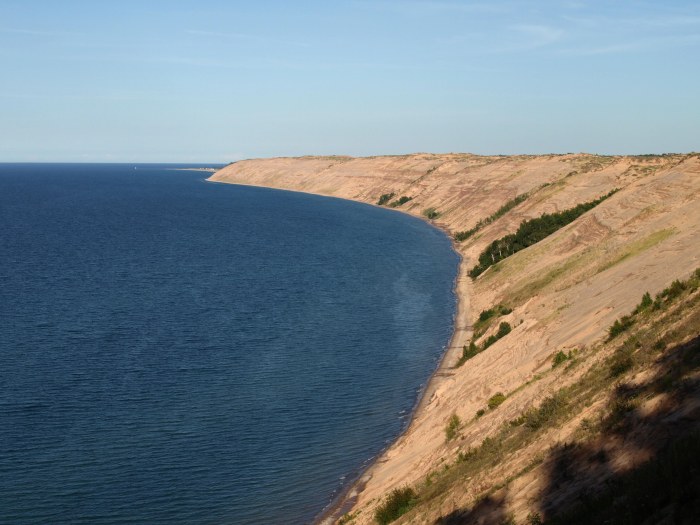
You can get a great view of the five miles of sand that make up Grand Sable Dunes from this vantage point.

OLYMPUS DIGITAL CAMERA

And you can see Au Sable Point Light Station from there as well, which is where we were headed the next day.

OLYMPUS DIGITAL CAMERA

But before we get to the lighthouse, there is the little matter of sunset on the dunes and waiting for the Northern Lights. Stay tuned…

OLYMPUS DIGITAL CAMERA

Surprised by Sand

This past weekend, my sister Alison and I took our second hiking trip together. We planned a shorter hike than last year and parked such that we could hike a short distance (under two miles) to our campsites, pitch our tents, then do day hikes unencumbered by packs. I must say it was an excellent strategy.

So on Friday afternoon we quickly found ourselves setting up our tent at Masse Homestead backcountry campsite on the eastern end of the Pictured Rocks National Lakeshore. The hike to the site was eerily silent. We heard no birds or humming insects, encountered no other hikers, and spoke little as we walked a narrow path through a largely open, mostly deciduous woodland.

To Masse Homestead

Masse Homestead is a smaller site, with only three campsites allowed. There was some mold growing in the food box, so we opted for the food pole to keep our rations away from bears. The soil was sandy, making the tent setup smooth and bathroom breaks easy (apart from the mosquitoes). And in just a matter of minutes, we were ready to check out our surroundings.

Masse Homestead

The old bearded ranger (“I’ve lived in Grand Marais all my life but I’m slowly moving west. I’ve gotten about two and a half miles so far.”) told us about a very steep, sandy trail that led up to the dunes. It was easy to spot (harder to climb) so we grabbed cameras and water bottles and headed up.

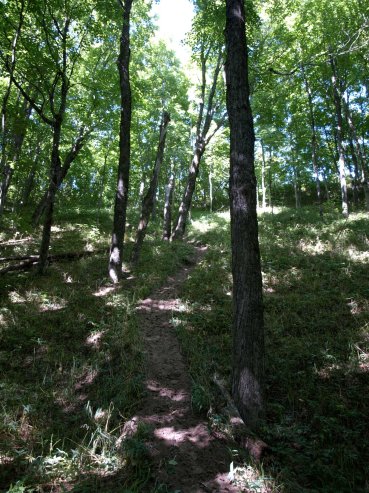
Trail up to dunes

Near the top, one gets the very queer feeling that you are going through C. S. Lewis’s wardrobe to Narnia.

OLYMPUS DIGITAL CAMERA

And, in fact, I think what awaited us took our collective breath away just like Narnia did for Lucy.

OLYMPUS DIGITAL CAMERA

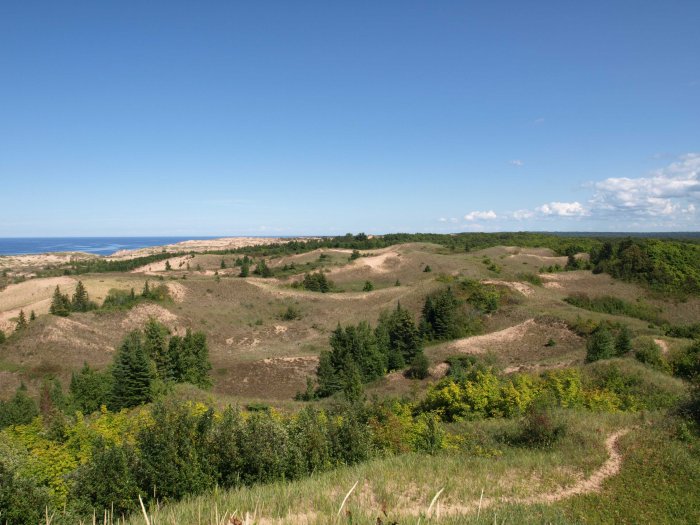
The last time I could see this much landscape all around me, I was in a plane.

OLYMPUS DIGITAL CAMERA

There we stood, upon the very highest point of the Grand Sable Dunes, and all around us was wilderness.

OLYMPUS DIGITAL CAMERA

The only sound was of the crickets and cicadas.

OLYMPUS DIGITAL CAMERA

At that moment, we felt as though we must be the only two people on earth.

OLYMPUS DIGITAL CAMERA

We hiked over the dunes, up and down, for a long time before we even approached the edge, losing site of the big hill we first stood on and the opening in the trees that would lead us back down to our tent.

OLYMPUS DIGITAL CAMERA

But how could we not be drawn by this landscape to abandon the trail and set off to blaze our own?

OLYMPUS DIGITAL CAMERA

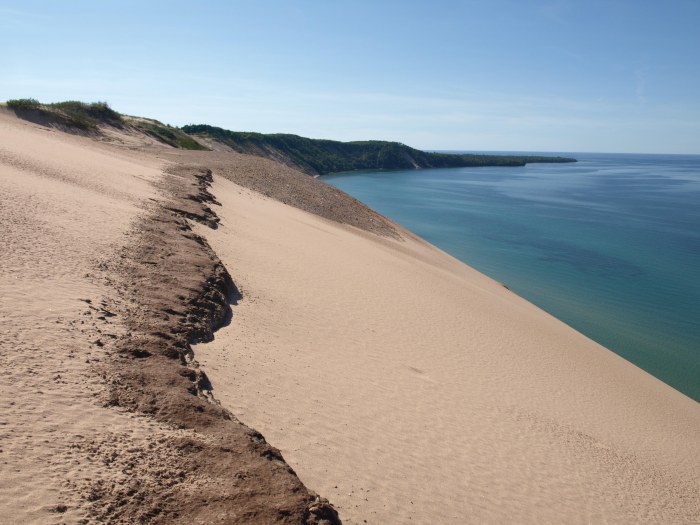
We stopped (quite sensibly) at this line of wet sand that ran across the top of the slope. Had we taken very many more steps forward, we might have found ourselves sliding down 300 or so feet into Lake Superior.

OLYMPUS DIGITAL CAMERA

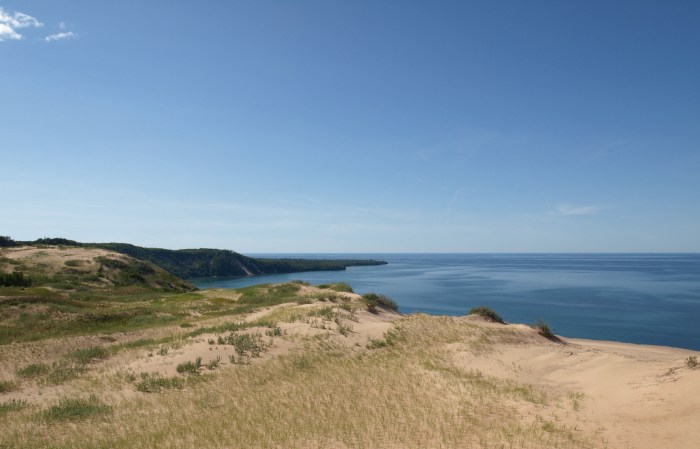
Instead, we rested our feet a bit and took in the incredibly blue lake and the cool breeze.

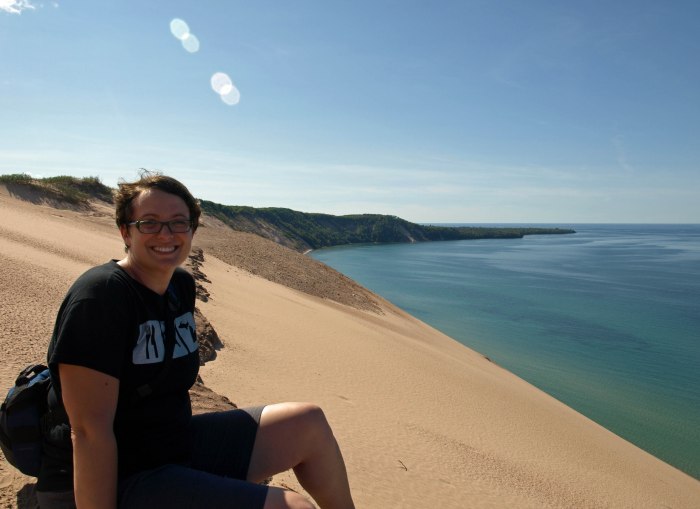
Erin on the Dunes

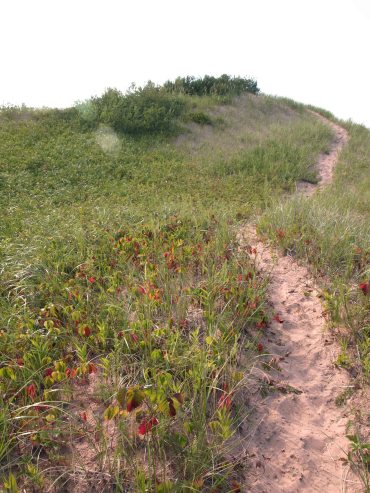
Besides some tracks in the sand (coyote, deer, crow, and one set of bare human feet) and one pile of scat (bear) there was little evidence of life up there beyond dune grasses, scrubby junipers, poplars, and wild roses.

OLYMPUS DIGITAL CAMERA

We would discover later that night that the dunes are a favored spot for huge clouds of gnats (or some related tiny flying insect) but that is a post for another day.

OLYMPUS DIGITAL CAMERA