Reclaiming an Occasional Hobby

Lately, I seem to have rabbits on the brain. I recently read a long interview with the now elderly Richard Adams, author of Watership Down, the book that anchored my childhood reading. A friend’s rabbit surprised her by having kittens (which is what baby rabbits are called–it didn’t spontaneously produce baby cats). One of those little baby bunnies has gone to live with another friend. And of course this is the time of year Midwesterners start pining for spring and all that comes with it–warm sun, flowers, rabbits munching the new grass. We know it will be long in coming, but…can’t we have dreams too?

Anyway, all this ruminating on rabbits reminded me that I had planned to mosaic a little half-circle table that I saved from a neighbor’s dumpster with the image of a rabbit poised in mid-leap. Maybe now’s a good time to start moving on that project. So this morning I quickly sketched up what I’m thinking.

OLYMPUS DIGITAL CAMERA

Mosaic is the perfect mid-winter project–indoors, slightly tedious, and you come away from it with something beautiful. I’ve got a few manuscripts for work that I need to listen to. Making a mosaic at the same time would be a lovely way to get double use out of the time. So if you’re looking for me next month, you’ll probably find me in the sunroom, snapping little porcelain tiles into smaller pieces and arranging them in such a way as to suggest a rabbit where before, there was nothing.

Writing for Our Better Selves

OLYMPUS DIGITAL CAMERA

These are the first lines of Elizabeth Barrett Browning’s Aurora Leigh, a poem in nine books which was particularly beloved of Emily Dickinson. I’m just diving in to my copy, an 1884 printing of the 1859 text. This quote strikes me, a professional copywriter who is ever writing for others, as a lovely, selfish thought. That is what my fiction is–writing for me, for my better self.

Lessons in Not Scrimping

There are some foods that you just can’t go low-fat on, aren’t there? I think we can all agree that fat-free ranch dressing and fat-free mayonnaise and those sick, white-fleshed turkey hot dogs are at best disappointing and at worst disgusting and not worth all the calories you’re saving. With some foods, you just can’t hold the good stuff back. They need the fat in order to taste how they’re supposed to taste.

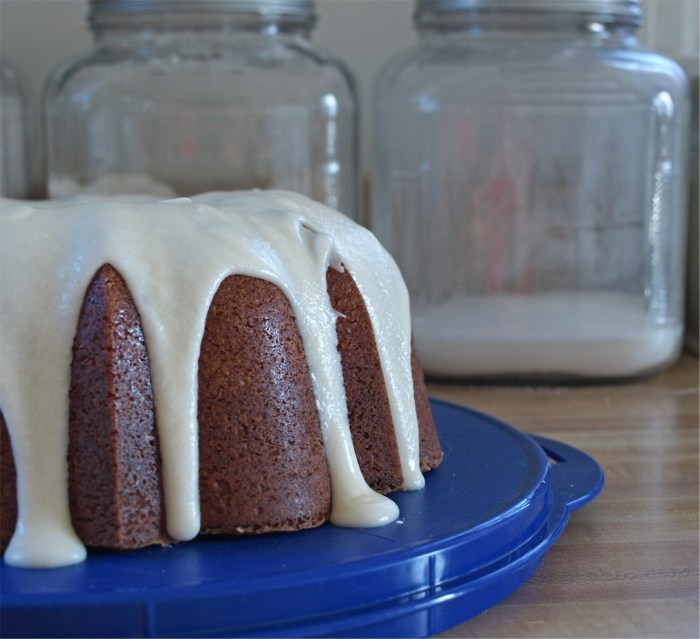
I imagine that pound cake is one of these.

OLYMPUS DIGITAL CAMERA

Pound cake is lavish. It’s unapologetically decadent. It’s essentially just butter, sugar, eggs, and heavy cream with some very white flour thrown in for good measure, then topped with more butter, sugar, and heavy cream. If you tried to make pound cake with low-fat and low-sugar substitutes I think you’d end up with a sad, nasty mess. No, in the case of pound cake, you need to go all in.

When you’re creating, whether you’re writing, sewing, painting, gardening, or whatever, the same holds true. You want to go all in, with the best of your ideas, the best tools at your disposal, the best raw materials you can get, and the best effort so that when you’ve finished something you’ve put all of yourself into it. Why? For several reasons:

1. When you put your all into something, you are generally happier with the result. Even if something didn’t turn out quite perfect (and there’s always something) you still know for a fact that you have done your absolute best. And mentally, that’s worth something. Even if others don’t get it or don’t even see it, if I know I’ve done my best and put everything I had into something, I can be proud of it.

2. The product of your efforts, whether it’s an herb garden or a baby blanket or the Great American Novel, will be better than if you only put in partial effort or just some of your good ideas (holding back others for a later project because you were worried you’d exhaust them forever on this one). If you put your “full-fat” self into your work, the end result will always taste/look/read/feel better. This is obvious, but it bears repeating when so many of us have the tendency to get down on our own work before we’ve even given our full effort to it. The world doesn’t owe us success for our minimal efforts. We owe the world our best effort, and success may follow.

3. Once people see your best, you’ll always want to give them your best in the future. If you bring an amazing, delicious, completely homemade pound cake to a dinner, the next time you’re asked to bring food, you’re not going to want to bring Chips Ahoy! cookies. You’re going to want to wow people again–because it feels so good to wow people. Once you write something you’re truly proud of and you get great feedback from people, you’re going to want to do even better the next time. Giving our best in one thing spurs us onto improvement. When we set a personal record running a mile (because really, you need to work off that pound cake) it makes us want to beat our personal best, doesn’t it? Giving everything you’ve got to a task not only makes the current result better, it makes future results better.

Today, this week, this month, and for the rest of the year, ask if you’re giving your current project the full-fat, gloriously delicious best you have to offer. Whether you’re cleaning out the garage or teaching your kid to ride a bike or detailing a car or crafting a poem or refinishing a table or whatever, remember that Splenda and Egg Beaters and skim milk and gluten-free flour do not a pound cake make.

How are you giving your best today?

Author Susie Finkbeiner on the Origin of a Novel

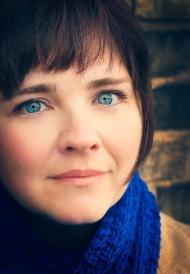
susie head shot

Today I’m happy to introduce you to Susie Finkbeiner, a West Michigan writer to watch. We’ve traded blogs for the day, so after you read this, head on over to Susie’s blog for my apologetic for the most depressing month of the year.

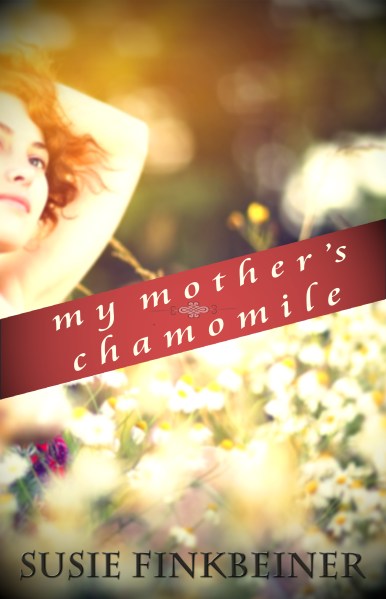
Susie has a quick wit and a quirky sense of humor, but she’s not afraid to tackle difficult, emotional subjects. Her latest book, My Mother’s Chamomile, is available for purchase for both Kindle and paperback readers. And I love the story of how she came about the idea, which she’s going to share with you below.

* * * * * * * * * * * * * * * * * * * * * * * * * * * * * * * * * *

The first time I heard reference to chamomile tea, I was a little girl, listening to my mom read Peter Rabbit. After his wild romp through Mr. McGregor’s garden, Peter had an upset tummy and his mother gave him a dose of chamomile tea.

I thought for sure it was punishment for losing his jacket and shoes.

“One tablespoon to be taken at bedtime.”

That sounded like something I wanted to avoid. I would have preferred the bread and milk and blackberries that Peter’s sister got.

Years passed (I won’t tell you how many), and I still had a prejudice against chamomile. A few people told me that it was “nasty”. Based on my childhood imaginings, I believed them.

Chamomile seemed like the kind of thing die hard tea drinkers sipped with pinky fingers pointing to the heavens. And, I truly believed, that they only imbibed it because they thought they had to prove how die hard they were about herbs.

You know those herbal people. They are a rough and tumble crowd.

Then, a couple years ago, I started work on my second novel. Somehow, my characters were tea drinkers. Throughout the writing, I discovered that, not only did they drink it, they grew it.

They had a big old garden full of chamomile plants.

I’m sure Erin would concur, characters in novels often catch the author off guard.

My Mother's Chamomile Front

I decided that I might as well learn as much as I could about chamomile. Part of that was steeping a cup and taking a sip.

Much to my surprise, it had a pleasant aroma, much like sweet apples. And the flavor wasn’t as terrible as I’d expected. In fact, I rather liked it.

I sipped and read about the plant. While I researched, I found that the flower has been used for nearly 2,000 years to wash wounds, reduce inflammation, calm upset stomachs. It is, however, mostly used to comfort its drinkers, helping them to rest.

A lightbulb popped on over my head. In addition to being tea growing and sipping people, my characters were also a family of funeral directors. They made it their business to comfort their community in their worst moments.

Like chamomile, they served to soothe and calm.

These days, when I read Peter Rabbit to my kids, I smile at the mother giving her son a tablespoon of chamomile tea. Instead of punishment, it turned out to be merciful. A remedy for his overactive little body and sour stomach.

I wonder if she drank what was left over to soothe her nerves from having such a rambunctious bunny.

* * * * * * * * * * * * * * * * * * * * * * * * * * * * * * * * * *

Susie Finkbeiner is a wife and mother living in the beauty of West Michigan. When she’s not busy writing, she enjoys playing Scrabble with her husband, zoo trips with her kids, coffee dates with good friends, and quiet moments to read. Susie is the author of Paint Chips and My Mother’s Chamomile, both published by WhiteFire Publishing. She blogs at susiefinkbeiner.wordpress.com.

The Creative Momentum of Concentrated Time

I wrote this post just a little over a year ago. Since that big writing weekend at Gun Lake, I’ve taken a few blocks of concentrated time off of work in order to write. The first week of this year I did this and managed to write over 13,000 words and the first five chapters of a new novel. And I felt pretty swell about that.

I managed to write here and there in the weeks following, ending up with twelve chapters and nearly 28,000 words by the first week of February. At this rate I thought maybe I could be done by Easter.

Then this past week I took another writing vacation that was capped with another weekend at Gun Lake. Two weeks of vacation already used up in February?! Why would I do such a thing? How foolish!

Actually, it’s not a big problem. One of the perks of staying with one company for twelve years is accumulated paid time off. So I’m not worried about needing more vacation time later in the year.

And you know what? I wrote more than 36,000 words this week and am now on chapter 29. That’s called momentum. Almost 65,000 words into a novel that I started just six weeks ago.

How did I manage it? I took control of my time. I directed my life instead of letting it direct me. And everyone, everyone can do that.

On Wednesday I’ll be guest blogging over at author Susie Finkbeiner’s blog. I’ll be talking about time. If you’re having trouble finding the time to create, whether you’re writing or quilting or painting or making music, I encourage you to check it out.

You’ve got 24 hours today. Are you going to set aside a few of them to do what you love?

Trailblazing and the Seductive Pull of the Status Quo

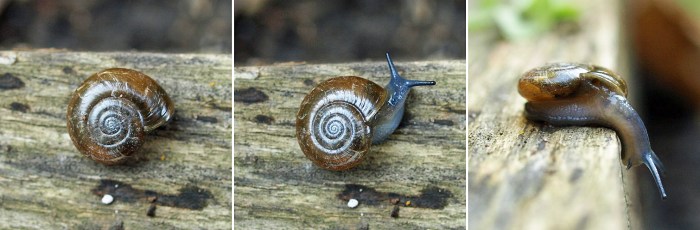
Snail

In Laura Ingalls Wilder’s Little House books, we encounter two opposite impulses embodied in Laura’s parents. Pa is a restless wanderer moving his family ever west in search of more space, more freedom, and complete self-reliance. Ma is obedient to her husband’s wishes, but her heart is still back in New England where her family remains. Just when the family settles in one place and the land is tamed and things are beginning to work smoothly, just when Ma’s workload gets a little lighter because the house is built, the barn is secure, and the vegetable garden is established, Pa announces the family is leaving that all behind and heading back out on the trail to chase the horizon.

As Americans, we admire Pa and leave Ma to fret about Indian attacks and the children’s education. Or we pretend we do. Or we do while we’re yet young and unattached. But when we have established homes and jobs and families of our own, the pull of the horizon must war with the pull of the earth beneath our feet. We begin to see the sense in staying where we are. We begin to see all that open land not as welcoming us but as waiting to destroy us.

So we stay in jobs we dislike for 30 years in order to feed and clothe our families and keep our health insurance (well, maybe not that anymore…). It would be a different thing, we say, if we were single or childless. We take the path of least resistance and claim that it must be God’s will for our lives because we encounter no obstacles (if that’s your view, go check out 1 Corinthians 16:9 and note the word and). We keep plodding through and put out of mind that there may be something else for us.

Is there something you have been putting off for fear that your life will be disrupted? Or that you may fail? The Ingalls family never quite made it to where Pa wanted to go. I’m not sure even reaching the Pacific Ocean would have quelled his wanderlust. In fact, they had to turn back east and retreat for a time. But that never seemed to stop Pa. And though they encountered hardship most of us can’t imagine nowadays, they also experienced the pride of being trailblazers.

It’s hard to balance contentment with one’s circumstances and the drive to get that dream job or live in that dream city or pursue that dream degree. The status quo is so comfortable, so cozy, so easy. Why would we want to mess with that?

Still, if you have gifts and you aren’t using them or you’re not using them to the extent you believe you should, maybe it’s time to venture out of your shell and take the plunge into the unknown. If an opportunity presents itself to you and your first instinct is to retreat into your shell and wait for it to go away, maybe it’s time to be brave and take on the challenge.

There will be obstacles. There will be long winters, rushing rivers, millions of grasshoppers, prairie fires and chimney fires, people who resent you, and family that doesn’t quite understand. There will be hard work and hard weather. But there will also be satisfaction and joy and adventure.

Case in point: I have submitted a few of my short stories this year to a number of contests and gotten a number of emails that include the words, “We’re sorry, but…” And yet, last night I got an email from one of those contests that told me I am a finalist! And that email was from The Saturday Evening Post. Even if I don’t win, I still got that far, I may end up in their anthology, I now have contact with the editor there who likes my work, and I can add this information to my bio as I query other magazines, editors, or agents.

But if I hadn’t taken the plunge and risked lots of rejection, I could never have gotten this far.

Is opportunity knocking? Why not crack the door and at least give it a chance to talk.

How 12 Ordinary Photos Became 12 Eye-Catching Ebook Covers

Over this past year, a few different people have asked me about the covers I’m creating for the short stories I’ve written. Some have wondered how I create them. It occurred to me that it might be fun to show you all the original photos I started with and the finished covers side by side so you can see how I decided what to keep, what to chop, and what to change in order to make a photo into a cover. This is going to end up a pretty long post, but I hope a pretty interesting one as well.

If I had been really smart, I would have tracked all of the changes I made to the photos so I could tell you exactly how to achieve particular effects in Photoshop. Alas, I did not do so. But messing around in Photoshop and seeing what you come up with is half the fun anyway. I didn’t really know what I was doing in several of these, so if I can end up with something compelling, so can you, even if you’re a newbie. (Also, it helps to have a husband who actually does know what he’s doing and can answer all my questions.)

Without further ado…

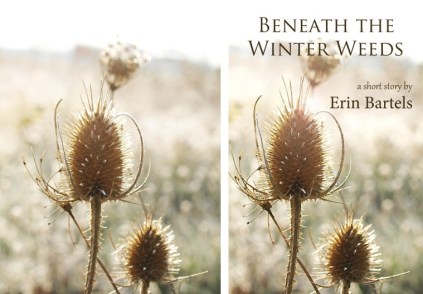
Beneath the Winter Weeds
1BeneathCompare

Super simple because I started with a great photo. Crop, sharpen, layer one effect (don’t remember which!), and add text. You’ll see I kept the same fonts on every cover in order to give everything a family look, despite all the different colors and images.

The Door

1DoorCompare

Another one I didn’t change much beyond cropping. You’ll note that in all of these, I selected colors that were in the photo as the colors for the text. That’s one of the simplest ways to create more cohesion in a cover. If you choose colors form a chart, you’re going to get things that aren’t quite matches. Use the eye-dropper tool to select colors that are already in your photo to then color your text. Also, watch out for high contrast photos where it’s hard to find enough room to put a title that will be readable. In this photo, it was hard to find a spot for the already very short title where I could have it all one font color and yet still readable. I think I was pushing it on this one. “The” is very easy to read, while “Door” is a bit harder.

This Elegant Ruin

3ElegantCompare

I hadn’t planned on putting my model on the cover at all–I only wanted to have the violin in the proper playing position. But Corissa had such an enigmatic look in her eye and I love this girl’s hair. With some adjustments for lighting and a warming filter, the whole cover has a very warm, honey glow to it. I smudged the background to create that rounded light (rather than have the straight windowsill) and created the illusion of movement on the bow using the same tactic. I remember having trouble placing the words, and even changed the title from its original (An Elegant Ruin) to achieve the right balance for the words. I then played with triangles in placement. There are three triangle shapes in this cover. Also, notice how much of the photo I didn’t use. Cropping is absolutely the most basic and effective way to turn a mediocre photo into a good one.

Also, this was one of only two photos I actually took after writing the story, for the purpose of a cover image. All the rest were photos I already had, some of them many years old.

We Shall Sometime Come to Someplace

4SometimeCompare

I loved this rabbit. Problem was, the rabbit in the story is a wild one, not a gray domestic one. Wild rabbits are brown. This took a LOT of tries to get the right brown for the rabbit and the right brown for the background and those two layers were manipulated separately first, then together. It was hard to keep this from becoming just too dark.

Clean

5CleanCompare

Look how dark and crooked that original is! I did so much to this photo, I can’t even begin to tell you how I did it. Lots of strategic lighting adjustments, layer by layer, bit by bit. This was the other cover for which I asked a girl from church to model after I wrote the story. Elise didn’t bat an eye about getting in that dryer in full view of a number of people washing their clothes at the laundromat.

One Endless Summer Day

6EndlessCompare

I knew I needed a ladybug for this. But she couldn’t be on a rock. I knew I needed a green plant for this. But it couldn’t be boring. So out came the lasso tool and a lot of patience, twisting and turning and shrinking and shadowing so it would look semi-real. I like the way it turned out in the end.

10 Degrees Cooler in the Shade

7DegreesCompare

This was an image/title pair that preceded the story and I wrote the story to fit it. Not a lot of edits on the image. It was already quite eye-catching.

The Astonishing Moment

8AstonishingCompare

This may be the image that was worked over the most. When you see the original and final side by side it may not even see like the same photo. The cover image was cropped from the left side (see the lighter almost vertical line between the clouds?) and then I used several different artistic filters to make it look more illustrated, which fits with a bit in the story (although I didn’t realize it until I wrote this post). See the Mackinac Bridge in the distance in the original? Don’t let that fool you. The story actually takes place on Lake Superior.

The Beginning and the End

9BeginningCompare

Cropped, flipped, brightened, and a little fun with the text. Not much more to say, except that this was one of the first images I shot with my macro lens when I got it.

Drive

10DriveCompare

This image was obviously cropped and brightened and I upped the color saturation. I also used an artistic effect (perhaps watercolor?). I didn’t have to blur it to make it look like there was movement down the road as I took this from the passenger seat one day when we were driving Up North.

Memory Man

11MemoryCompare

This photo of the undergirding of a train bridge over the Lansing River Trail also serves as the basis of the background on my husband’s website. I needed something urban looking, but didn’t want the graffiti to compete with the words on the cover, so I rotated the photo 90 degrees and cropped out my cover image from what is really the top of the original photo (note the dark strip of rivets to orient your brain). Then I enhanced the colors, brightened, increased contrast, and added effects to make it less photoreal and more like a painting. I put the words vertical because of all the dark rust and even dropped an article because it didn’t really fit the design (it used to be called The Memory Man). A real graphic designer could have made it work, I’m sure. I also removed distracting dots of rust from beneath the words so that the title and author name can be easily read.

Water & Light

12WaterCompare

Lastly, another very simple one. Just a matter of cropping, brightening, and placing text. This one I haven’t written yet, haven’t started at all, and have barely thought about. It may or may not end up with some subtle tie to Christmas since it will be coming out in December. The title simply came from the building that is featured in the photo (and may or may not have anything to do with the eventual story), which is the Lansing Board of Water and Light building downtown. Built in the 1930s, it is a gorgeous place with Art Deco lines and stirring murals on the lobby walls. Modern public buildings just don’t compare. Anyway, we’ll see what story I can come up with to fit the cover and title.

And that makes twelve. Twelve photos, twelve covers, twelve stories. I’m busy working on Memory Man right now. This has been such a fun year-long experiment. I highly recommend you try it if you’re struggling with consistent writing. As you write you will hone your skills and short stories are far easier to finish than novels, thus giving you that satisfying feeling of typing out the last sentence far more often. We’re getting close to the end of the year. It may be time to start thinking up some writing goals for 2014…

Kill Your Smart Phone

Tomorrow afternoon I will be leading a workshop at the Breathe Christian Writers Conference on developing a writing rhythm. I’ll talk about the importance of carving out consistent time to write and a space (or spaces) in which to do it. But the most crucial part of the discussion will be on what I’m calling creative sustenance, what others may call “feeding your muse.” And I realized in the course of preparing for this discussion that I have developed a holistic hatred of cell phones in general and smart phones in particular.

I’ve never enjoyed talking on the phone to anyone beyond my husband when we are apart (which really doesn’t happen nowadays, but it certainly did back when I was still in high school and he was off at college already) and I do enjoy an occasional call from a far-flung friend.

Honestly, though, it’s not phone calls that irritate me so much. It’s constant texting, email checking, and web-surfing rather than a.) paying attention to the real person who is talking to you right now, showing just how anti-social social media really makes us, or b.) paying attention to the world around so that you don’t, say, get hit by my Explorer or, heaven forbid, notice the way the trees are swaying or that lonely old man sitting by himself in the corner. Also, there’s that incredible phenomenon of people watching movies on phones or tablets, in public, without headphones. When did that become acceptable?

But for the writer the danger is really point B, and not necessarily because of the possibility of getting run over. It’s because to write about real life you need to pay attention to real life. If it hasn’t already happened, I’m sure someone will make a literary splash at some point for writing a novel entirely in texts, but for most real stories populated with real characters living in a real setting (all of which need to be conveyed in precise words on a page/screen) you have to PAY ATTENTION to the stuff that is real.

If you’re an artist of any kind and you find your well of creativity is running dry, it may be because you’ve been looking at little beyond a screen for too long. Get out in real life and engage. Talk to that old man in the corner. Something he says or the expression that crosses his face will likely inspire you to write a novel or a screenplay or a short story. Look at the tops of those trees swaying in the breeze and imagine what happens on a day where wind blows and leaves wrench themselves from branches and go skittering down the road.

Readers need you to notice for them (because they’re all staring at their little electronic idols too). And you can’t point out beauty and sadness and truth to them if you don’t see it yourself.