Watch Women Writers, Women(‘s) Books on Friday, March 1st, for the cover reveal for The Words between Us, which is coming out in September! What better way to celebrate the end of February!

Watch Women Writers, Women(‘s) Books on Friday, March 1st, for the cover reveal for The Words between Us, which is coming out in September! What better way to celebrate the end of February!
 Meet Felicia Grossman, author of the historical romance Appetites & Vices, which releases today from Carina Press
Felicia Grossman wanted to write stories ever since her father read her Treasure Island when she was four years old. The Delaware native never lost her love of words, earning both an English degree and a law degree. Felicia now lives in the northern part of the country with her spouse, children, and dogs. When not writing, she can be found eating pastries or belting showtunes in her living room.
Welcome, Felicia!
Tell us about your book.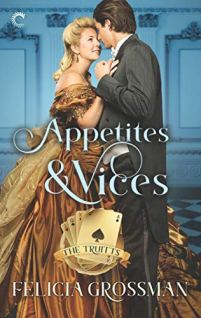
Appetites & Vices tells the story of Ursula Nunes, the least popular Jewish heiress in 1840s Delaware, and Jay Truitt, a recovering opium addict hiding behind his rich playboy persona. What starts as a faux engagement to help Ursula’s social standing turns into actual love. The novel follows Jay’s struggle build a new life and Ursula’s struggles to fit into both Jewish and Gentile society, while discovering that everything is a little easier with a partner. The book explores of the difficulties of American Jewish identity, addiction, and interfaith romance.
Where did you get the idea?
Appetites is a faux engagement story and I love that trope (romance is all about the tropes). And I really, really, really wanted to write a heroine in a historical romance that could’ve been my ancestor (there’s no British nobility in my blood, I promise), who got to have a really big character arc because why should the heroes have all the fun screwing things up?
Tell us about your favorite character.
Let’s be real, I usually put a little bit of myself in all my characters, especially my heroines, but there’s a TON of younger me in Urs. A lot of embarrassing things that I look back on and cringe, and a lot of the good stuff as well. Urs is spoiled, indignant, high-tempered, impetuous, pushy, bossy, and socially-awkward, but she’s smart, loyal, brave, determined, and ultimately very kind. She values fairness and justice and may say the wrong thing, but would never “punch” (or throw) down.
How long did you take to write this book?
I started writing Appetites in August of 2017. My heroine was originally a grandmother in a book I was querying so I gave her a backstory for fun. I finished editing around November of 2017 and did some initial test queries/pitching in December #pitmad. I really queried in February of 2018 and got an agent through a #kisspitch like. Appetites sold in July of 2018 so it’s been really fast.
What kind of research did you do for this book?
It’s historical so a ton of research. It’s set in my area of the country (Delaware and Philadelphia)—where I grew-up—just a few centuries earlier—so I kind of knew where to go, i.e., Rebecca Gratz’s letters and writings as well as Winterthur Museum and Gardens, etc.
What is your favorite part of your writing process, and why?
I love editing, especially big edits. It feels like spring cleaning and because you are finally molding your clay. Drafting is throwing the clay down on the wheel, editing is where the fun begins.
Can you share your writing routine?
I’m a mom and I have a full-time day job so I write whenever I can. In hallways, when the kids go to bed, anywhere and everywhere.
If you could tell your younger writing self anything, what would it be?
Don’t be afraid to put yourself out there. You only grow and change if you learn and you can’t learn what you don’t know.
Which book influenced you the most?
One? I have to pick just one? I always I’m historical romance with a bit of a Jewish humorous women’s fiction voice. Like Joanna Shupe, Alyssa Cole, Beverly Jenkins, and Elizabeth Hoyt have been huge romance influences, while Nora Ephron, Susan Isaacs, and Jennifer Weiner have been huge voice inspirations. I read Heartburn when I was like ten and it was totally inappropriate but it also changed my life because I understood the tone, the humor, and the dynamics.
What are you working on right now?
Appetites & Vices has a sequel called Dalliances & Devotion coming out in August, so there are edits there. I’m also drafting something entirely new, but still American now, and there’s a Regency I’m editing.
Thanks for chatting, Felicia! We wish you success with your debut!
 Meet Megan Collins
Megan Collins holds an MFA in Creative Writing from Boston University. She has taught creative writing at the Greater Hartford Academy of the Arts and Central Connecticut State University, and she is the managing editor of 3Elements Review. A Pushcart Prize and Best of the Net nominee, her work has appeared in many print and online journals, including Off the Coast, Spillway, Tinderbox Poetry Journal, and Rattle. She lives in Connecticut.
Megan is the author of The Winter Sister, out today!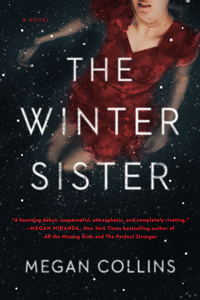
The Winter Sister opens sixteen years ago, when Sylvie’s sister Persephone didn’t come home. Out too late with the boyfriend she was forbidden from seeing, Persephone was missing for three days before her body was found—and all these years later, her murder remains unsolved. Now, in the present day, Sylvie reluctantly returns home to care for her estranged, alcoholic mother undergoing cancer treatment, and finally begins to uncover the truth behind what happened to Persephone.
Here’s the first paragraph:
“When they found my sister’s body, the flyers we’d hung around town were still crisp against the telephone poles. The search party still had land to scour; the batteries in their flashlights still held a charge. Persephone had been missing for less than seventy-two hours when a jogger caught a glimpse of her red coat through the snow, but by then, my mother had already become a stranger to me.”
Let’s get to know Megan and her debut novel!
Where did you get the idea for The Winter Sister?
The Winter Sister is inspired by the Greek myth of Persephone and Demeter, which has always been my favorite myth because of the many ways in which it can be read—as a story of motherhood, a story of what happens when we refuse to let go of grief, or a story about the effects of trauma. The idea for this book came to me when I wondered what would have happened if Demeter had had another daughter, if Persephone had had a sister, who was left to navigate her childhood in the wake of her mother’s neglect and rage and unending grief over Persephone’s disappearance. Sylvie, the narrator of The Winter Sister, is my answer to that question.
No spoiler, but tell us something we won’t find out just by reading the book jacket.
Art plays a big role in this book. After her sister is murdered, Sylvie spends all of her free time painting, almost to the point of obsession, and by the time we meet her as an adult, she’s working as a tattoo artist. But art is not therapeutic to her; instead, it’s tied to a pivotal experience from her past, one that continues to cripple her with guilt and shame.
Tell us about your favorite character.
For me, Sylvie’s mother Annie is the most compelling. In a lot of ways, she’s a terrible mother, having basically abandoned that role altogether after Persephone was murdered. But deep in her core is a lot of love and guilt that have essentially left her paralyzed, unable to move on. And though I would never want to be like her, I sympathize with the trauma she’s endured. I understand how easy it can be to lose yourself to that pain.
If you could spend a day with one of your characters, who would it be and what would you do?
I would take Sylvie out on a self-care day because she’s gone through so much and definitely needs it. We’d eat giant cinnamon buns for breakfast, go see a funny movie, get massages, order some delicious takeout, and then binge-watch a riveting TV series for the rest of the day, pausing only to cuddle with my golden retriever Maisy (who clearly has to come, too).
Are your character based on real people or do they come from your imagination?
While none of my characters are based directly on anyone real, I’m certain that each one has qualities borrowed from people I’ve known. It’s impossible to write in a vacuum, so real life always slips in, whether it’s through a character’s background, a gesture, or a particular way of speaking.
How long did you take to write this book?
It was about two years from the initial outlining of this book to the final revision I made with my agent before it was sent out on submission. But during that time, I took nearly a year-long break, as I got stuck for a while and chose to focus on revising another project instead.
What kind of research did you do for this book?
In a way, I feel like I’ve been researching this book for half my life, ever since I first heard the myth of Persephone, and in all the years since, whenever I’ve re-read it, taught it, or devoured any reimagining or adaptation of it I could find.
Are you a plotter or a pantser?
I’m definitely a plotter. In my non-writing life, I like to plan things out and know as much about what’s coming as possible, so it makes sense that when it comes time for me to draft a novel, I want detailed outlines to help me find my way.
What is your favorite part of your writing process?
My favorite part of the writing process is the physical feeling I get in my body when the lines and sentences are flowing particularly well. It’s something I feel in my arms, in my legs—a sensation in my veins, as if my blood is sparkling. It sounds a little crazy when I say it like that, but I’m willing to bet that there are a lot of other writers who know exactly what I mean.
What is the most challenging part of your writing process?
The most challenging part of the process is when you know there’s a problem in what you’ve written—a consistency issue, a lack of clarity, a need for a better transition, etc.—but the solution eludes you. It can be incredibly frustrating to keep staring at the section that’s giving you trouble, believing that you’ll never write your way out of it. On a positive note, though, once you do find the answer to the problem, it’s incredibly rewarding and you get to feel like a superhero for a second.
Have you ever gotten writer’s block? If yes, how do you overcome it?
I have a rule for myself that I’m not always great at following: when you’re going through writer’s block, be kind to yourself. Writer’s block happens, and it’s not because you’re a bad writer; it’s because your brain needs to recharge. Take writer’s block as an opportunity to read voraciously, so that when you do come back to the blank page, your mind is stimulated and, hopefully, churning with fresh ideas.
If you could tell your younger writing self anything, what would it be?
“You WILL write a novel. You WILL get published. Stop worrying so much about what might NOT happen for you before you even get the words on the page. Write that story. Write those poems. And just enjoy the process.”
Do you have any writing quirks?
I’m a huge over-user of em-dashes—and I don’t think I’ll ever stop. In addition to being elegant, they offer a sense of pause that’s far superior, in my mind, to the comma, semi-colon, and ellipsis.
Tell us about yourself.
I have the immense privilege of teaching creative writing to high school students at an arts magnet school in Hartford, Connecticut. I’m also the managing editor of the literary journal 3Elements Review. When I’m not writing, reading, or teaching, I’m hanging out with my husband, Marc, and our golden retriever, Maisy.
How did you get into writing?
I caught the writing bug when I was six years old and wrote my very first story, “The Bad Cats.” From that day on, I knew there was no other path my life could take; I was going to be an author.
Apart from novel writing, do you do any other kind(s) of writing?
Over the past ten years, I’ve divided my time between writing novels and writing poetry. In fact, my MFA is in poetry, and I’ve published a number of poems in literary journals since graduating from Boston University’s creative writing program in 2008. I love fiction and poetry equally, and I don’t think I would be the writer I am today without the training I received in each.
Share something about you most people probably don’t know.
I’m obsessed with tiny things. I have a collection of miniature items, including a mini typewriter, mini bookshelf, and mini books! Some other favorites from my collection are my tiny cash register, shopping cart, and banker’s lamp.
Which book influenced you the most?
The Collected Poems of Sylvia Plath. Before I first read Sylvia Plath in my early teens, I was writing pretty terrible poems filled with a lot of abstracts and clichés, but as soon as I saw how Plath crafted images and made universal emotions or experiences feel completely new, I was changed forever. I didn’t have the opportunity to take any creative writing classes until I was in college, so as a teenager, Sylvia Plath was my teacher.
What are you working on right now?
I’m working on a new novel. Like The Winter Sister, it’s about a woman haunted by her past who has to navigate some dysfunctional familial dynamics in search of a long-buried truth—but the similarities end there.
Where can we find you?
Website: www.megancollins.com
Facebook: facebook.com/megancollinswriter
Twitter: @ImMeganCollins
Instagram: @megancollinswriter
Goodreads: https://www.goodreads.com/author/show/18280418.Megan_Collins
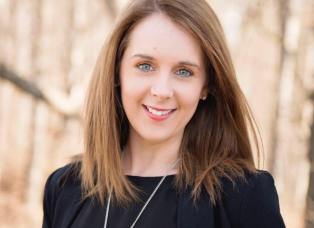 Meet Danielle Haas, author of the romantic suspense novel Bound by Danger, which releases today from Entangled
Danielle Haas grew up with a love of reading, partly due to her namesake—Danielle Steele. It seemed as though she was born to write out the same love stories she devoured while growing up.
She attended Bowling Green State University with a dream of studying creative writing, but the thought of sharing her work in front of a group of strangers was enough to make her change her major to Political Science.
After college she moved across the state of Ohio with her soon-to-be husband. Once they married and had babies, she decided to stay home and raise her children. Some days her sanity slipped further across the line to crazy town so she decided to brush off her rusty writing chops and see what happened.
Danielle now spends her days running kids around, playing with her beloved dog, and typing as fast as she can to get the stories in her head written down. She loves to write contemporary romance with relatable characters that make her readers’ hearts happy, as well as fast-paced romantic suspense that leaves them on the edge of their seats. Her story ideas are as varied and unpredictable as her everyday life.
Welcome, Danielle!
Tell us about your book.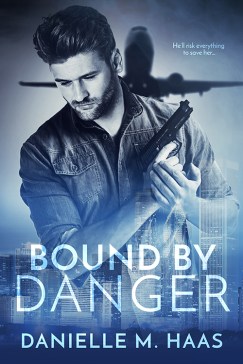
Special Agent Graham Grassi is on a quest to stop a sex-trafficking ring from infiltrating Chicago. His path keeps crossing with sexy redhead, Mickey O’Shay. The stakes raise higher when Mickey’s goddaughter is taken, and her connections to the case leave Graham wondering if she’s just another victim in a sick game, or if she knows more than she’s letting on. Together, they race against time to unravel a web of deception before it’s too late.
Where did you get the idea?
My initial idea sprang from wondering what would happen if a flight attendant had a blind date with a man she’d already met…a man she’d just told to stop trying to join the mile high club on a flight she worked. Then I realized this wasn’t very heroic behavior, and I had to figure out what situation could he possibly be in to take him from sleazy to dreamy. Of course NONE of this made the final version, but it led me to a great story I never expected to tell.
No spoiler, but tell us something we won’t find out just by reading the book jacket.
Although Mickey and Graham are in a high-stakes emotional situation, they still have a lot of witty banter between them. Graham even serenades Mickey—with a horrible singing voice—to one of my favorite songs by Journey.
What kind of research did you do for this book?
I did a lot of research into sex-trafficking. It was horrific! But it opened my eyes to this dark world that exists everywhere and I now have a passion for advocating against. I even ran my first 5k in support of raising money to help victims of sex-trafficking.
What is the most challenging part of your writing process, and why?
The most challenging part is just finding the time to sit down and write, and not feel guilty about doing so. I’m a stay-at-home mom and my son isn’t in school yet. It’s hard to balance.
Can you share your writing routine?
I normally write at my desk or at the island in my kitchen. I work better in the morning, so after I get my daughter on the school bus I give my son time to do his own thing (TV, Kindle, Puzzles, Play-doh) and I work on getting in my word count. My brain shuts off around 5:00 and it’s tough for me to get back into my writing at that point.
If you could tell your younger writing self anything, what would it be?
Be patient and find your writing tribe! The people in this community are amazing, and their support and advice have been life-changing. I wish I would have known they were out there sooner.
How many unpublished and half-finished books do you have?
I have three unpublished manuscripts that are all under contract. One will be out this year, the other two will follow shortly. I also have two unpublished/uncontracted manuscripts out on submission.
How did you get into writing?
I’ve always loved writing. When my son was 6 months old, I thought I was going to go stir crazy with only focusing on my children and husband. I decided to sit down and try to write a book based off my hometown and I fell in love with writing! That book, a small-town contemporary romance, will be published later this year!
Share something about you most people probably don’t know.
I changed my major in college seven times! I started in creative writing, but the idea of having to read my work in front of other people scared me so bad I just keep changing majors and looking for something else I’d love to do.
What are you working on right now?
I just finished another romantic suspense, which is book two of a three book series. Each book focuses on a crime where a dating app is used by the villain/and or suspects in the novels.
What’s your favorite writing advice?
Keep writing, keep learning, and have an open mind. After I finished my first manuscript, I thought it was the best thing ever…until my paths crossed with my now critique partner who pointed out everything I did wrong! Instead of being defensive and offended, I listened to her wonderful advice and used it to improve my writing. I still do this daily!
Where can we find your book?
Amazon
Apple
Kobo
Nook
Where can we find you?
Website
Facebook
Twitter
Instagram
Pinterest
Goodreads
Thanks for chatting, Danielle! We wish you success with your debut!
Last night was my first live event to support the launch of We Hope for Better Things.

Baker Book House in Grand Rapids, Michigan, was a perfect venue. Not only is it the retail arm of my publishing house, it is a fantastic space with lots of room for events like these.
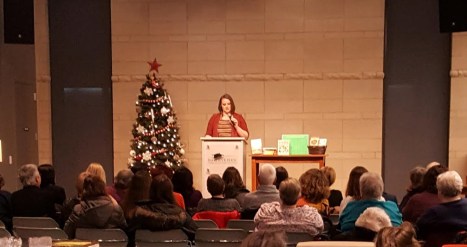
I didn’t count, but I would estimate that there were around 50 people who came to listen to me jaw on about the importance of knowing our history in order to improve our future.

There was family — my mom and dad, my aunt, my husband and son, my mother-in-law and father-in-law.

There were dear friends — girls who were on my Little League softball team and stood in my wedding, and fellow writer-friends I met through WFWA who actually made the trip from Chicago (with two more of their friends) to surprise me (and boy I was surprised!).

There was a sweet old lady from the church I attended in my early twenties when I lived in Grand Rapids. There were members of my publishing team and people I’d worked with for well over a decade. There were fellow writers I met through my involvement with the Breathe Writers Conference and the Capital City Writers Association.
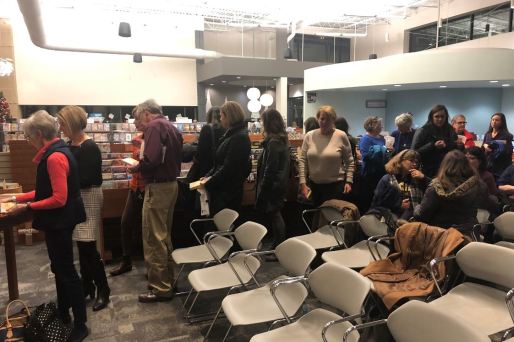
And there were lots of people I’d never met before. Several of them grew up in Detroit during the 1960s, which is where the book is partially set. One of them actually went to the same high school as my mom did in Detroit at the same time she was there. Those who had already read it said they really enjoyed seeing their childhood come alive in the book. That was really gratifying to me because it means I not only did my research but I got it onto the page in a compelling way.

All in all, it went well and I know I’ll be less nervous for my next event coming up on January 24th at 7:00pm at Schuler Books & Music in Okemos, MI.

Also, I want to take a moment to point you to a new page on this website. This events page is where I will be putting information about where I will be in the future, just in case you want to connect in person. You can also find it through the media page in the header of the website, along with pages that link to reviews, interviews and articles, and resources for book clubs.
Thanks for reading!!
Starting today and running for….as long as it needs to, you’ll find a new feature on this humble blog: interviews with debut authors!
For the past year, I have found great camaraderie and help from my fellow 2019 debut authors. As we seek to support one another, some of us have offered to do interviews for our blogs. So every once in a while, you’re going to see one of them on here. Now, I haven’t read all of these books — some of them just aren’t in my wheelhouse, but that doesn’t mean they’re not in yours or in the wheelhouse of someone you know.
For the first, allow me to introduce you to B.P. Donigan.

B.P. Donigan was born and raised in Wasilla, Alaska (which she reminds us would later become famous thanks to one infamous politician who could see Russia from her house, but at the time was about as rural as you can get).
She attended college in rural Idaho earning a degree in Print Journalism, and then not-so-rural Utah earning a degree in Marketing, and finally moved to very-not-rural Boston where she lived and worked for ten years. After paying her dues to the Extreme Winters, she resides now in sunny California, with her two kids, two fish, two dogs, and one amazing husband. Like any good superhero she spends her days building her cover story behind a desk, and her nights saving the world (on paper, at least).
Donigan’s debut is Fate Forged.

Here’s the description:
Growing up on the streets of Boston, Maeve O’Neill learned to rely only on herself. Paying bills isn’t glamorous, but her life is on a better track—until she starts having agonizing visions of torture. Desperate to rid herself of the paralyzing episodes, she follows her visions to the scene of a murder. Instead of answers, she gets an unexpected gift from the victim: Magic.
With the unwanted power, Maeve becomes the access point to all of Earth’s untapped magic. Now, powerful enemies are after her and staying alive means striking a bargain with an untrustworthy ally with a long-shot plan. Maeve has to keep the magic in check until she can get rid of it, but her control is slipping and everything could go wrong. If the plan fails, her unlikely ally betrays her, or her enemies catch her, she’ll be handing over all of Earth’s magic…and her life.
Interest piqued? Let’s find out more:
What sparked the idea for Fate Forged?
Fate Forged started with a ‘what if’ questions. What if a woman inherited crazy magic powers, but had no idea how to control them? From there, I let the questions lead me into a story. Who is she? Why doesn’t she know how to control the magic powers? Where do the powers come from? What if she doesn’t remember something critical about herself…
Did anything from your real life influence your book at all?
Definitely! I grew up in Alaska, which is where my characters go to search for a Fate who can remove the uncontrollable magic powers from my main character. They hike over a glacier and to the top of a mountain in a re-creation of a three-day hike I did when I was a teenager. (I wasn’t chased by demon dogs at the time, but otherwise it’s the same hike.) The locations, and even the hiker’s huts where they stop over, are all real places. Also, the book starts out in Boston where I lived for a decade after college, and I mention Davis Square and a fortune cookie factory, which are real places that are near and dear to my heart. I had a lot of fun putting my favorite places into my story.
Did you have to do any research for Fate Forged?
I researched everything! For the story itself, I had to map out the character’s road trip, and Google search weapons, how to realistically kill someone in hand-to-hand combat, and watch lots of videos online just to make a coherent fight scene. For a while there, I was pretty sure my internet searches were going to flag an FBI raid on my house.
How long did it take for you to write Fate Forged?
I first sat down to write a novel four years before Fate Forged was published. The first year was all about learning how to write a novel. I’ve always been an avid reader, and I knew what I liked, but I had no idea how to plan, plot, or pace a novel. An entire second year was spent editing my work in progress and then getting beta readers and critique partners.
Did anything change significantly in your book during the writing or editing process?
Yes! Many of the characters’ names changed, and the title used to be The Lost Sect, which I liked, but the publisher didn’t think had enough depth. After some soul searching, I decided “Fate” was a thread that will reach across the entire series, and then I attempted to find a title with the word Fate that didn’t sound like a romance novel! To make it all cohesive, I ended up coming up with titles for the first three books (as well as the series title) so the extra effort was worth it.
Are you a plotter or a pantser?
Plotter all the way. I’m always looking for better ways to plan out the plot, the characters, and pacing. For me, it’s so much easier to write creatively if I know the bones of the story are solid.
What do you like to do when you’re not writing?
When I’m not writing, I have a full-time job, two kids, two dogs, and a husband. All that keeps me busy! When I have spare time, I love to dabble in home improvement projects and arts and crafts. I love trying new things, but honestly I have a hard time finishing up the projects I start.
What are you working on right now?
I’m working on book two in the Bound Magic Series, which is tentatively titled Fate Changed. Although the main characters overcome a lot of challenges in Fate Forged, there are still some people who need to be stopped, and the fate of Earth’s magic hangs in the balance in a new way.
Where can we find the book?
You can buy the book on Amazon | Kobo | Red Adept Publishing | B&N | GooglePlay
Where can we find you?
Website www.bpdonigan.com
Join B.P. Donigan’s Newsletter
After I sold my debut novel and got a 2019 pub date, I joined a group of other writers on Facebook whose debut novels are coming out in 2019. The writers in this group are all writers of adult or new adult fiction. They are men and women of various backgrounds writing in various genres — contemporary, historical, sci-fi, fantasy, paranormal, romance, and more. We’ve been holding each other up, comparing notes, reassuring each other, and answering one another’s questions for months as we’ve gone through the process of getting edits, seeing galleys, seeing cover designs, etc. It’s been an awesome resource and a great source of encouragement to all of us.
Starting today, you get to meet them!

If you love to read and you want to be up on the up-and-comers, head over to Twitter and follow the #DebutAuthors19 and #Debut19Chat hashtags. Starting today and every day throughout the month of August, we’ll be introducing ourselves, talking about our books and our publishing journeys, and giving you an inside look at what’s coming to bookstores in 2019.
Hopefully, you’ll find several great new books to add to your Goodreads shelf and/or pre-order.
I’ve already added my post for day 1. Go see who else is tweeting!
I mentioned yesterday that the last book I found at John King Books was the one that broke my budget. It became its own post because I felt I needed to offer an explanation as to why I shelled out $55 for this 1939 printing of the first unabridged English translation of Mein Kampf.

As the introduction explains, the text is fully annotated to explain the history behind events Hitler mentions in the text and to correct false information.
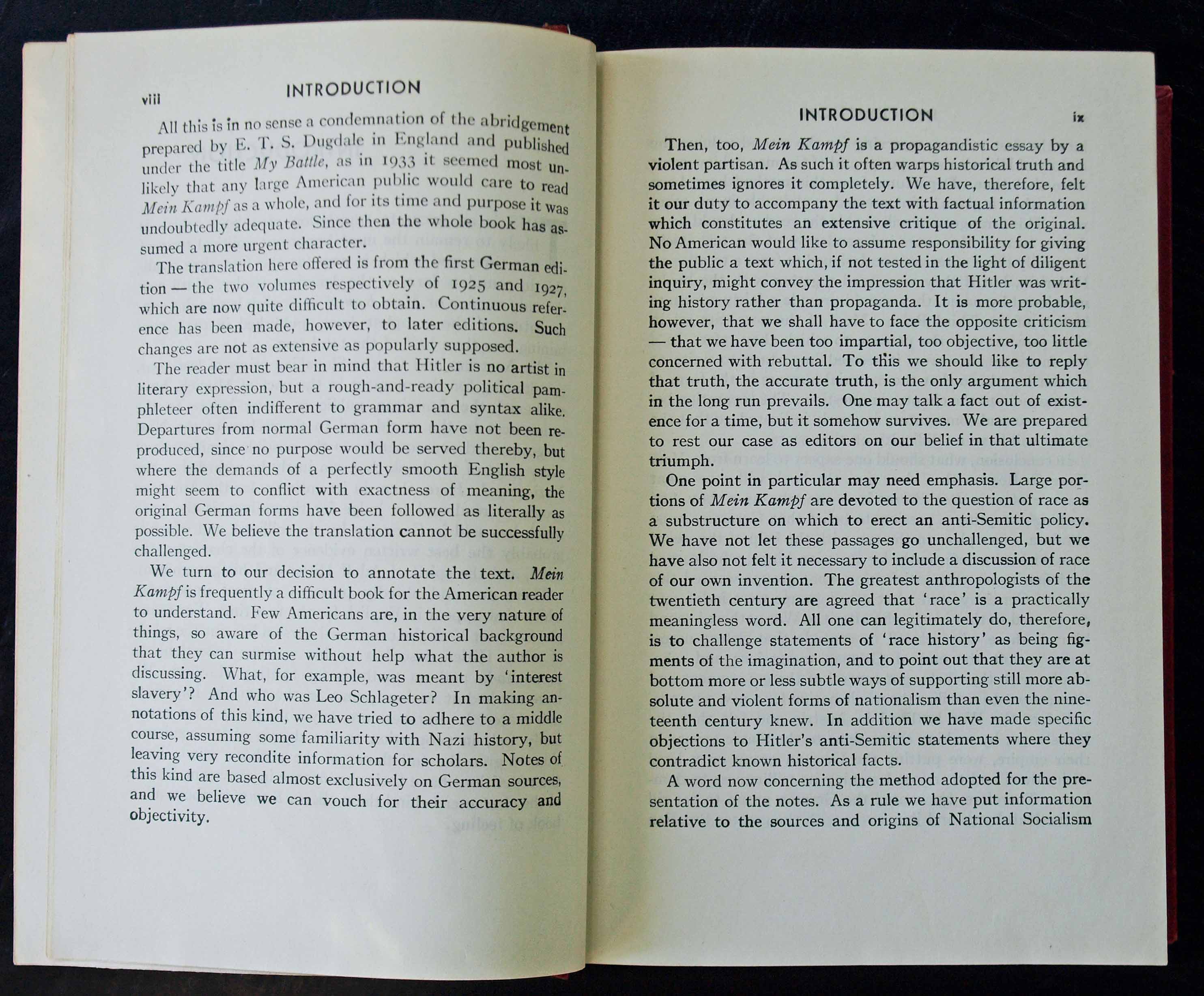
Now, why on earth would I want such a book? I’m not a neo-Nazi or a white supremacist, though a card tucked in the pages which we discovered once we were back home certainly suggests that those people are active and looking to recruit like-minded people…

One of the reasons I bought this book is that I am a student of history, particularly of the 20th century, and I am deeply interested in how historical events led to the world we live in today. I am also researching Adolf Hitler and the geopolitical realities of his lifetime for a series of books I hope to write someday. Thus, it is invaluable to have this pre-WWII view of the book and the man that changed the course of history. The editors are not looking back at Hitler through the historical lens of WWII and the Holocaust, but from the standpoint of what were to them current events. The introduction to this book mentions the reasoning behind the timing of this edition, and a preface even makes note of the tremendous speed at which they felt pressured to produce it.

In some ways, producing this book is a bit like people buying The Art of the Deal or other Trump-authored books after the election to see just what kind of man had come to power. This introduction was certainly written before the invasion of Poland in the fall of 1939 as it makes no mention of it. The world knew Europe was headed for conflict after Germany’s 1938 annexation of portions of Czechoslovakia, but it had no inkling of the scope of the war that would engulf the entire globe over the next six years. Seeing how they saw these events as they were unfolding rather than simply reading history from the standpoint of someone looking back in judgment — How could they have thought they could appease Hitler? How could they have turned a blind eye to what he was doing? — is vital for an honest, non-revisionist understanding of why world events happen as they do. It removes the “hindsight” glasses we are always inevitably wearing when we study history and allows us to see with the biases that the people of that time had.
When you read portions of Mein Kampf that deal with the question of race, and especially the Jewish people, you wonder how on earth anyone could believe any of it. While Hitler can even sound reasonable in some of his views of more political questions (even if you disagree with him, there are logical underpinnings to his arguments in this sphere), the logical leaps he makes when talking about race sound utterly absurd to us. How could anyone have followed this guy? We’ve all seen the newsreels. He was a raving lunatic. They must have all been brainwashed. I’ve even heard an acquaintance of mine say that she thought they must have been eating something bad or the water must have been poisoned for them to blindly follow him.
But that kind of talk removes responsibility from the real people who carry out horrific acts, and it makes those of us in the 21st century feel quite sure of our intellectual and moral superiority to those in the past. We would never do such things. No one could fool us the way Hitler fooled them.
Really?
The fact of the matter is, if you study even the century that led up to World War I, what do you find? Rampant antisemitism. What do you find after WWI? Rampant antisemitism. Leaders like Hitler cannot lead without a following. He struggled for years to gain his, but once he found the right combination of political views (including blaming the Jews for WWI and for the Marxist revolution in Germany after the war) and built the right kind of propaganda machine (which he talks about extensively in Mein Kampf) he found a very willing audience to listen to and applaud and follow him. They wanted someone to blame and they wanted someone to make Germany great again. He wasn’t a lunatic. He was a very clever man who knew how to convince people that he was going to fix everything that was wrong.
We live in a day when our president throws a lot of blame around. When it has been suggested that we register and track people of a particular religion. When the working class population is hard-pressed and suffering from long-term joblessness and wage stagnation. When we vote in someone from outside the establishment in order to shake things up. Our times are not so unlike those that led up to two of the most deadly and destructive wars in history (approximately 100 million people died as a result of WWI and WWII combined — that would be like the entire populations of California, Texas, New York, and Illinois combined…dead).
Now, I’m not equating Trump and Hitler. Trump’s a bumbling idiot muddling through a job he’s perhaps realizing he didn’t really want to do after all. Were Trump a decent orator, maybe (maybe) I’d be more concerned about him. (Aside: Imagine the crazy tweets Hitler would unleash if he’d had Twitter.) No, sir. Trump is no Hitler.
I’m simply saying that it’s important to study our history and to resist chronological snobbery, which suggests that since we live in a later time we are more enlightened or savvy or moral than those who lived in the past. We’re not. We must always be on guard against bad leadership and we must always be on guard against our own capacity to do evil…especially when we have convinced ourselves we are doing good.
Because the more pressing question, the more disturbing question is: Could we regular, everyday Americans be more like all those regular, everyday Germans in the 1930s than we think?

On Saturday, my sister and I took our first trip to John King Books in Detroit.

It was everything you want in a giant used bookstore housed in an old factory.

Full of charm and mystery.

And beautiful books.

I wanted to take all of these home with me. But I had given myself a budget. In a place like this, you kind of have to.

I brought home this book to read before, during, and after my upcoming trip to the Upper Peninsula.

I built my growing collection of fantastically lovely volumes of poetry printed in the 1800s.

I found Byron last year in a Lansing antique shop, and he is now joined by Burns and Longfellow.

I added yet another green-bound classic to my stacks (green, it seems, was the favorite color of these 1930s printings).

And I found a curiosity or two. This is a copy of The Legend of Sleepy Hollow written in shorthand.

I have a book that teaches you how to write shorthand from my grandmother’s library and this slim volume will go along with it (uh oh…I sense another collection coming into being).
The last book I found — the one that busted my budget and ended my shopping day — is something I’ll tell you about tomorrow…


Between the covers of these five books are a total of forty chapters. One chapter for each day of Lent. They’re all books I’ve been meaning to read, books that have been sitting in stacks or on shelves. Each day of Lent, I hope to read one chapter. I probably haven’t read five books in one month since I was on maternity leave, so we’ll see if I can keep up with that ambitious schedule. But I thought that, rather than giving up practices or habits I should not have to begin with and calling that a sacrifice, I might instead feed my mind and soul with devotional readings, memoir/history, science and religion debates, and Bible study. That, in addition to my daily readings (they’re snippets, really) from C. S. Lewis’s classic works.
I’m putting writing on the back burner during Lent. Perhaps a poem or two or three may materialize, but likely little else. And I’ll put off my research reading until after Easter — though I suppose the grim realities of World War I would be in keeping with this somber season. For now I’ll set my mind on things above and hope that it positively affects my world below.
For those of you who begin the observance of Lent tomorrow, may it be a time of fruitful self-examination that brings you to the joy of Easter in the proper mental and spiritual state.
 Erin Bartels
You must be logged in to post a comment.