The Way It Seems to Work

FlakeI’m sure you’ve had this experience. You make a plan to do something, you start executing that plan, things are working, things are cooking, and then someone comes along with an “opportunity” for you that, when it comes down to it, you just can’t pass up. It will take time, energy, and creativity (which you have already earmarked for your planned work) but you just can’t pass it up because it will give as much as it takes–more experience, connections, and, oh yeah, money. And suddenly your perfectly apportioned calendar becomes bloated and more complicated. You start to get nervous and you think to yourself “I don’t know about this…”

Ever happen to you?

As you may have guessed, a nice, paying writing opportunity was dropped in my lap this week and I have decided to pursue it. I have also decided to keep my promise to myself and any potential readers out there to write and self-publish one short story each month. I also need to finish pulling together a proposal for a writing conference, make a quilt for a friend, clean my house up before my mother arrives for a visit (today), and, what was that other thing? That’s right, my full time job. Thank goodness there are still three more months before I need to think about yard work.

Just like that the very lovely January feeling of finally having your calendar and your goals under control dissipates into a vaguely uneasy sense that you will get it all done (because you have to) but you might not always enjoy it.

There you have it. Opportunity comes along at inopportune times. But you still need to grab it and run with it and realize that, with a little crazy ambition and an understanding spouse, you are hard at work blazing the trail to the life you truly want–the writing life.

You know what? 2013 is going to be a great, crazy year.

Sneak Peek at January’s Short Story

I’m already hard at work writing January’s short story, which I’ve tentatively titled Winter Weeds. And because procrastination is an integral part of writing (and because I have to get to it at some point in order to upload everything to Amazon) here is my current cover mock-up. You may recognize the photo.

Winter Weeds Cover Mock-Up

As I’m plugging away at this story, I am enjoying the challenge of capturing a setting in vivid words. The temperature, the way the light hits, the thin, faint smells of winter. This is probably my favorite kind of writing. Such a fun challenge to try to describe the essence of something physical and visual in mere words on a white page.

When are you at your very best as you write? Dialogue? Action sequences? Bringing emotions to life? Think about whatever type of scene you like most to write, the kind of thing that got you jazzed about writing in the first place. Are you still writing scenes like that? Has the joy of writing slipped away? Has your technique stalled or improved over the years?

Today, write something you absolutely love to write, whether or not it is attached to any work in progress. It may just take on a life of its own and become your next great work.

The Editing Secret You Know (But Are Trying to Forget)

Balancing the Baby

The observant among you will have noticed something rather off about the photo above. The rest of you are wondering why I would post a boring photo of my fireplace. If you are in the second lot, look again. See it now?

That baby should not be there. And really, it’s a pretty poor Photoshop job anyway, so you may be suspecting that the weeks-old baby on the mantel is not in actuality sitting up there under his own power. Two photos taken, one with my husband on either side, holding up our infant son several years ago, knit together quickly to make it appear that the boy just jumped up there on his own and was casually relaxing. In hindsight, we should have used a tripod.

I post this photo to illustrate a writing truth that you have probably already heard, but of which we all need to be reminded now and then. Sometimes you write a scene, a chapter, or an entire book and place a baby somewhere it doesn’t belong. A turn of phrase you are particularly proud of that really doesn’t fit the tone of the rest of your work, a supporting character you love but can’t justify because he doesn’t move the story along, a bit of melodramatic indulgence in place of hardworking, compelling storytelling.

These are the babies on your mantel. They don’t belong there. You need to remove them. And you know it (usually). If your babies blend in too much, perhaps a reader with keener eyes can help you identify them.

You don’t have to toss your babies out in the cold and forget about them. You just can’t leave them up on the mantel. It’s distracting. Tuck them away in their cribs until you find a better place for them in another work. Keep that turn of phrase, that great character, that bit of melodrama in your notebook; they may all someday turn into new stories where they fit perfectly.

Perception Is Reality . . . Well, Almost

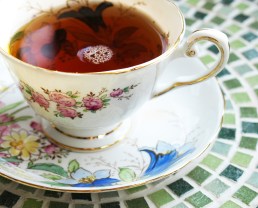
Tea“This smells like an old timey poultice that has just been removed from a wound.”

This is what my husband said as he walked into the living room with a mug of Sleepytime tea.

“It’s chamomile. It’s supposed to smell like apples,” I countered as I drew near to sniff the offending liquid. It smelled exactly how it was supposed to smell. Like yummy, soothing herbal tea.

My husband is not a tea drinker, and is especially not an herbal tea drinker (why bother if there’s no caffeine?) but he was going to muscle that poultice tea down anyway. The night before he had not slept at all. Not one blessed minute. So this night he was doing everything he possibly could, piling on all the useless advice he’d heard over the past five years, in a desperate attempt to trick his mind into shutting down for the night. Magnesium, valerian root, sleeping pill, sleepytime tea, and a few other things I don’t recall now. As he rattled of the ingredients to his sleep-inducing cocktail, I remarked that he was probably the world’s foremost connoisseur of insomnia cures. Much good that did, though, as whether they worked or not seemed to be a bit of a crap shoot.

He did sleep that night. But insomnia is not really what this post is about. It’s about perception. Specifically, perception of writing. Your writing, perhaps.

I thought the tea smelled fine. My husband thought it smelled like it had just been extracted from the germ-infested seeping wound of some filthy Dark Age peasant. I like tea. My husband does not.

In writing, as well as any other field that seeks to involve other people’s senses, desires, prejudices, and emotions (think advertising, movies, music, just about any media you can imagine) a stark black and white sense of reality does not matter, and many would argue it cannot be determined anyway. What matters is how people perceive what you’ve created.

In other words, if I write something I think is unique but others think is commonplace, it is commonplace. If I write something I think is edge-of-your-seat but readers put it down because they don’t feel the drive to keep reading, it is not edge-of-your-seat. If I write something I believe takes on deep issues but the reader dismisses as shallow and sophomoric, it is not as deep as I think it is.

Ouch. Criticism reveals our writing’s most persistent flaws. It’s hard to take at times, just as it was hard for my husband to swallow that tea. But criticism, even the mean and spiteful criticism, can strengthen our writing if we apply it correctly. Even a tirade can be turned into constructive criticism if we read it with the right spirit and thick enough skin.

But here’s the kicker. You are a writer. You are an artist. And even if people do not receive your work as you hoped they would, you have a message and a vision. While properly applying criticism to our writing does produce better writing, there is such a thing as too much compromise, when your writing and your story become someone else’s because you are trying to please too many people.

If you are confident that an element of your writing is right for your story, that it serves your story in a way that it would not if you changed it (perhaps the way a character acts or your point of view or the style in which it is written) then leave it alone. Sometimes people criticize things because they are not exactly like everything else they’ve read. Sometimes they criticize because they had a really crappy day and they need to lash out at someone. Sometimes they criticize because they are trolls. Be courageous. Be willing to be different. But only after you have truly and honestly considered your reader’s opinion and have a good reason for disregarding it (and there are many legitimate reasons to reject other’s opinions).

When I initially gave my novel manuscript to a few friends and colleagues to get feedback, there were a couple things that everyone said I did really well. And there were a couple of things that were distracting flaws. I had to choose how much of those perceived flaws I was going to change. If only one reader mentioned it, I might leave it as is. But if almost everyone mentioned it, I knew I needed to think hard about how to address it. And then I had to decide if I had really addressed it adequately once I did make changes. (I’m still not sure.) But I also had to decide if I was willing to sacrifice something I felt was necessary to retain the style of the storytelling.

Perception is reality for the reader. You can control the reader’s perception up to a point, but you cannot change the lens through which they read. So do your part to make things understandable. Do your part to create and mold the perception. But accept the fact that another reader may see your work differently, may catch your vision in a way the first reader didn’t. Maybe every single reader isn’t really the right audience for you. Maybe you’re happy with a smaller audience that truly understands and appreciates your writing for what it is because you are all looking at it through similar lenses.

I’m the tea drinker in our family. My husband will never like tea, no matter how many different kinds are out there, no matter how much sugar, no matter how it’s dressed up. He is not the “audience” for tea. And tea growers don’t grow for him. They grow for me.

Who is your audience? Your real audience. Write for them.

How Green Day Derailed My NaNoWriMo Plans

1995 was a pretty incredible year for music. The Smashing Pumpkins came out with Mellon Collie and the Infinite Sadness, Oasis gave us (What’s the Story) Morning Glory?, and No Doubt released Tragic Kingdom. Debut acts like Foo Fighters, Garbage, Collective Soul, The Presidents of the United States of America, Ben Folds Five, 311, and Alanis Morisette’s Jagged Little Pill flavored the radio waves with a hit or two or three. dcTalk gave us Jesus Freak and Jars of Clay’s Flood could be heard on every station, sometimes simultaneously. Everclear, Silverchair, Radiohead…

And, of course, Green Day.

Green Day had been around for a while and 1994 saw them break out into the mainstream (to the horror of many alternateens who simply couldn’t bear to like something that was popular) with Dookie. But it’s 1995’s Insomniac that has dramatically affected my spare time for the next month.

Allow me to explain. The low brake fluid light came on in my Explorer this past week, so when I went into the office on Thursday I drove my husband’s car for safety reasons. While my vehicle is filled with the fairly low-key folk rock music of Brandi Carlile, Bob Dylan, and the Indigo Girls at the moment, my husband’s tastes run toward the much more energetic. I was already on the road when I realized I had failed to bring some of my CDs in the car and I had failed to even review what was in the 6-disc changer in the glove box. So I punched through until I found something that worked for me (FM Static) and drove to Grand Rapids.

But on the drive home, I switched over to Insomniac. It had been years since I’d listened to the whole album. As hit after hit emanated (no, leapt is the more appropriate word) from the speakers, I was astonished I had let so much time go by. What Green Day lacks in technical skill and enunciation they more than make up for in melody, energy, and sheer aural satisfaction. They may not be good musicians (or at least they weren’t in 1995) but they make some dang good music, a perfect little package of apathy and angst wrapped up with a peppy bow on top.

Now, what, you may be asking yourself, does any of this have to do with National Novel Writing Month? Well, the day this all went down was November 1, the first day of NaNoWriMo. I had been planning to either pick up on a story I’d abandoned at 18,000 words a while back that involved a woman attending an artist’s workshop on Mackinac Island, or start a new story I’d been thinking of that would involve a young woman, her cantankerous great aunt, sewing, home restoration, and recovering a lost past. Green Day has no part–no part–in either of these plot lines.

But years ago I had an idea for a story about a young guy wanting to make it big as a musician, his father’s fruitless quest to do the same, and what happens to those around them as they pursue their dreams. Enter Insomniac. Listening to that album on the way home from the office inspired me to pursue the story about the budding guitarist.

So that’s what I’m writing this month. I’m quizzing my guitar-playing husband who was covering Green Day songs as a teenager in high school and had a band in college as well (and is already training up our son to love rock).

I’m listening to Pandora’s 90s Alternative Rock station (every song is awesome). I’m channeling my years of following my husband (then boyfriend) to gigs in church basements and at outdoor festivals, carrying gig bags and amps, blaring WGRD as we barreled down the S-curve through downtown Grand Rapids in college. I’m using my own experience growing up in a house that was saturated with music (more jazz and blues than punk or hard rock) and my recent attempts at learning to play guitar.

And even though I have no outline and I don’t know where this story is really going, I’m so far enjoying the ride. And the soundtrack.

Where Do Ideas Come From?

Anyone who writes or wishes to write inevitably asks or is asked this question at some point: Where do your ideas come from? For the person who assumes he or she is uncreative (you know who you are) the notion that anyone “thinks up” plots and settings and characters from thin air is nearly inconceivable. And even as my brain teems with characters and plotlines and settings and title ideas, I still occasionally run across an ultracreative movie (think Inception), TV show (hello, Breaking Bad), or book (The Thirteenth Tale comes to mind) and think “Who thinks of these things?” (This question also arises when my husband, a compulsive band name generator, says, without preamble, something like “Problem Attic.”)

So where do ideas come from? Naturally, I can’t speak to the experiences of others, but in my own creative life, my ideas usually come when I am doing some sort of physical activity that doesn’t involve deep thinking. Of the half a dozen or so writing projects I currently have percolating in my mind and on the page (some still just a note scribbled here or there) nearly all of them came at a moment of mental clarity brought on by physical exertion of some kind. Just one came from something someone said.

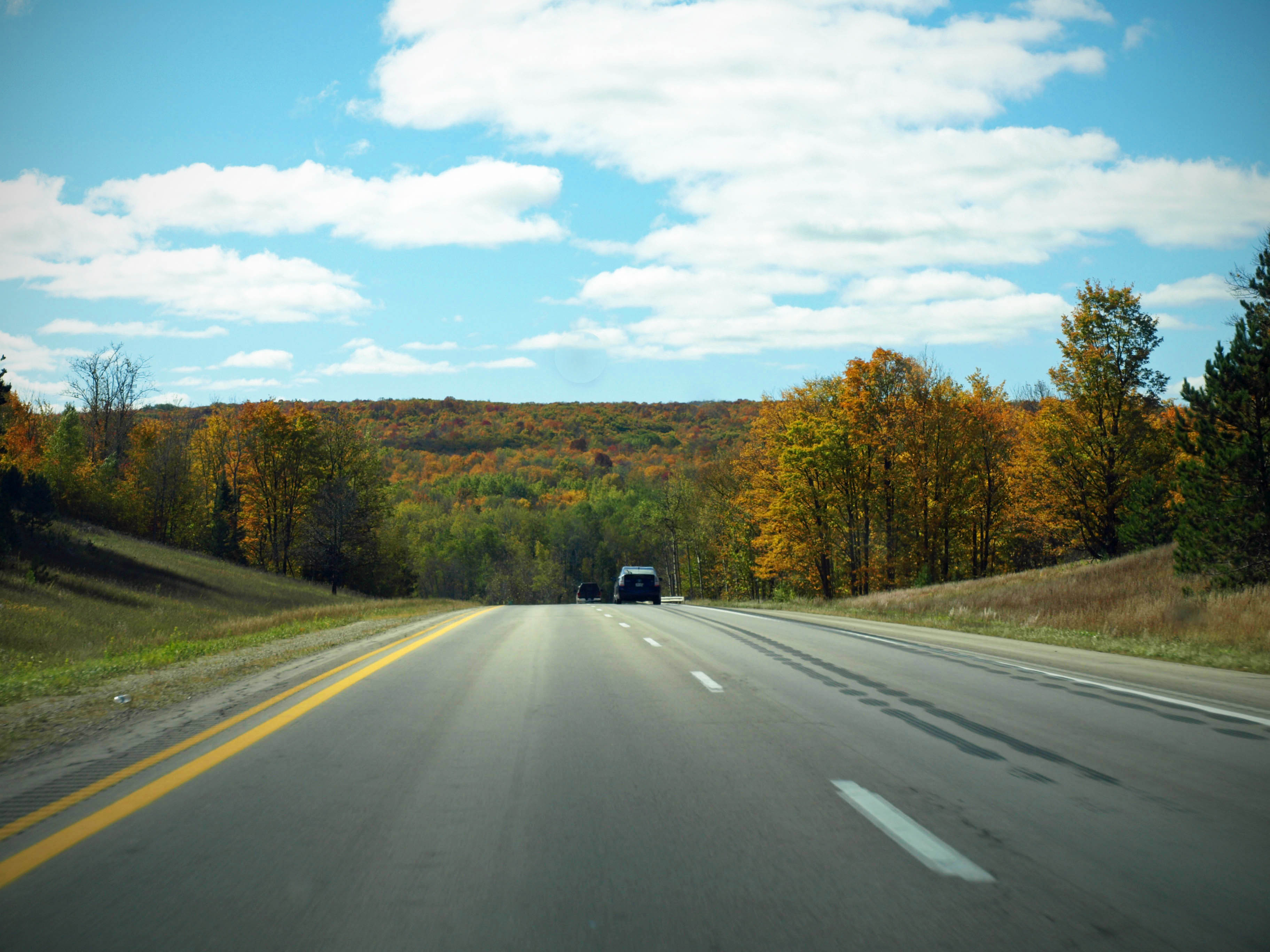
What was I doing when the rest of them come to me? Usually driving. Driving is just the sort of passive physical activity that, in me, breeds creativity. And it can’t be driving just anywhere. No, no. My ideas come on the expressway, usually on I-96 between my home in Lansing and my office in Grand Rapids (and before you ask, no, I don’t make that commute every day–just once a week). The reason they occur on that stretch of road most often? Simple: that’s where I’m most often driving! There’s nothing magical about that particular 50 or 60 miles of concrete. I’ve had plenty of ideas pop up on I-127, M-115, M-31, and various other highways. But when you have a commute that you make regularly, you don’t have to think about it. You keep your eyes open for brake lights ahead and deer to your right and left, and you’re golden! No more thought is required, which gives your mind space to breathe and flex.

I’ve had a novel idea while hiking (that largely mindless process of plodding, plodding, plodding), written much of a poem while stirring something on the stove, and I recently plotted out an entire short story while running. Hiking and running are certainly more physical than driving or stirring, but they require just as little conscious thought to accomplish, and, in fact, are often things that you can get through easier if your mind is distracted from your aching joints and the sweat trickling down your back. I had the idea for this blog post while cutting out pictures of little coffee cups from a java jacket to add to a collage in my office. Not thinking, just letting my kindergarten scissors training kick in (“Move the paper, not the scissors!”).

So next time you’re feeling uncreative, maybe what you need is some good old fashioned mindless physical labor to get the juices flowing.

Just watch out for deer.

When Passion Meets Purpose

There are times in life when our disparate passions may cross paths through no design of our own. When a talent that often seemed to us a pointless exercise can suddenly be put to great use in the service of a cause or mission. In that moment of connection, we may find our voice.

Such a connection came about for me over the past year.

I have always enjoyed writing, and, in fact, write for a living. But when it came to my own creative writing I often felt aimless or even uninspired. Projects started then abandoned when I felt no compulsion to go on. Ideas tinkling through my brain like water over rocks but with nowhere to land. Yeah, it was frustrating.

I also live in a beautiful state made up of two peninsulas bordered by the Great Lakes and peppered with more than 11,000 inland lakes, as well as many rivers, streams, wetlands, and ponds. The landscape ranges from urban decay to vibrant cities to rural hamlets, from flat farmlands to rolling orchards to deep forests, from stony and sandy beaches to fantastic rock formations to rushing waterfalls. I have a fierce love for Michigan, despite her faults.

Then in July 2011, I began writing a story set on a fictional lake in northern Michigan. And the fateful intersection of two passions came to be. That story, A Beautiful Fiction, lends its name to this space. I’m currently exploring the possibility of publishing that novel. In the meantime, I’ve carved out this online space to continue to pursue my passions, to bring them together in service to one another and to you.

If you love to read, if you love to travel, if you love to live in or visit Michigan, if you love beautiful photography, if you love history, if you love the Midwest, if you love water and woods and city and country . . . please come back often. Because I love all those things too.