Revising Your Manuscript: Cutting the Fat

When it comes to revision, writers have a lot to say about what to leave in and what to leave out. Kill your darlings is a common way of describing the process of cutting out the parts that are pretty or clever but do not move the story along. But there are other things to cut out as well if we want our writing to sing–the boring stuff, the repetitive stuff, the needless stuff.

Long exchanges in dialogue that you might have in actual life, but that no one wants to read about.

Words we all use when we speak, like um, well, yeah, so, but, etc. that slow our dialogue down and require all sorts of commas (which also slow the reader down).

Words that happen too often. In my current work in progress, it was “ma’am.” I think I cut about a hundred of those out after a beta reader pointed them out to me!

Overexplanation of the setting. This may be hard to gauge, but consider that, in most cases, your reader doesn’t need to visualize a room or vista exactly as you do to understand what’s going on. None of us goes into a room and then catalogs in our heads everything in it. Pick one or two features that make a place unique or represent a place’s ethos that a character might notice. Need an example of overdoing the setting? Read the first chapter of A Separate Peace. Mr. Knowles, we get it! It’s a private school in the Northeast with old brick buildings. Now put away the map and move on.

Needless physical description of characters. Eye color, hair color, height, weight, body type, manner of dress. Does it matter? Sometimes. But sometimes it is plain overdone. What do readers have to know in order to understand your character? Can they see it in action as a character changes? I’m of the opinion that a reader can identify more with your protagonist if they are not over-described. Because the moment a protagonist is a willowy blonde with “eyes of violet that changed with her moods” I think, well, this person is certainly nothing like me. Or anyone. Because eye colors may look different depending on the color of someone’s shirt, but seriously, it’s not an optic mood ring.

How do you tell what needs to be cut? Usually, you need other readers who are not so close to the story to show you where you’re making them yawn or sigh or scream in exasperation.  Each sentence should serve to move the plot forward, help readers understand something about a character or the setting that is truly germane to the story (and in most cases it is more engaging when you can show it rather than tell it), or speak to the story’s theme. When you (or your reader) find something that can be removed with absolutely no harm to the story, it’s probably not needed.

Cutting the fat is how you get your story down to its true essence, which helps the reader better interpret and understand the point you are trying to make. None of us will ever do it perfectly. But try to keep it in mind as you read through your manuscript. You may be surprised by just how much you can lose without losing your story. And once all that dross is consumed by the fire, what’s left shines all the brighter.

Here are some links to other sites with great advice on cutting useless words in particular:

Common Redundancies

Five Tips on Cutting the Clutter

Five Words You Can Probably Cut Altogether (Mostly)


Revising Your Manuscript: The Importance of Patience

After my two-month drafting frenzy in January and February, I was deliriously happy. Now I could finally stop thinking about it. Two months may not seem too long to think about a novel you’re writing, but of course I didn’t start thinking about it when I started writing it. I’d been thinking and reading and researching and outlining for many months before that. And getting to the end of the first draft meant that I could finally, for the first time in perhaps a year, think about something else. I closed the file, backed it up in two places, and went on with life.

Two weeks later, I was ready to start thinking about revision, my favorite part of the writing process and the subject of several upcoming blog posts over the coming month or so.

There’s lots of advice out there on revising and editing. Lots of great books about same. Just earlier this week, Kristen Lamb mentioned the importance of writing a quick draft and not getting bogged down in edits (and accidentally throwing out something that might blossom into something beautiful) along the way. She’s spot on. And the patience doesn’t end with the words “The End.”

Have you ever tried to bake bread that you haven’t left to rise quite long enough? Or been in a hurry to eat your homemade pad thai and thus not allowed the rice noodles to soak long enough before adding them to the pan? (Am I the only one to whom this has happened?) Or tried to enjoy an avocado that just was not ripe enough? It’s always a disappointing experience. Certain foods need time to just sit before they’re ready for consumption or else you’re going to have a heck of a time chewing them.

Likewise, our drafts need to sit awhile before they’re ready for revision. When we’ve been working closely with our characters and setting and plot, we need a little distance, a little time apart, before we can honestly assess them, before we can chew on them. Giving a story time to ripen and soften, allowing time for all the different threads and characters and subplots and symbols to get friendly with each other, like leaven working its magic in a lump of dough, and, most importantly, allowing our own minds to move away from the story for a while into something else–like reining in the out-of-control laundry situation and paying the bills–can give us the kind of clarity we need to honestly assess our work. Even stepping away from the computer for a couple weeks can help.

After two weeks away, I reexperienced my story (with the help of my friendly cyborg voice, Crystal) and did a thorough edit, exchanging good words for the perfect words, clarifying characters’ intentions and emotional states, adding important symbols earlier in the story, making motivation clear, and lots more (which we’ll unpack in other posts). I rewrote the ending to be more satisfying for the reader. I removed some pointless descriptions and smoothed the rough surfaces.

During this first revision, I had some fantastic epiphanies that make the story even better. But if I’d immediately started editing after I finished the first draft, I don’t think my mind would have been clear enough to see the possibilities that lay beyond the book I’d already written. The distance was essential in that.

The distance also allowed my mind to start wandering toward what I’ll write next. The day after I came to the end of the first draft, a plot for a new novel began to coalesce in my mind, and now I’m off and running on that one, doing the background reading I’ll need to do in order to plot it out. I had to get out of that earlier story world so I could start thinking about the next one. I’ve found a writing rhythm that seems to be working. I’m excited about the year ahead. A year that will be filled with waiting for readers, then editing, then waiting some more, then editing, then querying. And while I’m busy with that part of the journey for one novel, a little baby idea will be slowly gestating, ready to be birthed into a new first draft, perhaps round about the same time of year this last one was.

What about you? Do you find it difficult to be patient when it comes to revising your work? Does your eagerness to get everything perfect as you go keep you from finishing? Join the conversation below.

How to Take Criticism Like a Pro

This post on professionalism in writing is so good, I had to share it with you. The perfect follow-up to my post on beta readers. What do you do with that criticism you hope to receive? Read on…

Author Kristen Lamb's avatarKristen Lamb's Blog

Image via Flickr Commons, courtesy of JonoMeuller Image via Flickr Commons, courtesy of JonoMeuller

One of the greatest blessings of being an author and teacher is I meet so many tremendous people. I feel we writers have a unique profession. It isn’t at all uncommon to see a seasoned author take time out of a crushing schedule to offer help, guidance and support to those who need it. I know of many game-changers, mentors who transformed my writing and my character. Les EdgertonCandace Havens, Bob Mayer, James Rollins, James Scott Bell, Allison Brennan are merely a few I can think of off the top of my head.

J.E. Fishman is another, and he offers a very unique perspective because he’s worked multiple sides of the industry. He was a former NYC literary agent, an editor for Doubleday and now he’s a novelist. His newest book A Danger to Himself and Others

View original post 1,453 more words

How to Get the Most Out of Your Beta Readers

Hey friends! Today I’m a guest blogger at The Creative Penn. Head on over there to check out how writing takes the same dedication and discipline as training for an athletic contest. And now, beta readers…

***************************************************

Yesterday I finished my first revision/editing pass through my novel manuscript and sent it out to seven people to read. These are the first of my beta readers (another smaller group will read it in another month) and they are going to help me see my story as, well, as a reader would the first time through.

It’s important if you ever hope for your writing to see the light of day, whether you publish it traditionally or self-publish, to have someone read it before everyone reads it. Preferably lots of someones. If you are working on something that you want to show an editor or an agent, you really don’t want that person to be the first to read your novel.

When you write a book, even if it doesn’t take too long to draft it, you are still too close to your creation to accurately assess how a first-time reader will experience it. So beta readers can give you important feedback. But if you want to get feedback you can really use (and not just your mom’s adoring praise–sorry, Mom) you need to choose your readers well. In my group of seven, three are fellow writers, one has been a book marketer for fifteen years, two are avid readers (well, they’re all avid readers), and one I don’t really know about in terms of reading and writing, but his important function is his gender. You see, I want a good mix of industry professionals and everywomen and everymen, because every reader can give me unique feedback.

My male reader is important because he can tell me if I have a male character doing or saying something that a guy really wouldn’t do or say (I read a LOT of books by women and see a lot of movies and TV episodes where male characters say something only a woman would say).

Two of these readers are African American, which is important because I’m fairly sure there are more black characters than white in this novel. They can point out where a character may fall into an unintentional stereotype.

One of my readers is a historic preservationist and knows everything there is to know about old houses, furniture, and American history in one of the time periods in which the story takes place. She can tell me if there is a historical inaccuracy.

The reader who is a marketing professional is used to evaluating books for publishing boards and therefore knows what weaknesses might keep it from publication.

The readers who just LOVE to read can tell me if the book held their interest, dragged, was confusing, etc.

To guide my readers into giving me feedback I could use, I asked them to keep some simple questions in mind:

1. Note any place where the story is dragging or you find your mind wandering because it’s getting a little boring.
2. Let me know if something is confusing.
3. Let me know if you saw a surprise coming a million miles away.
4. Note anywhere where you are jarred out of the story for any reason.
5. Don’t worry about commas, but if you see a typo please mark it.
6. Are there characters you particularly like or dislike? Why?

And I gave them an ideal deadline for comments so that I could move on in the revision and editing process. My next group of readers will include a friend who is a sociology professor who studies race and class closely and another author who is both male and African American and has written books that have urban settings and urban problems. These readers will offer me an important critical view of the social structures in my novel.

If you’re thinking of having others read your work, I encourage you to do some thinking about what sort of feedback you need most. And then give your readers the okay to be critical. We don’t improve when we’re only praised (though it’s nice to be praised). Divorce yourself from your story a little and trust that the reader coming to it fresh is going to see things you can’t, and those are things you need to know about and take into account when you revise.

How about you? Have a good or bad experience with early readers? Care to share?

How to Write Your Novel’s First Draft in Just 2 Months

Late Tuesday night, I happily typed the final words of the first draft of a novel that I began 65 days before. 92,615 words, averaging out to 1,425 per day, though if you’ve been following this blog, you probably know that I don’t write every single day, and I don’t even advocate writing daily (though, if that’s your thing, more power to you).

Beyond writing, I do work full time Monday through Friday; attend church and teach Sunday school on Sundays; take my son to karate on Mondays and Fridays; teach ESL and attend choir practice and Bible study on Wednesdays; commute halfway across the state on Thursdays; and make halfhearted attempts to keep up on housework (well, sometimes).

So how? How can someone with a full life still find the time to write the draft of a full length work of fiction in a little over 2 months?

I’m glad you asked. Because I bet you can do it too–if you want to.

First, spend an entire year thinking about, researching, and sketching a rough outline of the novel before writing anything. Go ahead and make notes of scenes or particular phrases or dialogue you think of, but don’t start the real writing until you are ready. Really ready. So ready that you can’t hold back any longer. I put this first not only because it comes first chronologically, but because it was so obviously the most critical factor for me this time around.

Second, build in some concentrated blocks of writing time. I probably could have managed most days to write something on my manuscript, but to write fast and in the moment, I needed to have a string of empty days where nothing was on my schedule except writing. That’s how I got momentum. I took one week of vacation at the very beginning and another six weeks later. More than 50,000 words were written in those two weeks alone–over half the book.

Third, write first. Write before you go to work, before you do the dishes at night, before you collapse in bed and binge on House of Cards. Put the writing first for this limited amount of time while you’re working hard to get that first draft done. Now I have the whole rest of the year to relax a bit and enjoy life more while I edit at a far more leisurely pace. But if you don’t put it first for awhile, it will always get pushed back down the priorities list until it’s the last thing you do with the dregs of your energy–or it may fall off entirely.

Fourth, resist getting bogged down. There were times, especially near the end, when I had to slow down and look at the big picture again before I could see the way forward. But if you stand still too long in the muck in the middle of your book, you may find that you’re cemented there. Leave it too long, and you might give up on it. Push forward whenever you can.

Fifth, eliminate your biggest distractions. TV? Facebook? Video games? Friends? They’re all crouching on the sidelines waiting to devour your time and brain cells. Do whatever it takes to control these distractions. Have a friend take your TV and your X-box for a while. Go Cold Turkey on time-sucking Internet sites. Have your mom dog-sit for a couple months. Schedule some special times with your friends for a few months from now so you have something to look forward to.

I want to stress that I didn’t set out to write this draft at breakneck speed. I was fully expecting it to take at least twice as long as it did. The speed happened because the story wanted so badly to be told after my copious research. It was all wound up inside my brain and once I let it go, there was no stopping it. But along the way I had ample opportunities for it to get derailed. And that’s where the last three pieces of advice come in.

You have to want it. And you have to be willing to sacrifice for it, if only for a time.

I’m a pretty firm believer that a person can do almost anything for set amount of time. When I was running a lot, I convinced myself to go further and run longer by forcing myself to “at least get to the end of this song” and then “at least get to the chorus of this next song” and then “at least go one more minute.”

Can you give yourself a time frame and tell yourself that you can write for “at least this one hour today” or “every day for just this next week” or “1000 words a day for just this one month?” If you can do that, push yourself a little harder. Give yourself a deadline. Then beat it.

Getting to “The End”

In all of my writing life, from essays in school to writing back cover copy to writing a novel, I must admit that I have the most trouble with the endings. I’m a good starter. I love introductions, headlines that grab you, the set-up to a story. Maybe it’s the anticipation.

Middles are good too, though perhaps not as exciting to write. It’s in the middle where the evidence builds, the bricks are being laid, the meat of what you’re trying to say starts to come out. It’s where you build to your climax.

But I’m never quite happy with my endings. I’ve always felt that my conclusions to essays were the weakest part of them. I often struggle to find the right way to end back cover copy. With my short stories, knowing where to end was the toughest part.

This is probably why I was able to write 80,000 words of my current novel in the space of 8 weeks and now I’ve slowed to a crawl as I decide how best to bring it all home. By this time an outline can’t help me. What I wrote is far better than my original outline. Anyway, I have a clear idea of what I need to write. I just question whether the pace is working or if I’m leaving the reader hanging on anything.

Rather than press on ahead I’ve decided to take a small step back to look at the whole. I’m digitizing the entire manuscript and will listen to it this week before writing more. I would prefer to listen to it all in one day, but I have this thing called a job and a family, so I guess that’s out for the moment. One nice thing about this turn of events is that it will get me off my butt for a bit. I can listen to my text on my iPod while I do the laundry and hit the treadmill. (My intensive writing schedule has me feeling tremendously slouchy.)

So while I’d like nothing more than to post on here that the manuscript is done, it needs to cook a little longer. I guess it’s all part of the process.

And see, even now I don’t know how to end this post.

Author Susie Finkbeiner on the Origin of a Novel

susie head shot

Today I’m happy to introduce you to Susie Finkbeiner, a West Michigan writer to watch. We’ve traded blogs for the day, so after you read this, head on over to Susie’s blog for my apologetic for the most depressing month of the year.

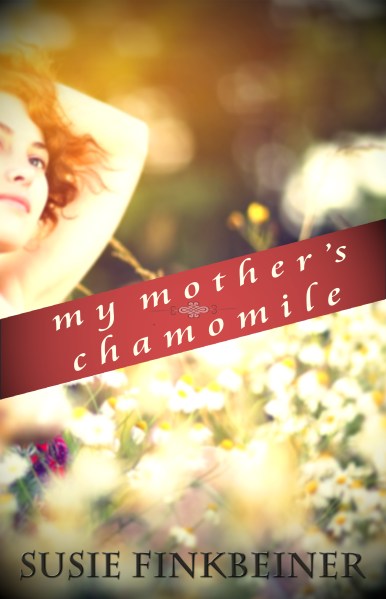
Susie has a quick wit and a quirky sense of humor, but she’s not afraid to tackle difficult, emotional subjects. Her latest book, My Mother’s Chamomile, is available for purchase for both Kindle and paperback readers. And I love the story of how she came about the idea, which she’s going to share with you below.

* * * * * * * * * * * * * * * * * * * * * * * * * * * * * * * * * *

The first time I heard reference to chamomile tea, I was a little girl, listening to my mom read Peter Rabbit. After his wild romp through Mr. McGregor’s garden, Peter had an upset tummy and his mother gave him a dose of chamomile tea.

I thought for sure it was punishment for losing his jacket and shoes.

“One tablespoon to be taken at bedtime.”

That sounded like something I wanted to avoid. I would have preferred the bread and milk and blackberries that Peter’s sister got.

Years passed (I won’t tell you how many), and I still had a prejudice against chamomile. A few people told me that it was “nasty”. Based on my childhood imaginings, I believed them.

Chamomile seemed like the kind of thing die hard tea drinkers sipped with pinky fingers pointing to the heavens. And, I truly believed, that they only imbibed it because they thought they had to prove how die hard they were about herbs.

You know those herbal people. They are a rough and tumble crowd.

Then, a couple years ago, I started work on my second novel. Somehow, my characters were tea drinkers. Throughout the writing, I discovered that, not only did they drink it, they grew it.

They had a big old garden full of chamomile plants.

I’m sure Erin would concur, characters in novels often catch the author off guard.

My Mother's Chamomile Front

I decided that I might as well learn as much as I could about chamomile. Part of that was steeping a cup and taking a sip.

Much to my surprise, it had a pleasant aroma, much like sweet apples. And the flavor wasn’t as terrible as I’d expected. In fact, I rather liked it.

I sipped and read about the plant. While I researched, I found that the flower has been used for nearly 2,000 years to wash wounds, reduce inflammation, calm upset stomachs. It is, however, mostly used to comfort its drinkers, helping them to rest.

A lightbulb popped on over my head. In addition to being tea growing and sipping people, my characters were also a family of funeral directors. They made it their business to comfort their community in their worst moments.

Like chamomile, they served to soothe and calm.

These days, when I read Peter Rabbit to my kids, I smile at the mother giving her son a tablespoon of chamomile tea. Instead of punishment, it turned out to be merciful. A remedy for his overactive little body and sour stomach.

I wonder if she drank what was left over to soothe her nerves from having such a rambunctious bunny.

* * * * * * * * * * * * * * * * * * * * * * * * * * * * * * * * * *

Susie Finkbeiner is a wife and mother living in the beauty of West Michigan. When she’s not busy writing, she enjoys playing Scrabble with her husband, zoo trips with her kids, coffee dates with good friends, and quiet moments to read. Susie is the author of Paint Chips and My Mother’s Chamomile, both published by WhiteFire Publishing. She blogs at susiefinkbeiner.wordpress.com.

The Creative Momentum of Concentrated Time

I wrote this post just a little over a year ago. Since that big writing weekend at Gun Lake, I’ve taken a few blocks of concentrated time off of work in order to write. The first week of this year I did this and managed to write over 13,000 words and the first five chapters of a new novel. And I felt pretty swell about that.

I managed to write here and there in the weeks following, ending up with twelve chapters and nearly 28,000 words by the first week of February. At this rate I thought maybe I could be done by Easter.

Then this past week I took another writing vacation that was capped with another weekend at Gun Lake. Two weeks of vacation already used up in February?! Why would I do such a thing? How foolish!

Actually, it’s not a big problem. One of the perks of staying with one company for twelve years is accumulated paid time off. So I’m not worried about needing more vacation time later in the year.

And you know what? I wrote more than 36,000 words this week and am now on chapter 29. That’s called momentum. Almost 65,000 words into a novel that I started just six weeks ago.

How did I manage it? I took control of my time. I directed my life instead of letting it direct me. And everyone, everyone can do that.

On Wednesday I’ll be guest blogging over at author Susie Finkbeiner’s blog. I’ll be talking about time. If you’re having trouble finding the time to create, whether you’re writing or quilting or painting or making music, I encourage you to check it out.

You’ve got 24 hours today. Are you going to set aside a few of them to do what you love?

In the Dead of Winter, Life Still Stirs

This is the view through my 75-year-old windows lately.

OLYMPUS DIGITAL CAMERA

OLYMPUS DIGITAL CAMERA

OLYMPUS DIGITAL CAMERA

Some of these patterns put me in mind of coral–appropriate in a part of the world that was once the bottom of an ocean. In summer we gather fossilized coral. In winter, it graces our living room window panes.

It has been a ferocious winter, one that still has the Great Lakes State firmly in its icy grip. But while the windows may be frosty and the ground still covered in snow, beneath it all the earth prepares for spring. Squirrels are fornicating in the back yard. Birds are twittering in the pile of sticks that has been stacked up by the side of the road since the ice storm a month ago. The buds of this year’s growth already grace the bare branches of trees and shrubs. In fact, looking at that last frost photo, I kind of see those bud-studded branches right there in the ice.

And within my mind is a steady running stream of story that my fingers are faithfully putting down into words.

Settling into Cold and Cloudy

While a winter storm is apparently raging on the Atlantic coast, we in mid-Michigan have been enjoying a sunny day. But we’ll need to soak it up while we can, as the forecast calls for high temps in the teens and lots of clouds through the end of the month.

Late January and into February, my irritating habit of making the most of the weather starts to fade. The more the people around you complain about the snow and ice and wind, the more you start to resent it all too.

But I’m telling myself that it is a very, very good thing that I will not be able to get out into the garden until late April. I have a writing goal to reach and I don’t want to get distracted. With everything in my work in progress going fairly well (I’m up to chapter nine and have topped 20,000 words since starting just three weeks ago) I’ve decided to shoot for finishing the first draft by Easter (which is April 20th this year). If I reach that goal, then I can let the thing settle for a month while I get the yard and gardens in order and spend some serious time outside enjoying spring.

So I’m looking at the cold and cloudy near future as an asset rather than a reason to despair.

What about you? What are you going to get done before spring rolls along?