Wildflower Wednesday: Boneset

Boneset

Common Name: Boneset

Scientific Name: Eupatorium perfoliatum

Habitat & Range: wet ditches, meadows, and roadsides

Bloom Time: summer and fall

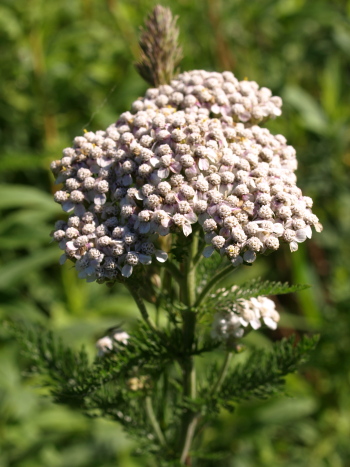
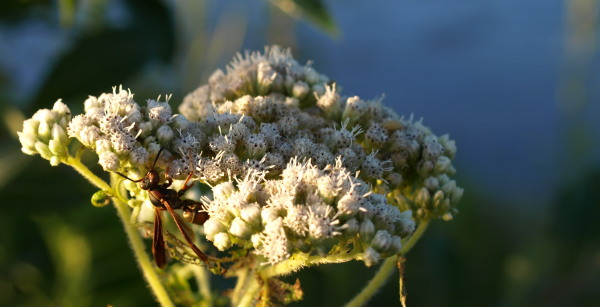
About: Boneset is yet another white, flat-topped flower you will find in bloom in the summertime. The flower resembles Yarrow, but it is easily identified by its unique rough leaves, which are joined to the opposite leaf at the base so that it looks like the stem goes right through one large leaf. (Unfortunately, the specimen in my photo below had well-chewed leaves so you can’t really tell.) It’s an important nectar plant and has been used medicinally in the past to treat dengue fever. However, it is toxic to humans, so this is another plant you have to be careful with. Old herbals may advocate its use as a tea to treat coughs and colds, but it can cause liver damage, muscle tremors, and other problems. Overdose can be deadly. Best to leave it to the butterflies.

Boneset

Reference: Wildflowers of Michigan by Stan Tekiela; Adventure Publications, 2000

(also Wikipedia)

A New Appreciation for August–Oh, and a New Story

Before I get to the post, just want to make you aware that…

********************************************

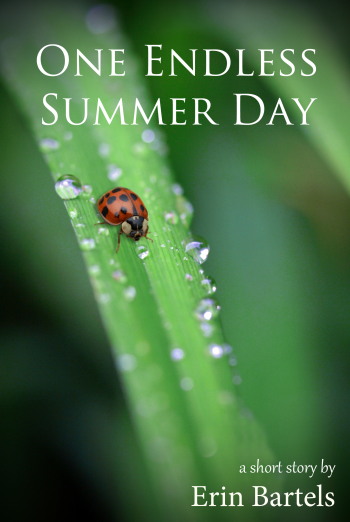
August’s Short Story Is Now Available!

OLYMPUS DIGITAL CAMERA

Kayaks, Lake Superior, bad weather, a mysterious woman…this story blends together elements of adventure on the open “seas” and psychological drama to create a time-bending tale that feels to me like the beginning of a much larger story waiting to be written. Hope you enjoy it! Click here to buy it for slightly less than $1 for your Kindle.

********************************************

Now, to the point…

It is the final day of August and, as I mentioned earlier in the week, I have just begun to develop a bit of a good feeling toward this month.

Since childhood, I have disliked the month of August, which I always thought of as just one more month of hot, humid, numbingly boring days before school finally started up (yeah, I was one of those kids who loved going back to school). Little League was over, the bloom of freedom I felt in June had withered, and I have always disliked very hot weather.

Into adulthood I have maintained this disdain for August. It is a month where you dress for the heat and then freeze inside every business because they set their air conditioning so insanely low. It is a month where wasps and bees, previously seen as happy-go-lucky and dopey, mindlessly buzzing about in the yard, become aggressive and swarmy as they start fretting about the impending winter. It is a month when lots of spiders and bats–BATS–start exploring your house (and your poor husband must get a painful and heart-stoppingly expensive series of eleven rabies shots after a close encounter, eight in just one sitting).

Still, there are a few perks, right?

FarmersMarket06

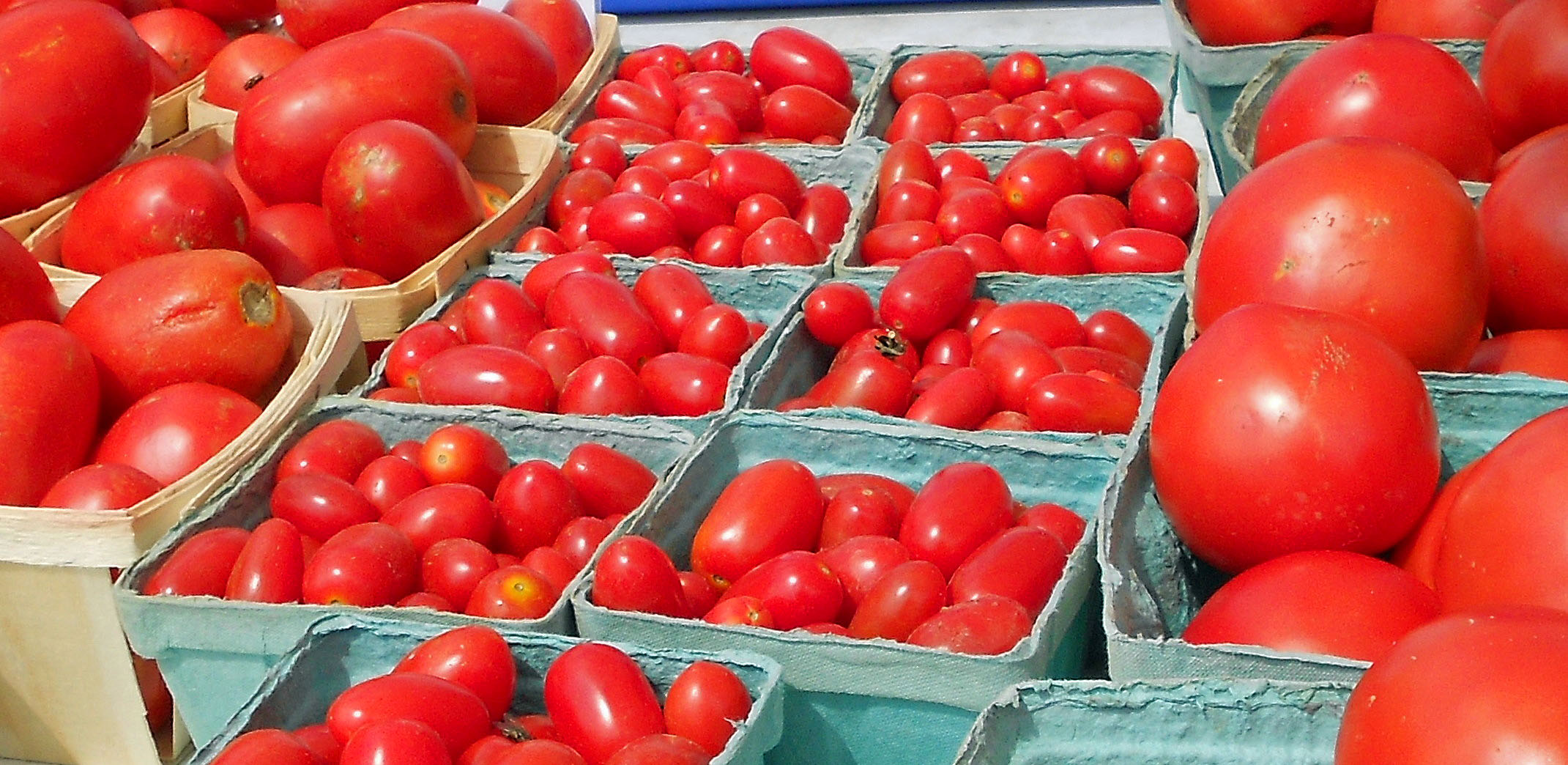
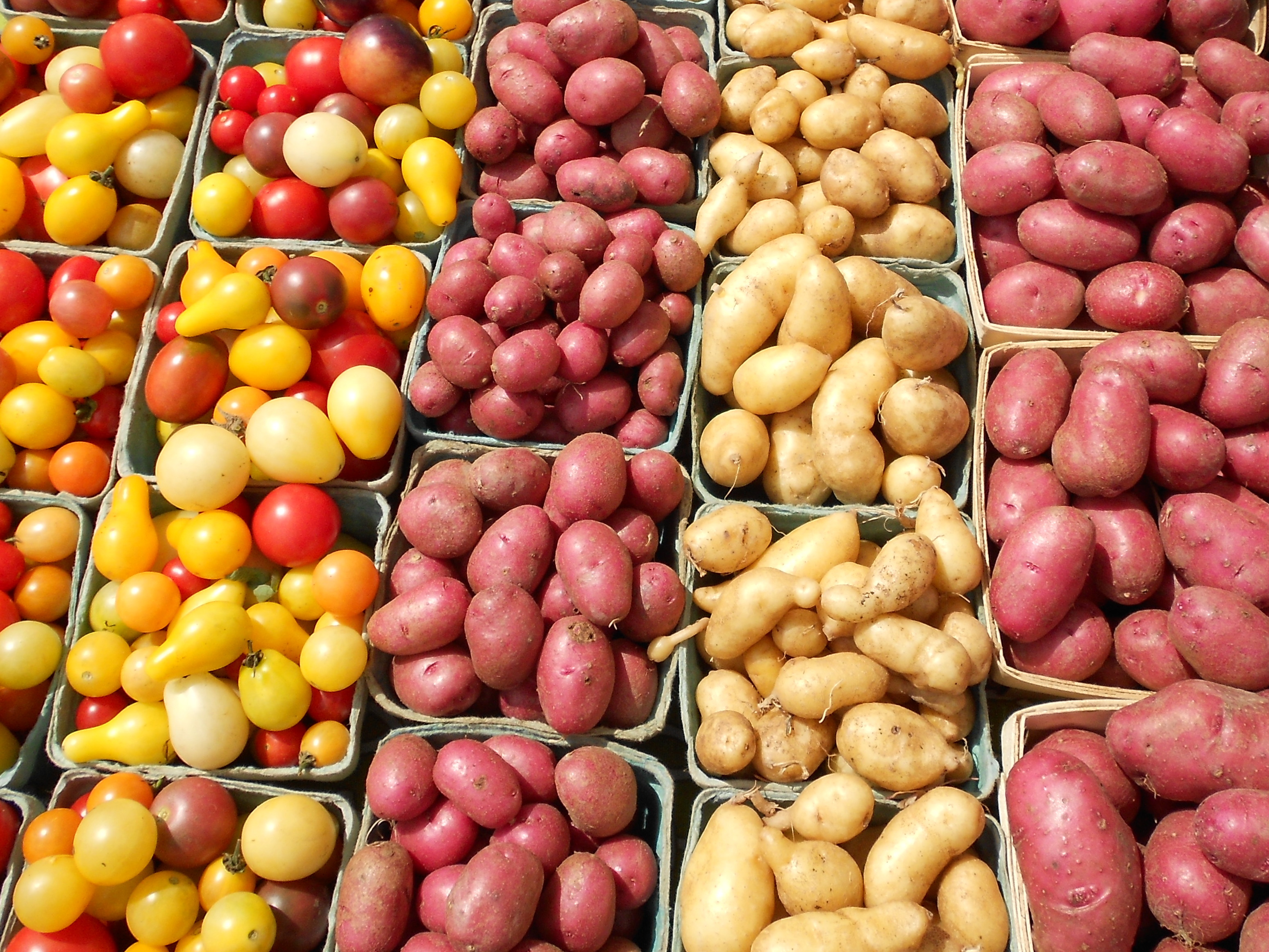
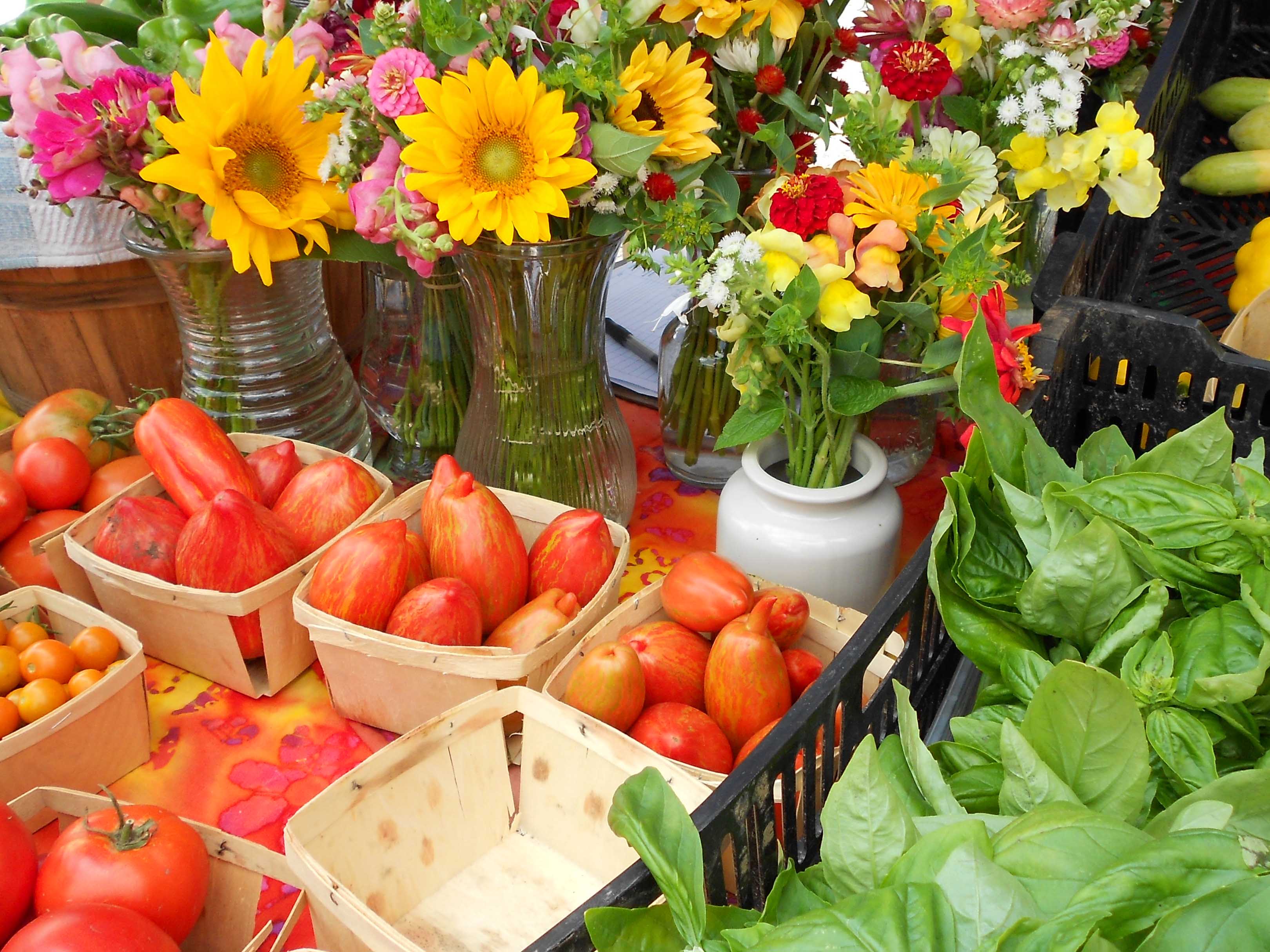
The farmer’s market is flush with fresh local produce. My backyard vegetable garden is busy working on a bumper crop of tomatoes, eggplants, and cucumbers. Homemade tomato sauce is bubbling on the stove top. There are peaches and apricots and plums to can. 

OLYMPUS DIGITAL CAMERA

Ah, but the flower garden is in such disarray! It looks terrible! Besides those common little black-eyed susans, nothing at all is blooming! And the weeds! The weeds!

Still, there was that field of nodding sunflowers we saw as we drove home from our hiking trip.

OLYMPUS DIGITAL CAMERA

And the sound of cicadas. And the hints of fall. The gold carpet of dying ferns beneath the evergreens. The audacious red display of the sumac along my weekly commute. The precocious tree here and there that simply cannot wait to show off her red and orange autumnal gown.

OLYMPUS DIGITAL CAMERA

The rumblings of the thunderstorms that wake me in the wee hours of the morning. The shimmering clouds of blackbirds gathering for their fall migration.

OLYMPUS DIGITAL CAMERA

The dreamy quality of the light. The foggy mornings that burn off into brilliantly sunny days.

OLYMPUS DIGITAL CAMERA

Yes. Maybe…just maybe…August is getting a hold on me.

But I still hate March.
Wildflower Wednesday: Common Yarrow

Yarrow

Common Name: Common Yarrow

Scientific Name: Achillea millefolium

Habitat & Range: dry, sunny fields, prairies, and woods

Bloom Time: summer

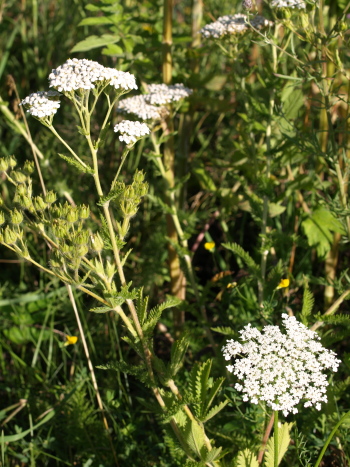
About: Another white, flat-topped flower (which is far less insidious and far more useful than Water Hemlock) you will find blooming this time of year is Common Yarrow. If you garden with perennials, you probably know there are many lovely cultivars of Yarrow to be found at your local nursery. Common Yarrow is a bit less showy, but a very useful plant that has been used medicinally for perhaps millenia to slow or stop the flow of blood from wounds (including by the legendary Achilles during the Trojan wars–hence the first part of its scientific name). It is a good companion plant in your garden because it attracts beneficial insects such as ladybugs and predatory wasps. Young leaves can be dried and used as an herb or cooked and eaten as a green. You can find many more uses and recipes in herbals.

Here it is growing alongside lookalike Queen Anne’s Lace:

OLYMPUS DIGITAL CAMERA

Yarrow is upper left and Queen Anne’s Lace is lower right.

Reference: Wildflowers of Michigan by Stan Tekiela; Adventure Publications, 2000 (also Wikipedia)

Wildflower Wednesday: Water Hemlock

waterhemlock

Common Name: Water Hemlock

Scientific Name: Cicuta maculata

Habitat & Range: wet, sunny meadows, ditches, my garden

Bloom Time: summer and fall

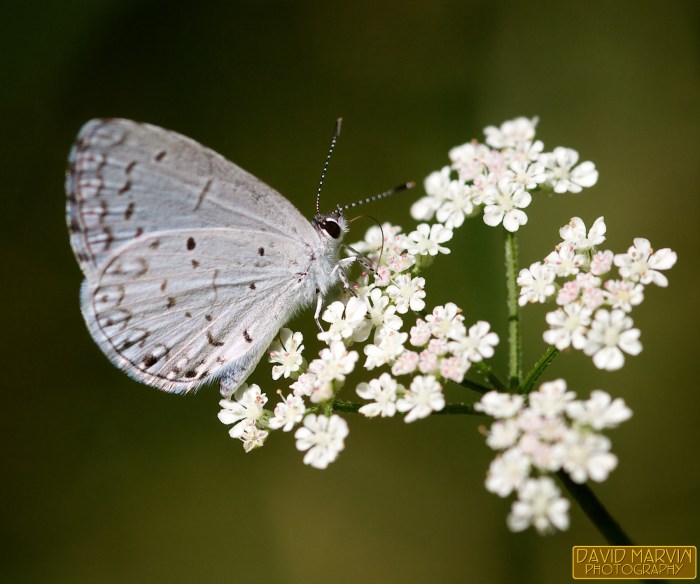
About: Last week I mentioned that Queen Anne’s Lace was in the carrot family and the root was edible (as a coffee substitute). Water Hemlock is also in the carrot family. It looks very much like Queen Anne’s Lace and like Cow Parsnip (also edible). The taproots even smell like carrots. But DO NOT CONSUME any part of this plant in any fashion as it is Michigan’s most poisonous plant. Just a small amount will cause convulsions and then death. If you have children or pets and you see this in your yard, eradicate it. Pull plants up by the root and throw away. Don’t add them to your compost pile (I’m not sure anything bad would come of it, but better to be safe than sorry).

When we moved to our house, which has several wet spots, I saw quite a bit of this plant but thought I had successfully removed it. When we came home from two weeks’ vacation earlier this month, I found a couple lurking in my vegetable garden and near the driveway. Weeds always seem to find a way. I pulled them up before I thought about taking photos, so I borrowed a photo from my friend and butterfly/dragonfly photographer extraordinaire David Marvin.

I’m also going to direct you to this website for many detailed pictures of the plant so you know what’s what when you think you’ve encountered this plant. The telltale sign is the leaf, which has veins that end in the V of the serrated leaves rather than at the tips.

Reference: Wildflowers of Michigan by Stan Tekiela; Adventure Publications, 2000

Wildflower Wednesday: Queen Anne’s Lace

Queen Anne's Lace

Common Name: Queen Anne’s Lace

Scientific Name: Daucus carota

Habitat & Range: dry, sunny meadows and roadsides statewide

Bloom Time: summer and fall

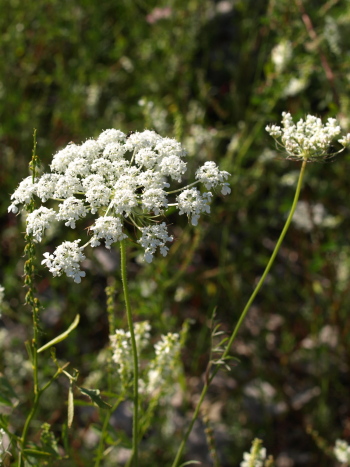
About: So many of our wildflowers are non-native European garden plants that have escaped, and this is one of them. A member of the carrot family (and thus a host plant for black swallowtail butterflies) Queen Anne’s Lace is a common and well-known plant. I recall hearing the story behind the little cluster of dark red flowers in the center as a child: that Queen Anne (whoever that was, I was not sure) was making lace and pricked her finger with the needle and a drop of her blood got on it. But now I’m fairly sure handmade lace is made with a tiny crochet hook (right?) so I’m thinking Queen Anne must have had to work pretty hard to draw that drop of blood. At any rate, her namesake plant is now considered an invasive, though I’ve not heard of any plans to rid the state of it.

The root of Queen Anne’s Lace can apparently be dug, dried, ground, and used as a coffee substitute. But beware that in the family of flat-topped flowers (which we shall explore in the coming weeks) there are many lookalikes–and some of them are deadly. So hold off on making that “coffee” until you really know what’s what. Next week: water hemlock.

Reference: Wildflowers of Michigan by Stan Tekiela; Adventure Publications, 2000

queenanne4
Here’s what’s become of Queen Anne’s Lace in the fall.

Driving North on 131 to Interlochen and Points Beyond

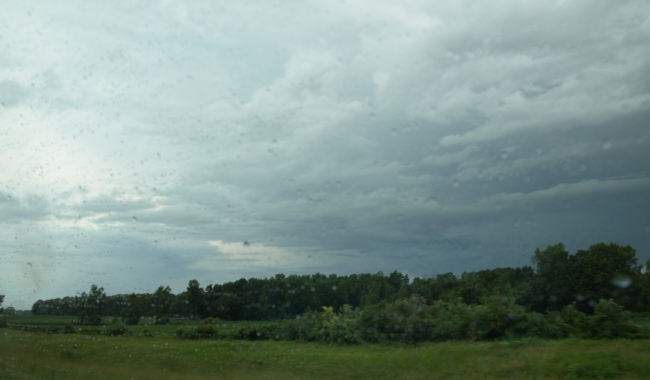
On Tuesday my husband, Zachary, and I dropped the boy off at his grandparents’ house and headed north for Interlochen. At the outset, it did not look to be a terribly great day for driving or for the concert.

Image

Soon we were quite pounded with rain and white-knuckling it at only about 45 mph.

Image

But it started letting up pretty quickly and the rest of the trip went off without a hitch.

Image

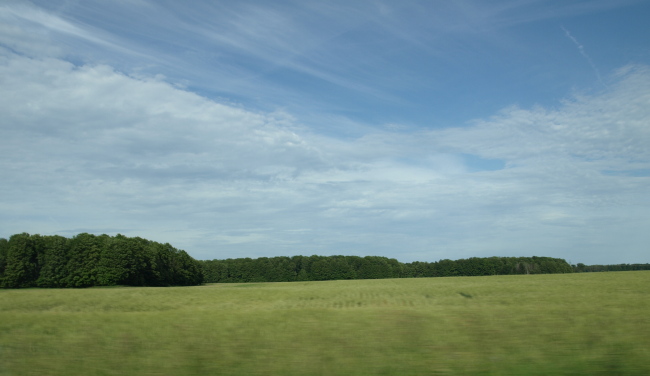
In fact, the further north we got, the nicer the weather got.

Image

Which is generally to be expected in the summer months.

Image

Also expected on trips Up North are places like this.

Image

Things sometimes get a little strange is all I’m saying. A lot of oddballs live up north (no offense to my sister).

At any rate, the concert was incredible. Quite possibly one of the best I’ve been to. The weather cooled off and the sun setting over the lake behind the stage set a great atmosphere for Brandi Carlile’s fresh sound and amazing voice.

Image

The next day we lazed around the Traverse City and Old Mission Point area with brunch at The Omelette Shoppe on Cass St. and a short walk around the stony beach.

Image

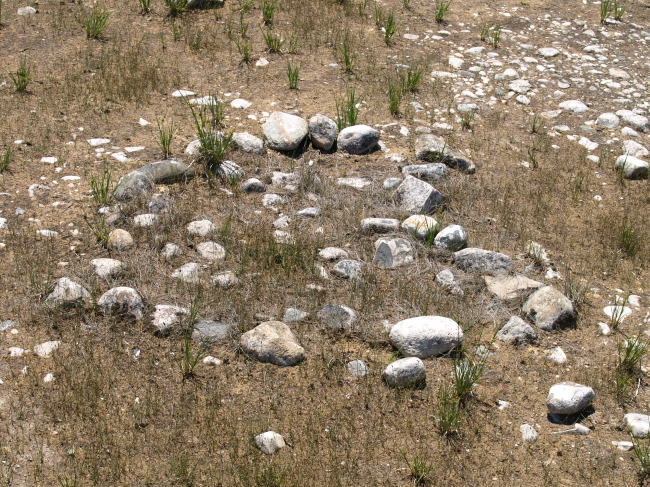
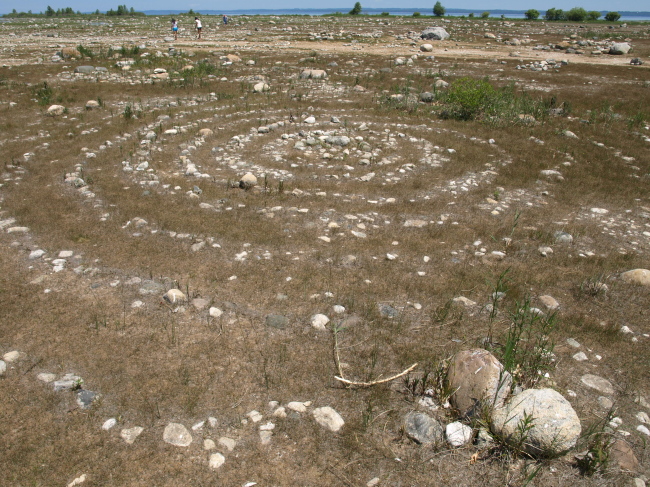
We found a couple interesting rock arrangements.

Image

See the heart? And this…

Image

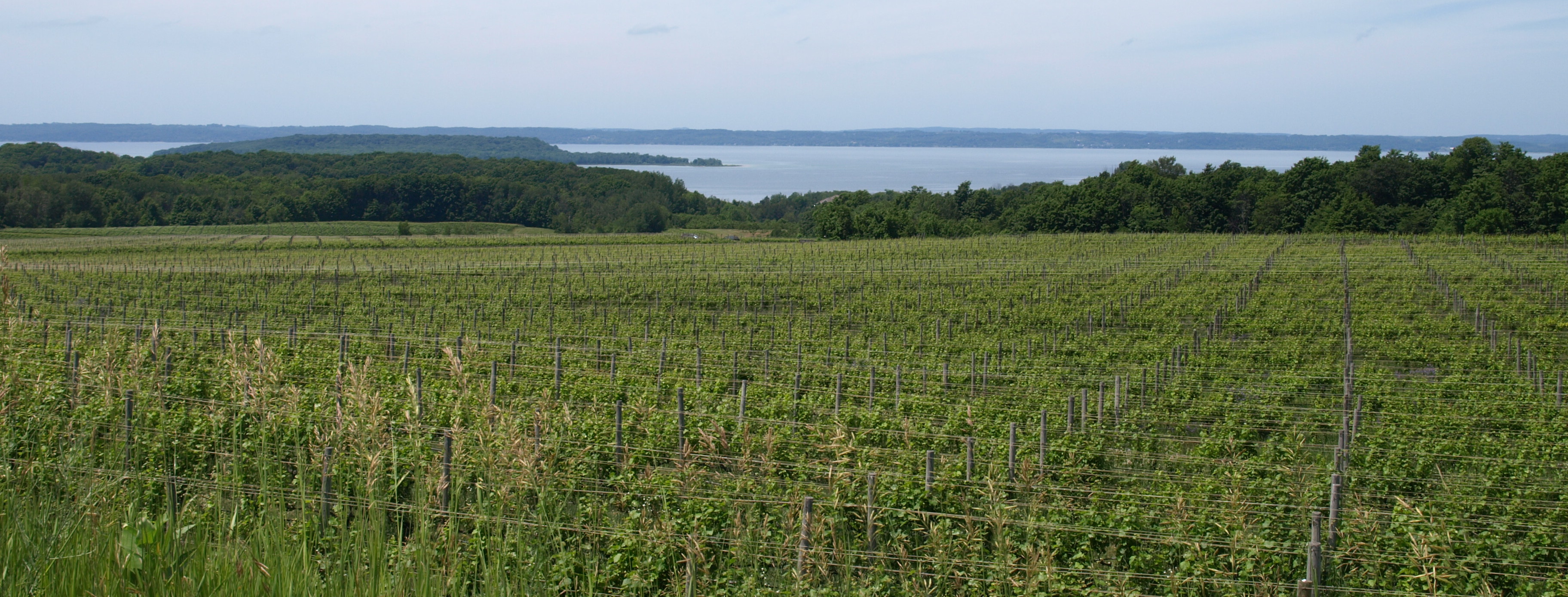
And enjoyed the lovely cherry orchards and vineyards along M-37.

Image

Too soon we headed back south. But it will only be a few weeks until we get to drive north once more, this time for nearly two weeks.

Soon it will be July (can you believe it?). So I must say goodbye for a couple days so I can finish up June’s short story for you all. Here’s the updated cover, which I’m liking very much:

Image

Summer in Michigan Means One Thing to Me: Up North

Over the past week my husband, Zach, and I have been engaged in the blessed process of planning summer travel around the state: picking dates, securing care for our pets, coordinating travel with family, reserving a room here…

Bay View Inn

We’re thrilled to be heading back up to Mackinac Island after a few years’ absence and excited to introduce our son to its magical qualities for the first time. Zach and I will spend two nights there alone, writing while overlooking the Straits of Mackinaw and riding bikes around the island. Then my in-laws will come up with our son and we all get to pal around, ride bikes, bring the boy to Fort Mackinac, ride in horse-drawn carriages, and eat ice cream. I can already feel the wind off the water.

Mackinac Island Ride

But before we get to Mackinac Island, we’ll be spending another week at a very special place to our family, Camp Lake Louise

Lake Louise

And in late summer will be the Second Annual Sisters’ Hiking Trip. Last year we hiked Pictured Rocks…

Pictured Rocks National Lakeshore

You can read about our amazing trip here, here, here, and here. Not totally sure just where we’re going this year. But I’m scheming.

This is the time of year my heart aches for woods and water and sky, when thinking about driving north–far north–elicits a physical reaction of butterflies in my stomach and even tears welling in my eyes. The silence of the night sky filled with stars. The sound of wind through trees. The cold splash of clear water. The clip-clip-clip of horses’ hooves. The heat of the sun upon bare skin. The scratchy sound of sand upon worn pine floors. Just the thought of these stirs deep longing in my soul.

I’m hopelessly in love with Michigan.

You Can’t Have Fireflies without Mosquitoes

When my husband and I experienced our first summer in Lansing we were entranced by the steady green sparkle of fireflies illuminating our neighborhood. In the twilight of July evenings, every yard was graced with twinkling lights like tiny meteorites burning up in the earth’s atmosphere.

As a child I watched movies where people caught fireflies in jars and wished for the opportunity to do the same. When evening came my lawn was simply a blank and ever-darkening mat of common grass. Catching fireflies seemed a right of passage I had been denied. I had always assumed they didn’t live in Michigan.

Fast-forward to this very week when Michigan is overrun with a bumper crop of mosquitoes courtesy of the very rainy spring and a sudden uptick in temperature. The air is thick with moisture and the relentless buzz of bloodsucking, six-legged vampires. Our almost-five-year-old son was mobbed the other day and suffered about eight bites on just one foot and ankle. He scratched. The ankle swelled. And he ended up looking like he’d sprained it it was so swollen, red, and purple.

Zach and I realized that we would all need bug spray for any excursion beyond the walls of our house until this first wave of mosquitoes dies off. It occurred to us that, despite growing up in what is essentially reclaimed swampland in the Bay City area, as children we never put bug spray on to go play outside. We got occasional bites, but we weren’t mobbed.

When we were growing up, our community sprayed for mosquitoes to keep the population down. On heady summer nights I would be out playing in the yard and from far off I’d hear the steady beep, beep, beep of the mosquito truck. Mom would hear it too and call me in. Then we’d tear around the house shutting all the windows to keep the poison out.

It was Zach who made the connection. No mosquitoes meant no fireflies. The poison spewing from the truck wasn’t genetically engineered to kill only mosquitoes. Anything that was out at twilight and not hidden away in some protected spot would suffer death. The good was destroyed along with the bad.

No mosquitoes, no fireflies.

We work hard to eliminate adversity in our lives, don’t we? I know I do. I want to get along with everyone if I can. I want my work to hum along without bumps along the way. I want my writing career to progress at a steady pace without big setbacks. I want my son to grow up without feeling the sting of rejection from friends or the public humiliation of messing up a play in baseball. I want my husband to feel constantly fulfilled and consistently loved by everyone.

But this can’t happen, can it? Life isn’t all fireflies. And if you eliminate the mosquitoes, the good times don’t feel nearly as good because there’s nothing negative to which it compares. It’s like taking an antidepressant that not only keeps you from falling into despair but at the same time keeps you from fully experiencing joy. Everything becomes a flat line. A flat line means you’re dead.

So we cover our bodies in DEET, hoping to avoid West Nile even as we are likely increasing our cancer risk. We do what we can to keep the mosquito bites at bay. And we look forward to seeing the fireflies in July.

This, That, and the Other

In my non-literary life, I spend a lot of time sewing, often using vintage patterns, sometimes vintage pieces of fabric, and sometimes both. A recent creation of mine was featured on The Sew Weekly, to which I am a regular contributor. And I was happy to receive a nod from the lovely Jody at Couture Allure, who was the source for the vintage flapper dress pieces that made their way into my 1920s dropwaist dress.

I did a lot more blogging about my sewing on my previous blogs, but I thought I’d mention this particular project as a jumping off point for a new feature I’m developing called Destination Lansing. In 2013, I will do a weekly blog post highlighting the many things that make living in or visiting Michigan’s state capital a treat. One of those places will be Potter Park Zoo, where I recently wore this dress. Why would someone wear a flapper dress a la The Great Gatsby to a zoo? Well, it will all make sense if you read this.

And though F. Scott Fitzgerald was not from Michigan, he was born in the midwest, so there’s a loose tie-in there with the real purpose of this blog (to champion the region and, eventually, feature more content of Michigan authors, books set in Michigan, and my own literary efforts, which are ongoing but as of yet mostly private).

Beyond that, sewing occupies a prominent spot in my next work in progress, so it’s not completely unrelated to my writing. Anyway, I guess since this is my space I don’t really need to justify what I decide to write about here, do I?  😉

As the rottenly hot summer winds up today and cool autumn begins tomorrow, I anticipate the return of my poetic muse (who rarely visits in the summertime) and I’m looking forward to sharing the beauty of this bittersweet season with all of you.

Canning Summertime

While canning can be done all year round using frozen or store-bought fruits and vegetables, your food will always taste better and be better for you if it is grown locally and in season, and if it is harvested when it’s ripe rather than when it’s still green and hard enough to ship across the country or the globe. In Michigan, canning generally starts in June with strawberry season, speeds up a bit in July with blueberries and cherries, and then gets frantic in August when peaches, raspberries, blackberries, tomatoes, plums, pickle cucumbers, and more start getting ripe.

Already this year I’ve canned all this:

  • Strawberry Jam
  • Strawberry Lemon Marmalade
  • Strawberry Lemonade Concentrate
  • Strawberry Rhubarb Pie Filling
  • Berry Wine Jelly
  • Herb Jelly
  • Red Wine Jelly
  • Sour Cherry Jelly
  • Blueberry Jam
  • Gooseberry Jam
  • Peach Jam
  • Peach Salsa
  • Four Fruit Nectar

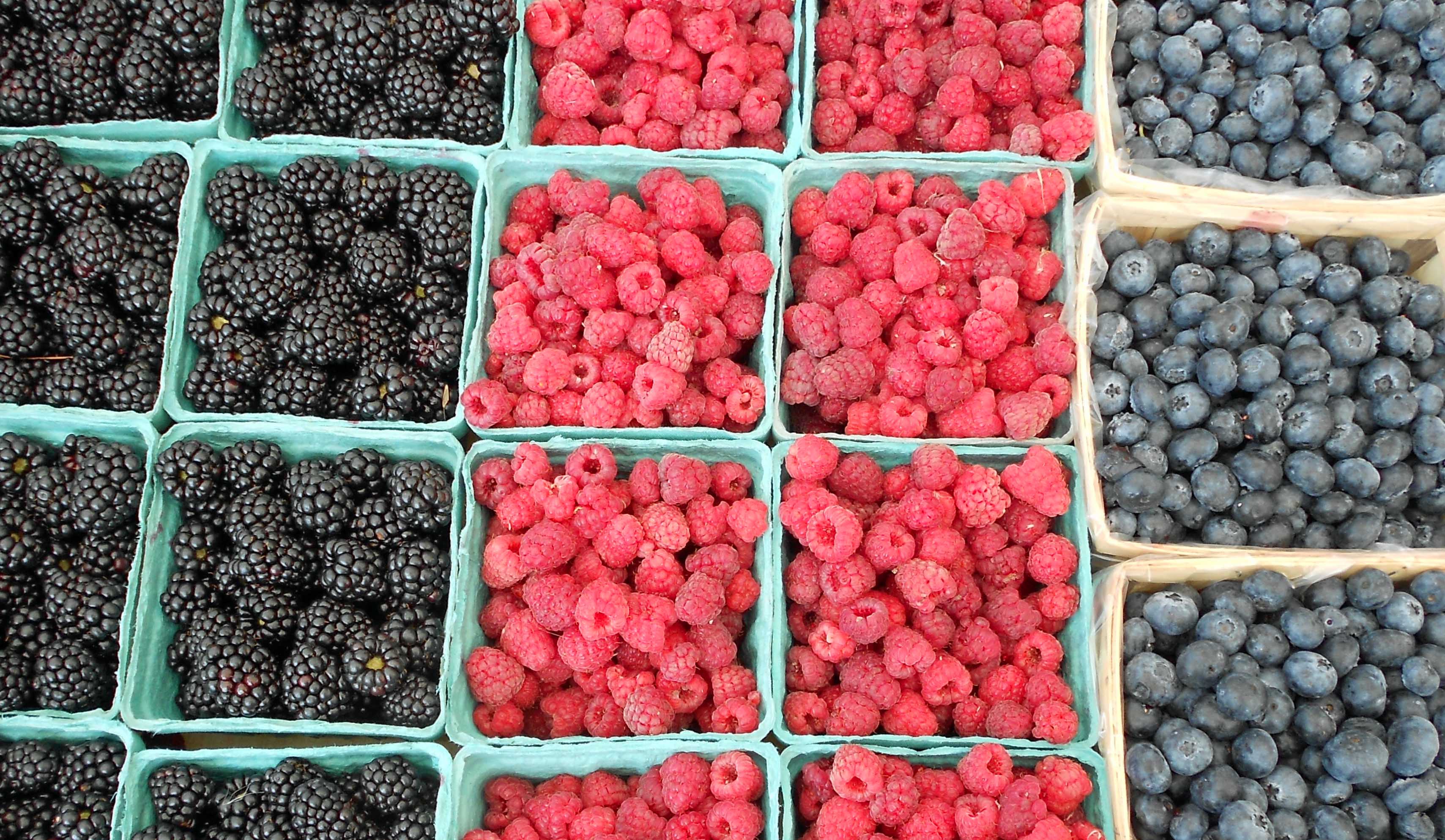
All of the recipes are found in the Ball Complete Book of Home Preserving. And today at the farmer’s market we picked up raspberries and blackberries to make into jam. We also got corn, zucchini for bread, green beans, cantaloupe, and a bunch of sunflowers for the table.

For your shopping convenience, check out this handy chart of when fruits and vegetables are available at your local farmer’s market.

More and more urban communities have farmer’s markets, and more and more of them take food stamps, so be sure to take advantage of the amazing taste and ecologically more sound growing, harvesting, and shipping practices of food from small, local, family-run farms. If you find yourself buying produce under the flourescent lights in a grocery store chain in August in Michigan, I think you need to reevaluate your buying practices.

Get it fresh!