Wildflower Wednesday: Butterfly Weed

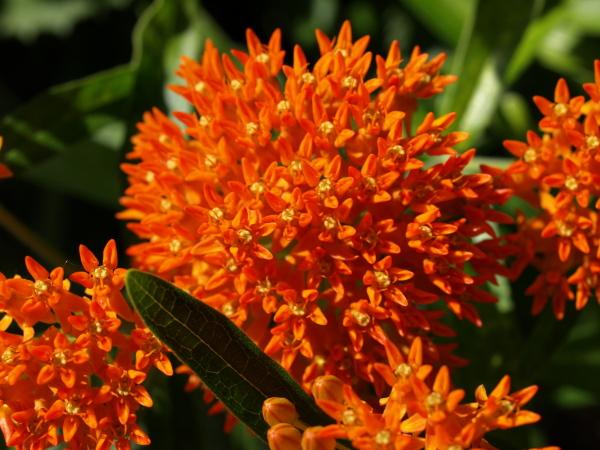
butterflyweed1

Common Name: Butterfly Weed

Scientific Name: Asclepias tuberosa

Habitat & Range: dry soil, full sun, prairies and meadows

Bloom Time: summer

About: How about some more flowers that will attract butterflies and other pollinators? Butterfly Weed is a compact, lower growing perennial wildflower that can be purchased at a good nursery or easily seeded. It is better for attracting butterflies to smaller yards than big, sprawling plants like Milkweed or Joe-pye Weed (though it is a milkweed and thus still host to Monarchs and also to Gray Hairstreaks). And it’s orange, not all that common in wildflowers, which tend toward begin white, yellow, or purplish.

I have a specimen in my garden (originally purchased at, you guessed it, a native plant sale) that has been slowly growing in circumference for years. And I occasionally find volunteers pop up in other parts of the garden, which can easily be pulled or replanted elsewhere (if you catch them early; the long taproot this plant develops makes transplanting difficult once a plant is established). It is great in full sun and dry soil, so you can position in some of the most harsh spots in your garden, along with your Sedum and other tough plants. It can be found growing wild throughout the Lower Peninsula.

Here’s some on Mackinac Island:

OLYMPUS DIGITAL CAMERA

Reference: Wildflowers of Michigan by Stan Tekiela; Adventure Publications, 2000

Wildflower Wednesday: Joe-pye Weed

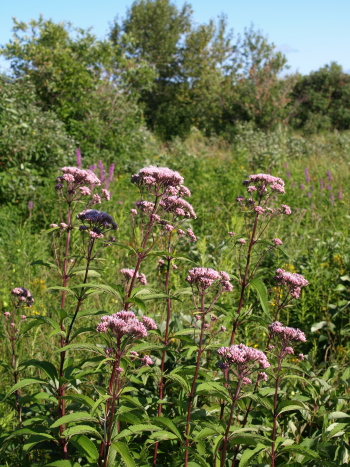
Joe-pye weed

Common Name: Joe-pye Weed

Scientific Name: variously Eupatorium maculatum and Eutrochium maculatum (depending on the source)

Habitat & Range: wet, full sun meadows and along streams and lakes

Bloom Time: summer

About: A tall perennial you can get at most nurseries or native plant sales, this may look like a milkweed, but it is in fact part of the aster family. If you have a pond on your property, this is a perfect plant to edge it. It’s tall (some varieties can reach 10 feet!) so use it as a backdrop to smaller plants in your native or cottage garden. Even though it likes moist soil, its extensive root system means it will tolerate drought. It’s not too picky. Other pluses: it attracts butterflies and deer don’t like to eat it.

Reference: Wildflowers of Michigan by Stan Tekiela; Adventure Publications, 2000

(also Better Homes & Gardens online plant encyclopedia)

Wildflower Wednesday: Swamp Milkweed

Swamp Milkweed

Common Name: Swamp Milkweed

Scientific Name: Asclepias incarnata

Habitat & Range: wet meadows, swamps, streams, lakesides

Bloom Time: summer

About: Host to the Monarch butterfly (along with Common Milkweed, which can be distinguished from its more delicate cousin by its much larger leaves and duller flowers), this is perfect for your butterfly garden if you’ve got some consistently wet spots on your property. I tried them (purchased from a native plant sale, not taken from the wild) in an area of my yard that is often soggy in springtime, but the summer sun dries out my soil too much and there’s too much shade there, so they never took.

This photo (like those of the Boneset a couple weeks ago) was taken along the shore of Lake Louise (properly Thumb Lake) in the northern Lower Peninsula, but this plant can be found throughout the state.

Reference: Wildflowers of Michigan by Stan Tekiela; Adventure Publications, 2000

Wildflower Wednesday: Wild Parsnip

Wild Parsnip

Common Name: Wild Parsnip

Scientific Name: Pastinaca sativa

Habitat & Range: wet, sunny fields and roadsides

Bloom Time: spring and summer

About: Not all flat-topped wildflowers are white. A few of them are yellow. Growing right along with the Yarrow and Queen Anne’s Lace from weeks past I spotted Wild Parsnip (not to be confused with the white-flowered Cow Parsnip, which I mentioned in the entry on Water Hemlock). All of these photos (along with many others) were taken on the same day in one small area on Mackinac Island near Mission Point Resort. Like Queen Anne’s Lace and Water Hemlock, Wild Parsnip is part of the carrot family and is a host plant for black swallowtail butterflies. Like Queen Anne’s Lace, this was a European garden plant that has escaped. You can only eat the long taproot of this plant in the first year of growth (after that it gets too woody). But beware of the parts of the plant that sit above the ground. If you are sensitive to it, the leaves can cause photodermatitis if touched. This means that after you touch the plant, if you are exposed to sunlight, your skin can blister and weep (eww), so wear long sleeves and gloves. Very inconsiderately, this plant’s flower looks like dill, but one look at the leaves and you will know it’s not.

Reference: Wildflowers of Michigan by Stan Tekiela; Adventure Publications, 2000

Wildflower Wednesday: Boneset

Boneset

Common Name: Boneset

Scientific Name: Eupatorium perfoliatum

Habitat & Range: wet ditches, meadows, and roadsides

Bloom Time: summer and fall

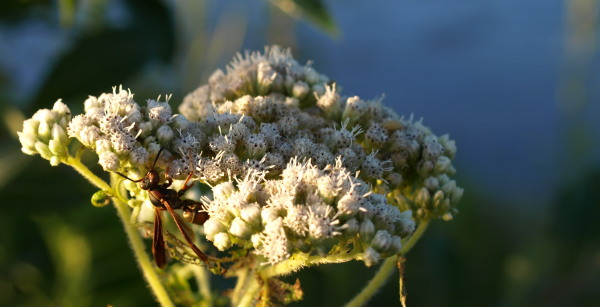
About: Boneset is yet another white, flat-topped flower you will find in bloom in the summertime. The flower resembles Yarrow, but it is easily identified by its unique rough leaves, which are joined to the opposite leaf at the base so that it looks like the stem goes right through one large leaf. (Unfortunately, the specimen in my photo below had well-chewed leaves so you can’t really tell.) It’s an important nectar plant and has been used medicinally in the past to treat dengue fever. However, it is toxic to humans, so this is another plant you have to be careful with. Old herbals may advocate its use as a tea to treat coughs and colds, but it can cause liver damage, muscle tremors, and other problems. Overdose can be deadly. Best to leave it to the butterflies.

Boneset

Reference: Wildflowers of Michigan by Stan Tekiela; Adventure Publications, 2000

(also Wikipedia)

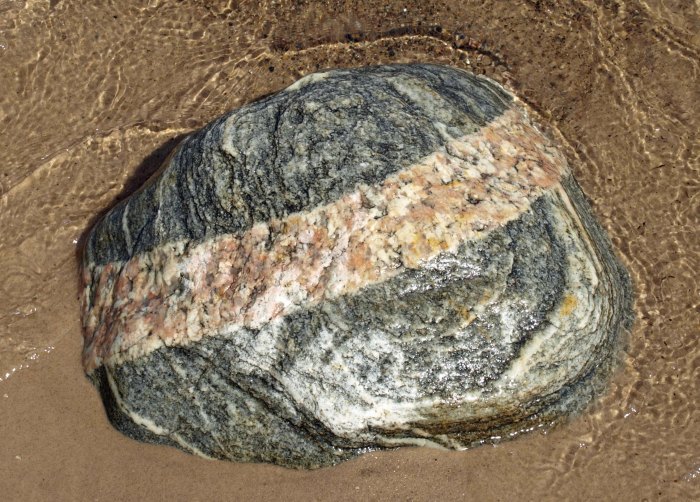
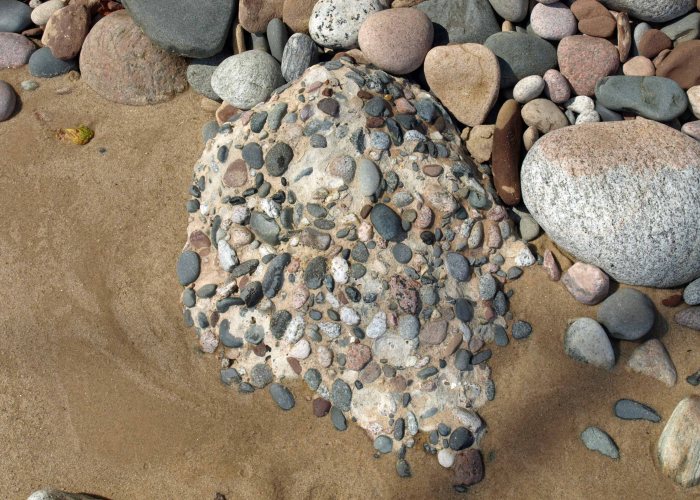
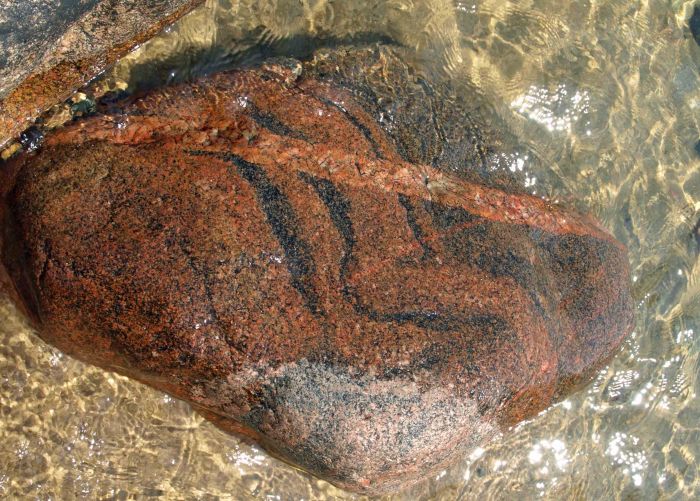
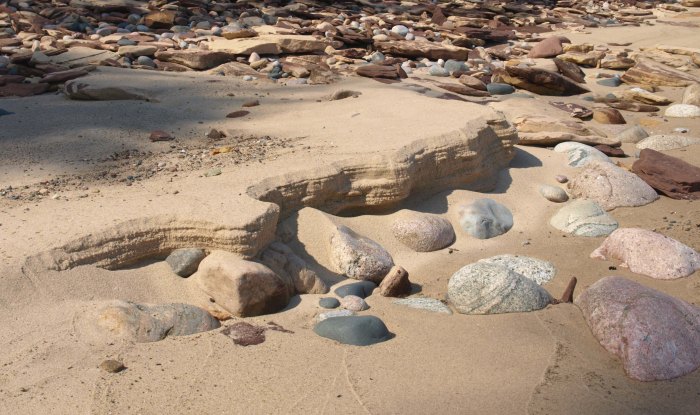
Lake Superior Stones: A Collector’s Lament

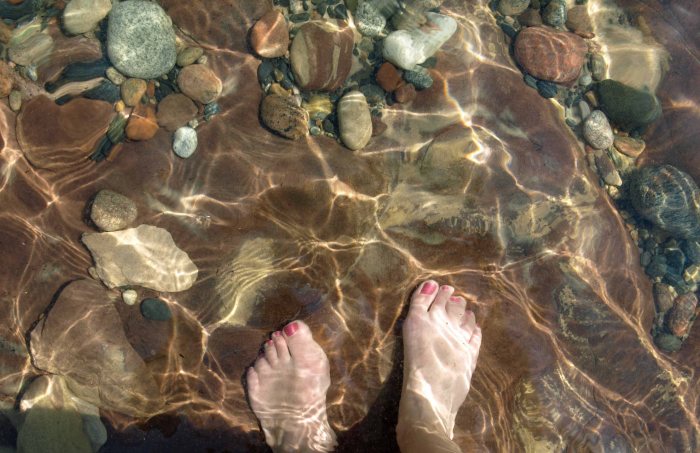
I love rocks. I like looking at them, feeling them, collecting them, putting them in jars.

OLYMPUS DIGITAL CAMERA

But here’s the problem with being a rock collector at a National Park–you can’t collect the rocks.

OLYMPUS DIGITAL CAMERA

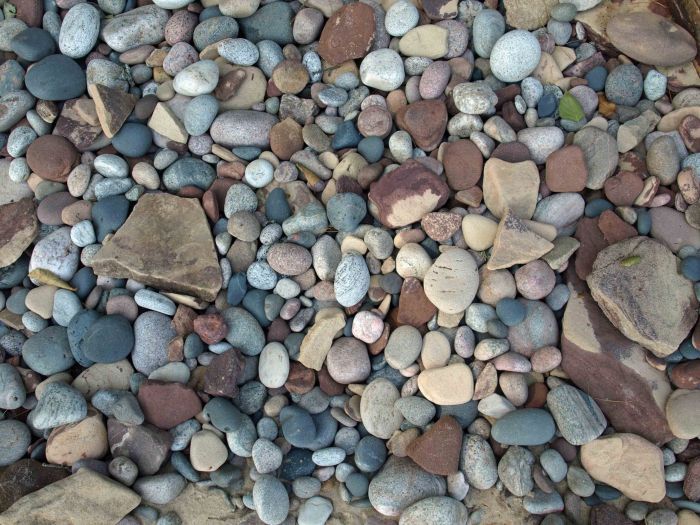
All these lovely rocks and you have to leave them be.

OLYMPUS DIGITAL CAMERA

And anyway, when you’re backpacking, you can’t really start socking away a bunch of rocks in your pack. Every ounce counts.

OLYMPUS DIGITAL CAMERA

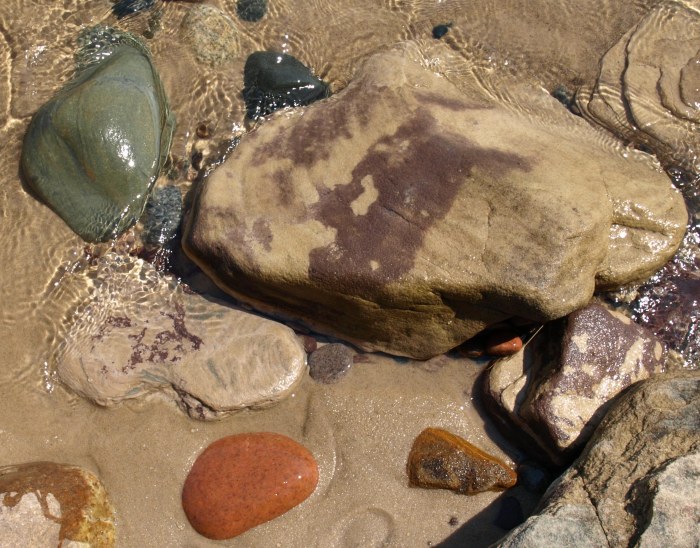
So while I would have liked to bring home a bunch of stone souvenirs, I mostly left them alone and took pictures (though I have to admit, I brought a few little ones home…they were tiny, really…no one will miss them).

OLYMPUS DIGITAL CAMERA

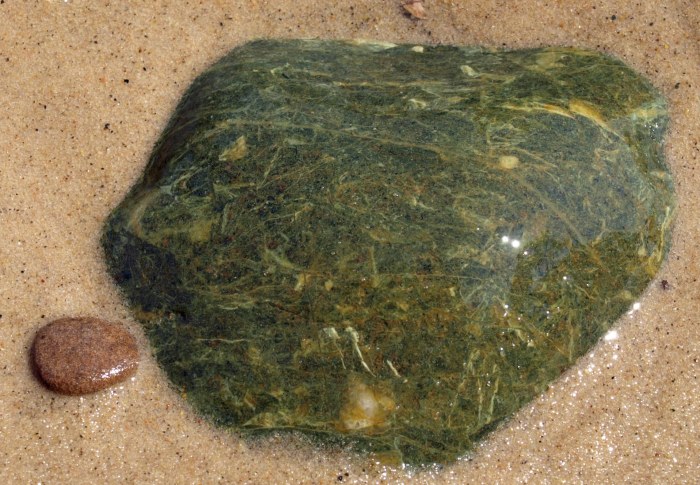
I generally like stones for how they look and I don’t get deep into their composition, rarity, or how they formed (although, that does interest me).

OLYMPUS DIGITAL CAMERA

And there are people far better qualified to identify all of these beauties than I.

OLYMPUS DIGITAL CAMERA

I can tell you that I saw sedimentary rocks, like sandstone and the great conglomerate above.

OLYMPUS DIGITAL CAMERA

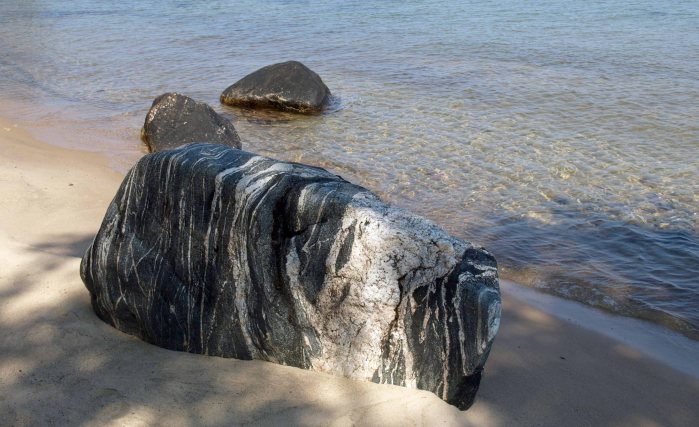
And that I saw igneous rocks, like strips of granite, through metamorphic rocks, like gneiss, which you can see in a couple of these photos. And I wonder just how that granite found its way in there.

OLYMPUS DIGITAL CAMERA
And I saw this great little scene of erosion and shaping by the waves and wind on the beach, like Pictured Rocks in miniature.

But I left them all there. For your trip.

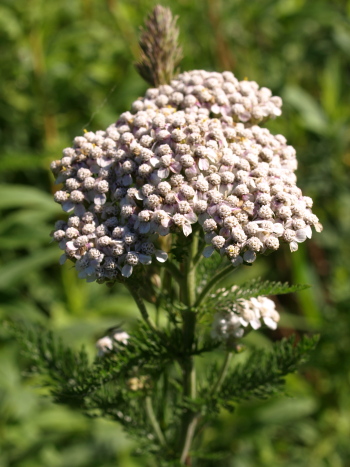
Wildflower Wednesday: Common Yarrow

Yarrow

Common Name: Common Yarrow

Scientific Name: Achillea millefolium

Habitat & Range: dry, sunny fields, prairies, and woods

Bloom Time: summer

About: Another white, flat-topped flower (which is far less insidious and far more useful than Water Hemlock) you will find blooming this time of year is Common Yarrow. If you garden with perennials, you probably know there are many lovely cultivars of Yarrow to be found at your local nursery. Common Yarrow is a bit less showy, but a very useful plant that has been used medicinally for perhaps millenia to slow or stop the flow of blood from wounds (including by the legendary Achilles during the Trojan wars–hence the first part of its scientific name). It is a good companion plant in your garden because it attracts beneficial insects such as ladybugs and predatory wasps. Young leaves can be dried and used as an herb or cooked and eaten as a green. You can find many more uses and recipes in herbals.

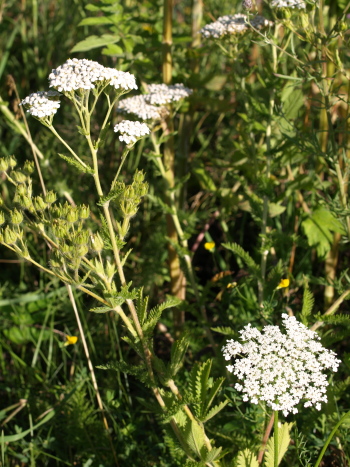
Here it is growing alongside lookalike Queen Anne’s Lace:

OLYMPUS DIGITAL CAMERA

Yarrow is upper left and Queen Anne’s Lace is lower right.

Reference: Wildflowers of Michigan by Stan Tekiela; Adventure Publications, 2000 (also Wikipedia)

Wildflower Wednesday: Water Hemlock

waterhemlock

Common Name: Water Hemlock

Scientific Name: Cicuta maculata

Habitat & Range: wet, sunny meadows, ditches, my garden

Bloom Time: summer and fall

About: Last week I mentioned that Queen Anne’s Lace was in the carrot family and the root was edible (as a coffee substitute). Water Hemlock is also in the carrot family. It looks very much like Queen Anne’s Lace and like Cow Parsnip (also edible). The taproots even smell like carrots. But DO NOT CONSUME any part of this plant in any fashion as it is Michigan’s most poisonous plant. Just a small amount will cause convulsions and then death. If you have children or pets and you see this in your yard, eradicate it. Pull plants up by the root and throw away. Don’t add them to your compost pile (I’m not sure anything bad would come of it, but better to be safe than sorry).

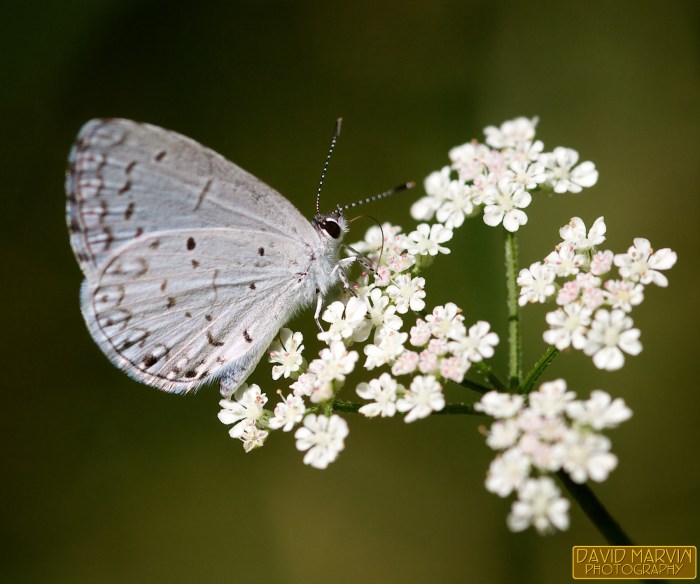
When we moved to our house, which has several wet spots, I saw quite a bit of this plant but thought I had successfully removed it. When we came home from two weeks’ vacation earlier this month, I found a couple lurking in my vegetable garden and near the driveway. Weeds always seem to find a way. I pulled them up before I thought about taking photos, so I borrowed a photo from my friend and butterfly/dragonfly photographer extraordinaire David Marvin.

I’m also going to direct you to this website for many detailed pictures of the plant so you know what’s what when you think you’ve encountered this plant. The telltale sign is the leaf, which has veins that end in the V of the serrated leaves rather than at the tips.

Reference: Wildflowers of Michigan by Stan Tekiela; Adventure Publications, 2000

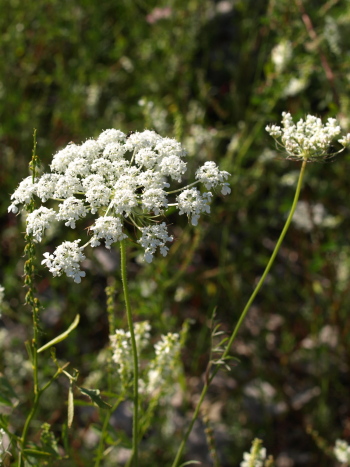
Wildflower Wednesday: Queen Anne’s Lace

Queen Anne's Lace

Common Name: Queen Anne’s Lace

Scientific Name: Daucus carota

Habitat & Range: dry, sunny meadows and roadsides statewide

Bloom Time: summer and fall

About: So many of our wildflowers are non-native European garden plants that have escaped, and this is one of them. A member of the carrot family (and thus a host plant for black swallowtail butterflies) Queen Anne’s Lace is a common and well-known plant. I recall hearing the story behind the little cluster of dark red flowers in the center as a child: that Queen Anne (whoever that was, I was not sure) was making lace and pricked her finger with the needle and a drop of her blood got on it. But now I’m fairly sure handmade lace is made with a tiny crochet hook (right?) so I’m thinking Queen Anne must have had to work pretty hard to draw that drop of blood. At any rate, her namesake plant is now considered an invasive, though I’ve not heard of any plans to rid the state of it.

The root of Queen Anne’s Lace can apparently be dug, dried, ground, and used as a coffee substitute. But beware that in the family of flat-topped flowers (which we shall explore in the coming weeks) there are many lookalikes–and some of them are deadly. So hold off on making that “coffee” until you really know what’s what. Next week: water hemlock.

Reference: Wildflowers of Michigan by Stan Tekiela; Adventure Publications, 2000

queenanne4
Here’s what’s become of Queen Anne’s Lace in the fall.

Wildflower Wednesday: Fringed Gentian

Fringed Gentian

Common Name: Fringed Gentian

Scientific Name: Gentianopsis crinita

Habitat & Range: wet prairies & meadows, along streams and lakes

Bloom Time: late summer & fall

About: I see fringed gentian regularly up at Camp Lake Louise, but I only have pictures of it from odd years because…it’s a biennial! It takes two years to bloom and, like most wildflowers, should not be picked or dug up. Since 2013 is an odd year, I was on the lookout for them on our trip this year, but it’s been a cool summer and the late summer wildflowers were not in bloom yet when we were up there.

In addition, like many other wildflowers, it depends on a mycorrhizal relationship. In other words, it can only grow where certain bacteria or fungi are present in the soil, so if you decide you are the special exception and you’ll just go ahead and take that plant home thank you very much, it won’t grow in your yard anyway, so please leave it be and bring home some nice photos instead.
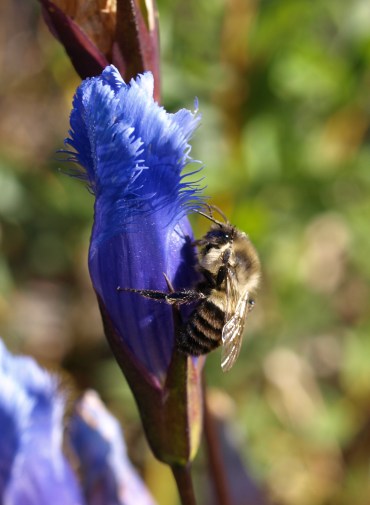
Fringed Gentian

The fringed gentian has been the subject of some poetry over the years, including

Emily Dickinson

God made a little gentian;
It tried to be a rose
And failed, and all the summer laughed.
But just before the snows
There came a purple creature
That ravished all the hill;
And summer hid her forehead,
And mockery was still.
The frosts were her condition;
The Tyrian would not come
Until the North evoked it.
“Creator! shall I bloom?”

William Cullen Bryant

Thou blossom bright with autumn dew,
And colored with the heaven’s own blue,
That openest when the quiet light
Succeeds the keen and frosty night.

Thou comest not when violets lean
O’er wandering brooks and springs unseen,
Or columbines, in purple dressed,
Nod o’er the ground-bird’s hidden nest.

Thou waitest late and com’st alone,
When woods are bare and birds are flown,
And frosts and shortening days portend
The aged year is near his end.

Then doth thy sweet and quiet eye
Look through its fringes to the sky,
Blue–blue–as if that sky let fall
A flower from its cerulean wall.

I would that thus, when I shall see
The hour of death draw near to me,
Hope, blossoming within my heart,
May look to heaven as I depart.

and Robert Frost 

I felt the chill of the meadow underfoot,
But the sun overhead;
And snatches of verse and song of scenes like this
I sung or said.

I skirted the margin alders for miles and miles
In a sweeping line.
The day was the day by every flower that blooms,
But I saw no sign.

Yet further I went to be before the scythe,
For the grass was high;
Till I saw the path where the slender fox had come
And gone panting by.

Then at last and following him I found–
In the very hour
When the color flushed to the petals it must have been–
The far-sought flower.

There stood the purple spires with no breath of air
Nor headlong bee
To disturbe their perfect poise the livelong day
‘Neath the alder tree.

I only knelt and putting the boughs aside
Looked, or at most
Counted them all to the buds in the copse’s depth
That were pale as a ghost.

Then I arose and silently wandered home,
And I for one
Said that the fall might come and whirl of leaves,
For summer was done.

Fringed Gentian

Reference: Wildflowers of Michigan by Stan Tekiela; Adventure Publications, 2000