Thoughts on Submission(s)

We all run in various circles. I don’t mean that in the sense of having no direction, just a dog chasing its tail and not getting anywhere. I mean it more in the sense of social and professional circles.

In the two main circles in which I find myself running about, the word submission has two distinct meanings.

This is what submission looks like for a dog. We humans shy away from this sort of vulnerability.
This is what submission looks like for a dog. We humans generally avoid this sort of vulnerability at all cost.

In the circle labeled Writing, submission is a noun (a story or a poem sent to some contest or publication) or a process (the act of sending that story or poem to that contest or publication).

In the circle labeled Faith, submission is always a verb (us submitting to God, husbands and wives submitting to each other, us submitting our plans to God’s will).

In practice, these can feel like the same thing for several reasons.

1. It’s not easy. Submitting a story, querying an agent, sending your tender literary child out into the world–it’s hard. Taking the first step in handing control of your work over to someone else and risking their rejection is difficult in the same way it is hard to trust someone else with control of your life and happiness. It’s kind of scary at first. Submission of any kind requires courage.

2. It’s a long process. Waiting is the name of the game if you are submitting stories to magazines or entering contests or sending out queries. It will usually take months to receive a response and in the meantime you can feel like you’re in a kind of literary limbo. When you hand your plans over to God you can feel that his timing and yours do not always (usually) match up one to one. It’s going to take longer than you want it to. Submission of any kind requires patience.

3. You have to keep doing it, over and over. Submit, get rejected, repeat. That’s the process you need to follow until your work matures, hits a nerve, happens to be timed just right. You can’t give up. Similarly, submitting to God is not a one-time thing–it’s an ongoing process. You have to do it daily. You’re never done submitting. Submission of any kind requires persistence.

4. Eventually, it pays off. You can’t publish something if you don’t submit it, and if you are a good writer who is consistently trying to improve your craft, eventually you will get published. In the same way, submitting to God or to a spouse can seem at first as if you’re getting the short end of the stick–you lose the control over your daily life, you turn over the fulfillment of your needs to someone else. What if they get it wrong? What if they neglect you? But the reality is, God is better at fulfilling your needs than you are, and a loving spouse is as well. Submission of any kind requires trust.

Courage, patience, persistence, trust. Do you have those qualities? Which one do you do best? Which is hardest for you right now? If you’ve shied away from submitting your writing and sharing it with the world, what is holding you back?

Don’t let fear of rejection keep you from submitting. Everyone gets rejected. But if you never submit, never turn anything over out of fear that once you do everything is beyond your control, you can never be the writer or person you were meant to be. If you’ve been given the gift of being able to write well, that gift was given for a reason. Use it. Share it. Submit it to God. And for goodness’ sake, submit it for publication!
When Youthful Illusions Fade, You Can Really Get to Work

You. Are. Awesome.Creative people, when you were young did you imagine yourself being “discovered” at some point? Be honest. When you were a child singing slightly off-key in your room, wasn’t there some part of you that was sure that somehow in your dinky Midwestern town, as you were one day following your mother back out to the car with a cart full of groceries, singing quietly to yourself, that a random Nashville bigwig would overhear your angelic voice and sign you on the spot?

No? That was just me then?

Surely when the pencil drawing you made in seventh grade art class was selected to go on some foam board display in the hallway you imagined that during the next parent/teacher conferences a famous art critic would wander past the cafeteria and stumble upon your flawless execution of a winged horse, track you down in a mad rush of inquiry, and whisk you away to some fine art institution in New York where you would blossom into the absolute toast of the cutting edge art scene.

Am I getting closer?

How about this. Despite the keen awareness in college that you were perhaps not quite as remarkable as you were lead to believe in your small hometown, that you were surrounded by many talented people and could even enjoy being part of this community of young visionaries, there was still a place in your psyche that was reserved for illusions of grandeur, that believed that your creative writing teacher would read your complex and sophisticated short story about losing your best friend and immediately pass it on (with gracious apologies to you for not asking first) to her friend at The New Yorker and you would assume your natural and rightful position as the brightest young literary star to come from your town in…ever.

Admit it. That was you. Some small part of you, anyway.

If it was not you, it was certainly me at various times of my young life. Even in my twenties I felt sure (well, perhaps not quite as sure as I had been in my teens) that the promise that teachers and parents saw in me would simply materialize into worldly success on a grand scale with little effort on my part (and that it would be nothing less than I deserved).

Considering this, you may think turning thirty a few years ago would have sent me into a shame spiral at having not accomplished artistic feats that would last through the ages and get me interviewed on NPR. Actually it felt really, really good. Rather than be despondent that I would never be considered a young prodigy admired the world over for my natural talent and easy charisma, I felt a lightening of spirit as the pressure to live up to the expectations I had placed upon myself was lifted from my shoulders. It was not until the silly desire for admiration was gone that I began to write anything worth reading.

Why do I write today? To exercise my gifts, to enjoy the process of creation, and to share in the exchange of ideas that is one of the many things that distinguishes us from the rest of creation. I love to read and I think when you love to partake in an activity you naturally want to contribute. My experiment of writing and publishing a short story each month of this year is part of a determined effort to contribute.

Why do you write?

Seeing Beyond Myself

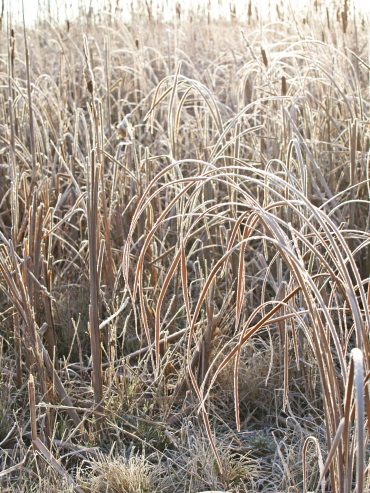
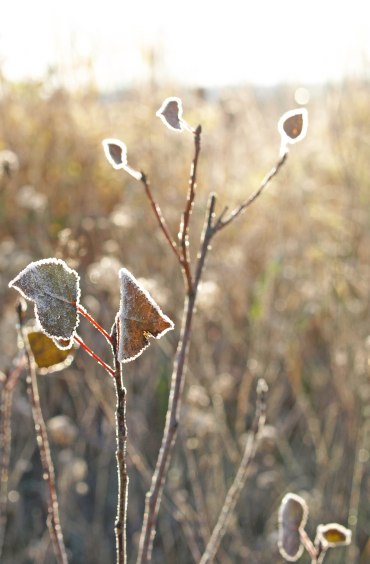
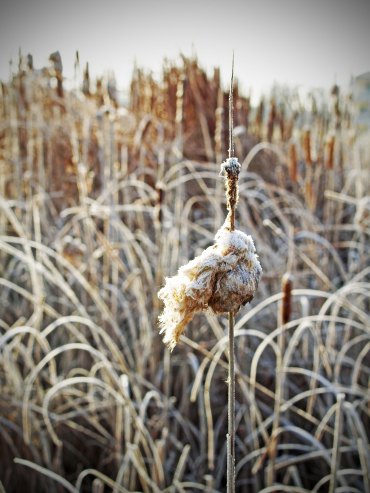
We’ve recently had some lovely frosty, clear mornings in mid-Michigan and I’m glad I had my camera handy when I was dropping off my son at school.

Mornings and evenings in cold weather are what make the dark and dreary winter months more bearable, and may even lift them to a level more on par with the wonder of springtime.

There are so very many lovely things in this world, to be found in all seasons.

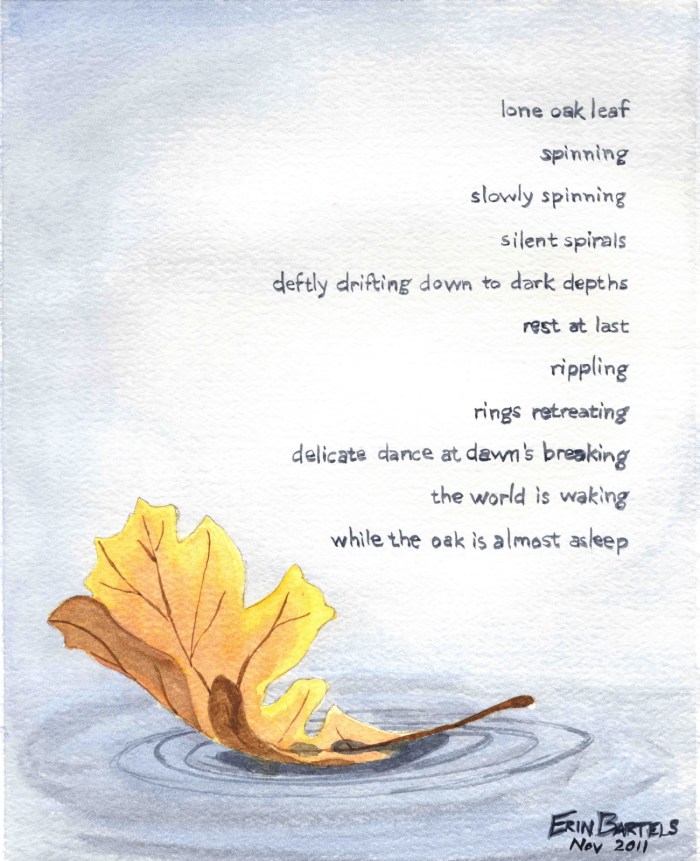
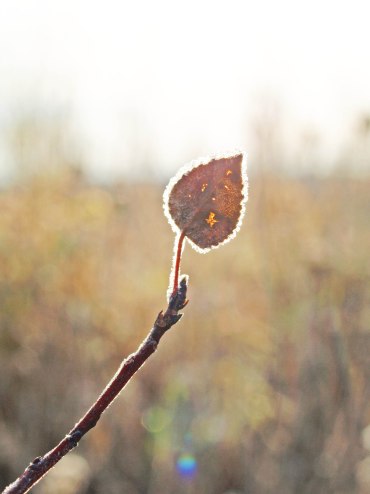
We woke up this morning to a beautiful dusting of light snow, though most of it is melted now. The trees are all bare, but for a few that keep their leaves rather tenaciously, like the oaks. Puts me in mind of a little poem I wrote last November I’ll share with you here.

I think that may be the last thing I painted, an entire year ago! I’ve been getting the itch to paint again, though my usual spot in the sunroom has been taken over by model trains for the winter.

The waning months of the year are when we start getting those “Top Whatever of 2012” lists sprinkled across various media outlets, and before that silliness begins, I’m taking a moment to analyze my own year.

I’ve spent most of my free time in 2012 sewing clothes for myself, contributing to the Sew Weekly, and editing a novel. It’s been a very self-focused year. I was convicted of that this morning. As we near the beginning of Advent and the beginning of winter, I hope to turn my thoughts and efforts more toward others, which, as a writer who tends toward introversion and introspection, can sometimes be difficult to do.

I wonder if you’ve ever had the same epiphany, that your life, energy, and efforts were too focused on yourself. Assuming the world doesn’t end in a few weeks, what are you going to do differently in 2013? Where will you put your efforts? Will you spend your time entertaining yourself and thinking of ways you can further your goals? Or will you conscientiously look for ways to serve? I want to look beyond myself and I pray for the passion and focus to do so. I want to be one lone oak leaf that, in dying to self, can live in such a way that my efforts ripple outward and touch every corner of my pond.

3:00 AM Thoughts

My poor husband is plagued with chronic intermittent (no, those are not mutually exclusive terms) insomnia, meaning that every few months he goes through 4-6 weeks of near-nightly insomnia that a veritable cocktail of drugs, behavior modification, and fervent prayer often will not cure. Then, mysteriously, one day he can sleep again. He has many 3:00 AM thoughts, I’d wager, and most of them are probably along the lines of frustration and despair.

I do not suffer from insomnia, thank the Lord, but since my pregnancy five years ago, I have had a bit of trouble staying asleep an entire night. In fact, I’d be willing to bet that of all the nights that have transpired from late 2007 until now, I’ve only had uninterrupted sleep during about 15% of them. I think anyone with kids could probably say the same, and a good deal of the childless populace as well.

Once I’m awake, it is often difficult to fall back asleep as those 3:00 AM thoughts invade my brain. Regrets, story ideas and scenes, what I should have said, the weight of all the work that will greet me in the morning, half-done sewing projects, trying to remember what day it is and how long until I need to get out of bed. Those 3:00 AM thoughts can keep me from slumber for an hour or more.

Last night was such a night, brought on by a son’s nightmare and subsequent screaming. Once I was back in bed my mind got busy. I managed to get some good short story development out of it, but there was a lot of regret and second guessing about a recent kind act of trust in which the party receiving our generosity has not held up his end of the bargain. All the things we should have done differently to ensure more accountability. Prayers that my heart would be at peace about it and I could simply forget it and move on with life. And when I finally fell back asleep that person invaded my early morning dreams and in flooded those same emotions.

Perhaps everything will yet be resolved. Perhaps it won’t. And perhaps I will get a full night’s sleep tonight.

Perhaps.

The Most Pervasive Storyteller of Our Time (for better or worse)

It is so strange how the world goes on even when we remove ourselves from it. On the drive home from Camp Lake Louise Saturday, we stopped at a Burger King to grab a bite, use the restrooms, and let the dog stretch her legs a bit. And now even Burger King has flat screen TVs hanging all over the place like a sports bar. As I was filling some little paper cups with ketchup I caught my first bit of news in a week. Something about police and bomb squads and an apartment in Colorado and the new Batman movie. Details would filter in during the next few days, but all I had at that moment was one little snippet of a much larger story. An excerpt from a tragedy.

Really any news story we see is the same way, like reading one paragraph in the middle of a novel. We’ll probably get a character name or two, a sense of the conflict perhaps, maybe some dialogue we can quote. But the events leading up to that paragraph are not known to us.  We have to go back to get them, while at the same time, the story keeps stretching out in front of that one paragraph we’ve read.

News is reading backward and forward at the same time. It’s never starting at the beginning, because even though each story has a beginning, it’s not important to us until something happens that gets our attention. News starts in the middle, then fills us in as details are discovered, even as it keeps us abreast of the developing story. News is a Quentin Tarantino movie, but with less art and considerably less swearing.

In our media soaked world, we get near-constant updates about an almost infinite number of stories, as though we were standing in a great library and picking up books at random, reading a couple paragraphs, then putting them down again and picking up another, and so on and so on, never actually finishing any of them. (Because really, don’t you always find yourself wondering what ever happened to that so and so who did such and such and the news media is already on to the next thing and never revisits it?) And this is how we experience the larger world. In a scattered, random, and incomplete way.

Is this why human beings love to hear, read, and watch entire fictional stories in the form of spoken storytelling, novels, and movies? Is this why we read fiction? Is this why we shell out the kind of money we do at movie theaters for two hours (and usually less) of beginning to end storytelling that has cause, effect, conflict, and conclusion in their proper place?

When you read a good novel or short story, when you see a good movie, do you ever have that feeling at the end when you close the back cover or stand up from your seat and you have to reorient yourself to the real world? You get that satisfying feeling of closure (or sometimes that excited anticipation of a possible sequel), that bittersweet ache of separating of yourself from a story that completely engrossed you. You never, ever get that from the news. And yet, most of the stories that filter into your life come in those little, dissatisfying pieces.

That dissatisfaction, along with the sad reality that most news is bad news and most of it is outside my control or often even my realm of influence, is why I go through very purposeful seasons of news avoidance. I ignore, for a time, that kind of piecemeal, negative storytelling in favor of experiencing life and fiction as a whole.

Lessons Learned While Overdoing It #3: I’m Lucky I Wised Up When I Did

I don’t know how you get along with your siblings, but I would say that odds are fairly decent that it’s not exactly the same at every age. I would imagine that most siblings go through periods of being best friends, worst enemies, and various other relationships in between those extremes.

My sister, Alison, and I are no exception. Had you told me as a child that I would get my sister out on a four-day, three-night, 27-mile hike (and that I would somehow convince her to carry her own food, clothing, and shelter on her back) I would have laughed in your face. Growing up, I was the one to be found in the tree, in the dirt, in the neighbor’s snowdrift. Alison would usually be inside. Playing with Barbies (yag–that’s “yawn” and “gag” put together, folks). As a child, she would not have struck me as the hiking type.

Had you told me as a high schooler that she would look forward to spending that much quality time with her little sister, I’d have sneered and rolled my eyes. I have no hard evidence, but I’m convinced that when my big sister saw me walking down the illustrious halls of Garber High School she hid behind other people, avoided eye contact at all costs, and perhaps even stuck out her leg to trip me. As a teenager, she would not have struck me as the bonding type.

Had you told me even ten years ago that we would even be speaking to each other much at this point in life, I would have been pleasantly surprised. It’s not that we so vehemently disliked one another, but that we didn’t communicate very well. At the time I thought this was her fault. (I, after all, was most certainly perfect.) But in 2003 or 2004 I realized that a very huge chunk of our rocky relationship was my fault. Solidly my fault.

I was compelled to write Alison a letter of apology. Which is what you do when you don’t communicate well, right? I have a bit of a tendency to say things I regret (or don’t even mean) when I try to work out conflict face to face out loud, so writing (and editing) is a very important process for me. In this letter I owned up to some serious miscommunication, misunderstanding, and misinformation on my part. I asked for forgiveness, and my gracious sister gave it to me.

And then we began to develop a real relationship.

Had you told me any time before my mid- to late-twenties that my sister and I would be close friends who went on hiking trips together, I would have gotten a wistful look in my eyes. Because I wouldn’t have believed it. But I would have wanted so badly for it to be true.

Today it is.

And when Alison and I took step after step after blessed step on that little section of the 4,600 mile North Country Trail, it felt like we had started down a long and happy path of true friendship that would only get stronger as we walked it.

4,573 miles to go, Alison. Are you ready?

Lessons Learned While Overdoing It #2: Small Graces

A landscape like that of Pictured Rocks is one of immensity. Lake Superior stretches on past the horizon in varying shades of green, turquoise, blue, and violet. The pristine blue sky arches to space. The faces of the cliffs explode from the waves. The soaring canopy of green rustles overhead.

But throughout our weekend hike at Pictured Rocks, my sister and I were careful to take note of the small things set in our path. I’m a “noticer.” My sister joked that while I was busy noticing a miniscule red and yellow fungus in the undergrowth I would be eaten by a bear. Sadly, we saw no bears, but we did see flowers, ferns, stones, fungus, insects, squirrels, snakes, rabbits, deer, and chipmunks. Always chipmunks.

Here are some of the small graces we experienced as we were pushing through the pain.

Beyond the sights, we heard eerie and thrilling bird calls we had never heard before and smelled the freshness of Lake Superior and pine forests. When you are exerting the kind of effort we were, you also appreciate with true gratitude the small graces of cool breezes off the lake, cold water from the rivers, and the frigid waves of Superior. That’s probably why so many of my photos are of our feet in the water.

It’s focusing on these gifts of comfort and beauty from God that makes it possible to overdo it without complaint. Sure our feet hurt, our shoulders were sore, our joints were aching, we were thirsty and rationing water. But that’s just hiking. Complaining doesn’t change it, and, in fact, it makes it no fun. I’ve been on hikes and nature walks and tours with complainers young and old and I have to tell you, there is little that grates on me quite like someone who is whining about heat or cold or bugs or boredom and not appreciating the beauty of a place.

And that’s how it is in the rest of life, too. You can focus on the negative  and moan about the things that make you uncomfortable or unhappy and bring everyone around you down with your constant discontent and never notice that all around you are small graces. All it takes is a shift in focus. All it takes is taking your eyes off yourself and looking instead to the gifts that have been lavished upon us by a generous hand.

Lessons Learned While Overdoing It #1: Perseverance

For some people, hiking 12 miles whilst carrying approximately 75 lbs (Is that an exaggeration? I’m not sure.) on your back is not difficult. I know this, because a few of you passed us on the trail last weekend. You were cordial and saved for later any eye-rolling or disparaging comments about our slow progress at the end there. And my sister and I appreciate that.

During the four mile span from Chapel Beach to Coves Campsite, I asked myself a number of times why, exactly, I had decided on 12 miles for our first big day on the Pictured Rocks trail. After all, neither of us is in stellar shape. I hadn’t been hiking in probably ten years. My job entails sitting, reading, typing, and, very occasionally, talking out loud. My sister also sits a lot in her job, though she has certainly been to the gym more recently than me. Still, why 12 miles?

I kept coming back to the inevitable: we had to end our hike where we began it because we didn’t have anyone picking us up. We had to get back to the parking lot at Miner’s Beach. So in order to make the 7+ hours drive to Pictured Rocks from Lansing (via Elk Rapids) worth it, we had to camp more than just one or two nights. And so we needed to get as far away from the car as possible that first day so we could make our way back at a more reasonable pace. This makes sense, right? Right?

In my infinite wisdom, I figured that doing 12 miles the first day, rather than leaving the big hike for the last day, would be smarter. We’d be more energetic, fresher, more excited about hiking. Also, we would be without injury, pains, blisters, bug bites, etc. that might slow us down near the end of the hike.

So it was that I found myself trudging (it can’t really be called walking at that point) through the hardest terrain of the entire hike, glancing about now and then for a clearing we might collapse in should we fail to reach the campsite before sunset (or before one of us expired). During these four miles, which felt to both of us like far more than four miles and I’m simply trusting that the National Park Service isn’t lying outright to us all about the distances between sites, I had a little talk with God.

Now, I’m of the belief, first of all, that there is a God, that he can and does hear prayer, and that he is all-powerful. I reasoned with myself that God could, if he so desired, physically move the Coves campsite so that it was closer. He could make it appear around the next bend or up the next cursed flight of “stairs.” (Is it just me, or is it way easier to climb those inclines without the aid of stairs?) However, if some other person was hiking toward Coves from the east, and if that person was praying that God would move the Coves campsite closer to them, who would God answer?

God could move the Coves campsite, but I knew that he wouldn’t. What purpose would it serve? Nothing but my own comfort. And I don’t think that God is particularly interested in my own personal comfort. I know he is loving, but so is my father, and I can tell you there were times when Dad wasn’t terribly interested in my own personal comfort. (For instance, I would have been comfortable with a later curfew but I think he disagreed.)

So, I knew that, despite his love for me, God would not move the campsite. What then, might I say to God as I stumbled over roots and leaned away from the edges of sandy cliffs?  Between my heavy breaths and occasional grunts I asked for endurance. I asked for the strength to make it as far as I knew I had to go that night. I asked that my sister, whose hip and heel were obviously in pain, would not be injured and would feel well enough the next day to hike again. I asked that he help us keep pace to make it there before dark.

You see, there are many struggles we cannot escape in life. God does not promise us a life of happiness and comfort. We do not deserve a certain level of prosperity simply because we are on this planet. We are not entitled to a certain level of education. We were not all born for great things. Most of us are just normal. Some of us will have health problems. Some of us will have trouble finding work. Some of us will do worse than our parents. Some of us will fail. But God doesn’t move the goals closer to us simply because we are weak and tired and in pain.

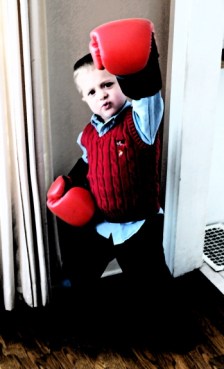
My husband and I recently had to explain to our four-year-old son that we will not let him win games simply because he wants to. We’ve been playing Sorry!, a game that is almost entirely determined by chance rather than skill or wit, and when the boy finally lost his first game, there were lots of tears. We had to explain to him that when people let you win, either by letting you cheat or making the game easier somehow, it doesn’t feel as good as you think it will. Winning because someone feels sorry for you is no victory.

In the same way, God does not make the game easier. He doesn’t move the campsite. But, if we ask, he may help us become a more graceful loser. He may give us the mental push we need to push through the pain and make it to Coves after all. We don’t grow when the bar is lowered. We grow when there’s no choice but to reach the goal as it stands.

We did reach Coves campsite before sunset. We pitched our tent, lurched down to Lake Superior to filter water, ate up some of the weight from our packs, and went to sleep. And the next day, though we were both very stiff, we started out. And you know, once you start walking again, you find that you really can do it. Your muscles stretch back out, your joints aren’t so angry with you anymore, and you can finally enjoy the scenery that you were silently cursing the night before. You can even laugh at the “stairs” which you must now traverse a second time.