Wildflower Wednesday: Columbine

Columbine


Common Name: Columbine

Scientific Name: Aquilegia canadensis

Habitat & Range: dry, open woodland in partial shade throughout the state

Bloom Time: spring further south & summer further north

About: One of Michigan’s more exotic looking wildflowers, the columbine is a favorite of our Ruby-Throated hummingbirds and butterflies. The photo you see above is of a true Aquilegia canadensis, but you’ll find other colors around, especially closer to towns where cultivated columbines have escaped and seeded. Columbines cross-pollinate and you can get some really pretty hybrid colors. Seeds may be collected from these wildflowers if you want to try them in your garden, but please leave the plants themselves alone. Also, these can nearly always be found at native plant sales. My heavy clay soil has not been very hospitable to them, but if you have sandier soil, give them a try. During hot summers a columbine may die back, but it will likely return the next spring.

Reference: Wildflowers of Michigan by Stan Tekiela; Adventure Publications, 2000

Sometimes, What You Seek Finds You

For most of my 33 years on the planet, as soon as I learned of the existence of Michigan’s state stone, the Petoskey stone, I have been searching for one. You can buy them all over up north in stores, pre-polished and sometimes cut into the shape of the state or a bear or some such thing. But I wanted to find one. And so, every trip I’ve taken up north to areas that potentially have Petoskey stones, I have walked, hunched, eyes peeled in the hopes that I might find one. Just one. That’s all I would need to be satisfied.

The Petoskey stone can only be found in certain parts of the state because it’s not just any rock. It’s a fossil. Fossilized coral from the long ago days when Michigan was beneath a sea. Now, any visit to just about any natural lake in the state can yield marine fossils. I have scads of them. But Petoskey stones are one particular type of coral and are found, unsurprisingly, in the Petoskey, Michigan, area.

petoskeystonemap
Devonian fossils like the Petoskey stone can be found in the blue regions.

In their rough state they look like pockmarked gray rocks, unremarkable and, compared to the lovely igneous rocks you can find in all colors, pretty forgettable. But shined up they reveal their true beauty.

As I said, I have never found one of these myself. But suddenly this week at Camp Lake Louise (an area to which Petoskey stones are not indigenous) six—yes, six—of these stones found me. (This is the spot I’d insert a photo, but I forgot my camera cord at home and my laptop refuses to read my xD card. Curses! I’ll share them with you at a later date.)

The funny thing is, they’ve been right under my feet the whole time. I’ve been up here probably fifteen times, once for an entire summer, and have walked over these rocks every time I’ve been here. And for the past five years I’ve stayed in a cabin mere paces from where I found the stones. In fact, two of them I found right up against and under the deck.

How did they get here? The ninety-year-old craft shop guru Wilma tells me that some time ago when they were doing some sort of construction project they brought in fill from another area of the state. After that, people started finding Petoskey stones a lot. My stones have apparently been working their way to the surface for a while.

It’s funny how you can look for something for so long you almost feel that you were destined never to find it. And then suddenly, without warning and without much effort on your part beyond keeping your eyes open, you can be overwhelmed with success.

And now I must get back to work here at camp, feeling the breeze off the lake, listening to loons, watching the bald eagles fish, and scanning the ground for treasures.

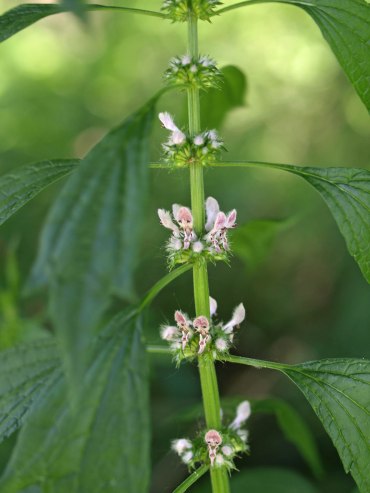
Wildflower Wednesday: Motherwort

Motherwort

Common Name: Motherwort

Scientific Name: Leonurus cardiaca

Habitat & Range: fields, edges of woodland, possibly your yard

Bloom Time: summer

About: Remember my explanation of the “wort” in plant names? Well, the common name of this plant suggests that either you use it when your mother is coming to visit (perhaps to calm your nerves?) or it looks like a mother. Or, more probably, it was used to treat some sort of menstrual disorder and/or aid in labor. The observant among you may have noted that the scientific name suggests that the plant may be used to treat heart ailments. The very observant might notice that there are also hints toward lions (LEOnurus) and another common name for this plant is Lion’s Tail (I’m thinking that is due to the shape of the leaves).

Motherwort was introduced from central Asia as a medicinal plant, so it is not native. However, like many Asian introductions to our state (carp, emerald ash borers, etc.) it is widespread, though thankfully not so destructive as some others. It shows up in overgrown back yards where some previous resident may have had an herb garden. But, as with all herbal remedy plants, do your research and be very careful when using them. Sometimes a plant is safe in a particular form or in a diluted amount but dangerous and even deadly in other forms and amounts. Be especially careful with herbs during pregnancy. Sometimes they are purported to help a pregnant woman’s health but actually they can cause cramping and even contractions. So never go by just one source (especially not an Internet source or an old herbal you found in a used bookstore) but check multiple modern reference books for the best information.

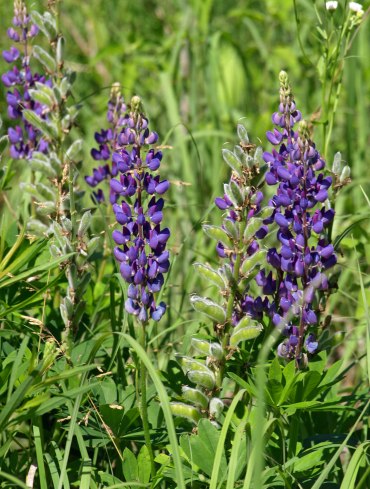
Wildflower Wednesday: Wild Lupine

Wild Lupine

Common Name: Wild Lupine

Scientific Name: Lupinus perennis

Habitat & Range: sunny fields & open woodland in the southern half of the Lower Peninsula

Bloom Time: late spring & early summer

About: Wild Lupine is the only host plant for the threatened Karner Blue butterfly caterpillar. In order to maintain the health of the plant and the existence of the Karner Blue, please NEVER cut, pick, or transplant Wild Lupine. This is a good general rule to follow with all native wildflower species. Enjoy them where they are, take a picture, and leave them be. If you love the look of Lupines and want them in your garden, there are many domestic varieties to choose from that form pleasant clumps of flowers. Or, if you’d like to be part of the solution to the Karner Blue butterfly’s plight, get native plants that have been grown from seed at your friendly neighborhood university plant sale. Calvin College and Michigan State University both have yearly plant sales in May that include important native plants.

Reference: Wildflowers of Michigan by Stan Tekiela; Adventure Publications, 2000

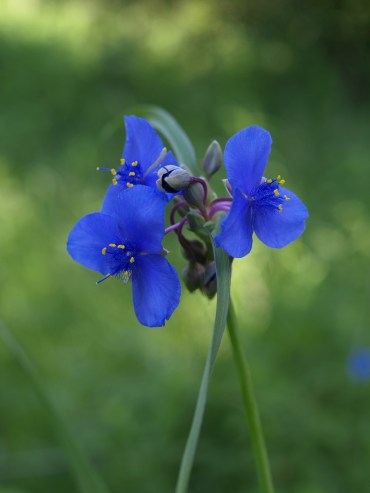
Wildflower Wednesday: Spiderwort

Summer is such a fun time to walk meadows and woods, listening to birds, watching butterflies and dragonflies, and spying out wildflowers. I have scads of photos of Michigan wildflowers, many of which I’ve identified, some of which are still a bit of a mystery. I thought perhaps that some of you nature lovers out there might enjoy a regular feature on wildflowers during the warm months. Thus I bring you the inaugural post in the Wildflower Wednesday series. Some of them will be common, others may be rare, all will include a bit of interesting information, like basic facts, uses, and lore.

So without further ado, I bring you the Spiderwort.

Spiderwort

Common Name: Spiderwort

Scientific Name: Tradescantia

Habitat & Range: meadows & fields in the southern half of the Lower Peninsula

Bloom Time: spring & summer, one to three blooms opening at a time in each cluster of up to 10 flowers

About: There are about 70 species of Tradescantia, many of which have interesting common names (Scurvy Weed, Moses in the Cradle, Wandering Jew, etc.). The name Spiderwort may come from the sort of spidery look that a clump of these plants have, with their long skinny leaves resembling a spider’s legs, or perhaps the stringy sap that looks a bit like a spiderweb if the leaf is torn apart.

Many plants have the suffix “wort” attached to them. This is a Middle English word that was often used in naming plants. Generally the first part of the name would indicate the area of the body that could be healed using the plant (as in Bloodwort, Bruisewort, and Woundwort–which is also a fine name for evil rabbit overlords) or it would indicate something about the shape of the plant. Often the only reason it seems people used a plant to treat a particular ailment is because it looked like a certain part of the body (Lungwort, for example). If it also happened to be medically efficacious, that was a bonus. For a nice long list of “wort” plants, click here.

Spiderwort comes in a nice array of purple shades, from lavender to nearly blue. Occasionally you see a pink or white form. They clump nicely, which makes them a useful garden plant in partial shade. These perennials are very easy to care for (really, you don’t have to do anything to encourage them–one of many lovely things about using native plants in your gardening).

Reference: Wildflowers of Michigan by Stan Tekiela; Adventure Publications, 2000

Summer in Michigan Means One Thing to Me: Up North

Over the past week my husband, Zach, and I have been engaged in the blessed process of planning summer travel around the state: picking dates, securing care for our pets, coordinating travel with family, reserving a room here…

Bay View Inn

We’re thrilled to be heading back up to Mackinac Island after a few years’ absence and excited to introduce our son to its magical qualities for the first time. Zach and I will spend two nights there alone, writing while overlooking the Straits of Mackinaw and riding bikes around the island. Then my in-laws will come up with our son and we all get to pal around, ride bikes, bring the boy to Fort Mackinac, ride in horse-drawn carriages, and eat ice cream. I can already feel the wind off the water.

Mackinac Island Ride

But before we get to Mackinac Island, we’ll be spending another week at a very special place to our family, Camp Lake Louise

Lake Louise

And in late summer will be the Second Annual Sisters’ Hiking Trip. Last year we hiked Pictured Rocks…

Pictured Rocks National Lakeshore

You can read about our amazing trip here, here, here, and here. Not totally sure just where we’re going this year. But I’m scheming.

This is the time of year my heart aches for woods and water and sky, when thinking about driving north–far north–elicits a physical reaction of butterflies in my stomach and even tears welling in my eyes. The silence of the night sky filled with stars. The sound of wind through trees. The cold splash of clear water. The clip-clip-clip of horses’ hooves. The heat of the sun upon bare skin. The scratchy sound of sand upon worn pine floors. Just the thought of these stirs deep longing in my soul.

I’m hopelessly in love with Michigan.

Editing Out the Cowbirds

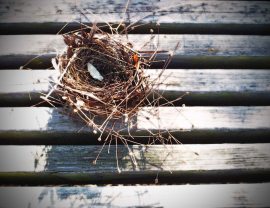
nestLast week my husband, Zach, and I were over at our friends’ house. While our sons tore around the house and our husbands scrutinized slabs of meat on the grill, my friend Kristin told me with a little glint of excitement in her eye that they had a bird’s nest in their juniper near the front door. She knew that I, the consummate animal-lover, would want to see it, so we went down the porch steps to the blessedly quiet outdoors.

Being allergic to juniper, I allowed Kristin to part the boughs and I peered into a small nest that held five eggs: four tiny blue eggs with speckles on one end and one creamy egg with speckles all over.

“You need to get rid of that white egg,” I said.

Kristin looked at me, her face a swirling mixture of puzzlement, suspicion, and intrigue. “Why?”

“It’s a cowbird egg. It’s a parasitic bird. The cowbird chick will be larger than the others and will push them out of the nest or eat all the food and the other babies will starve.”

Now Kristin looked positively flummoxed. “What?!”

“Yes, they lay all their eggs in the nests of other birds. You need to get rid of it.”

After I assured her that the mother bird would not reject the nest if it smelled like human (besides vultures, birds actually have a very poor sense of smell) it was decided that Kristin would fish the offending egg from the nest so that I wouldn’t break out in a hideous and persistent rash, but I would be the one to heartlessly dispose of the egg. I tossed it into the backyard where it could become a tasty treat for a blue jay, crow, or garter snake.

As a child, such an act would have seemed to me to be very harsh, cruel, morally reprehensible. To even squish a bug was a sin to me. But I am an adult and my sensibilities have been hardened by the knowledge that we have plenty of cowbirds in Michigan and if that nest contained the brood of a rarer bird, like a warbler of some sort, the threatened species was the one that warranted my protection.

Not surprisingly, there’s a lesson to be learned here (beyond the avian one).

In our interaction over the nest, Kristin was the writer, I was the editor, the nest was the piece of writing, and the eggs were content.

When we act as writers, we love the piece and everything in it. Then we share it with someone else, looking for critique. When we act as editors, we see a problem the writer does not. We helpfully point it out (hopefully with tact). We explain why it’s bad for the rest of the piece to leave it in there. And then it’s the writer’s job to trust the editor and actually pluck the offending egg out for the greater good. Sometimes the writer needs an extra push here and there, sometimes she needs reassurance that it’s the best course of action, and sometimes she needs the editor to be the bad guy. (“Yeah, I loved that part too, but my editor said it had to go.”)

When you’re writing for eventual publication or public consumption, you can’t go it alone. When we write, we need others to look at our work and identify the cowbird eggs, the parasitic parts that need to be removed so that the good eggs will survive and mature.

Who is editing your work? If you’re thinking of self-publishing, this is an essential component. Yes, self-pubbing is relatively easy and very cheap, and maybe you have an awesome platform to help you market your book and sell lots of copies. But don’t make the mistake of going it alone. Every writer needs an editor. And there are a lot of freelance editors out there.

If you have trouble finding one, let me know. I kill cowbirds for a very reasonable price.


Life Lessons from an Injured Bat

I realize that not everyone loves bats. In fact, the photo below may make some of you shudder involuntarily. Forget all the arguments for their usefulness and their harmlessness, they just give you the creeps. But bear with me a moment, because I think there is a lesson to be learned from this particular little bat.

OLYMPUS DIGITAL CAMERAI found this little brown bat on the ground when I was putting out some yard bags this past weekend. He was lying on his belly in a dirty bare patch on the still-dormant lawn beneath the lone ash tree on our street (perhaps in the entire city of Lansing) that has thus far miraculously survived the onslaught of the insidious emerald ash borer and getting run into by a car.

I could see this little bat was breathing and, knowing a little something about bats, I knew first of all that it could not fly from a ground position (bats must drop from a height to fly) and that I should by no means touch it, even begloved in thick leather, because if it bit me (which, being frightened and/or hurt, it surely would) I would have to get an expensive and painful series of shots to ward off rabies. So I went to the garage to get a long-handled flat shovel, not to bash the poor thing to death, but to pick it up safely.

I carefully scooped it up, eliciting a threatening display of tiny white teeth but little more in the way of resistance. Then I walked it to the large mostly-dead sugar maple by the garage, well away from the road and any possible contact with unsuspecting children or adults with no sense. I placed the blade of the shovel against the tree and let it slowly grip the bark and huddle against the rough bark. It crawled around a little to find a place sheltered from the wind and remained. A day later it was still there.

I wanted so desperately for it to fly away. I wanted it to leave the shelter of the tree and fly off back to the group of bats it must have wintered with. I suspected that that might be at the top of the very tree I put it on since it has hollow parts. But it hunkered down and did not move. Perhaps it was injured and could no longer fly. Whatever the reason, despite my efforts, it remained frozen in place.

Here’s why I bring this up here on a blog that is mostly about writing. Sometimes as a writer you get knocked down, whether you are a bestselling megastar or someone who has shared your work with only a few close friends or a bunch of strangers on the interwebs. You get a bad review (or maybe lots of them). You get a rejection letter (or maybe lots of them). You get silence (which is sometimes worse than negativity). You’re face down in the dirt wondering what hit you.

I hope that each of you have someone in your life who cares, who scoops you up, talks tenderly to you, and helps you get back on your feet. That person may not have the power to make you fly again, but maybe just knowing that there are those out there who care about you and your work will give you some sense of camaraderie, some feeling that you matter. Because you do. Whether or not you ever sell that screenplay or ever capture an agent or ever make a dime from your writing, you matter.

Then, once you’re back in the shelter of that tree, that place of safety, I hope you will take off and try again. Don’t hunker down and give up. Because your best days are waiting for you up ahead. Create your art. Share your stories. Take flight.

Seeing Beyond Myself

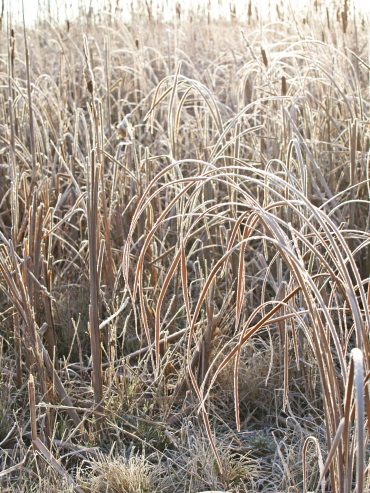
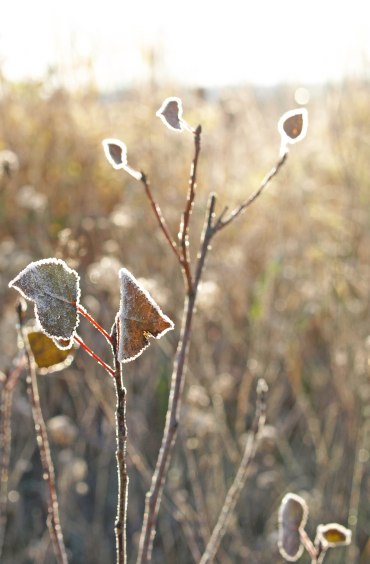
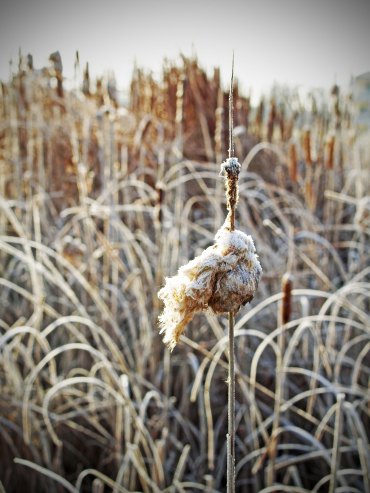
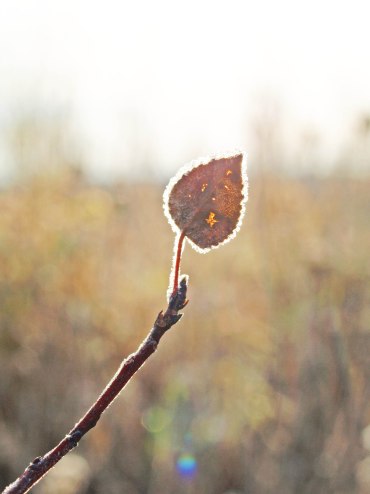
We’ve recently had some lovely frosty, clear mornings in mid-Michigan and I’m glad I had my camera handy when I was dropping off my son at school.

Mornings and evenings in cold weather are what make the dark and dreary winter months more bearable, and may even lift them to a level more on par with the wonder of springtime.

There are so very many lovely things in this world, to be found in all seasons.

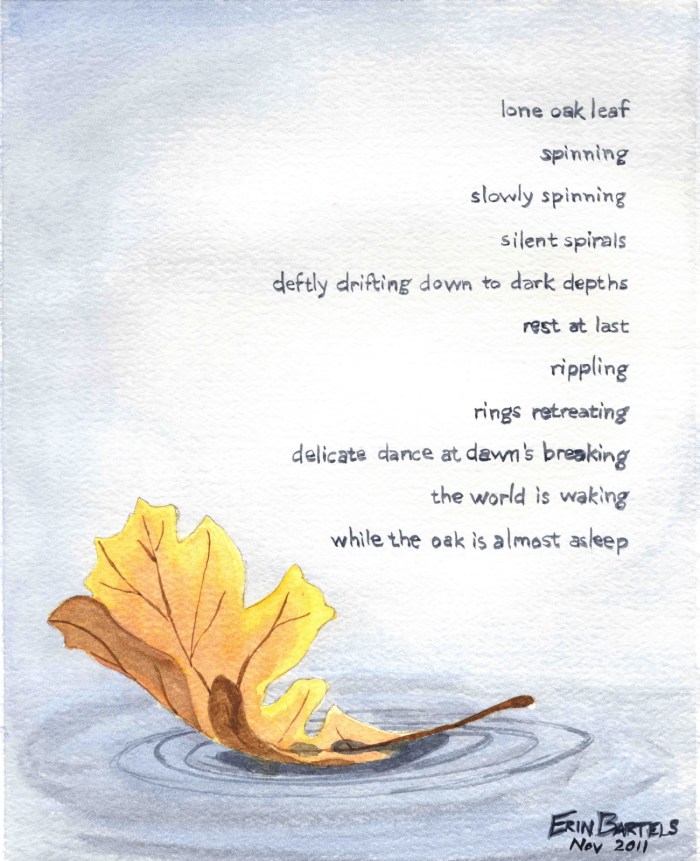
We woke up this morning to a beautiful dusting of light snow, though most of it is melted now. The trees are all bare, but for a few that keep their leaves rather tenaciously, like the oaks. Puts me in mind of a little poem I wrote last November I’ll share with you here.

I think that may be the last thing I painted, an entire year ago! I’ve been getting the itch to paint again, though my usual spot in the sunroom has been taken over by model trains for the winter.

The waning months of the year are when we start getting those “Top Whatever of 2012” lists sprinkled across various media outlets, and before that silliness begins, I’m taking a moment to analyze my own year.

I’ve spent most of my free time in 2012 sewing clothes for myself, contributing to the Sew Weekly, and editing a novel. It’s been a very self-focused year. I was convicted of that this morning. As we near the beginning of Advent and the beginning of winter, I hope to turn my thoughts and efforts more toward others, which, as a writer who tends toward introversion and introspection, can sometimes be difficult to do.

I wonder if you’ve ever had the same epiphany, that your life, energy, and efforts were too focused on yourself. Assuming the world doesn’t end in a few weeks, what are you going to do differently in 2013? Where will you put your efforts? Will you spend your time entertaining yourself and thinking of ways you can further your goals? Or will you conscientiously look for ways to serve? I want to look beyond myself and I pray for the passion and focus to do so. I want to be one lone oak leaf that, in dying to self, can live in such a way that my efforts ripple outward and touch every corner of my pond.