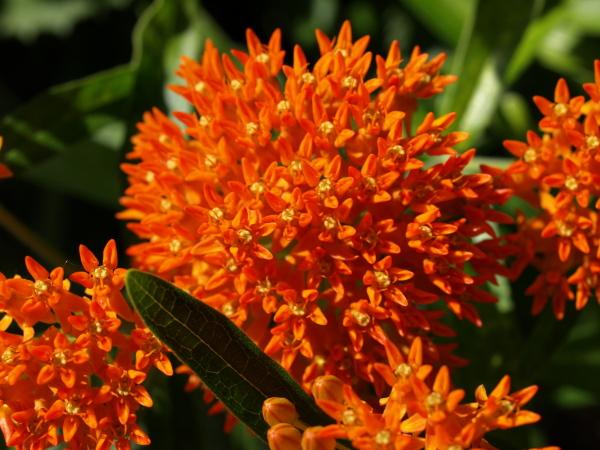
Wildflower Wednesday: Butterfly Weed

butterflyweed1

Common Name: Butterfly Weed

Scientific Name: Asclepias tuberosa

Habitat & Range: dry soil, full sun, prairies and meadows

Bloom Time: summer

About: How about some more flowers that will attract butterflies and other pollinators? Butterfly Weed is a compact, lower growing perennial wildflower that can be purchased at a good nursery or easily seeded. It is better for attracting butterflies to smaller yards than big, sprawling plants like Milkweed or Joe-pye Weed (though it is a milkweed and thus still host to Monarchs and also to Gray Hairstreaks). And it’s orange, not all that common in wildflowers, which tend toward begin white, yellow, or purplish.

I have a specimen in my garden (originally purchased at, you guessed it, a native plant sale) that has been slowly growing in circumference for years. And I occasionally find volunteers pop up in other parts of the garden, which can easily be pulled or replanted elsewhere (if you catch them early; the long taproot this plant develops makes transplanting difficult once a plant is established). It is great in full sun and dry soil, so you can position in some of the most harsh spots in your garden, along with your Sedum and other tough plants. It can be found growing wild throughout the Lower Peninsula.

Here’s some on Mackinac Island:

OLYMPUS DIGITAL CAMERA

Reference: Wildflowers of Michigan by Stan Tekiela; Adventure Publications, 2000
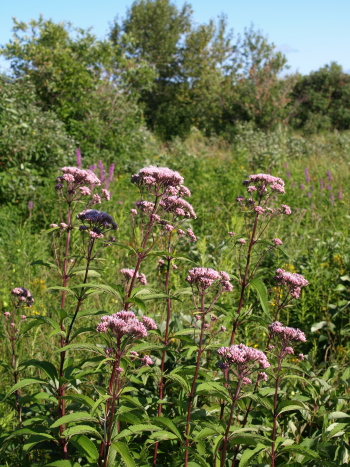
Wildflower Wednesday: Joe-pye Weed

Joe-pye weed

Common Name: Joe-pye Weed

Scientific Name: variously Eupatorium maculatum and Eutrochium maculatum (depending on the source)

Habitat & Range: wet, full sun meadows and along streams and lakes

Bloom Time: summer

About: A tall perennial you can get at most nurseries or native plant sales, this may look like a milkweed, but it is in fact part of the aster family. If you have a pond on your property, this is a perfect plant to edge it. It’s tall (some varieties can reach 10 feet!) so use it as a backdrop to smaller plants in your native or cottage garden. Even though it likes moist soil, its extensive root system means it will tolerate drought. It’s not too picky. Other pluses: it attracts butterflies and deer don’t like to eat it.

Reference: Wildflowers of Michigan by Stan Tekiela; Adventure Publications, 2000

(also Better Homes & Gardens online plant encyclopedia)

Wildflower Wednesday: Swamp Milkweed

Swamp Milkweed

Common Name: Swamp Milkweed

Scientific Name: Asclepias incarnata

Habitat & Range: wet meadows, swamps, streams, lakesides

Bloom Time: summer

About: Host to the Monarch butterfly (along with Common Milkweed, which can be distinguished from its more delicate cousin by its much larger leaves and duller flowers), this is perfect for your butterfly garden if you’ve got some consistently wet spots on your property. I tried them (purchased from a native plant sale, not taken from the wild) in an area of my yard that is often soggy in springtime, but the summer sun dries out my soil too much and there’s too much shade there, so they never took.

This photo (like those of the Boneset a couple weeks ago) was taken along the shore of Lake Louise (properly Thumb Lake) in the northern Lower Peninsula, but this plant can be found throughout the state.

Reference: Wildflowers of Michigan by Stan Tekiela; Adventure Publications, 2000