Wildflower Wednesday: Golden Alexanders

goldenalexander3

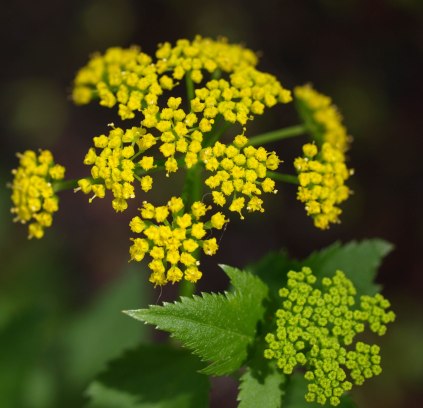
Common Name: Golden Alexanders

Scientific Name: Zizia aurea

Habitat & Range: wet ditches, field, and woods

Bloom Time: spring

About: I bought a couple of these native perennials at a native plant sale in 2009 and they have found a happy home in my shady garden. In fact, they are spreading. The problem is, they’re really only attractive (in the sense of not looking like a weed) when they’re in bloom, which isn’t for very long in the spring. But if you have a woodland garden, they are quite nice as it’s hard to get many flowers in such a setting. They are part of the carrot family and sometimes confused with Wild Parsnip. They are also related to Water Hemlock. In the past they were used to heal wounds and relieve fevers and syphilis, though I couldn’t speak to their effectiveness.

Reference: Wildflowers of Michigan by Stan Tekiela; Adventure Publications, 2000

Wildflower Wednesday: White Clover

OLYMPUS DIGITAL CAMERA

Common Name: White Clover

Scientific Name: Trifolium repens

Habitat & Range: sunny fields and lawns statewide

Bloom Time: spring, summer, and fall

About: Clovers are non-native plants brought over form Europe for pasturing livestock and now, of course, they are found absolutely everywhere. The White Clover is the one that will occasionally produce a four-leaf clover. Butterflies and bees love it for the nectar. Rabbits love to eat the leaves and the flowers. And as a child when I was stuck out in left field during my first year of Little League, I’d eat the flowers too. Just because I could. And I was bored. Good luck controlling these in your yard. It spreads by creeping and by seeds that can lay dormant for years before germinating.

Reference: Wildflowers of Michigan by Stan Tekiela; Adventure Publications, 2000

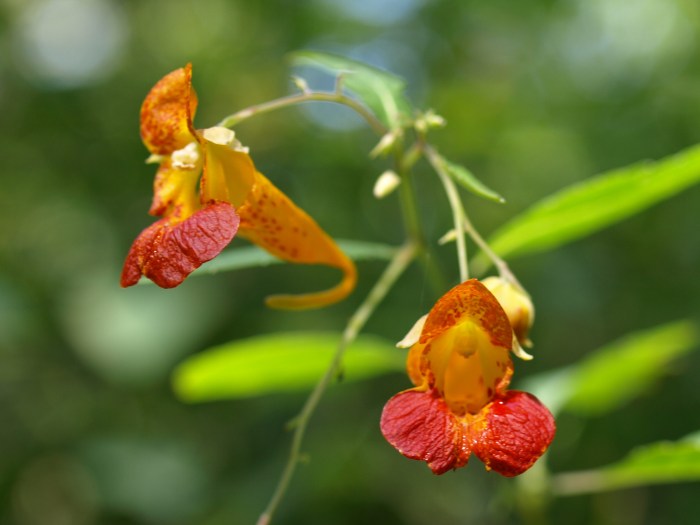
Wildflower Wednesday: Spotted Touch-Me-Not

touchmenot2

Common Name: Spotted Touch-Me-Not

Scientific Name: Impatiens capensis

Habitat & Range: wet shade and woodlands, by streams, and in wetlands statewide

Bloom Time: summer

About: You’ll see Touch-Me-Nots in yellow as well, but the orange ones are my favorite. These shade-loving plants not only have beautiful, exotic looking flowers, they are a favorite of children for their exploding seed pods. An annual, the Touch-Me-Not (also known as Jewelweed) disperses its seeds dramatically by flinging them here and there at a gentle touch. In the wild this is accomplished largely by deer walking by. But on walking trails it is a fun activity for children and adults alike. Its flowers are favored by hummingbirds and the sap from its stems can be used to soothe poison ivy or stings from nettles. An all around lovely, fun, and useful forest flower.

Reference: Wildflowers of Michigan by Stan Tekiela; Adventure Publications, 2000

Wildflower Wednesday: New England Aster

OLYMPUS DIGITAL CAMERA

Common Name: New England Aster

Scientific Name: Aster novae-angliae

Habitat & Range: moist, sun, prairies, roadsides throughout the state

Bloom Time: autumn

About: Late fall really is a lovely time, even if our recent snow up in Michigan is telling us that it’s over. Along with the goldenrod and gentian we’ve seen previously on Wildflower Wednesday, the beautiful native New England Aster brings bursts of color to compliment the reds, oranges, yellows, and browns of fall. While it ranges from white to pink to lavender to deep purple, the New England Aster usually looks just about as it does in this photo taken on the grounds of Camp Lael in Lapeer, Michigan. Asters are often found in perennial gardens, but they can be quite leggy. Plant them in waves and prune the plant down in the late spring to keep them more compact, or put them near the back of the bed where other plants will hide their ugly stems.

Reference: Wildflowers of Michigan by Stan Tekiela; Adventure Publications, 2000

Wildflower Wednesday: Spring Beauty

OLYMPUS DIGITAL CAMERA

Common Name: Spring Beauty

Scientific Name: Claytonia virginica

Habitat & Range: wet, shady, deciduous woods

Bloom Time: spring

About: Yes, we’re hurtling toward winter up here in Michigan, but that doesn’t mean we can’t think about spring. A delicate woodland flower that blooms in April or May, the Spring Beauty is found in the southern half of the Lower Peninsula. Its tubers are eaten like potatoes, but please don’t dig these up as their numbers are being reduced by over-gathering. Foraging is a fun thing to do (if you know what you’re doing and don’t eat anything poisonous) but people who foraged for these plants in the past (because they actually needed to) usually did so with knowledge of how to keep their sources producing. A lot of foraging hobbyists may go into the woods these days with only knowledge of what can be eaten rather than knowledge of how it should be eaten and preserved for the future. That said, if you’re lost in the woods for days on end next spring and you find some of these, I’m sure it’s okay to eat the tubers to keep from starving to death.

Reference: Wildflowers of Michigan by Stan Tekiela; Adventure Publications, 2000

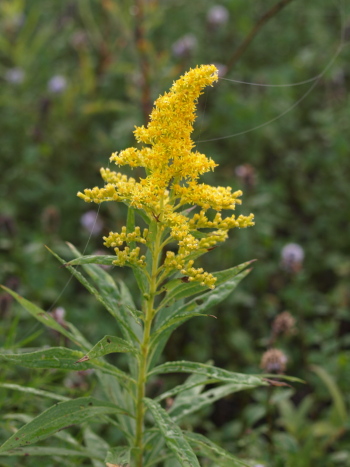
Wildflower Wednesday: Canada Goldenrod

FRgoldenrod

Common Name: Canada Goldenrod

Scientific Name: Solidago canadensis

Habitat & Range: dry, open fields and prairies

Bloom Time: summer and fall

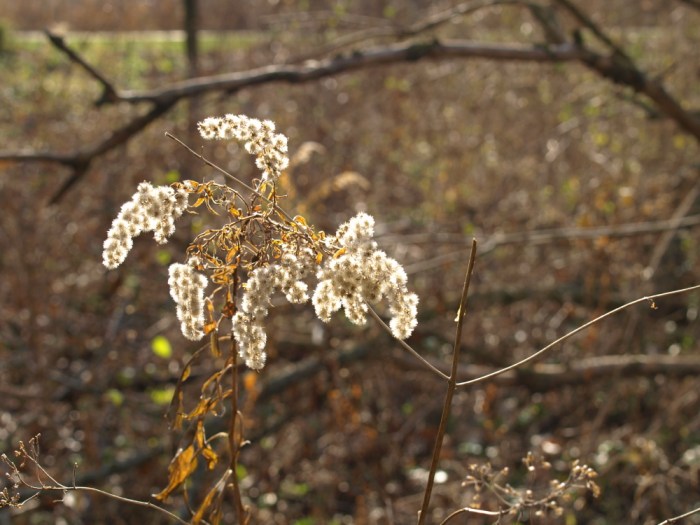
About: Did you know there are many kinds of Goldenrod? This one is probably the one you see most, but it has many relatives throughout Michigan (over 20) and the rest of the continent (over 100!). A member of the aster family, Goldenrod blooms in August and September and its fluffy white seeds can hang on up into November.

OLYMPUS DIGITAL CAMERA

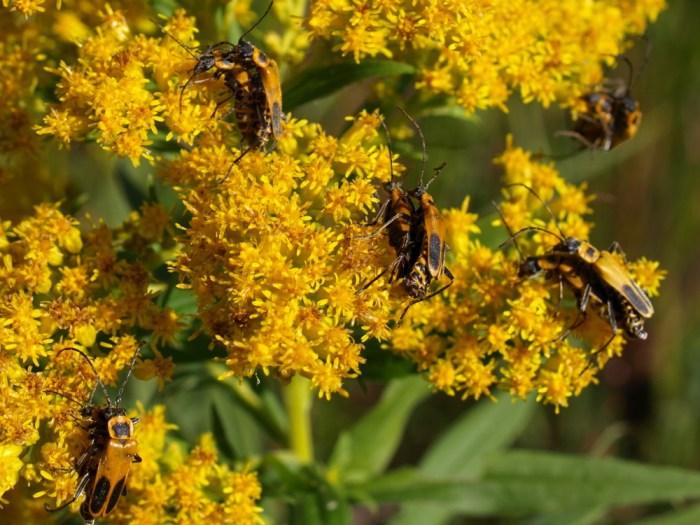
Lots of insects are attracted to Goldenrod, including these guys who are busy procreating:

FRmating1

And Goldenrod seem to be a favorite plant for insects who create galls–those bulbous growths in which the insect then lives and sometimes “farms” its food. Here are three in a row on a Goldenrod stem on Mackinac Island:

OLYMPUS DIGITAL CAMERA

Reference: Wildflowers of Michigan by Stan Tekiela; Adventure Publications, 2000

Wildflower Wednesday: False Solomon’s Seal

FalseSolomon'sSeal

Common Name: False Solomon’s Seal

Scientific Name: Smilacina racemosa

Habitat & Range: deciduous woods

Bloom Time: spring and summer

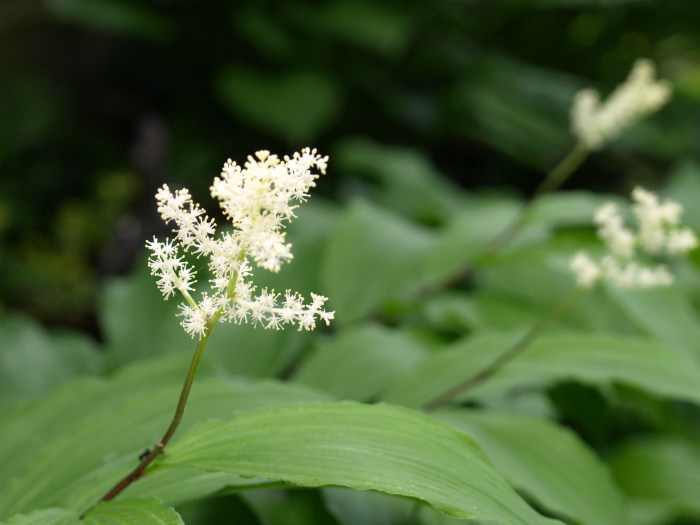
About: We’ve been out in the fields for months, but there are plenty of wildflowers to be found in the woods. Most tend to bloom in spring when there is more sunlight getting through to the forest floor, but in the summertime you can spot lots of them by their leaves and berries. False Solomon’s Seal is an easy one to identify. Long, bending stems look a bit like palm branches with simple, alternating leaves that are even attractive when they’re dying:

FRdevilstrail6

If your local nursery stocks woodland plants like Trillium and Hepatica and Jack-in-the-Pulpit, odds are they will have this too. That’s where I got mine. Solomon’s Seal is also sold in attractive variegated varieties and can brighten up a shady, tree-filled backyard.

Reference: Wildflowers of Michigan by Stan Tekiela; Adventure Publications, 2000

Wildflower Wednesday: Bee Balm or Wild Bergamot

OLYMPUS DIGITAL CAMERA

Common Name: Bee Balm or Wild Bergamot

Scientific Name: Monarda fistulosa

Habitat & Range: dry, sunny fields and roadsides

Bloom Time: summer

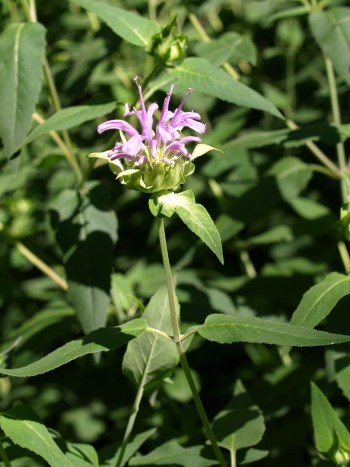
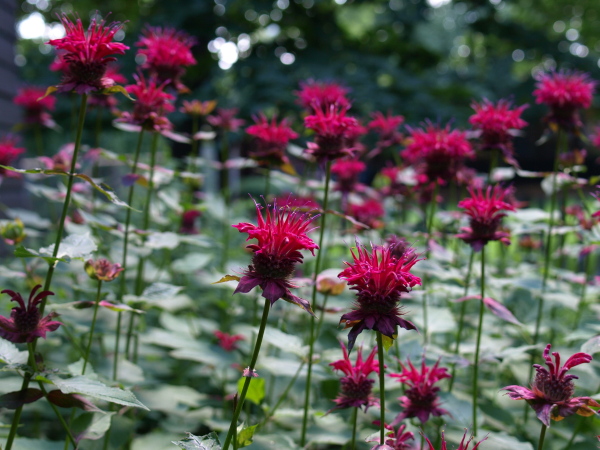
About: Do you like Earl Grey tea? The distinctive taste comes from Oil of Bergamot, derived from this native wildflower. If you like growing native plants for tea, this is a must-have. A part of the mint family, tea made from the leaves of Wild Bergamot is supposed to aid in digestion and treat respiratory problems (just like mint tea). Bees, butterflies, and hummingbirds love these flowers, but beware that it is a fairly aggressive spreader–great if you’ve got a large butterfly garden, but it may take over less pushy plants in a cottage garden. I have both the wild version and a showier cultivar (below) with bigger leaves and big, fuchsia flowers, but less of that essential oil you want for your tea. It is definitely taking over its spot in the garden. In fact, the species and the cultivar apparently cross-pollinated last year and this year I had a deeper purple plant as well. I’ll have move my poor crowded coneflowers elsewhere as I love these flowers that bloom when a lot of other stuff in the garden is looking kind of ragged from the summer heat. They are completely carefree practically the moment you put them in the ground.

OLYMPUS DIGITAL CAMERA

Reference: Wildflowers of Michigan by Stan Tekiela; Adventure Publications, 2000

October Is Almost Half Over–Don’t Miss It

OLYMPUS DIGITAL CAMERA

Along the drive to my son’s school is a block of city land devoted to nature. Surrounded on four sides by homes, a highway, and a golf course, it is nevertheless a patch of peaceful ground. This little enclave of trees and cattails and wildflowers is the haunt of ducks, herons, songbirds, rabbits, muskrats, turtles, and frogs, as well as senior citizens out on walks and health nuts getting in a run. It is lovely much of the year, but like all wooded areas in temperate zones, never so lovely as in fall.

OLYMPUS DIGITAL CAMERA

During our frenetic and emotionally taxing week last week, I stopped for twenty minutes one morning after dropping the boy off at school to take some pictures and breathe the cool October air. I took the photos you see in this post of Great White and Blue Herons, colorful sumac leaves, mist dancing above the water, and reflections of trees in the ponds.

OLYMPUS DIGITAL CAMERA

When I picked my son up that afternoon, I convinced him that visiting the ducks at the park would be far preferable to playing a video game or watching a TV show. We had a grand time greeting the ducks we knew (like Tucky, who is any female Mallard we encounter anywhere in the city) and naming those we were meeting for the first time (Caramel, Buttercup, Oreo, Splashy, Ducky, Woody, Shaky, etc.). We saw two muskrats and chipmunks with cheeks stuffed full of seeds.

OLYMPUS DIGITAL CAMERA

These two stops at the park took up less than an hour of my day. But that hour did so much good to my spirit. I saw so many different species of plants and animals living in such a small space. A compact and yet complex ecosystem.

OLYMPUS DIGITAL CAMERA

So much is packed into our lives. So many people, activities, responsibilities, diversions–all vying for attention. But in this little park nothing vied for attention. Everything waited quietly to be noticed.

OLYMPUS DIGITAL CAMERA

The silent rabbit I saw retreating ahead of me on the path did not need to be checked off my to-do list. Berries of every hue waited patiently on the bushes for me to note their presence or to pass them by without a glance. And while it’s fun to know the species of the trees or the birds or the flowers, it’s not necessary in order to enjoy looking at them.

OLYMPUS DIGITAL CAMERA

Surely there were creatures attempting to escape my notice entirely, like the cautious wading birds or whatever creature ducked underwater at my approach and created ringlets of tiny ripples retreating out into the pond.

OLYMPUS DIGITAL CAMERA

I try to make it a practice to notice nature. But when life gets so terribly busy it is easy to forget that there is a world out there that is unconcerned with deadlines or what happens on the next episode of insert-show-you-obsessively-watch. A bird is only concerned with eating. A plant is not concerned about anything at all! And while I wouldn’t want to be a heron or a maple tree, no matter how carefree their existence might be, I don’t want to miss what they have to teach me about patience, silence, and stillness.

OLYMPUS DIGITAL CAMERA

I hope you take the time for a little stroll in the woods or along a shore or in a nature center this week. The leaves are falling and this season will not last. Your project will be there tomorrow. Go take a walk.
Wildflower Wednesday: Cardinal Flower

Cardinal Flower

Common Name: Cardinal Flower

Scientific Name: Lobelia cardinalis

Habitat & Range: wet, shady streams and wetlands

Bloom Time: summer and fall

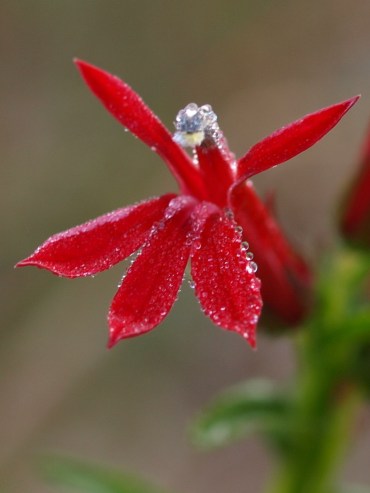
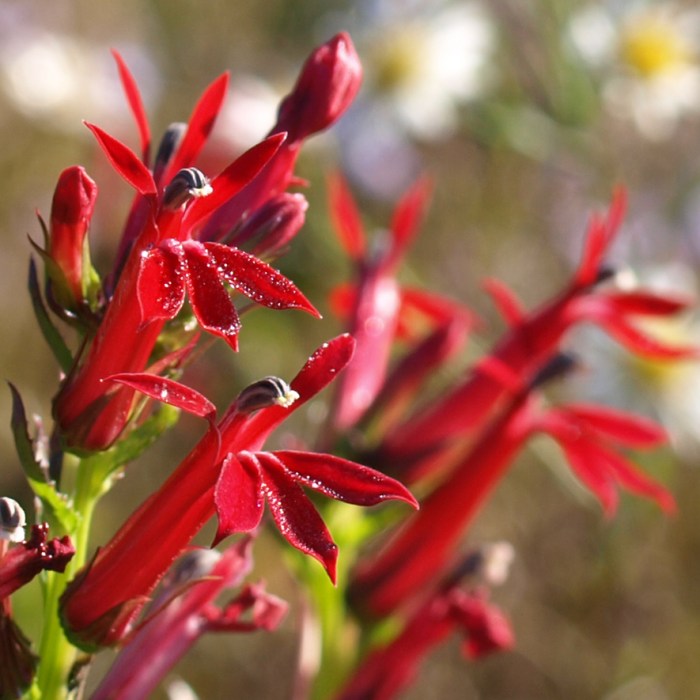
About: Not too many wildflowers in Michigan are this striking red. Not easy to grow in a garden (unless you have a pretty good pond on your property) the Cardinal Flower needs wet roots and a bit of sunlight. You can find it at a really well-stocked nursery or a native plant sale (this is another I tried unsuccessfully in my garden) but NEVER dig from the wild. Cardinal Flowers can only be pollinated by hummingbirds and thus don’t reproduce well. If you already have them established, lucky you! Otherwise, just take some nice pictures. Mine are from the shores of Thumb Lake at Camp Lake Louise. Like the bird, the plant gets its common name from the robes worn by Catholic cardinals.

OLYMPUS DIGITAL CAMERA

Reference: Wildflowers of Michigan by Stan Tekiela; Adventure Publications, 2000