Vacation Season Is Coming…and Michigan Is Open for Business

Look friends, winter’s over, the trees are leafing out, the flowers are blooming, and Michigan’s cities and coastlines are calling. If you live here, you already know how amazing it is. If you don’t, take a couple minutes and watch this:

And then head on over to my page of Michigan links and start clicking and planning a vacation here.

Michigan is more than Detroit (although, Detroit’s pretty freaking amazing, even for a city in crisis) and it has something for everyone. Here are some of the beautiful places I like to frequent.

Don’t forget to pack your sunscreen, bike, hiking shoes, ATV, fishing pole, camera, nature guides, water skis, appetite, and penchant for fun and relaxation.
Arctic Blasts and the Reason for Fiction

Thanks so much to so many of you who downloaded free stories yesterday. What took me by surprise was that the overwhelming favorite of the day was “Beneath the Winter Weeds,” the story I wrote last January. I suppose I had thought that people would be more interested reading about summer during this second (or is it third?) cold snap.

Perhaps fiction isn’t truly an escape from reality so much as it is an exploration of reality.

In case you were curious about what Michigan has been like the past few days, here’s the Lake Michigan lakeshore:

Be sure to watch the whole thing so you can see how this photographer found shelter from the storm.

This morning it’s cold (-10 on the thermostat–that’s -23 celsius for my international friends) and sunny and definitely the sort of morning that Valerie Steele might head into the woods to make her discovery…

In the Dead of Winter, Life Still Stirs

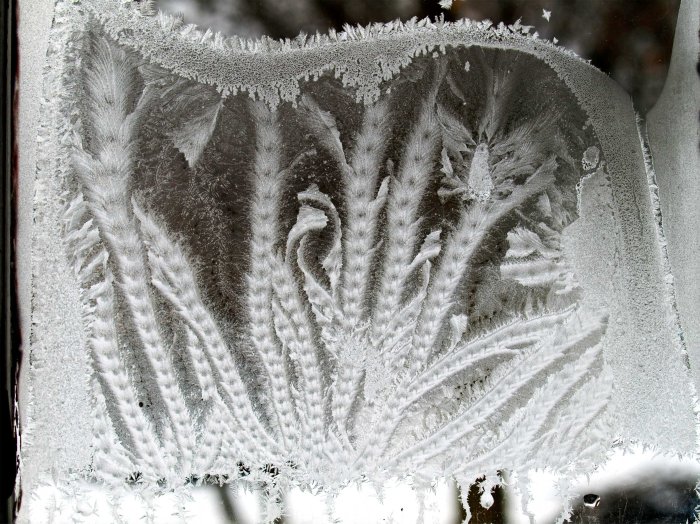
This is the view through my 75-year-old windows lately.

OLYMPUS DIGITAL CAMERA

OLYMPUS DIGITAL CAMERA

OLYMPUS DIGITAL CAMERA

Some of these patterns put me in mind of coral–appropriate in a part of the world that was once the bottom of an ocean. In summer we gather fossilized coral. In winter, it graces our living room window panes.

It has been a ferocious winter, one that still has the Great Lakes State firmly in its icy grip. But while the windows may be frosty and the ground still covered in snow, beneath it all the earth prepares for spring. Squirrels are fornicating in the back yard. Birds are twittering in the pile of sticks that has been stacked up by the side of the road since the ice storm a month ago. The buds of this year’s growth already grace the bare branches of trees and shrubs. In fact, looking at that last frost photo, I kind of see those bud-studded branches right there in the ice.

And within my mind is a steady running stream of story that my fingers are faithfully putting down into words.

Martin Luther King, Jr. Gave His Iconic “I Have a Dream” Speech in Detroit First

I’d wager that most of you didn’t know that before the March on Washington, DC, was the 125,000-strong Great March on Detroit. And that’s where 25,000 people first heard this iconic speech in Cobo Hall (now Cobo Center).

For the complete audio and text of his speech in Detroit, click here.

May we all take time today to remember a great man, a great minister, and a great Christian who made the greatest sacrifice for a great cause.

I’m pleased to say that this June 23, 1963 event is a turning point for two characters in my current WIP. And I’m extra pleased that I happen to be writing that chapter the very week we celebrate the life and work of Martin Luther King, Jr.

That’s what I call Providence.

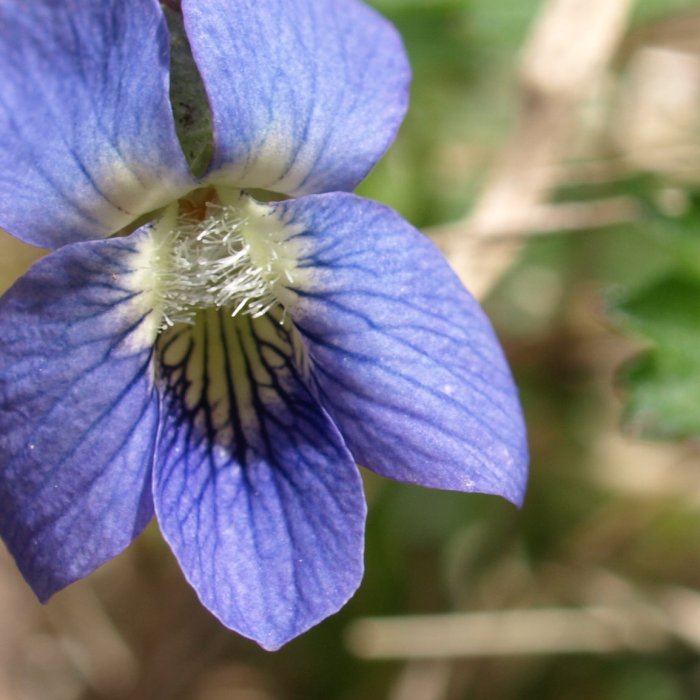
Wildflower Wednesday: Common Blue Violet

OLYMPUS DIGITAL CAMERA

Common Name: Common Blue Violet

Scientific Name: Viola sororia

Habitat & Range: woodlands and gardens statewide

Bloom Time: spring

About: If you have ever tried to rid your garden or lawn of violets, you know it is no easy task to dislodge these strong-rooted plants that spread by both underground runners and seeds. If you don’t get all–and I mean all–of that root, you will see them again very soon. At least they are native and make for a cheery presentation in spring. Their flowers can range from white to deep purple, and there is also a yellow variety that is not quite so low to the ground and less common in yards. The flowers can be candied and used as edible decorations on cakes and cupcakes, and even the leaves can be eaten in salads or as cooked greens. So if you can’t get rid of them and you don’t use dangerous fertilizers or pesticides on them, go ahead and eat them! I’ve made peace with the ones in the garden by the gas and electric boxes. But I still pull up about a hundred of them every year from other parts of the yard.

Reference: Wildflowers of Michigan by Stan Tekiela; Adventure Publications, 2000

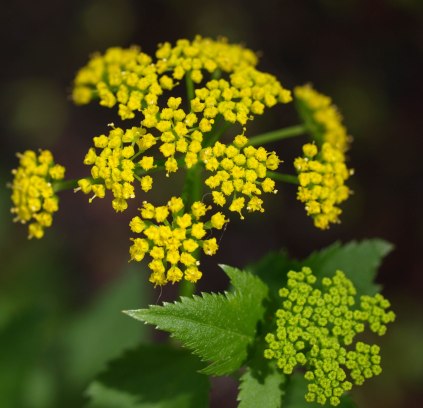
Wildflower Wednesday: Golden Alexanders

goldenalexander3

Common Name: Golden Alexanders

Scientific Name: Zizia aurea

Habitat & Range: wet ditches, field, and woods

Bloom Time: spring

About: I bought a couple of these native perennials at a native plant sale in 2009 and they have found a happy home in my shady garden. In fact, they are spreading. The problem is, they’re really only attractive (in the sense of not looking like a weed) when they’re in bloom, which isn’t for very long in the spring. But if you have a woodland garden, they are quite nice as it’s hard to get many flowers in such a setting. They are part of the carrot family and sometimes confused with Wild Parsnip. They are also related to Water Hemlock. In the past they were used to heal wounds and relieve fevers and syphilis, though I couldn’t speak to their effectiveness.

Reference: Wildflowers of Michigan by Stan Tekiela; Adventure Publications, 2000

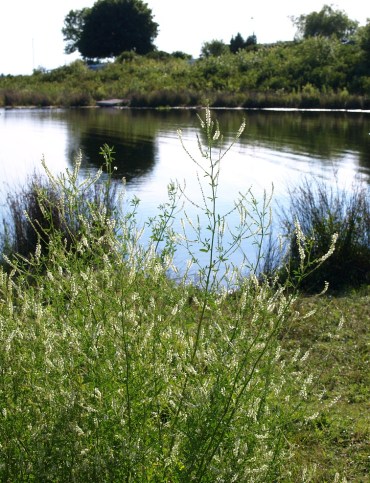
Wildflower Wednesday: White Sweet Clover

OLYMPUS DIGITAL CAMERA

Common Name: White Sweet Clover

Scientific Name: Melilotus alba

Habitat & Range: sunny fields, shorelines, and roadsides

Bloom Time: spring, summer, and fall

About: If you ever walk along the shore of a lake in Michigan, it’s likely you’ve smelled an evocative mixture of sand and water and plant life that creates a permanent memory. It’s also likely that part of this smell cocktail will be White Sweet Clover, a member of the pea family. It’s a non-native plant once grown as a hay crop but, of course, it has escaped and can now be found everywhere. Just like the White Clover, it’s an important nectar source and nearly impossible to eradicate as the seeds can lie dormant for years and can germinate as far as seven inches down into the ground. But hey, at least it smells nice. It also comes in yellow.

Reference: Wildflowers of Michigan by Stan Tekiela; Adventure Publications, 2000

Wildflower Wednesday: White Clover

OLYMPUS DIGITAL CAMERA

Common Name: White Clover

Scientific Name: Trifolium repens

Habitat & Range: sunny fields and lawns statewide

Bloom Time: spring, summer, and fall

About: Clovers are non-native plants brought over form Europe for pasturing livestock and now, of course, they are found absolutely everywhere. The White Clover is the one that will occasionally produce a four-leaf clover. Butterflies and bees love it for the nectar. Rabbits love to eat the leaves and the flowers. And as a child when I was stuck out in left field during my first year of Little League, I’d eat the flowers too. Just because I could. And I was bored. Good luck controlling these in your yard. It spreads by creeping and by seeds that can lay dormant for years before germinating.

Reference: Wildflowers of Michigan by Stan Tekiela; Adventure Publications, 2000

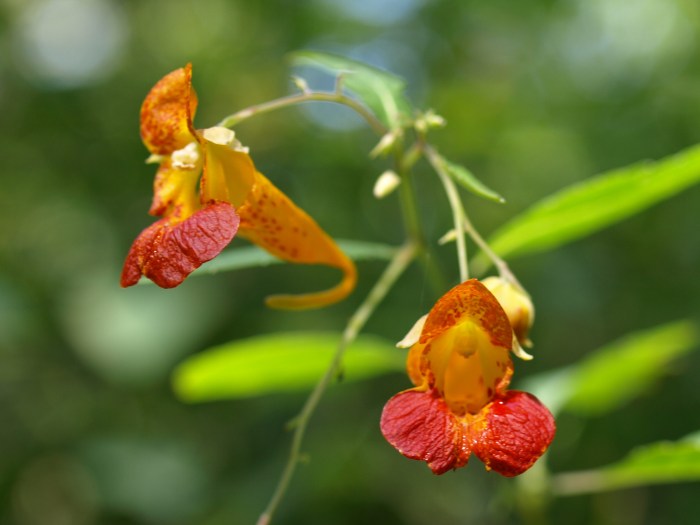
Wildflower Wednesday: Spotted Touch-Me-Not

touchmenot2

Common Name: Spotted Touch-Me-Not

Scientific Name: Impatiens capensis

Habitat & Range: wet shade and woodlands, by streams, and in wetlands statewide

Bloom Time: summer

About: You’ll see Touch-Me-Nots in yellow as well, but the orange ones are my favorite. These shade-loving plants not only have beautiful, exotic looking flowers, they are a favorite of children for their exploding seed pods. An annual, the Touch-Me-Not (also known as Jewelweed) disperses its seeds dramatically by flinging them here and there at a gentle touch. In the wild this is accomplished largely by deer walking by. But on walking trails it is a fun activity for children and adults alike. Its flowers are favored by hummingbirds and the sap from its stems can be used to soothe poison ivy or stings from nettles. An all around lovely, fun, and useful forest flower.

Reference: Wildflowers of Michigan by Stan Tekiela; Adventure Publications, 2000